
Reading skills development Normal Worksheets for Ages 5-7
5 filtered results
Difficulty Level
Grade
Age
-
From - To
Subject
Activity
Standards
Boost your child's reading skills with our comprehensive worksheets designed for ages 5-7. Our "Reading Skills Development Normal Worksheets" provide engaging activities that help young learners enhance their vocabulary, comprehension, and phonetic awareness. Each worksheet is age-appropriate and thoughtfully crafted to support various learning styles, making reading fun and accessible. With a variety of exercises, including matching words, filling in blanks, and short reading passages, these worksheets foster critical skills essential for academic success. Perfect for homeschooling, classroom use, or extra practice at home, our worksheets create a solid foundation for your child's reading journey. Start exploring today!
Favorites
With answer key
Interactive
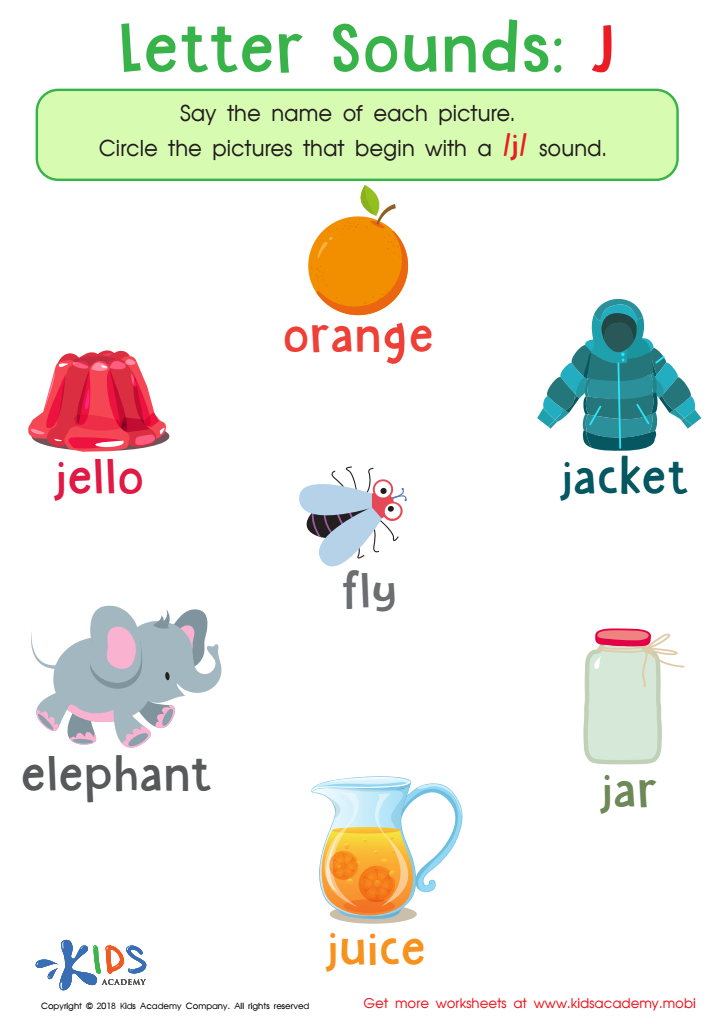
Letter Sounds: J Printable Worksheet
Preschoolers can learn to identify letter sounds by focusing on beginning sounds. This cute and colorful worksheet reviews the hard “j” sound. Kids can point it out by naming the words and circling only those starting with the “j” sound. Read the text out loud and listen closely!
 Assign to My Students
Letter Sounds: J Printable Worksheet
Worksheet
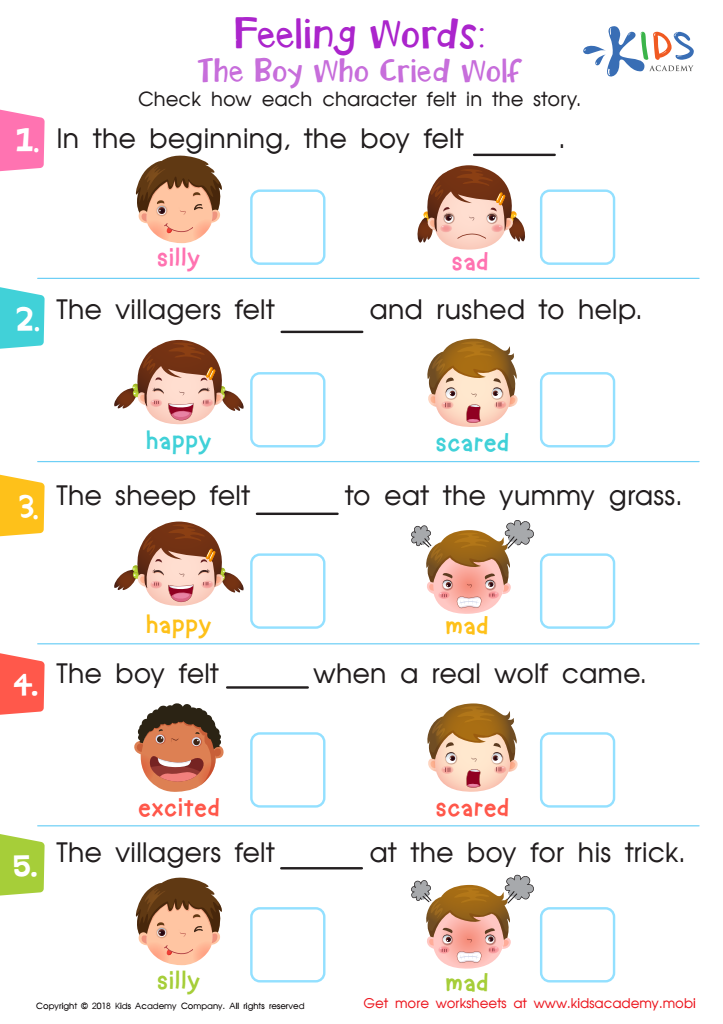
Feeling Words: The Boy Who Cried Wolf Worksheet
This worksheet helps students infer characters' traits and feelings by reading The Boy Who Cried Wolf. They choose the correct emotion for each character to improve their story comprehension. A great resource for the reading classroom, it teaches an essential comprehension skill.
Feeling Words: The Boy Who Cried Wolf Worksheet
Worksheet
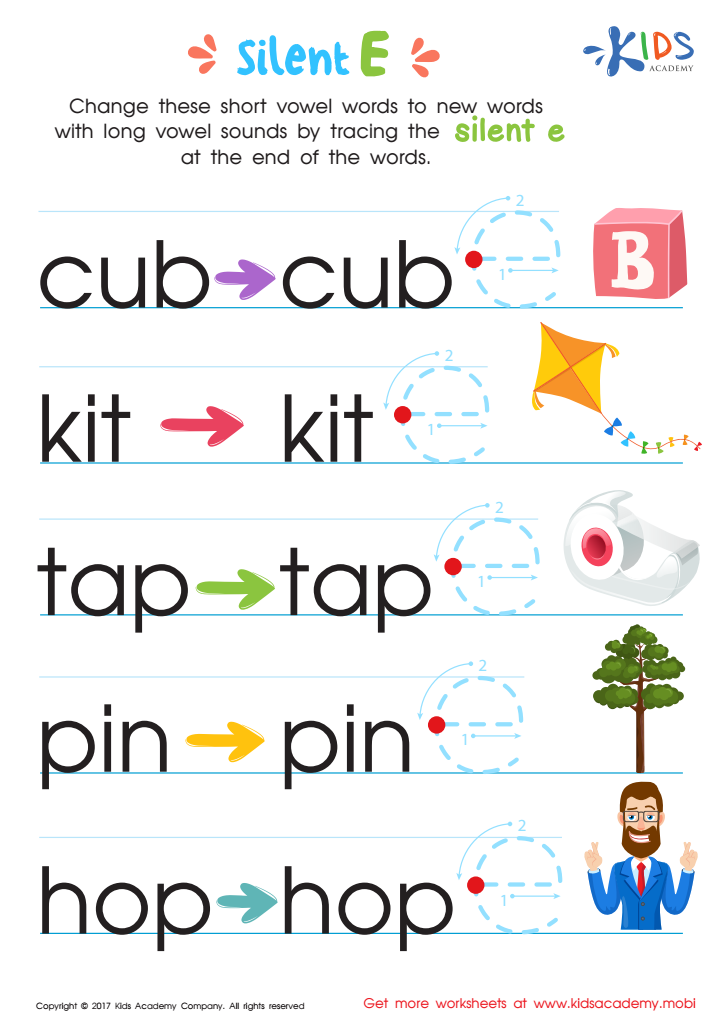
Silent E Words Worksheet
The letter e is amazing - it changes words without making a sound! Boost spelling and phonics with this Silent e worksheet from Kids Academy - fun and colorful!
Silent E Words Worksheet
Worksheet
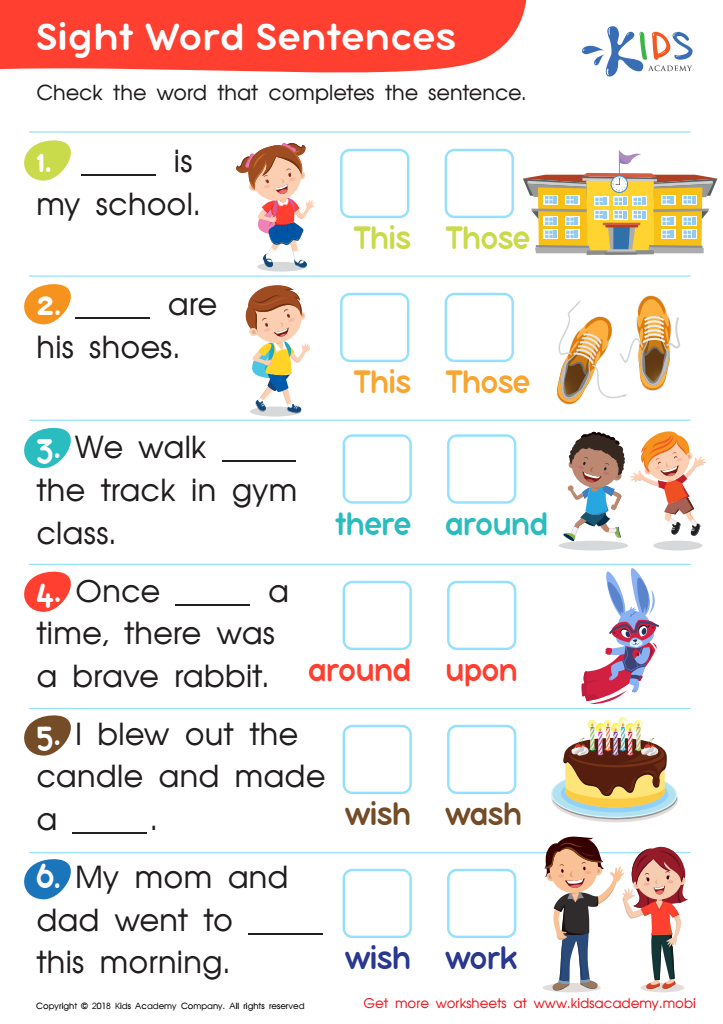
Sight Word Sentences Worksheet
Improve reading fluency! Have students fill in the blank with the correct sight word to complete sentences. Sight words are often tricky to decode - they don't follow phonics or spelling rules. To read smoothly, young learners must know them by memory. Use this printable and help kids master their sight words!
Sight Word Sentences Worksheet
Worksheet
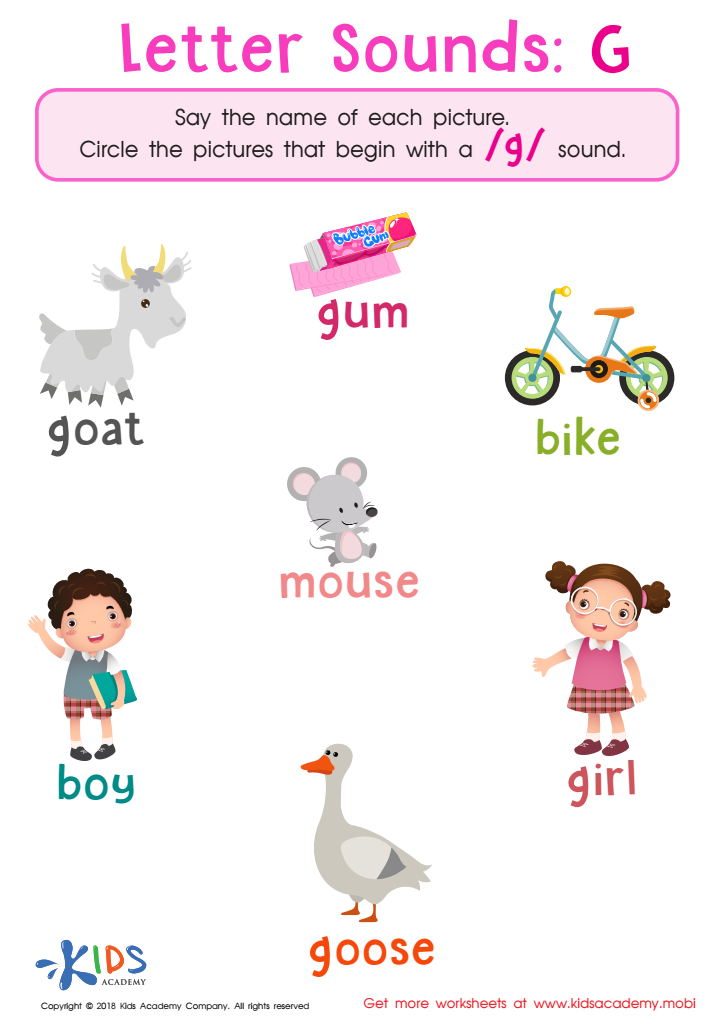
Letter G Sounds Worksheet
Help emerging readers build confidence by giving them practice identifying hard "G" with this free PDF worksheet. They'll use picture clues to name the words, and practice fine-motor skills tracing circles around the corresponding pics. It's a great way to introduce or reinforce hard "G" words.
Letter G Sounds Worksheet
Worksheet
Join Kids Academy for Free
Who is primarily going to use this learning content?







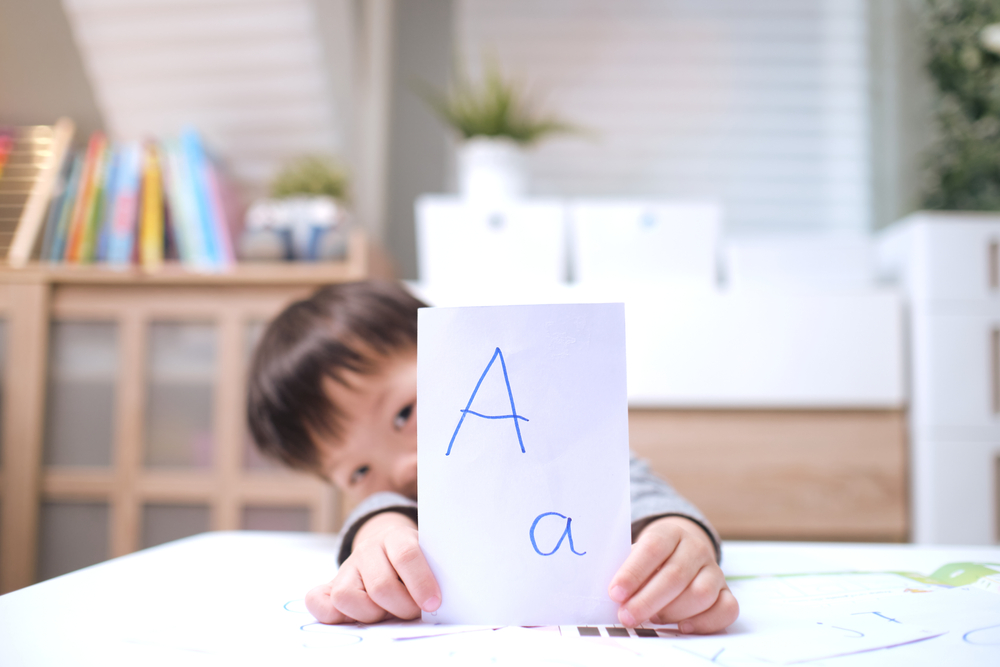
Reading skills development for children aged 5-7 is crucial for several reasons, making it a priority for both parents and teachers. At this stage, children are often embarking on their academic journey, and strong reading abilities lay the foundation for overall literacy. Proficient reading skills are closely tied to comprehension, vocabulary development, and critical thinking, all of which are essential for success across subjects.
Furthermore, children who develop reading skills early are more likely to gain a love for reading that can last a lifetime. This not only enhances their knowledge and creativity but also cultivates curiosity and promotes lifelong learning. In contrast, delays in reading skills can lead to increased frustration and disengagement from school, potentially affecting a child’s self-esteem and motivation.
Moreover, reading is integral to cultural and social development, helping children understand different perspectives and fostering empathy. Effective reading instruction can also empower children from diverse backgrounds by providing equitable access to learning opportunities. Therefore, parents and teachers play a pivotal role in nurturing reading skills, ensuring children build confidence and competence as they navigate their educational paths. By fostering these skills, we can contribute to creating a generation of informed, capable, and enthusiastic learners.








