Recognizing Patterns Normal Worksheets for Ages 5-7
6 filtered results
-
From - To
Discover engaging "Recognizing Patterns" worksheets tailored for ages 5-7 from Kids Academy. These printable worksheets are designed to foster early learning by enhancing children's ability to identify and complete patterns using colors, shapes, and sequences. Through playful exercises and activities, young learners strengthen their critical thinking and problem-solving skills. Ideal for home or classroom use, our carefully crafted worksheets promote cognitive development and prepare kids for future math challenges. Give your children a head start with our fun and educational resources that make learning effortless and enjoyable. Unlock their potential with Kids Academy today!
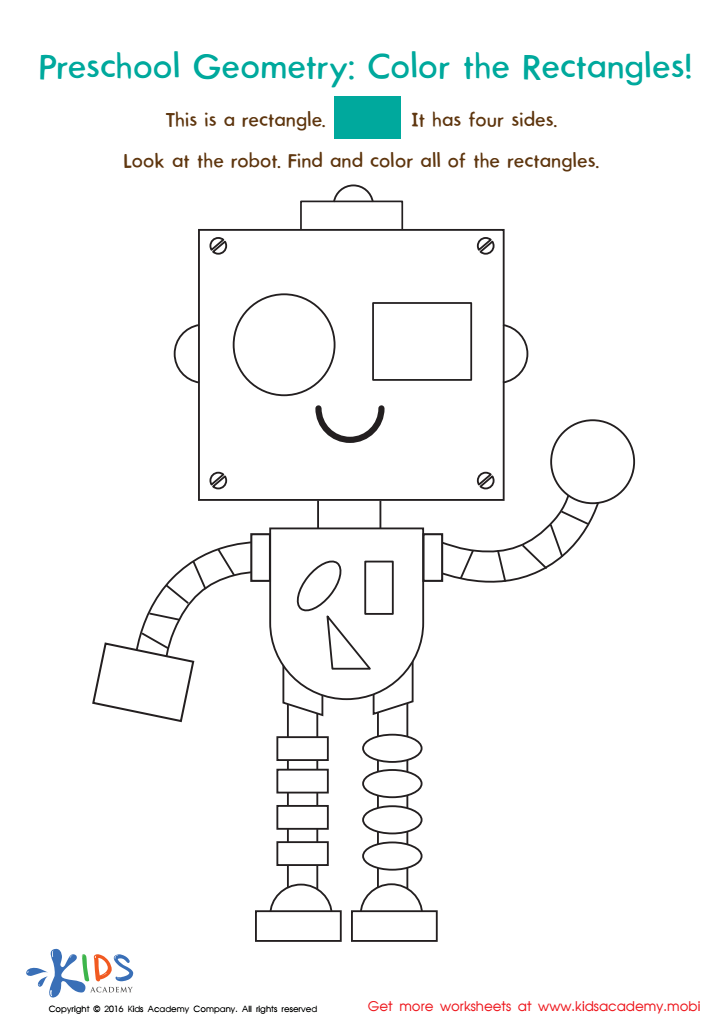
Geometry Worksheet
 Assign to My Students
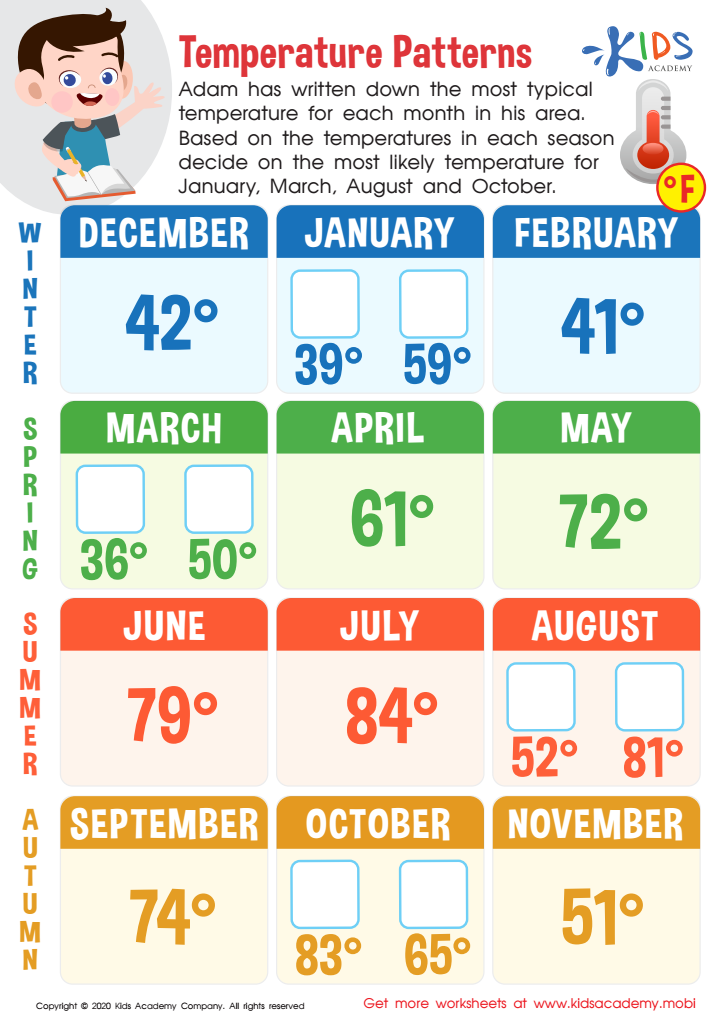
Temperature Patterns Worksheet
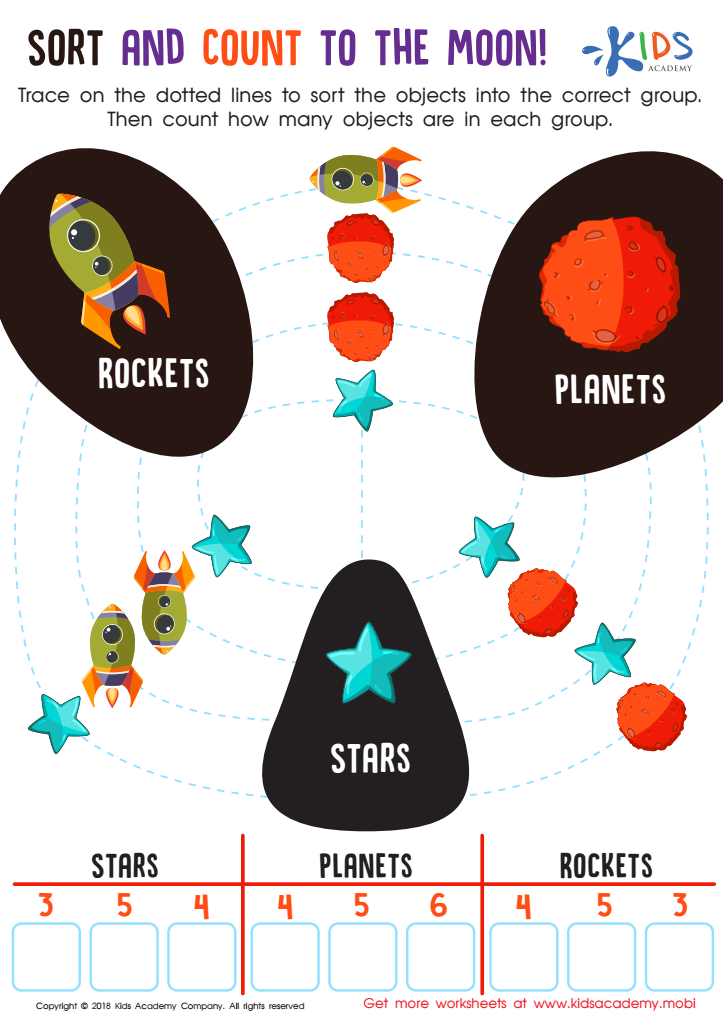
Sort and Count to the Moon Worksheet
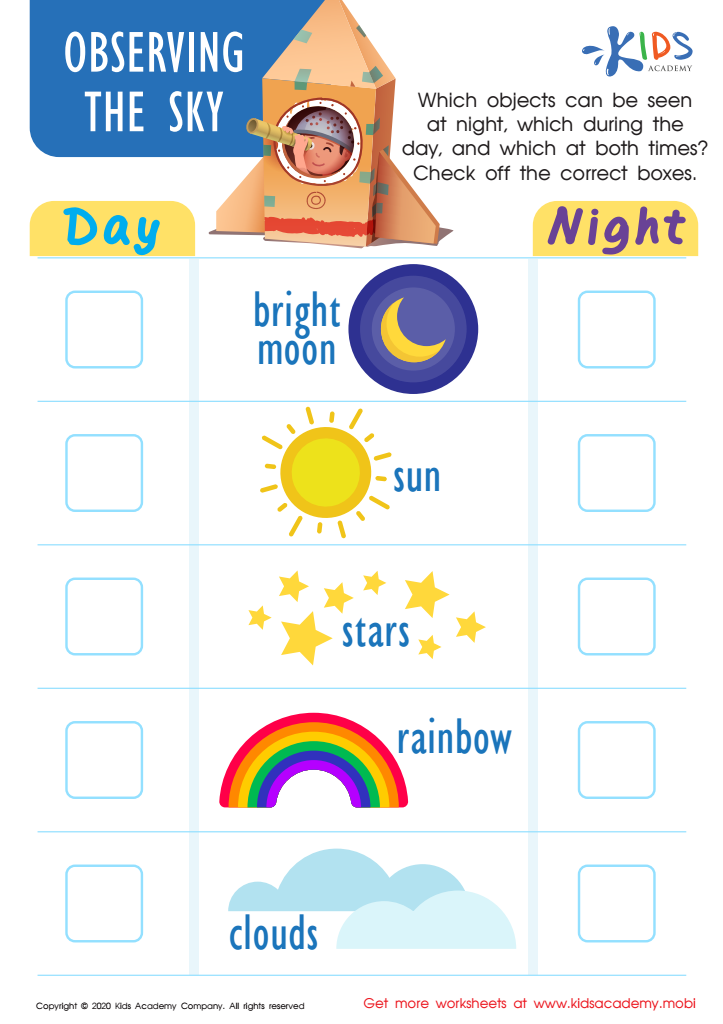
Observing the Sky Worksheet
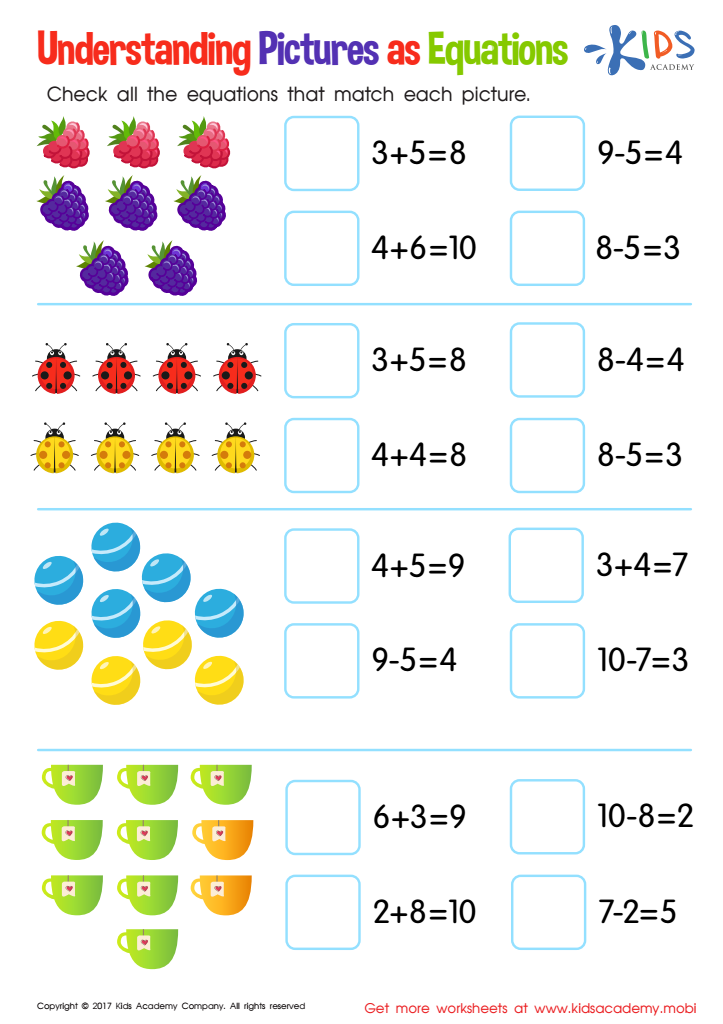
Understanding Pictures as Equations Worksheet
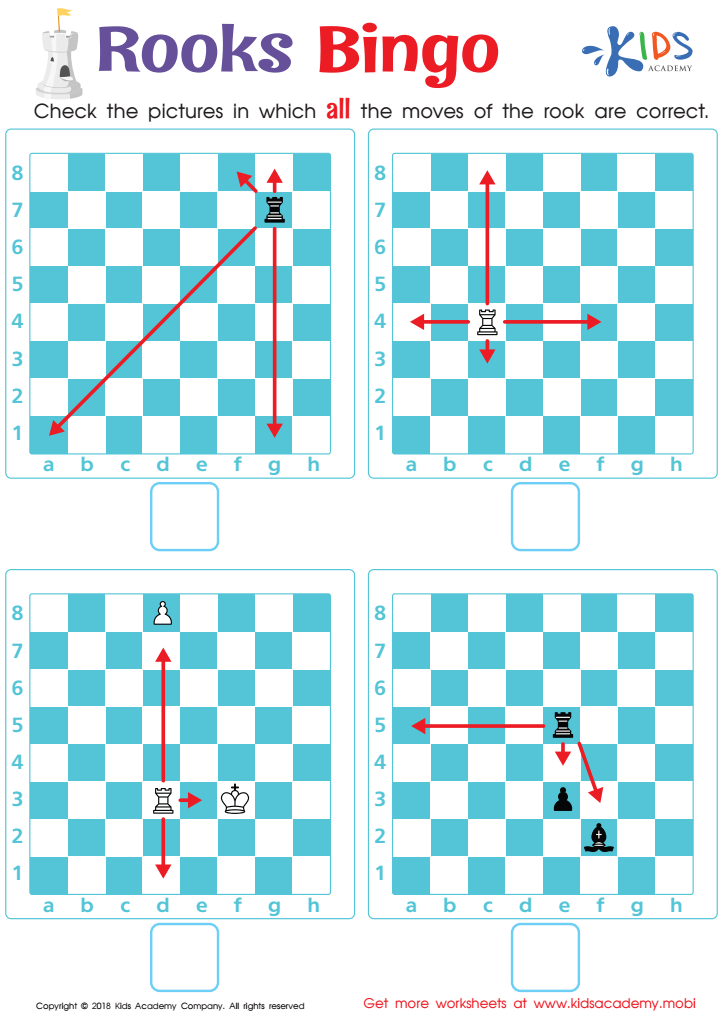
Rooks Bingo Worksheet





.jpg)

Recognizing patterns is fundamental for young children, particularly those aged 5-7, as it lays a crucial foundation for further cognitive development and learning. During these formative years, children begin to notice patterns in various forms, such as rhythms, sequences, shapes, numbers, and letters. This skill underpins essential areas of education, such as mathematics, reading, and critical thinking.
In mathematics, patterns help children understand order, structure, and predictability, which are vital for grasping concepts like counting, addition, subtraction, and more complex mathematical operations. By identifying patterns, children learn to predict and make logical connections, which are critical for problem-solving skills.
In literacy, recognizing patterns in language—such as rhyming words, letter sequences, and narrative structures—enhances reading comprehension and language acquisition. For example, recognizing the pattern in phonics helps children decode new words, improving their reading fluency.
Additionally, the ability to recognize patterns develops cognitive skills such as memory, attention to detail, and the ability to categorize and classify objects. These skills are not only academic but also assist in daily decision-making and strategizing.
Therefore, parents and teachers should foster an environment rich in pattern-based activities, such as sorting games, puzzles, and rhythmic clapping, to support the development of this essential cognitive skill in children aged 5-7.








