Shape identification Normal Worksheets for Ages 5-7
9 filtered results
-
From - To
Discover an engaging collection of shape identification worksheets designed specifically for children ages 5-7. These normal worksheets provide a fun, interactive way to help young learners recognize and understand various shapes, including circles, squares, triangles, and more. With vibrant illustrations and age-appropriate activities, kids will enhance their shape-solving skills while developing their critical thinking abilities. Each worksheet is carefully crafted to support early math learning standards, making it a perfect tool for both classroom and home use. Whether through coloring, matching, or tracing, our shape identification worksheets will keep children motivated while they explore the world of shapes!
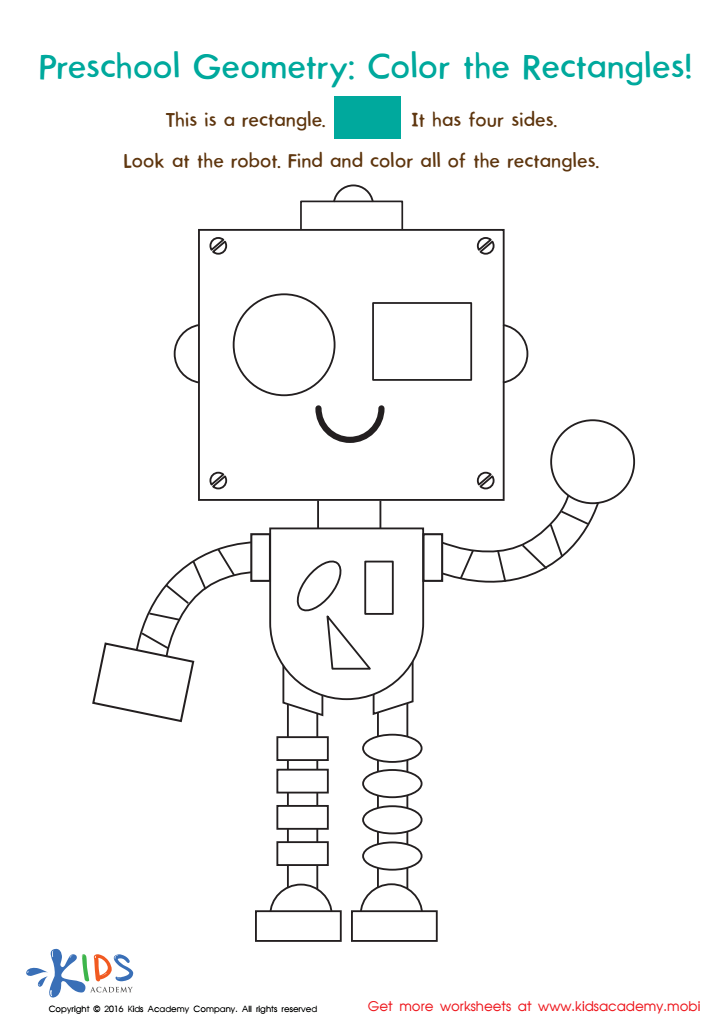
Geometry Worksheet
 Assign to My Students
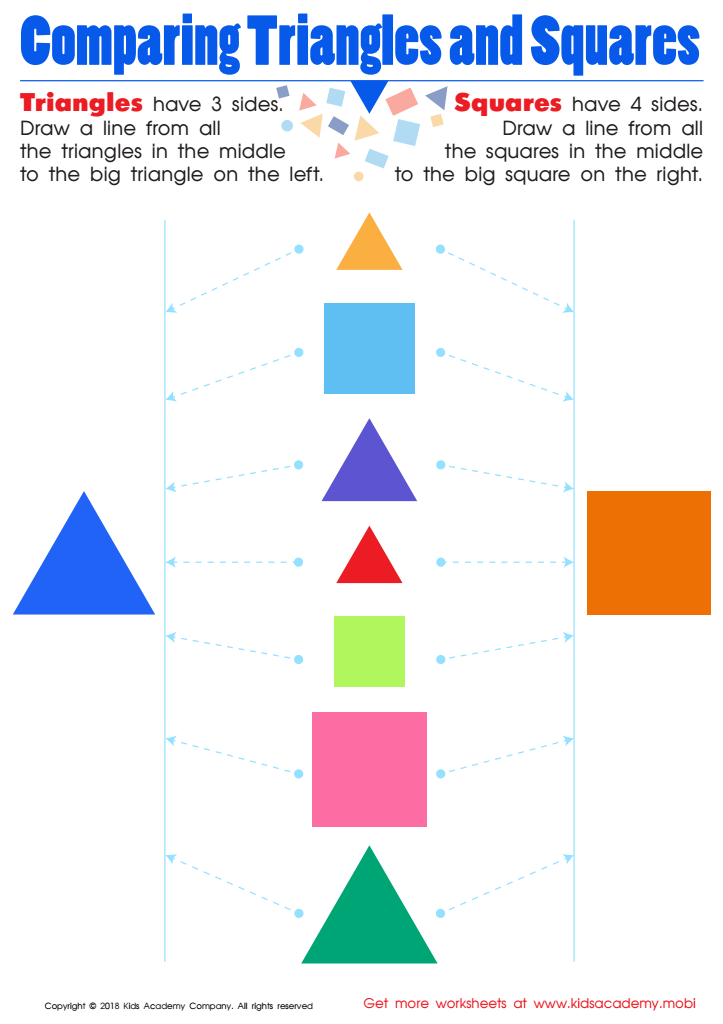
Comparing Triangles Squares Worksheet
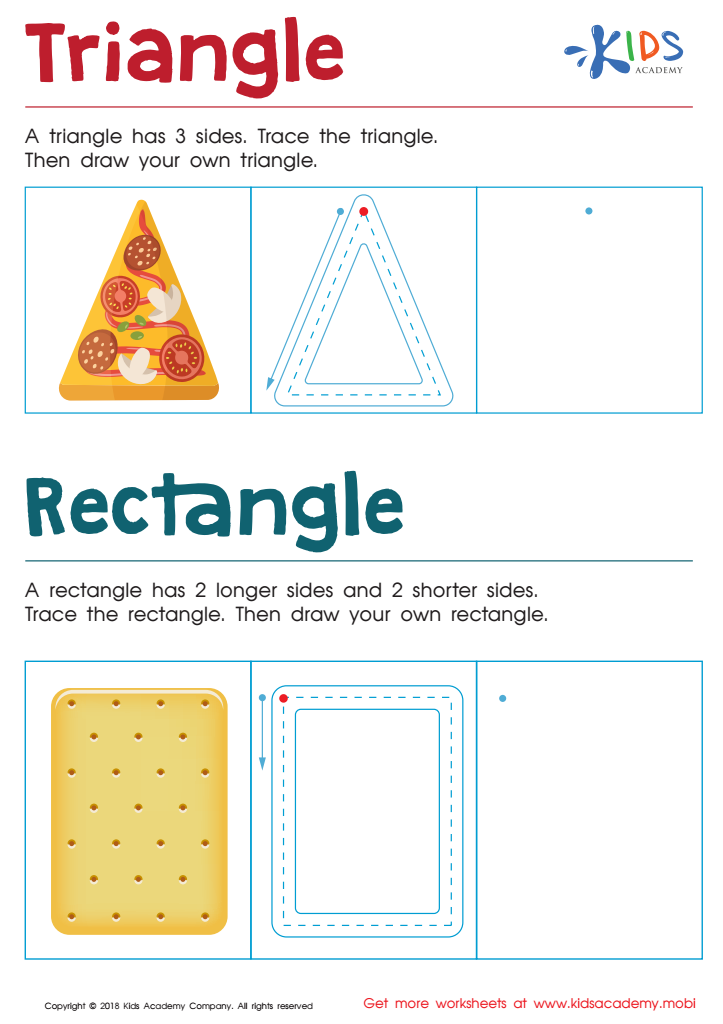
Triangle Rectangle Worksheet
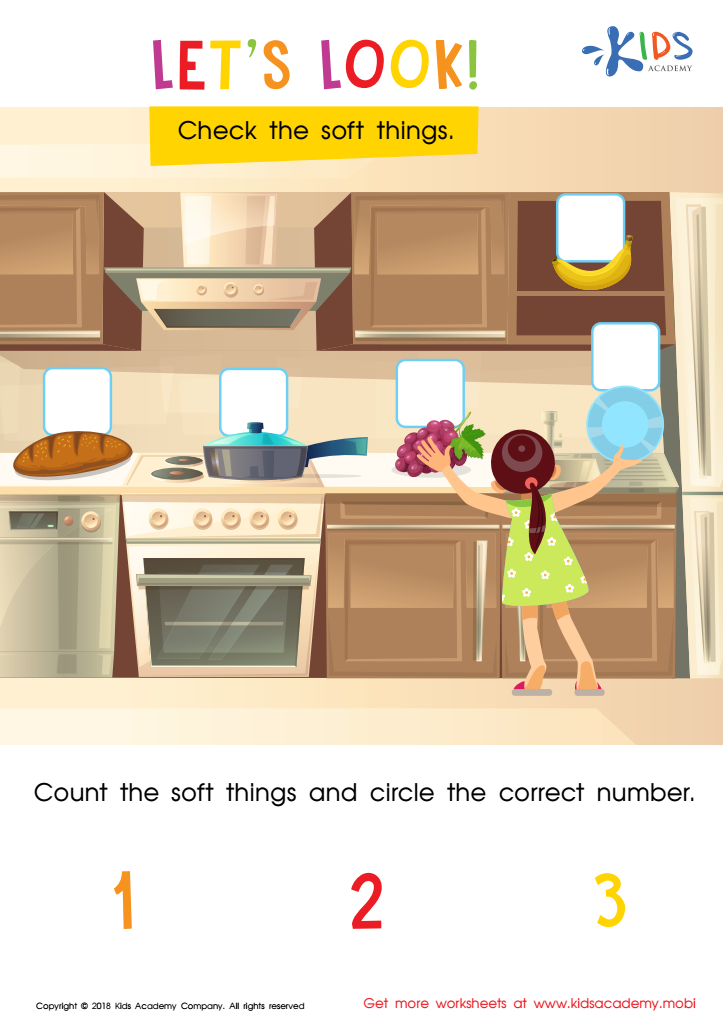
Let's Look! Assessment Worksheet
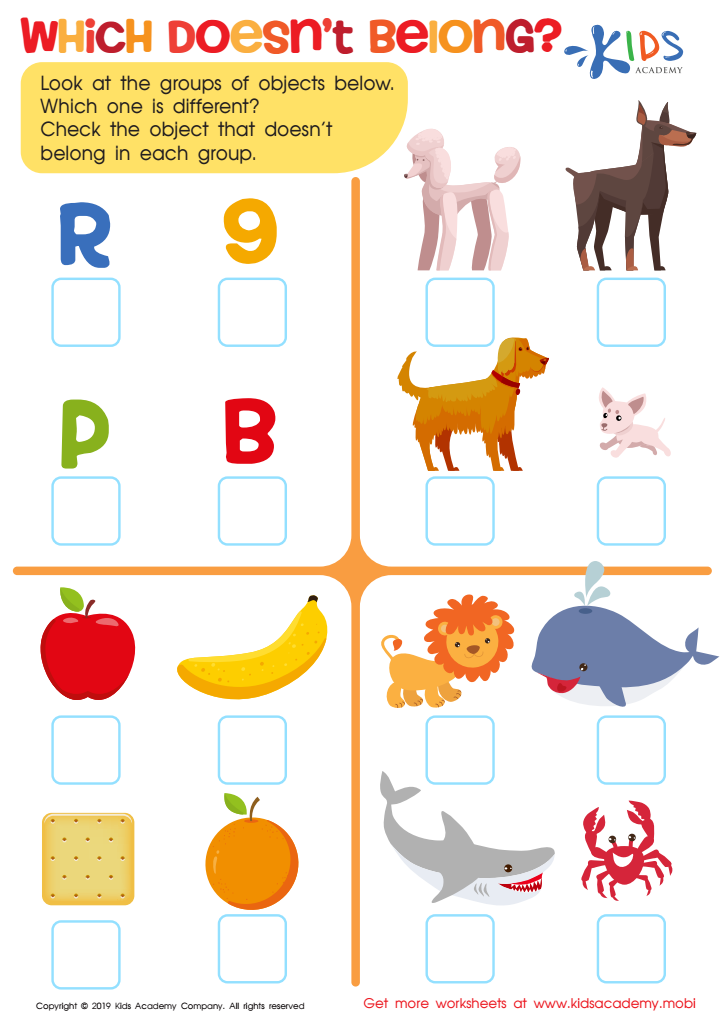
Which Doesn't Belong? Worksheet
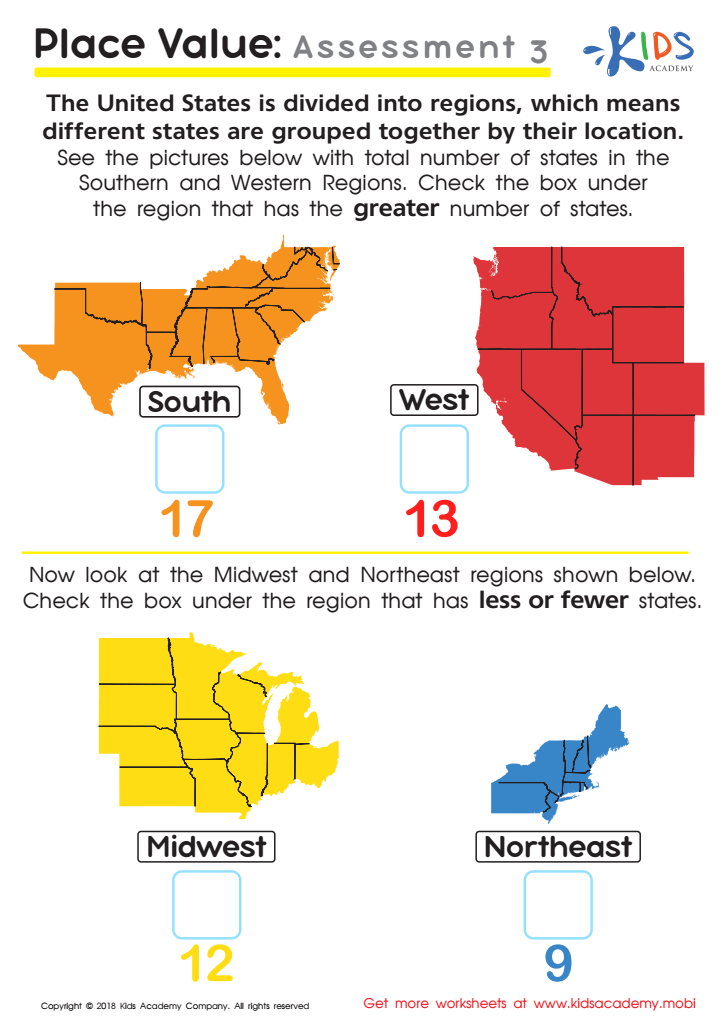
Place Value: Assessment 3 Worksheet
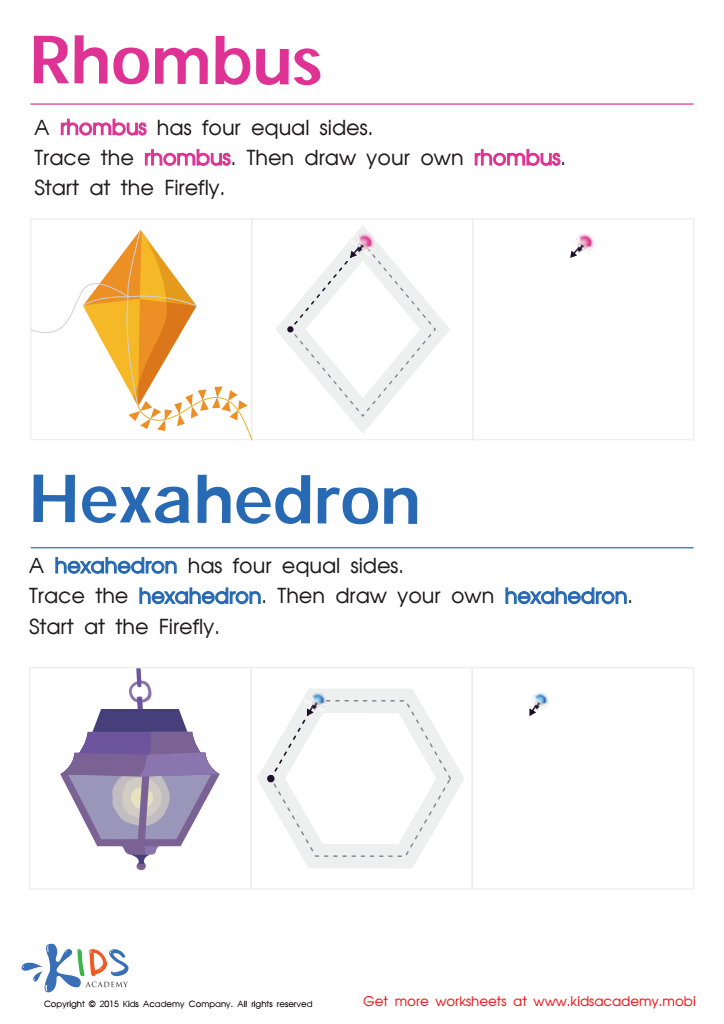
Draw a Rhombus And a Hexahedron Printable
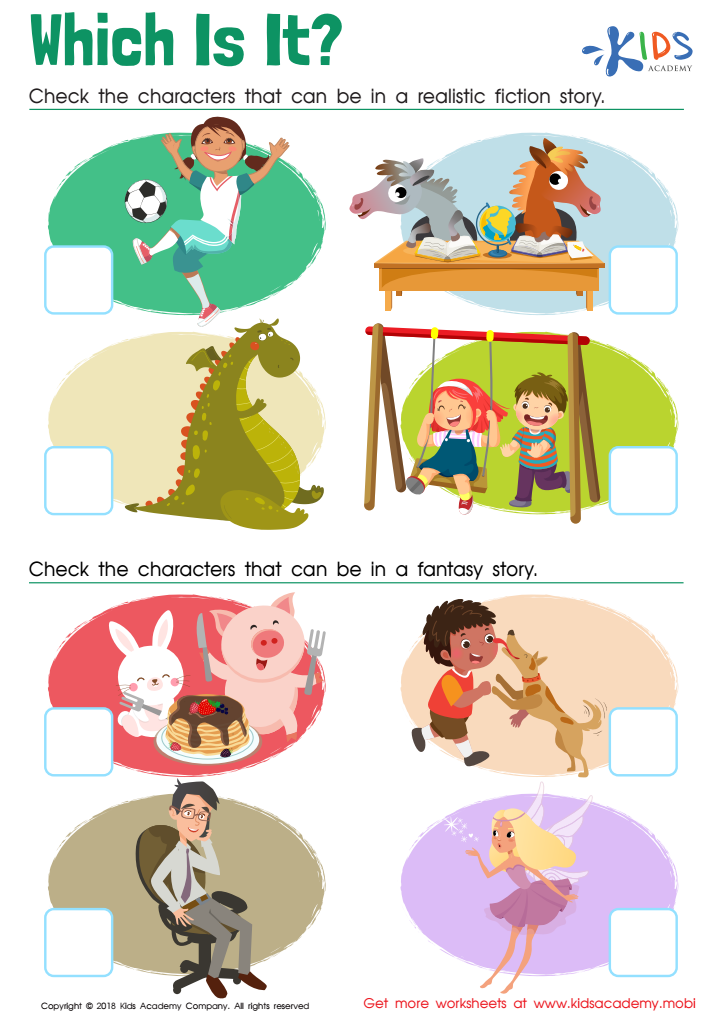
Which Is It? Worksheet
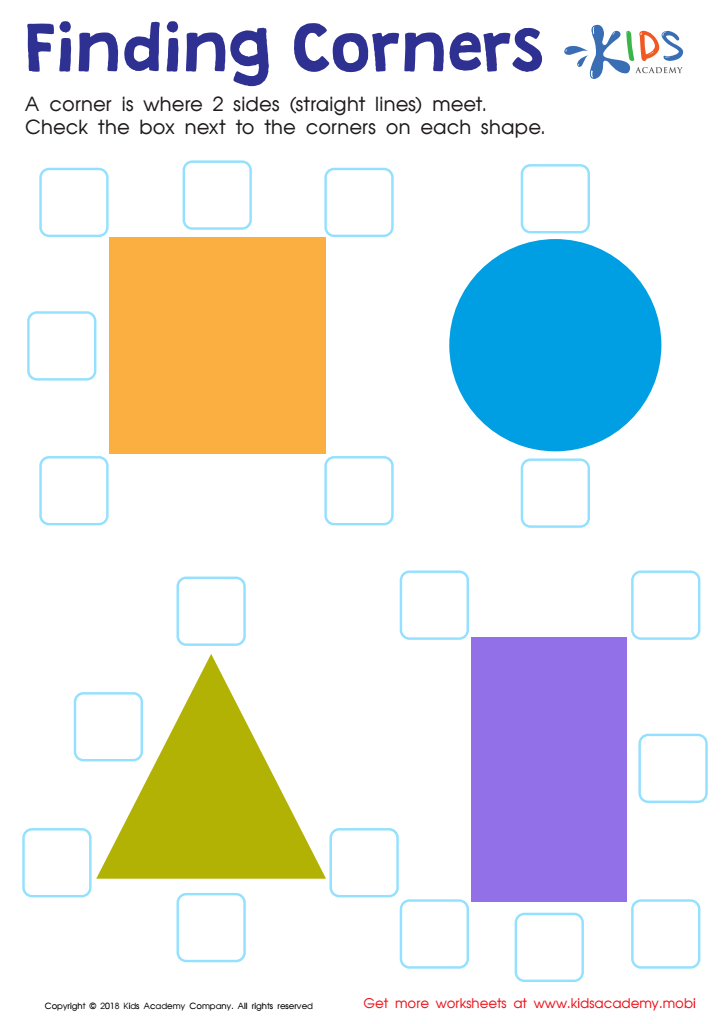
Finding Corners Worksheet


.jpg)





Shape identification is a critical early learning concept for children aged 5-7, and it is vital for parents and teachers to prioritize this skill. Understanding shapes lays the groundwork for essential mathematical and spatial reasoning. At this age, children are developing their cognitive skills, and recognizing shapes helps them make sense of the world around them. Shapes are ubiquitous in our environment, and being able to identify them empowers children to connect academic learning with real-life situations.
Furthermore, shape identification fosters problem-solving and critical thinking skills. As children learn to categorize and compare different shapes, they engage in analytical thinking, which is instrumental for later mathematical concepts such as geometry. Discussing and exploring shapes can enhance vocabulary development, as children learn to describe attributes such as sides and angles, enriching their communication abilities.
Additionally, critical skills such as fine motor skills can be enhanced through activities involving shape manipulation, such as drawing or assembling shape-related crafts. These foundational skills support overall cognitive development and set the stage for more complex learning in the future. By recognizing the importance of shape identification, parents and teachers can better equip children for success in school and beyond, fostering a lifelong love for learning and exploration.








