Uppercase identification Normal Worksheets for Ages 5-7
5 filtered results
-
From - To
Enhance your child's learning journey with our Uppercase Identification Normal Worksheets designed specifically for ages 5-7. These engaging and interactive worksheets help young learners recognize and differentiate uppercase letters, laying a solid foundation for reading and writing skills. With vibrant illustrations and age-appropriate activities, children can practice letter identification in a fun and enjoyable way. Perfect for classroom or home use, our worksheets promote essential cognitive skills while keeping kids motivated. Whether your child is just starting or refining their knowledge, these resources are an excellent tool for building confidence and literacy readiness. Download now and watch their skills soar!
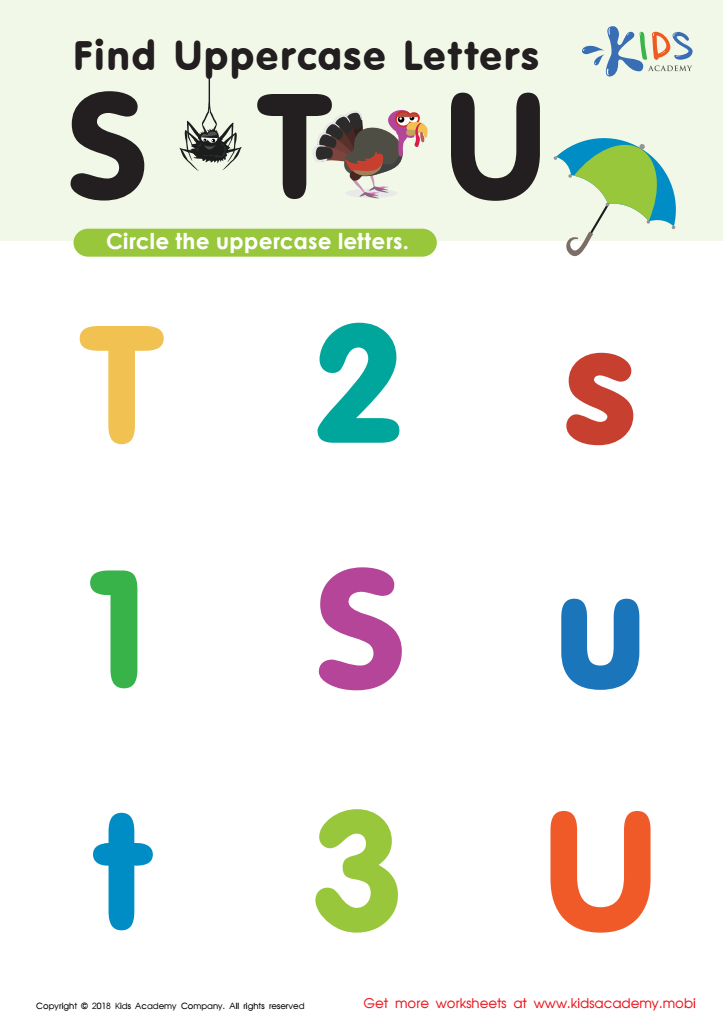
Find Uppercase Letters Worksheet
 Assign to My Students
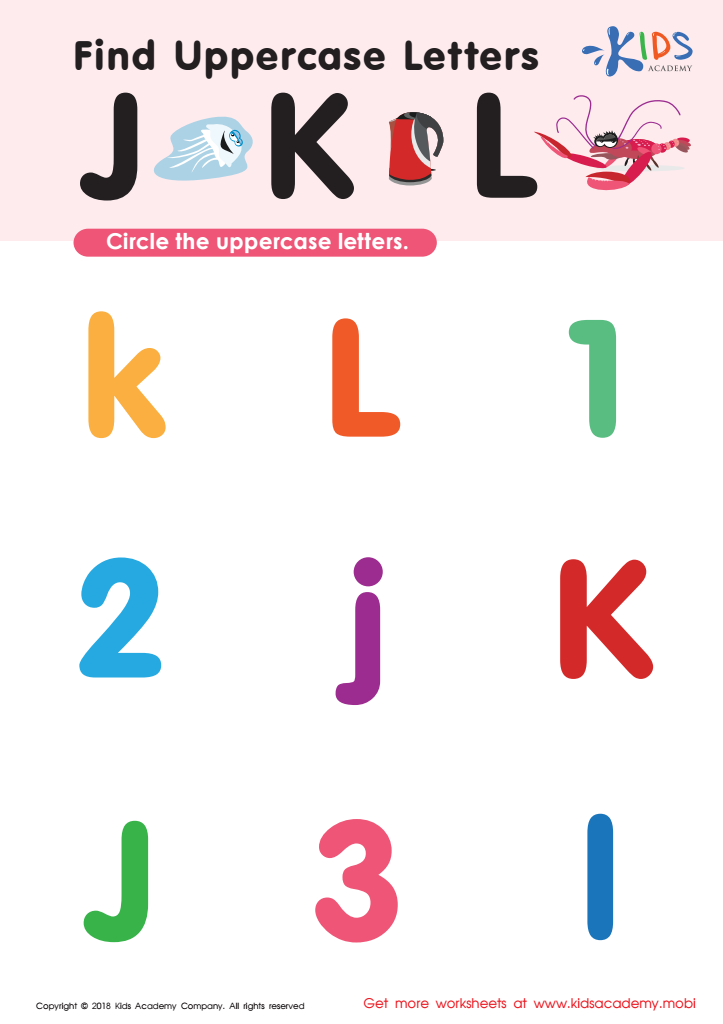
Find Uppercase Letters J, K, and L Worksheet

Find Uppercase Letters A, B, and C Worksheet
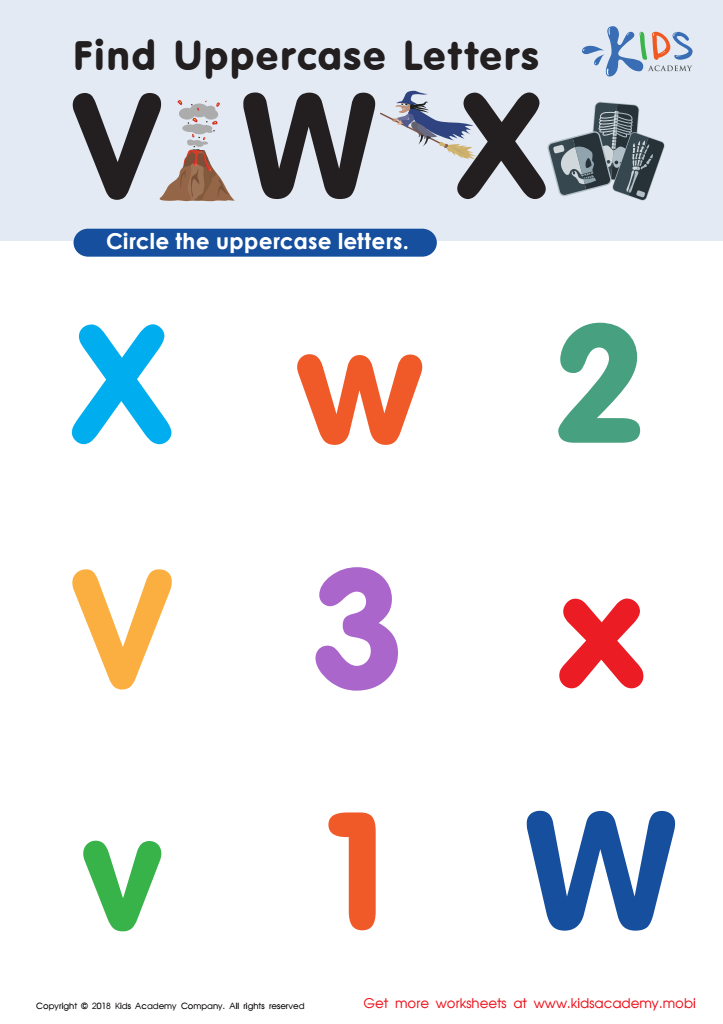
Find Uppercase Letters V, W, X Worksheet
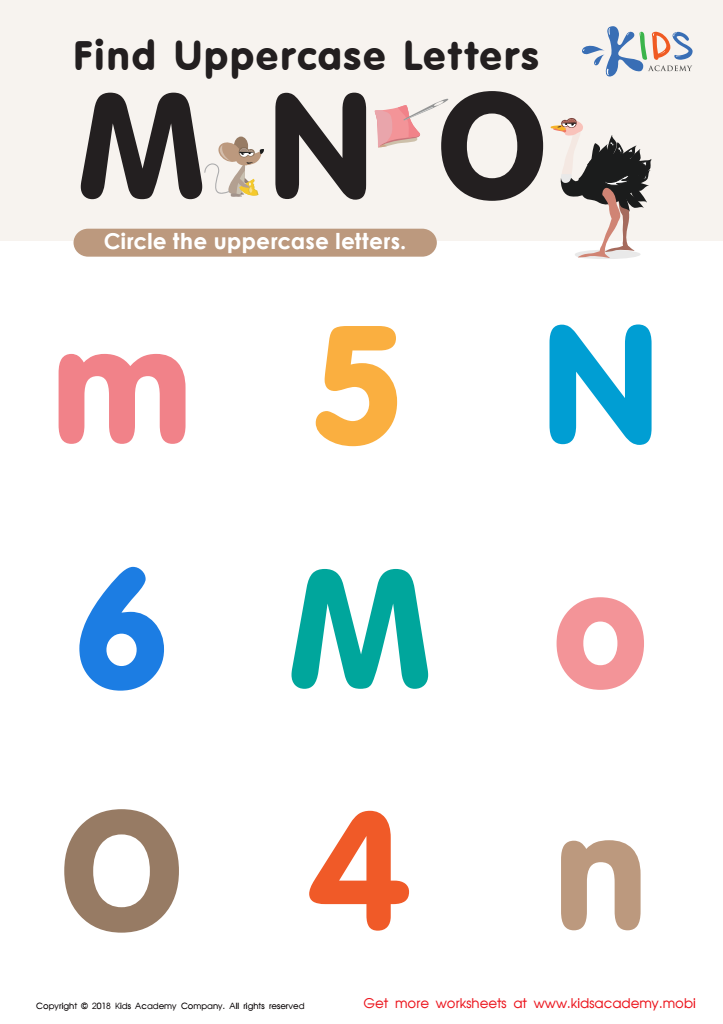
Find Uppercase Letters M, N, and O Worksheet







Uppercase letter identification is crucial for children aged 5-7 as it serves as a foundational skill for literacy development. During these formative years, children are typically beginning to learn to read and write, making the recognition and understanding of uppercase letters essential. Uppercase letters are often used in important contexts such as the beginning of sentences and for proper nouns, and mastering them helps children decode written language more effectively.
Parents and teachers should care because proficiency in uppercase letter identification boosts children's confidence in their reading abilities, making them more enthusiastic about engaging with texts. This skill also contributes to their ability to construct sentences and develop their writing skills. By supporting this knowledge, adults create a strong bridge for further literacy achievements, facilitating easier transitions to complex linguistic concepts.
Moreover, identification of uppercase letters often aids in the development of phonemic awareness, as children learn to associate sounds with letters. Furthermore, it enhances their fine motor skills through writing practice. Supporting uppercase identification at this age is integral not just for academic success, but also for fostering a lifelong love for reading and writing.








