Visual discrimination skills Normal Worksheets for Ages 5-7
5 filtered results
-
From - To
Enhance your child's visual discrimination skills with our engaging worksheets designed for ages 5-7. These activities help young learners identify similarities and differences in shapes, colors, and patterns, essential for developing critical thinking and attention to detail. Ideal for both home and classroom settings, our printable worksheets provide a fun, interactive way for children to practice these skills. By sharpening their visual perception, kids will boost their reading and math abilities, laying a strong foundation for future learning. Explore our variety of exercises today to support your child's cognitive growth while keeping them entertained!
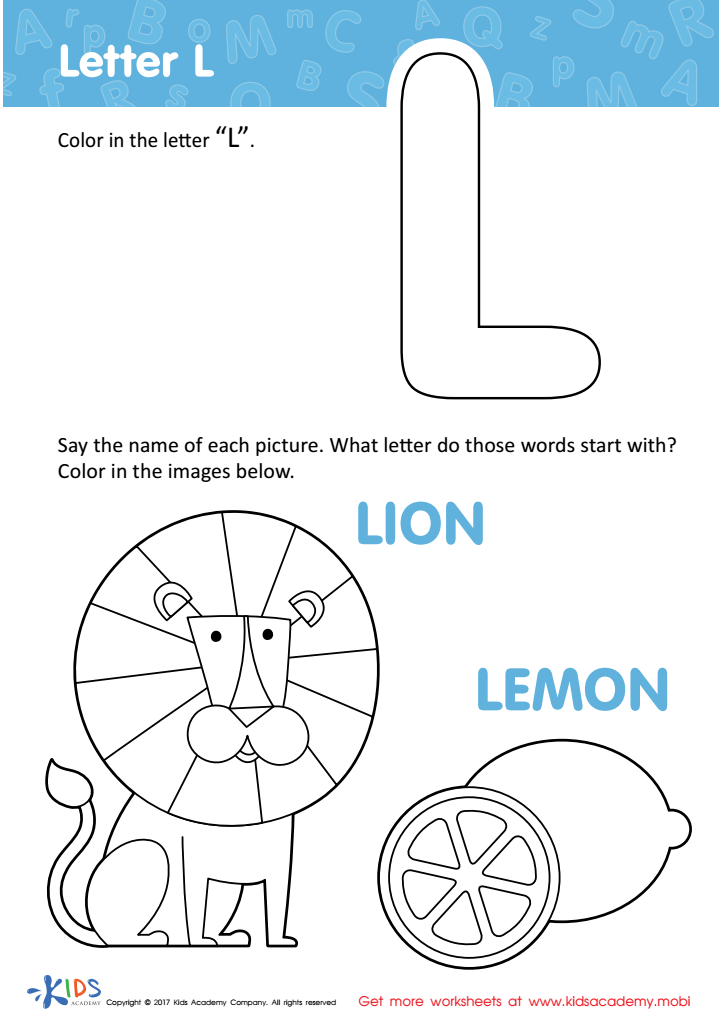
Letter L Coloring Sheet
 Assign to My Students
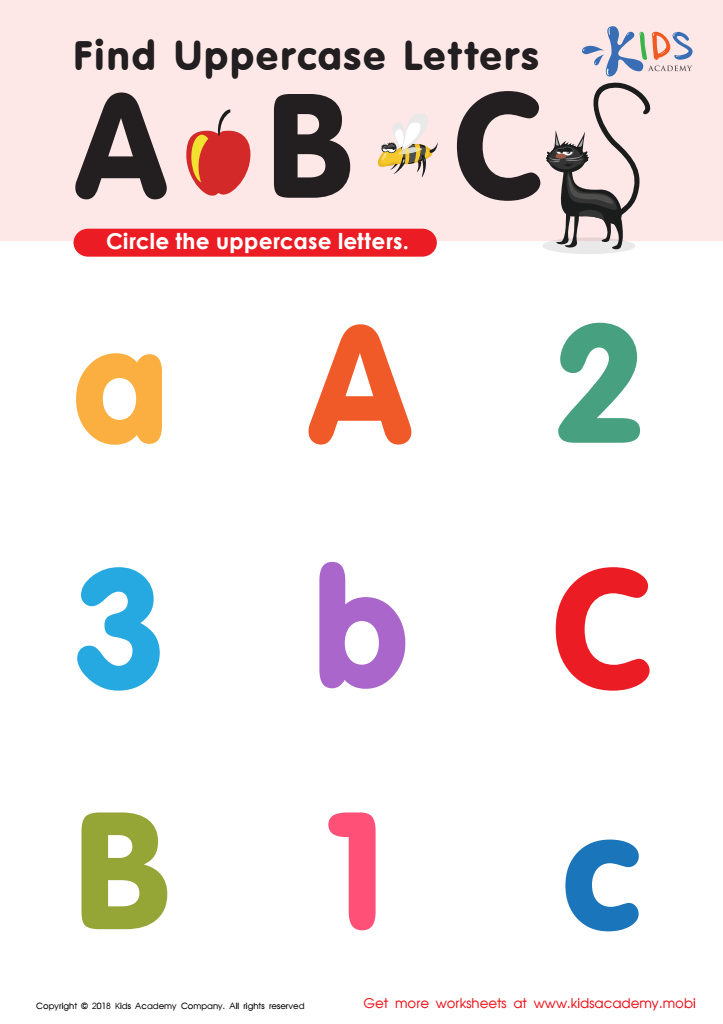
Find Uppercase Letters A, B, and C Worksheet
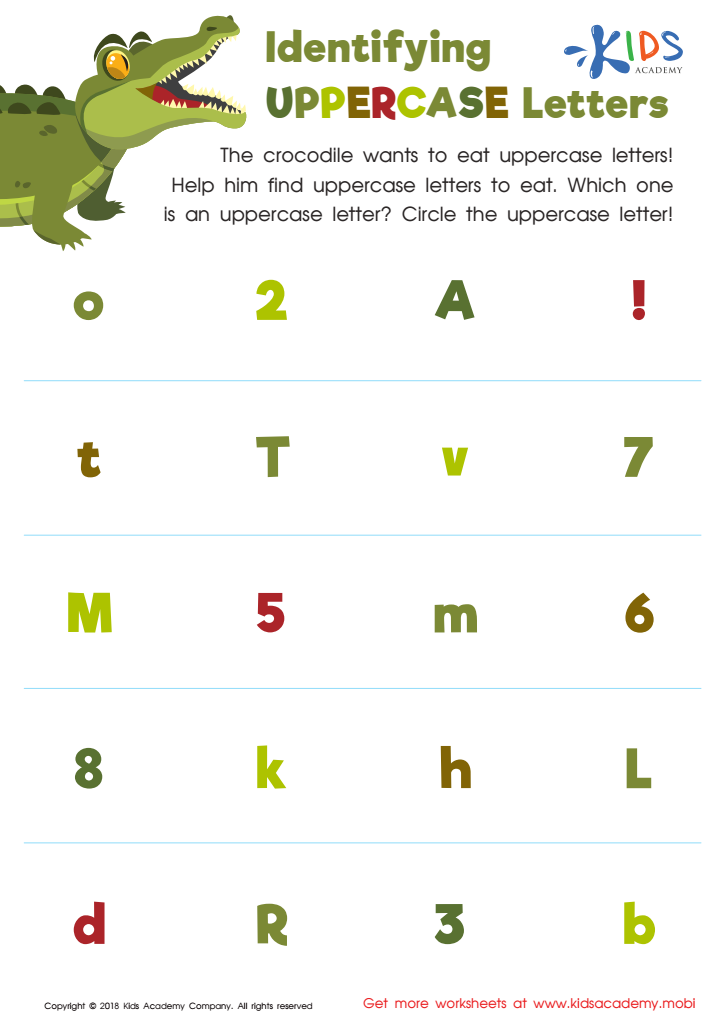
Identifying Uppercase Letters Worksheet

Find lowercase letters a b c Worksheet
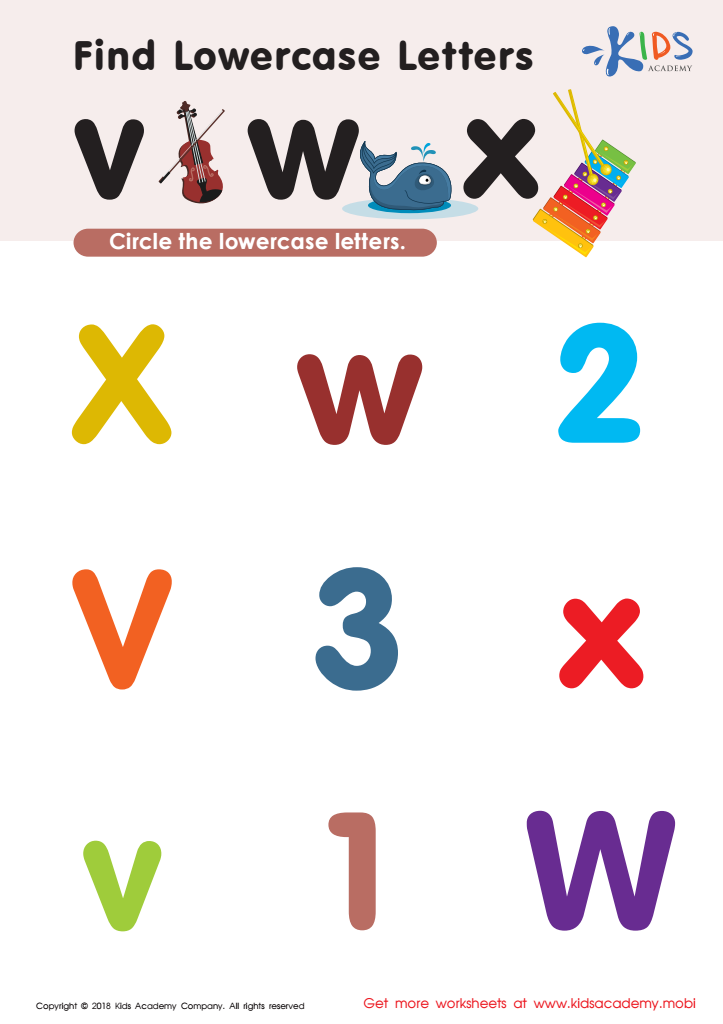
Find Lowercase Letters v w x Worksheet








Visual discrimination skills are crucial for children aged 5-7 as they form the backbone of many foundational learning processes. At this age, children are to recognize and differentiate between various shapes, sizes, colors, and patterns, which directly relates to their reading, writing, and mathematical capabilities. For example, being able to distinguish between similar letters (like "b" and "d") can significantly impact their reading and spelling proficiency.
Parents and teachers should care about these skills because they directly influence a child's academic success and confidence. Difficulty in visual discrimination may lead to frustration and a lack of interest in learning, adversely impacting a child's self-esteem. Additionally, strong visual discrimination skills contribute to critical thinking and problem-solving abilities that are essential for success in various life situations.
Supporting children's visual discrimination skills can be easily integrated into everyday activities, from playing games like “I Spy” to engaging in arts and crafts. Encouraging activities that nurture these skills not only enhances academic readiness but also helps in creating a well-rounded, capable individual prepared to tackle future challenges. In essence, fostering visual discrimination skills is an investment in a child's educational journey and overall development.








