Basic subtraction skills Normal Addition & Subtraction Worksheets for Ages 5-7
3 filtered results
-
From - To
Help your child master basic subtraction with our expertly crafted worksheets designed for ages 5-7. Each sheet offers fun, engaging exercises that build foundational math skills necessary for addition and subtraction. With a variety of activities, children can practice at their own pace, developing confidence and numerical fluency. Perfect for early learners, these resources ensure a comprehensive understanding of basic subtraction while keeping young minds excited about math. Join numerous parents and educators in providing quality early education tools from Kids Academy to give your child the advantage they deserve in their math journey. Download now and watch them excel!
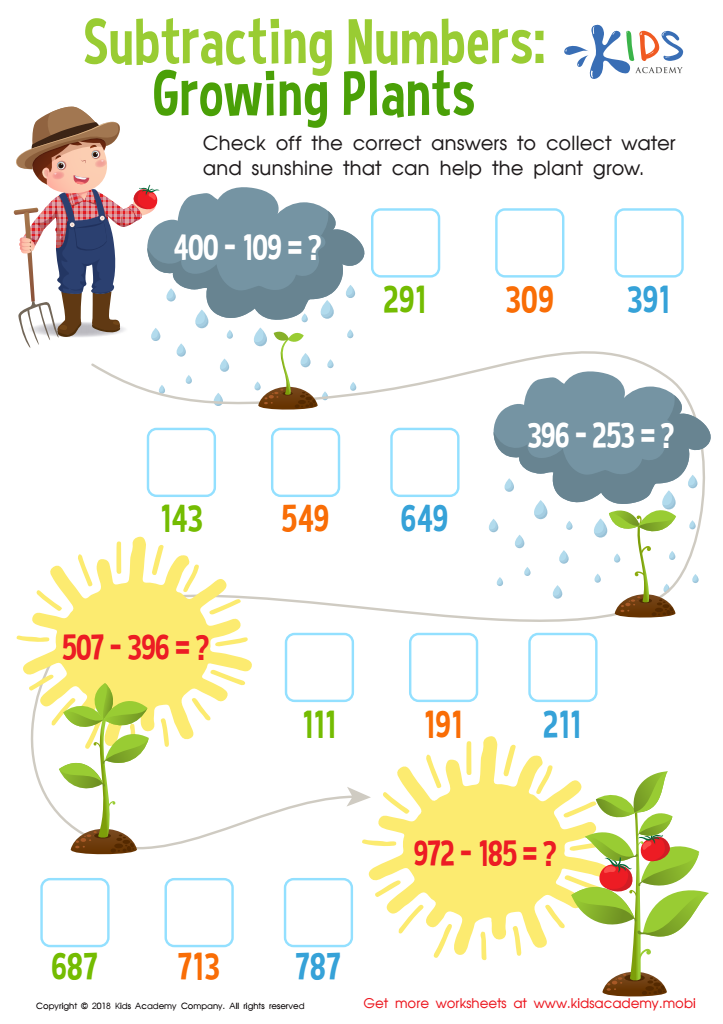
Subtracting Numbers: Growing Plants Worksheet
 Assign to My Students
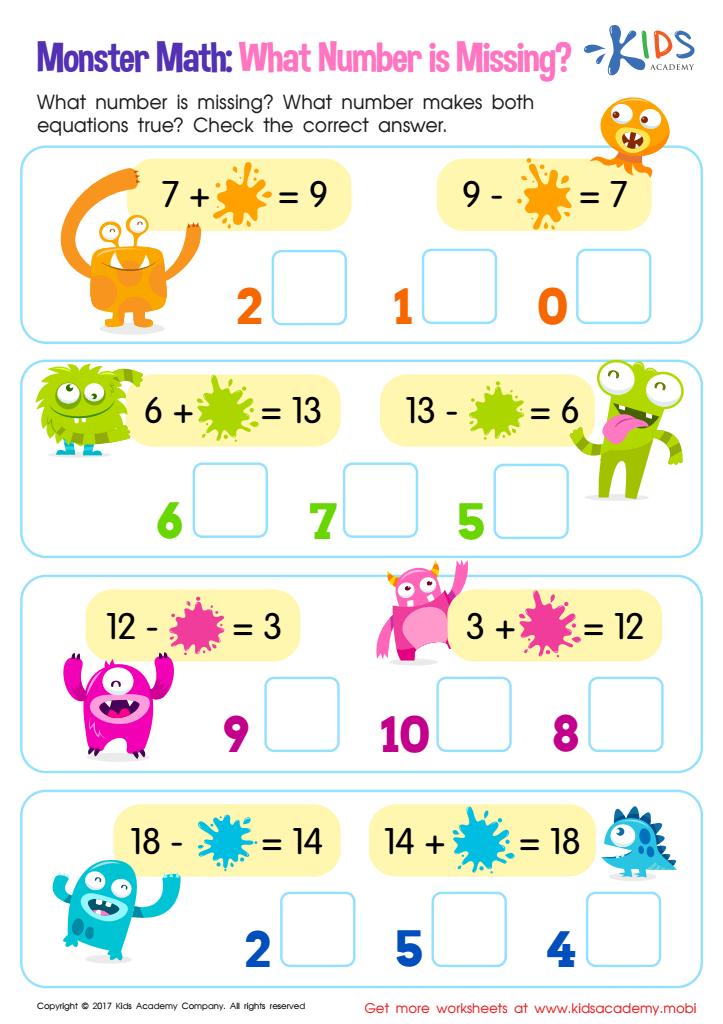
Missing Number: Monster Math Worksheet
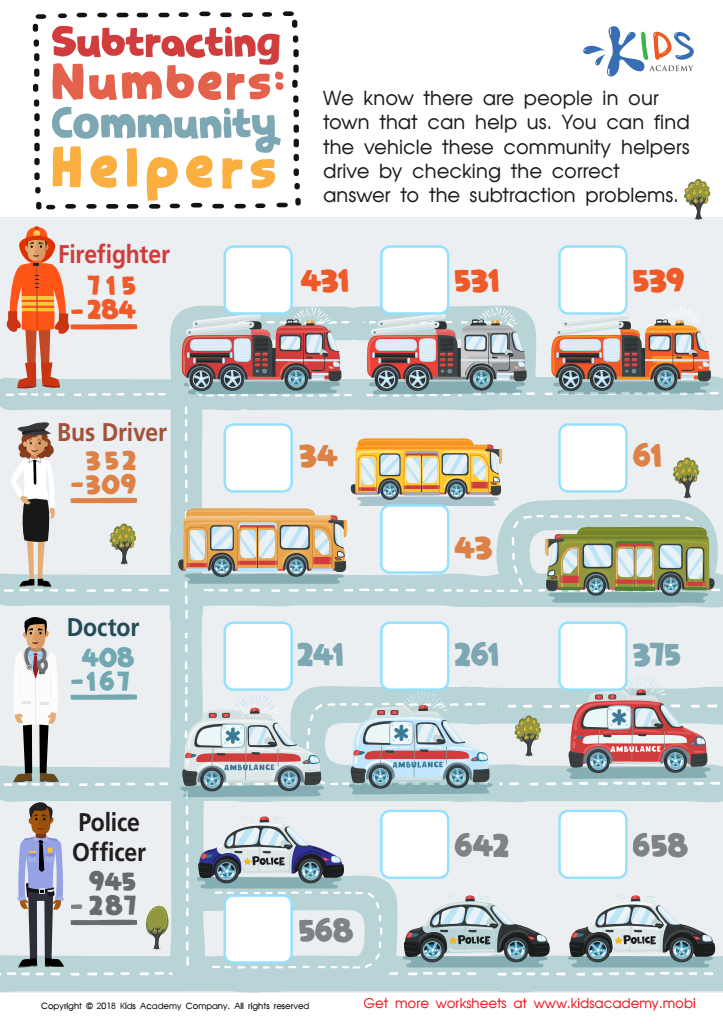
Subtracting Numbers: Community Helpers Worksheet








Parents and teachers should prioritize basic subtraction skills, along with normal addition and subtraction, for children aged 5-7 because they serve as foundational building blocks for future math learning. At this developmental stage, children’s brains are rapidly developing, making it an ideal time to introduce core mathematical concepts. Understanding basic subtraction and addition enhances cognitive development, helping children develop logical thinking and problem-solving skills.
Mastering these skills ensures children can tackle more complex mathematical concepts down the road, such as multiplication, division, and fractions. These arithmetic operations are part of daily life, affecting practical skills like telling time, managing money, measuring ingredients, and more. Furthermore, early proficiency in math can boost children’s confidence and foster a positive attitude toward learning, reducing math anxiety in later years.
Beyond academics, these basic skills encourage critical thinking and improve memory and concentration, benefiting other areas of education and daily activities. By ensuring that children ages 5-7 grasp these concepts, parents and teachers help cultivate a strong foundation that supports lifelong learning and everyday functioning. Therefore, time and effort invested in teaching these early math skills can have long-lasting positive effects on a child's overall educational trajectory.








