Cognitive Development Normal Addition & Subtraction Worksheets for Ages 5-7
3 filtered results
-
From - To
Enhance your child's cognitive development with our engaging normal addition and subtraction worksheets designed for ages 5-7. These well-crafted resources provide a balanced mix of fun and educational activities that instill a solid understanding of fundamental math concepts. By incorporating colorful graphics and interactive elements, children will develop critical thinking, problem-solving skills, and numerical fluency. As they work through these worksheets, kids will confidently engage with addition and subtraction while building their cognitive abilities in a playful way. Perfect for home or classroom use, our worksheets support early learners in their journey toward mathematical proficiency. Start nurturing their skills today!
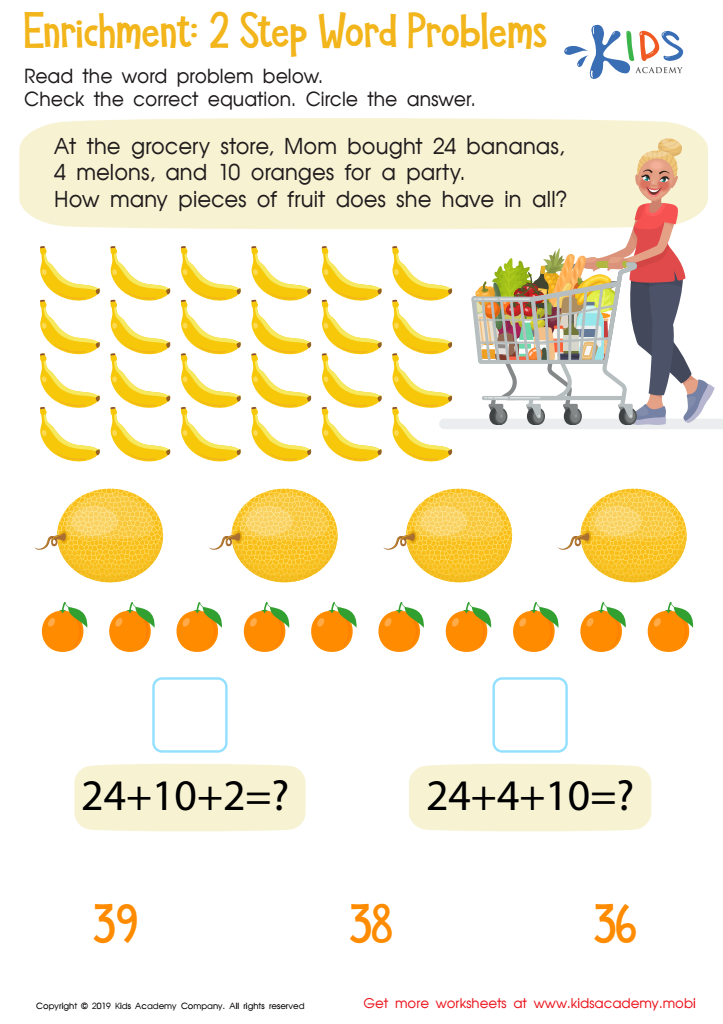
Enrichment -2 Step Word Problems Worksheet
 Assign to My Students
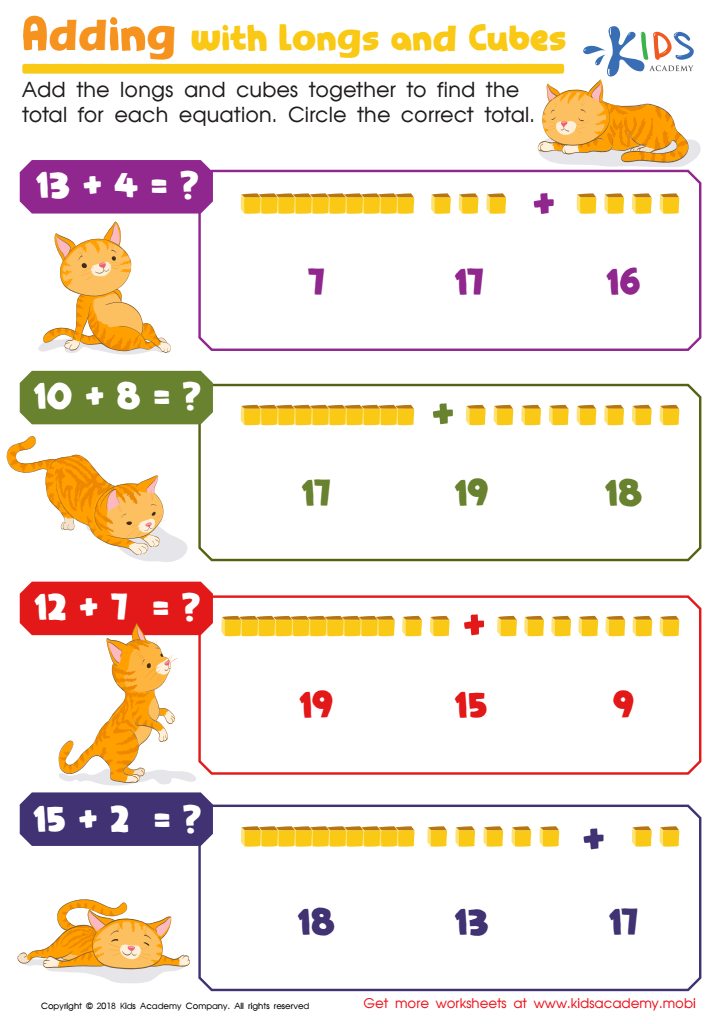
Adding With Longs and Cubes Worksheet
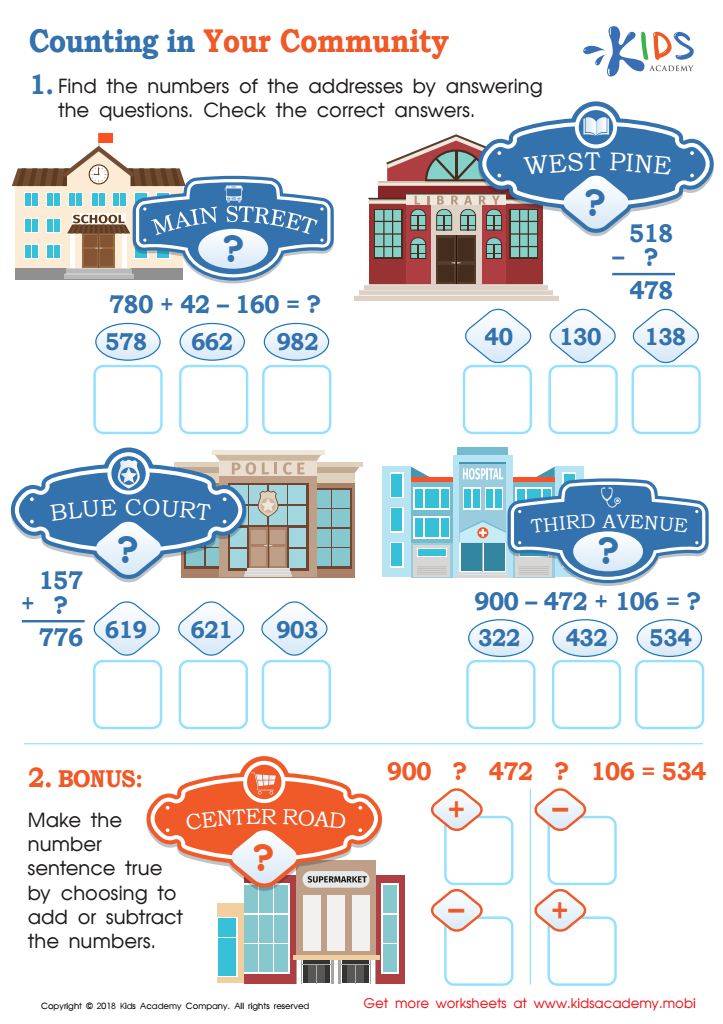
Counting in Your Community Worksheet








Cognitive development during early childhood, particularly in the context of normal addition and subtraction for children aged 5-7, is crucial for several reasons. First, this stage is pivotal for building foundational mathematical skills that support future learning. Mastery of basic arithmetic lays the groundwork for more advanced mathematical concepts, enabling children to engage confidently with mathematics throughout their education.
Moreover, understanding addition and subtraction contributes to the development of critical thinking and problem-solving strategies. When children learn how to manipulate numbers, they start to make connections, identify patterns, and approach equations logically. This cognitive rigor fosters not only mathematical competence but also general analytical skills.
Additionally, play-based and practical learning activities associated with these concepts can enhance a child's engagement and motivation. It promotes an active learning environment where curiosity thrives, reinforcing the importance of parental and teacher involvement in nurturing these skills.
Lastly, recognizing and supporting each child's unique cognitive pace is essential. Children who experience challenges with these concepts may need additional support or resources, which educators and parents can provide, ultimately fostering self-esteem and a positive attitude toward learning. In summary, attention to cognitive development in early mathematics sets the stage for educational success and personal growth.








