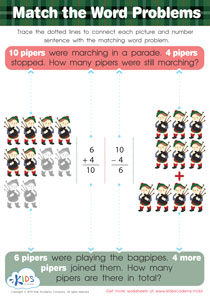
Fine Motor Skills Normal Addition Worksheets for Ages 5-7
3 filtered results
-
From - To
Enhance your child's fine motor skills and addition abilities with our engaging Normal Addition Worksheets designed specifically for ages 5-7. These worksheets incorporate fun and interactive elements that encourage hand-eye coordination, pencil grip, and control while building essential math skills. With colorful illustrations and imaginative scenarios, your young learners will find practicing addition enjoyable and exciting. Our worksheets improve dexterity and allow children to develop confidence in both math and fine motor capabilities simultaneously. Perfect for home or classroom use, these worksheets provide a comprehensive approach to learning through play, ensuring your child gains a solid foundation in essential mathematics.
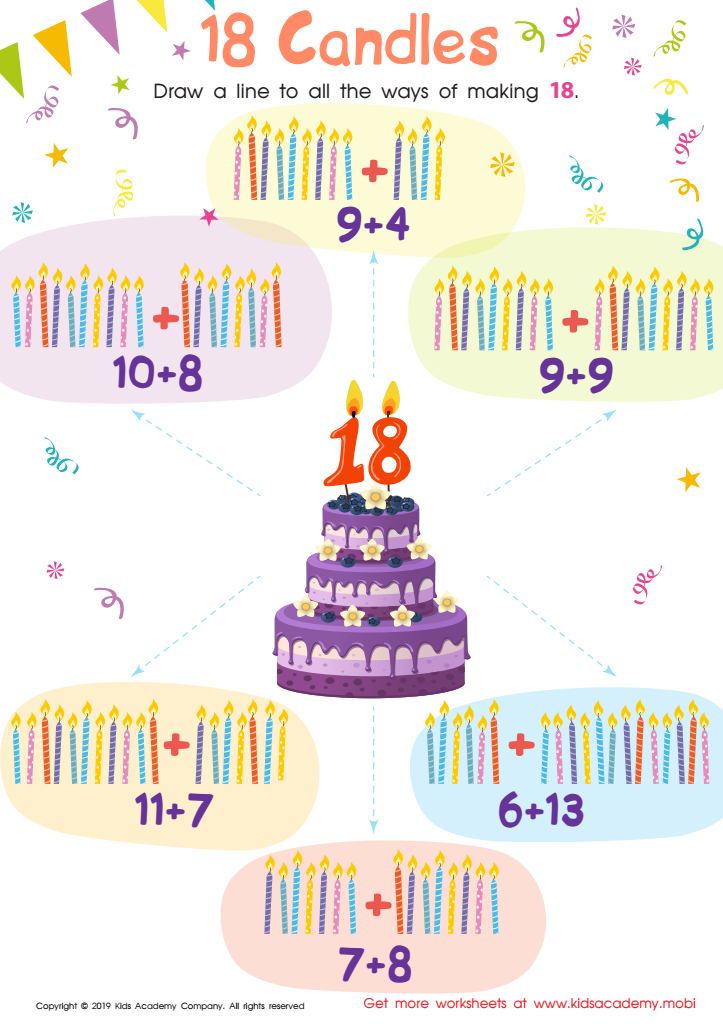
18 Candles Worksheet
 Assign to My Students
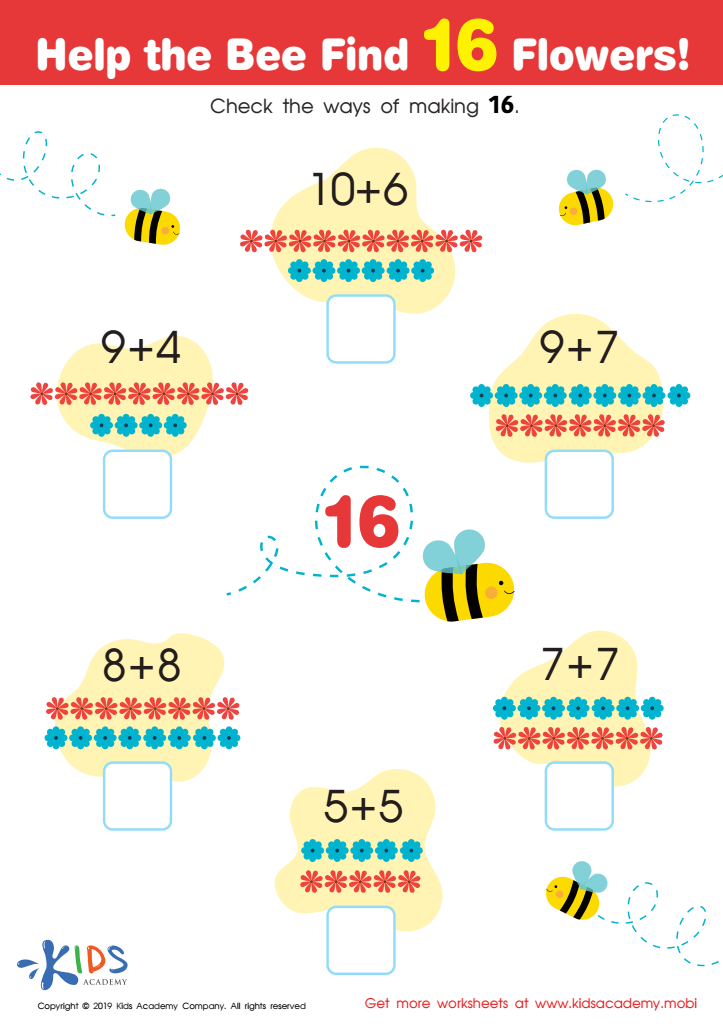
Help the Bee Find 16 Flowers Worksheet
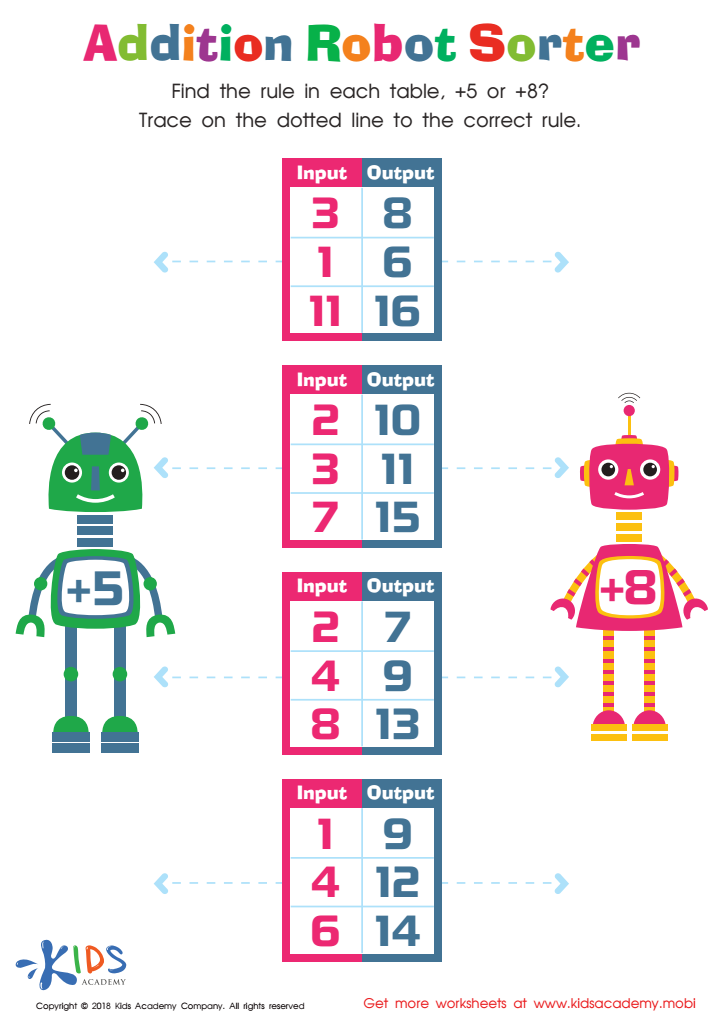
Addition Robot Sorter Worksheet






.jpg)

Fine motor skills are crucial for children's development, especially for those aged 5-7. These skills involve the use of smaller muscles in the hands and fingers to perform tasks that require precision and coordination, such as writing, drawing, and manipulating small objects. A focus on fine motor skills supports not only academic performance but also promotes self-esteem and independence in young learners.
Parents and teachers should care about these skills because they are foundational for tasks that children encounter in school and daily life. As children develop fine motor skills, they become better prepared for writing, which is essential for communication and learning. Proper fine motor development also contributes to a child's ability to engage in other important activities, such as tying shoelaces, buttoning clothes, and using utensils.
Furthermore, encouraging activities that enhance fine motor skills—like threading beads, cutting with scissors, or playing with playdough—can be enjoyable and foster positive parent-child or teacher-student interactions. By recognizing the importance of fine motor skills in early childhood, parents and teachers can facilitate activities that promote these skills, ensuring that children are ready for success as they progress in their education.