Shape Recognition Normal Geometry Worksheets for Ages 5-7 - Page 2
26 filtered results
-
From - To
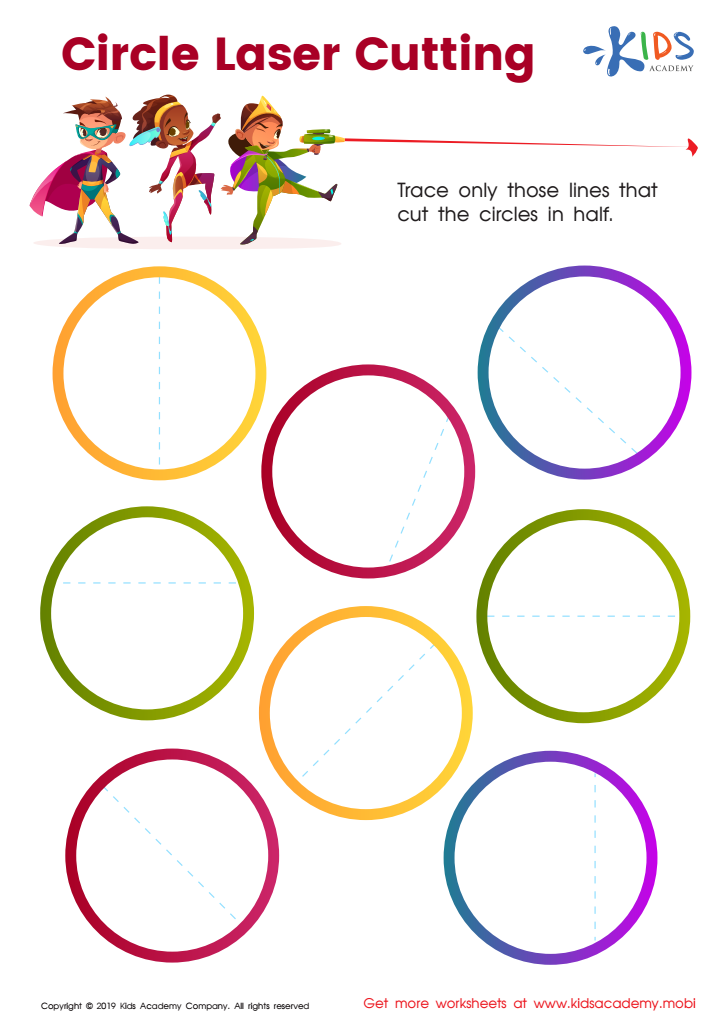
Circle Laser Cutting Worksheet
 Assign to My Students











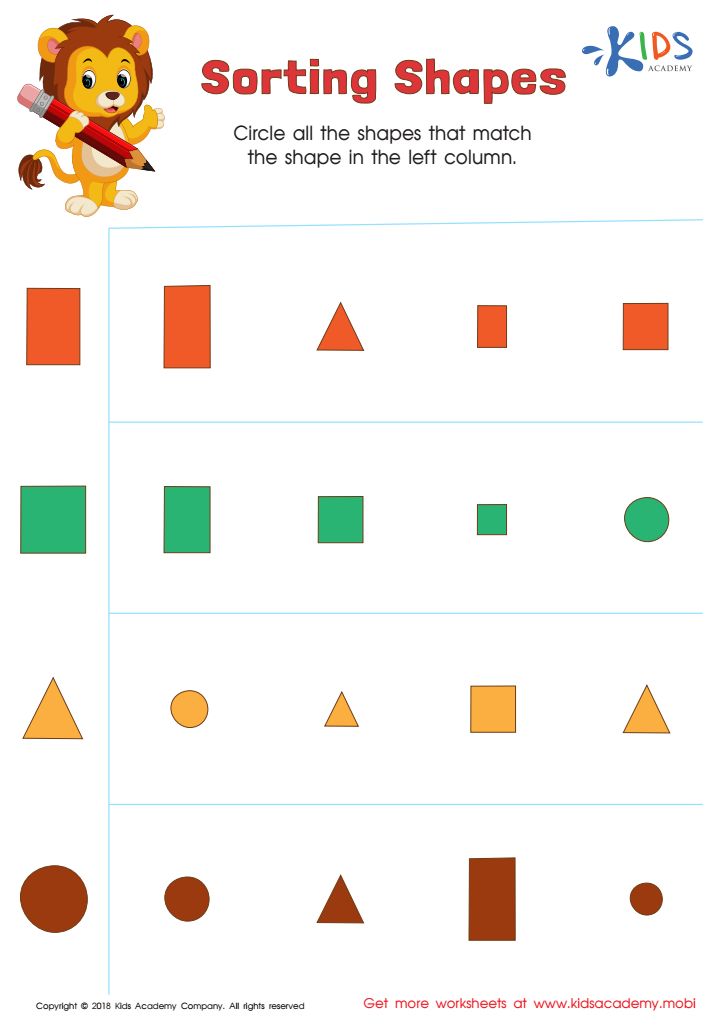
Sorting Shapes - Part 2 Worksheet








Shape recognition and understanding basic geometry are foundational skills that parents and teachers should prioritize for children aged 5-7. During this developmental stage, children begin to explore the world around them, and recognizing shapes plays a crucial role in their cognitive growth. Shape recognition helps children identify, categorize, and make sense of the environment, laying the groundwork for more complex mathematical concepts.
Understanding geometry at a young age fosters critical thinking and problem-solving skills. It equips children with the ability to visualize and manipulate shapes, aiding future academic success in math and science. Moreover, learning shapes enhances fine motor skills through activities like drawing, cutting, and building, promoting creativity and hand-eye coordination.
Additionally, shape recognition supports language development. Children learn to articulate the names and attributes of shapes, enriching their vocabulary and communication skills. It also facilitates social interactions through games and collaborative activities.
By engaging in playful, hands-on learning experiences focused on shapes, parents and teachers can nurture children’s curiosity and stimulate their love for learning. Recognizing the importance of shape recognition and geometry helps build a strong foundation for lifelong learning and an appreciation for mathematics.








