Enhancing math skills Normal Numbers Worksheets for Ages 5-7
3 filtered results
-
From - To
Boost your child's numeracy with our "Enhancing Math Skills: Normal Numbers Worksheets for Ages 5-7." Specially designed for young learners, these engaging worksheets aim to strengthen number recognition, counting abilities, and basic arithmetic through enjoyable and interactive activities. Perfect for children in early grades, these resources are crafted to build a solid math foundation while making learning fun. Download today to support your child's educational journey and watch their confidence soar as they master essential math skills! Explore more educational worksheets at Kids Academy.
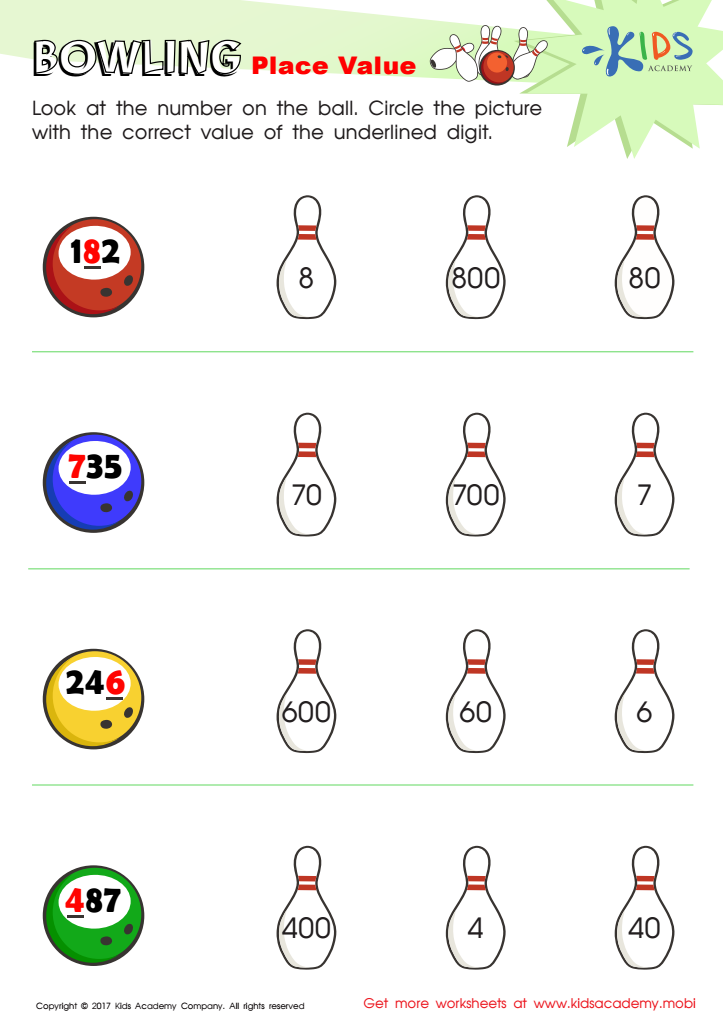
Place Value Worksheet
 Assign to My Students
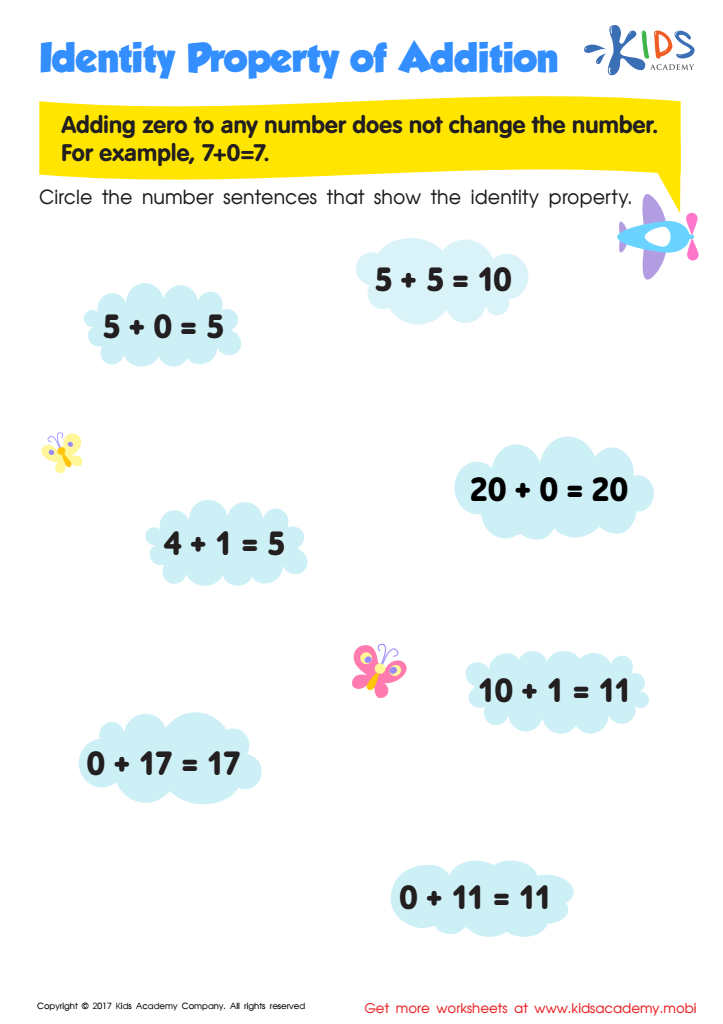
Identity Property of Addition Worksheet
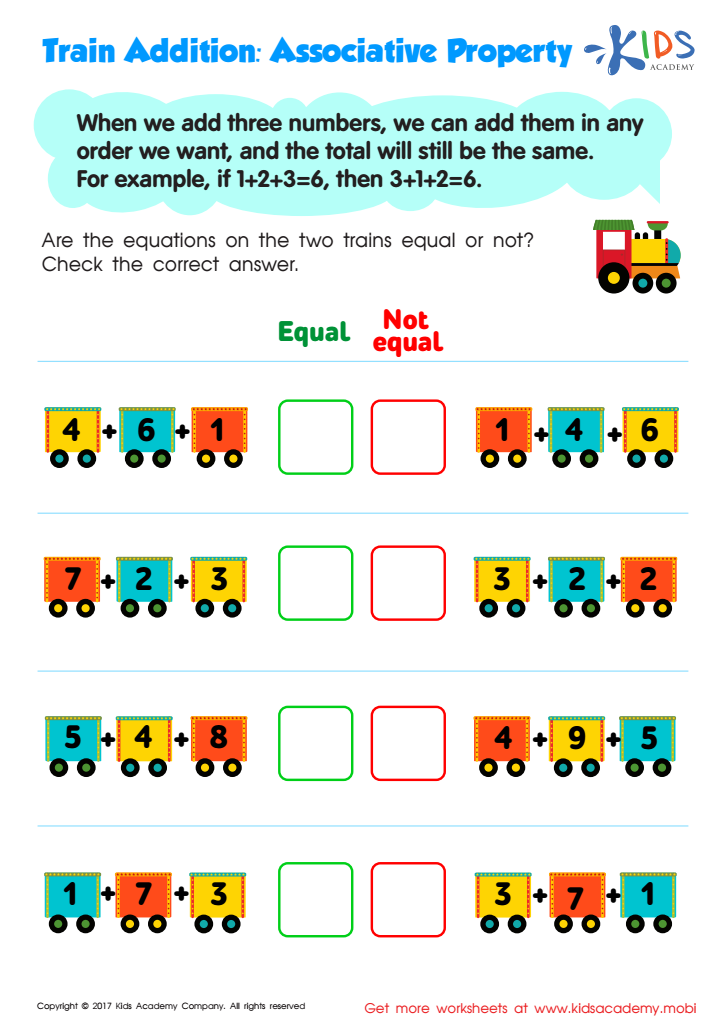
Train Addition: Associative Property Worksheet



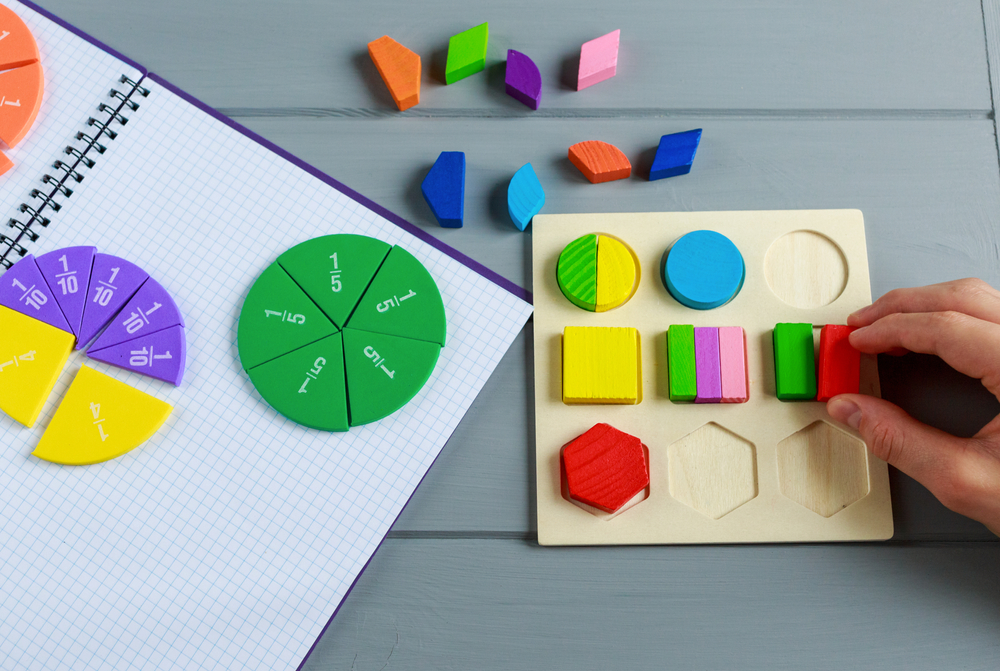




Parents and teachers should prioritize enhancing math skills in children ages 5-7 because this foundational period is crucial for future academic success and cognitive development. At this age, children's brains are highly receptive to learning new concepts, and introducing math in engaging and understandable ways fosters a positive attitude toward the subject.
Early math skills, such as understanding normal numbers, counting, and basic arithmetic, form the cornerstone for more complex mathematical concepts encountered later in school. Proficiency in these basic skills can predict better performance in math and other STEM (Science, Technology, Engineering, and Mathematics) fields, which are integral to many future career opportunities.
Furthermore, early math education supports cognitive development including problem-solving, logical reasoning, and critical thinking. These skills are not only vital for academic success but are also essential life skills. Math activities can also enhance a child’s self-confidence; mastering tasks like counting or recognizing number patterns instills a sense of achievement and encourages a positive learning experience.
Engaging children with math from a young age also promotes patience and persistence. When parents and teachers create a supportive learning environment, children are more likely to stay motivated and curious. Thus, focusing on enhancing math skills early on sets the foundation for lifelong learning and success.








