Recognizing number patterns Normal Numbers Worksheets for Ages 5-7
4 filtered results
-
From - To
Discover the joy of learning with our "Recognizing Number Patterns Normal Numbers Worksheets" designed for children ages 5-7. These engaging worksheets help young learners develop essential math skills by exploring patterns within numbers. By identifying and completing patterns, children enhance their cognitive abilities and improve their counting skills in a fun, interactive way. With colorful illustrations and age-appropriate activities, these worksheets make learning exciting and enjoyable. Perfect for both classroom and home use, our resources empower kids to build a strong foundation in mathematics, fostering confidence and a love for learning. Start nurturing your child's math skills today!
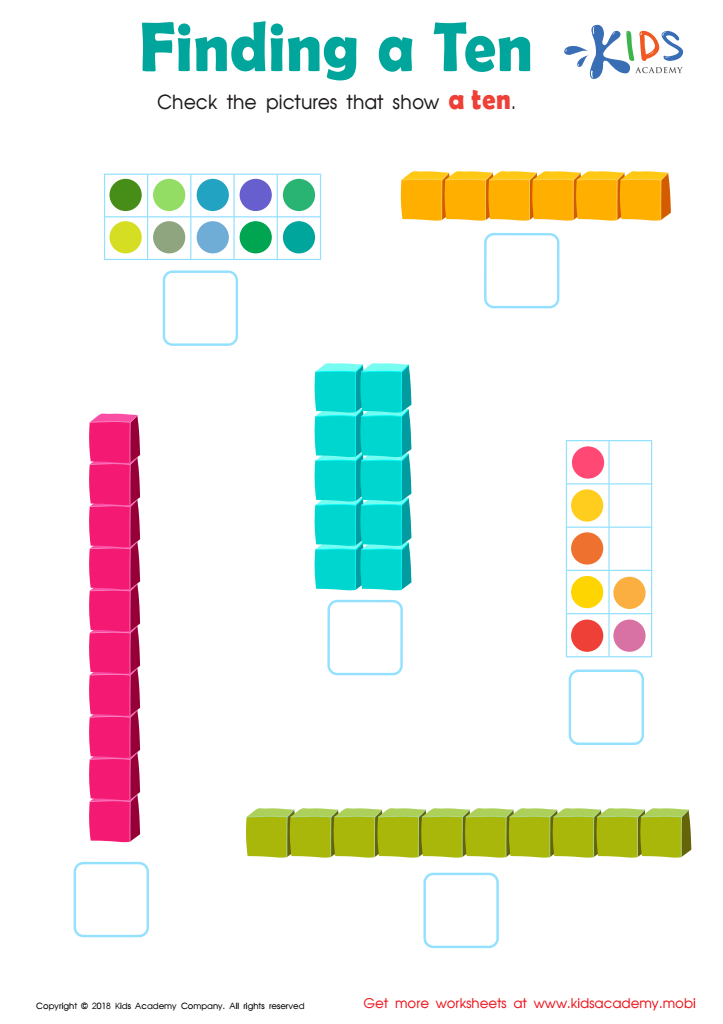
Finding a Ten Worksheet
 Assign to My Students
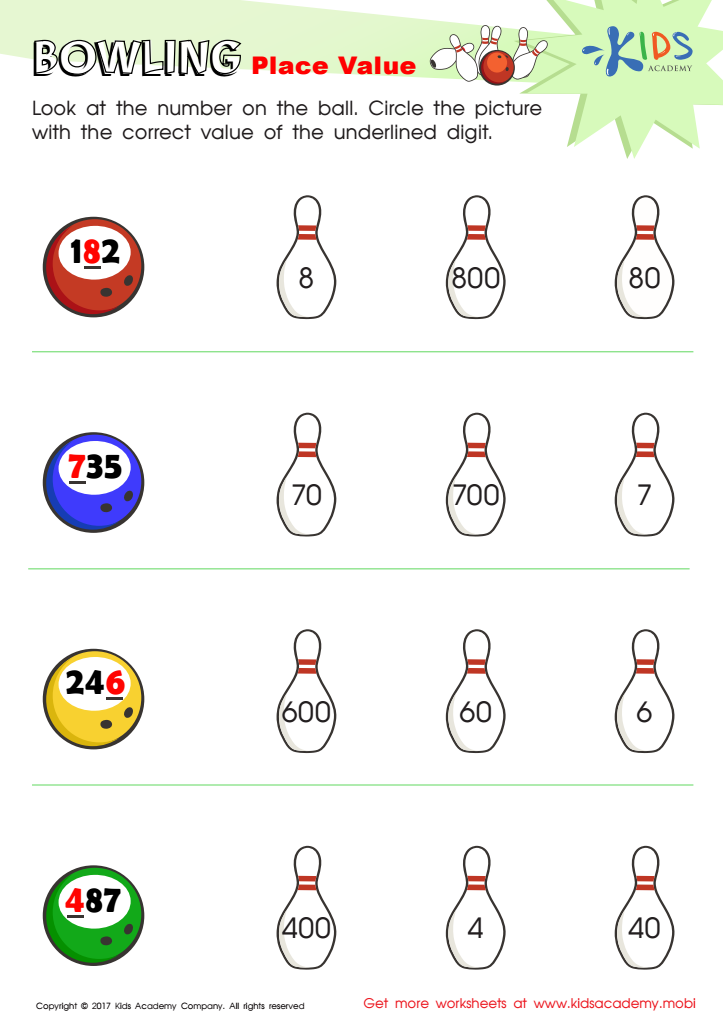
Place Value Worksheet
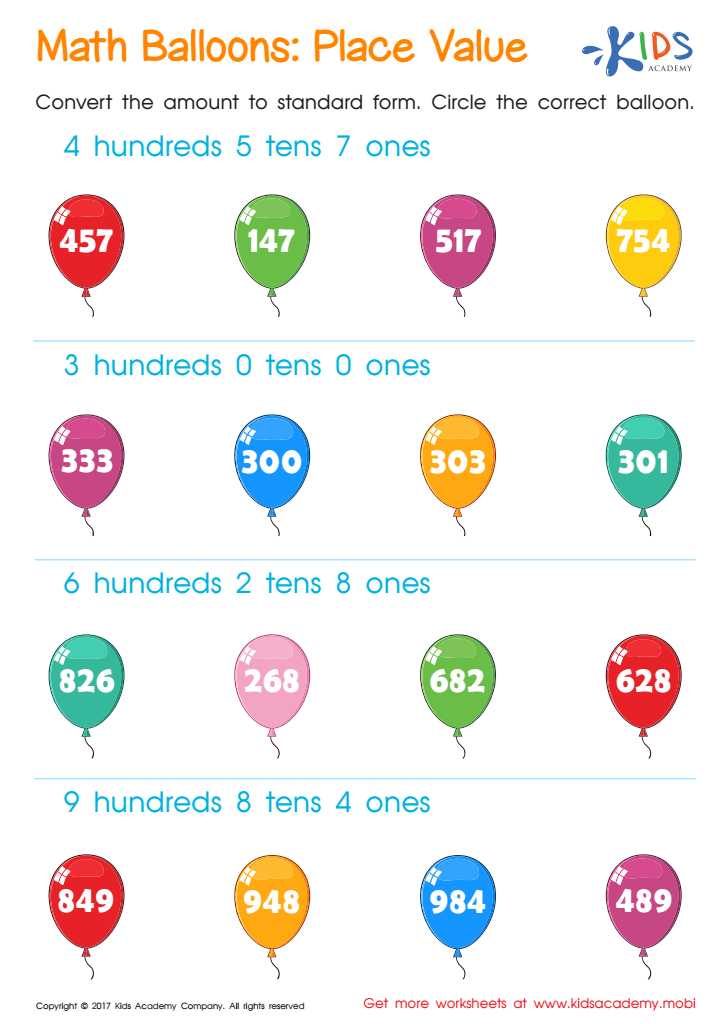
Place Value Printable Worksheet
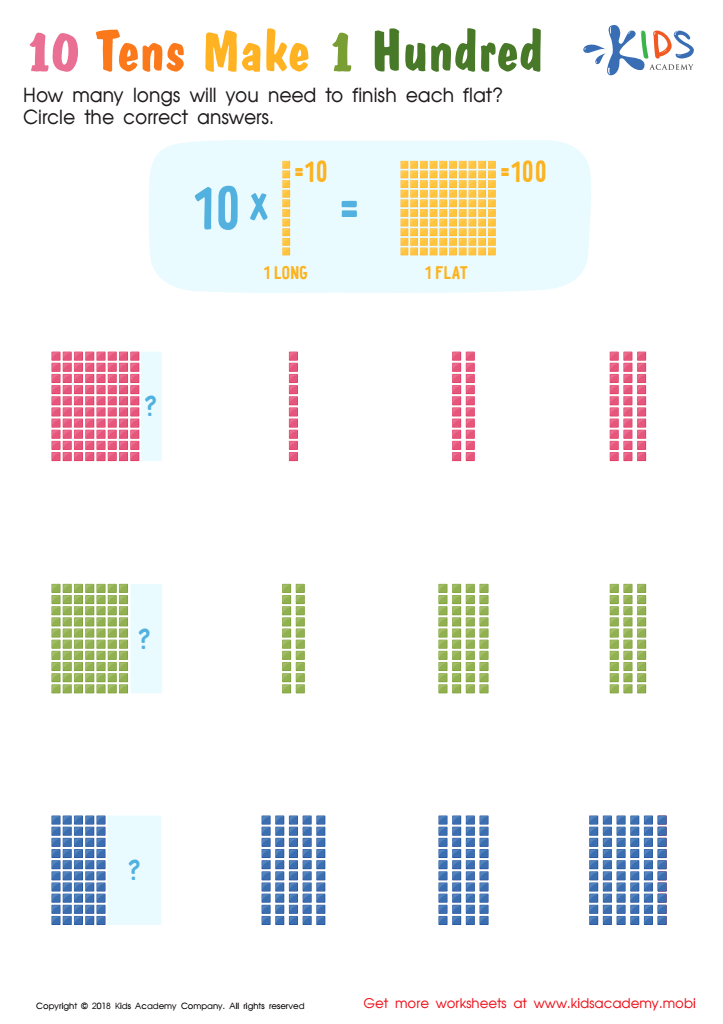
10 Tens Make 1 Hundred Worksheet








Recognizing number patterns in young children, particularly those aged 5-7, is crucial for several reasons. Firstly, number patterns form a foundational element of mathematics, enabling children to understand relationships between numbers, which is vital for future mathematical concepts. Identifying patterns helps children develop critical thinking and problem-solving skills as they begin to make connections and predictions based on observed sequences.
Moreover, understanding number patterns enhances numerical flexibility, allowing students to approach arithmetic with confidence and creativity. This skill helps them in basic operations like addition and subtraction, giving them tools to solve problems effectively. Regular exposure to recognizing normal numbers and patterns also contributes to early numeracy, strengthening their cognitive development at a critical age.
Additionally, fostering an interest in number patterns makes math more engaging and less intimidating for young learners. By nurturing their curiosity, teachers and parents can cultivate a positive attitude toward mathematics, which can lead to increased motivation and persistence in their future academic endeavors. Ultimately, recognizing number patterns supports children's overall mathematical literacy, laying the groundwork for subsequent learning and real-world application of math skills, making it a focus area for parents and educators alike.








