Basic measurement concepts Normal Math Worksheets for Ages 5-7
3 filtered results
-
From - To
Explore our engaging Basic Measurement Concepts Math Worksheets, specifically designed for children aged 5-7! These worksheets provide a fun and interactive way for young learners to understand essential measurement concepts, such as length, weight, and volume. Each activity encourages hands-on learning through relatable themes and illustrations, helping kids grasp measurements in real-life contexts. Our resources foster critical thinking and problem-solving skills while aligning with early math standards. Perfect for classrooms or home learning, these worksheets promote foundational knowledge and boost confidence in young mathematicians. Dive into the world of measurement and watch your child excel with ease and enjoyment!
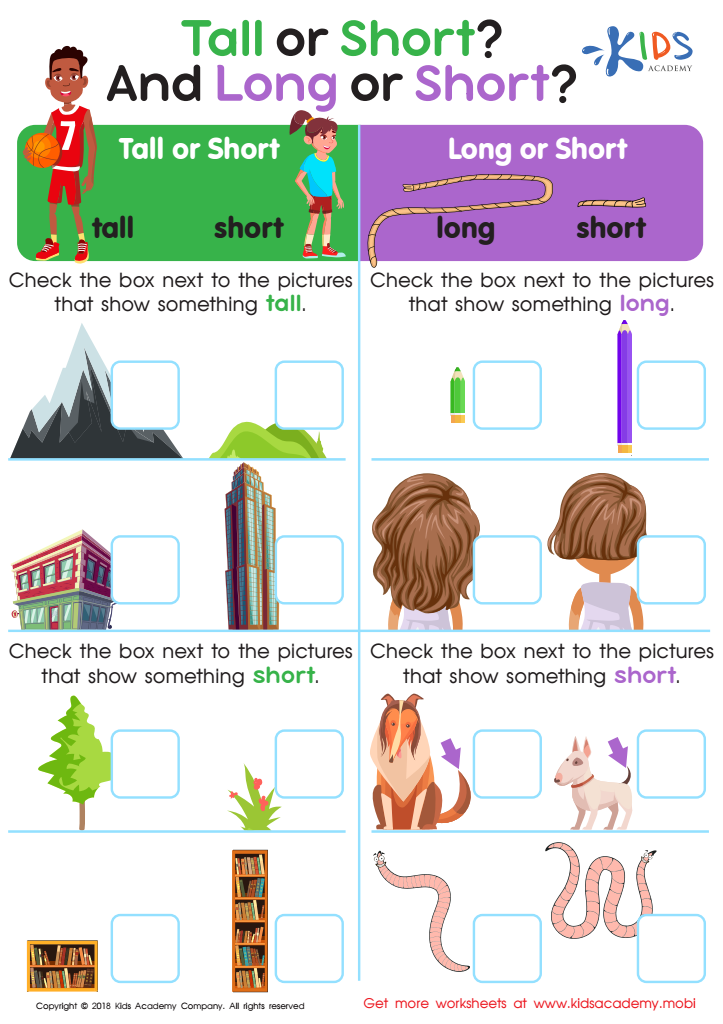
Tall or Short and Long or Short? Worksheet
 Assign to My Students
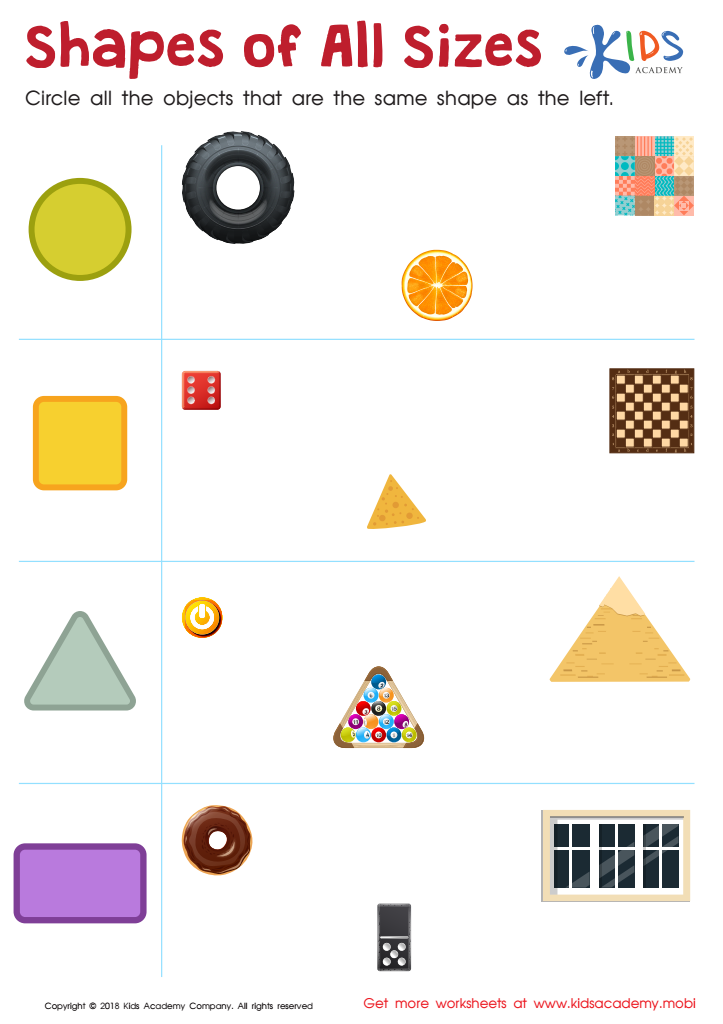
Shapes of All Sizes Worksheet
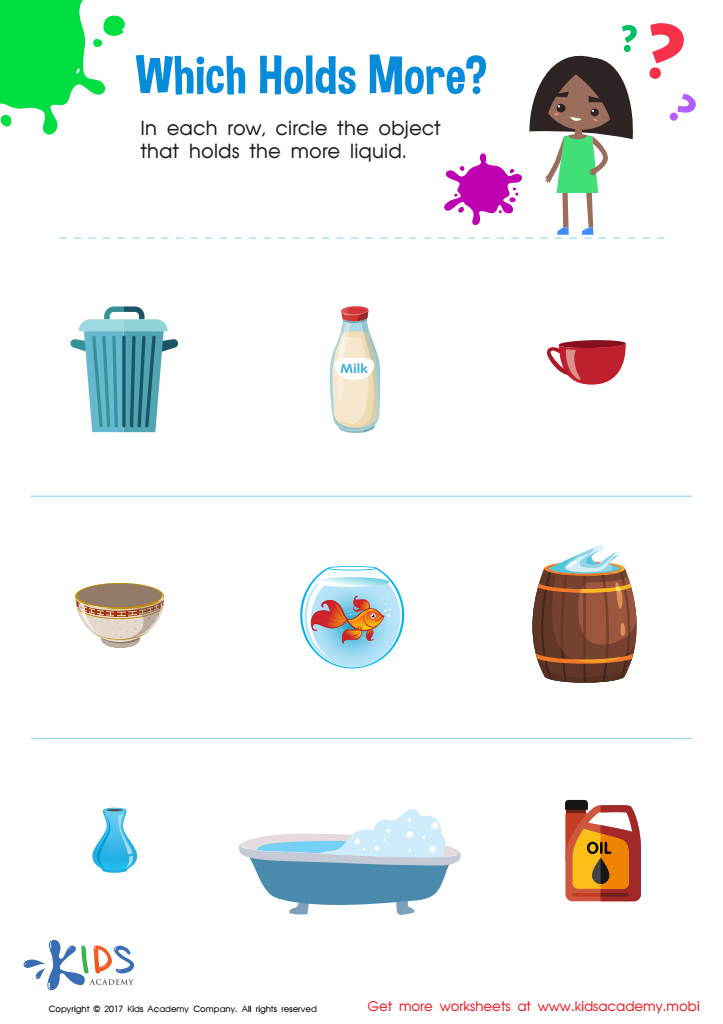
Which Holds More: Capacity Worksheet





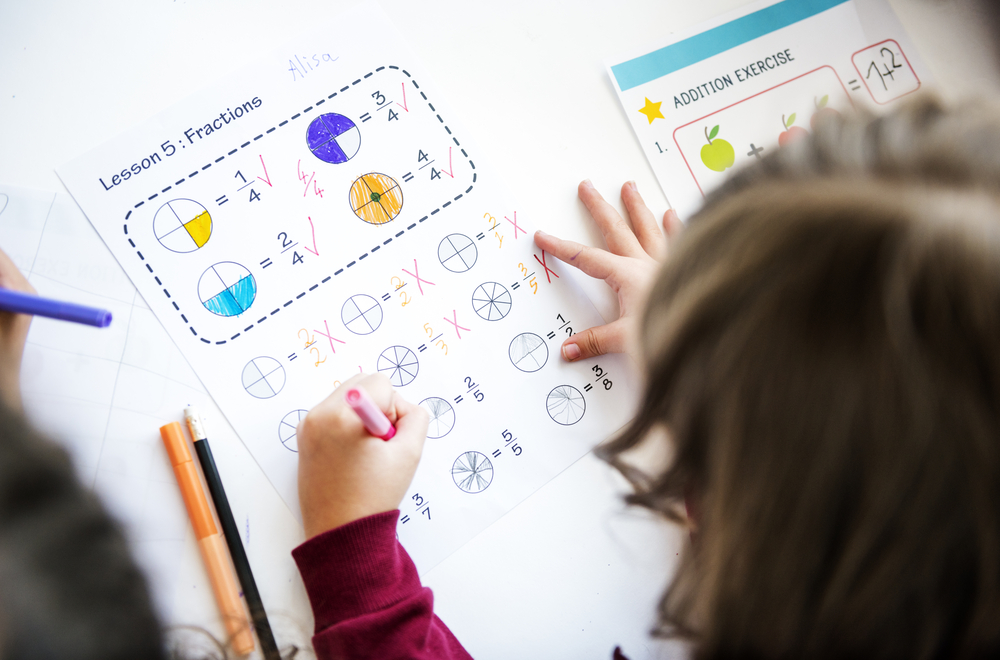


Parents and teachers should prioritize Basic Measurement Concepts in mathematics for children aged 5-7 because these foundational skills are essential for everyday life and future academic success. At this age, children are naturally curious and enthusiastic about exploring their world. Introducing measurement concepts—like length, weight, volume, and time—instills in them the ability to quantify and make sense of their experiences.
Understanding measurement supports the development of critical thinking and problem-solving skills. Students learn to compare sizes, estimate lengths, and recognize patterns, which enhances their cognitive abilities. Moreover, measuring activities often involve hands-on experiences, making learning interactive and engaging. This can ignite a passion for math and strengthen a child's confidence as they discover their capability to solve real-world problems.
Finally, early exposure to measurement fosters a foundation for more advanced mathematical concepts later in school. A strong grasp of basic measurement sets students up for success in subjects like geometry, science, and everyday tasks like cooking or budgeting. By valuing and promoting these concepts, parents and teachers play a crucial role in nurturing resourceful, capable learners ready to tackle the challenges ahead.








