
Fine motor skills (writing numbers) Normal Math Worksheets for Ages 5-7
3 filtered results
Difficulty Level
Grade
Age
-
From - To
Subject
Activity
Standards
Enhance your child's fine motor skills with our engaging math worksheets designed specifically for ages 5-7. These worksheets focus on the importance of writing numbers, encouraging children to develop precision and control in their handwriting. Featuring a variety of activities that involve number tracing, recognition, and basic math concepts, these resources are perfect for reinforcing classroom learning at home. Our fun and interactive designs make learning enjoyable, helping young learners build confidence and mastery in their writing skills. Foster their love for math while improving fine motor development with our comprehensive and age-appropriate worksheets today!
Favorites
With answer key
Interactive
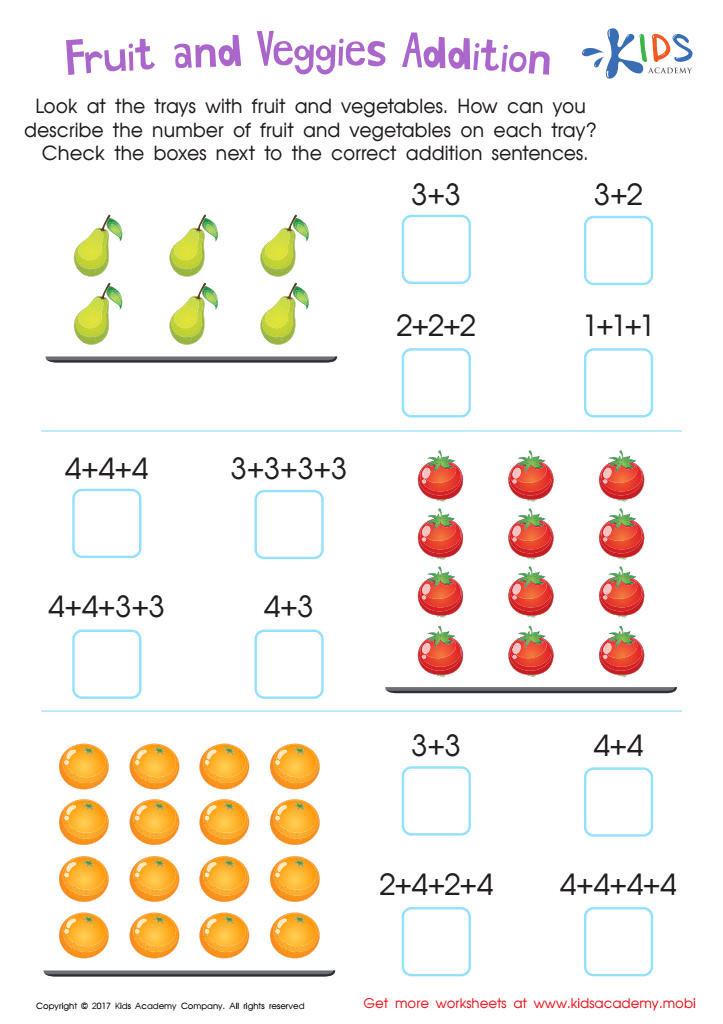
Fruit and Veggies Worksheet
It promotes problem-solving and analytical skills as kids match pictures to correct addition sentences. Help your child go beyond simple addition with this PDF worksheet!
 Assign to My Students
Fruit and Veggies Worksheet
Worksheet

Finding 4 in the Forest Worksheet
Before starting, have your kids count as high as they can. Ask them to identify the setting and point out the 4s. Trace 4 and draw your own. Help your kids circle all the 4s they can find in the forest. How far can they count? How well did they find the hidden 4s?
Finding 4 in the Forest Worksheet
Worksheet
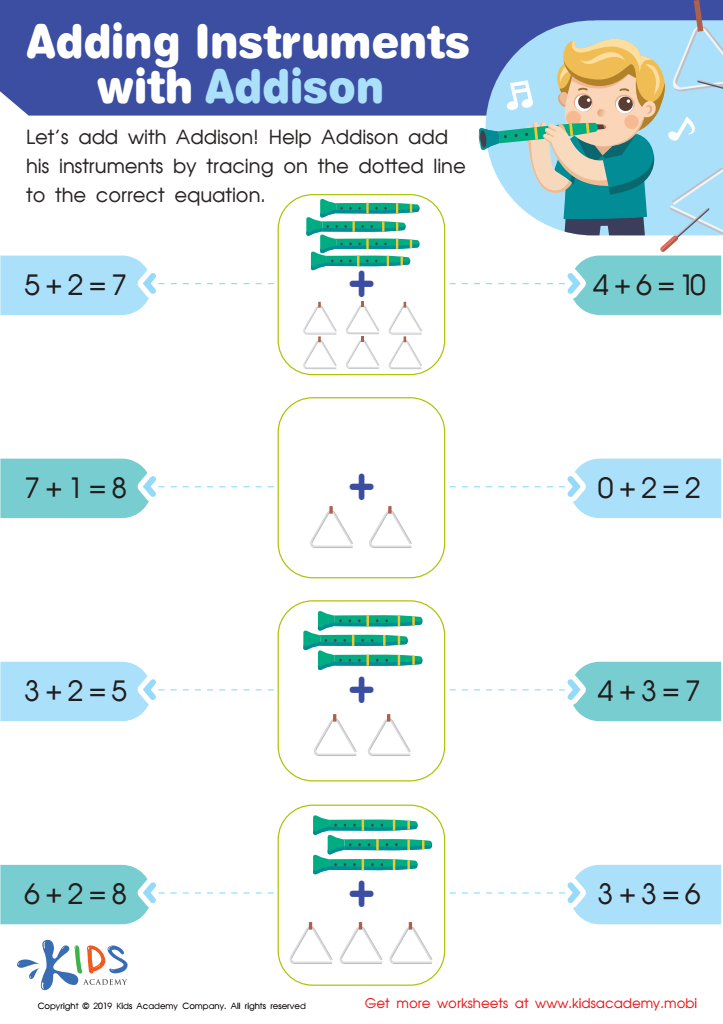
Adding Instruments with Addison Worksheet
Your math stars will enjoy assisting Addison as he adds his instruments. This worksheet has 10 basic addition problems with pictures of instruments to aid children. They match the pics and sentences, then connect them to the correct problem using the lines. A fun way to learn and practice addition!
Adding Instruments with Addison Worksheet
Worksheet
Join Kids Academy for Free
Who is primarily going to use this learning content?








Fine motor skills are essential developmental milestones for children aged 5-7, especially when it comes to writing numbers in math. These skills enable young learners to grasp pencils effectively, control their hand movements, and coordinate their fingers, which are crucial for writing activities. When students develop strong fine motor skills, they experience greater confidence and competence during math tasks, fostering a positive learning environment.
Parents and teachers should care about this aspect of learning because fine motor skills play a foundational role in academic achievement, particularly in mathematics. Writing numbers accurately influences a child's understanding of numeric concepts such as quantity, order, and relationship. Moreover, proficient handwriting allows children to focus on problem-solving rather than struggling with penmanship, therefore enhancing their overall mathematical comprehension.
Encouraging fine motor skill development through engaging activities such as tracing numbers, using manipulatives, and crafting can pave the way for smoother transitions into more complex math principles. By nurturing these skills early on, parents and teachers can provide children with the tools they need to succeed not just in math, but in all their academic endeavors. Attention to fine motor proficiency ultimately contributes to happier, more effective learners in the classroom.








