Recognizing number patterns Normal Math Worksheets for Ages 5-7
4 filtered results
-
From - To
Discover engaging and educational math worksheets tailored for ages 5-7, designed to make learning fun and effective! Our "Recognizing Number Patterns" worksheets help young learners identify and understand mathematical sequences and patterns, providing a solid foundation for future math success. Each worksheet features a variety of activities and exercises that challenge children while enhancing their problem-solving skills. Perfect for parents and teachers, these printable resources support hands-on learning and keep kids excited about math. Build your child's confidence and competence in mathematics with our expertly designed worksheets today!
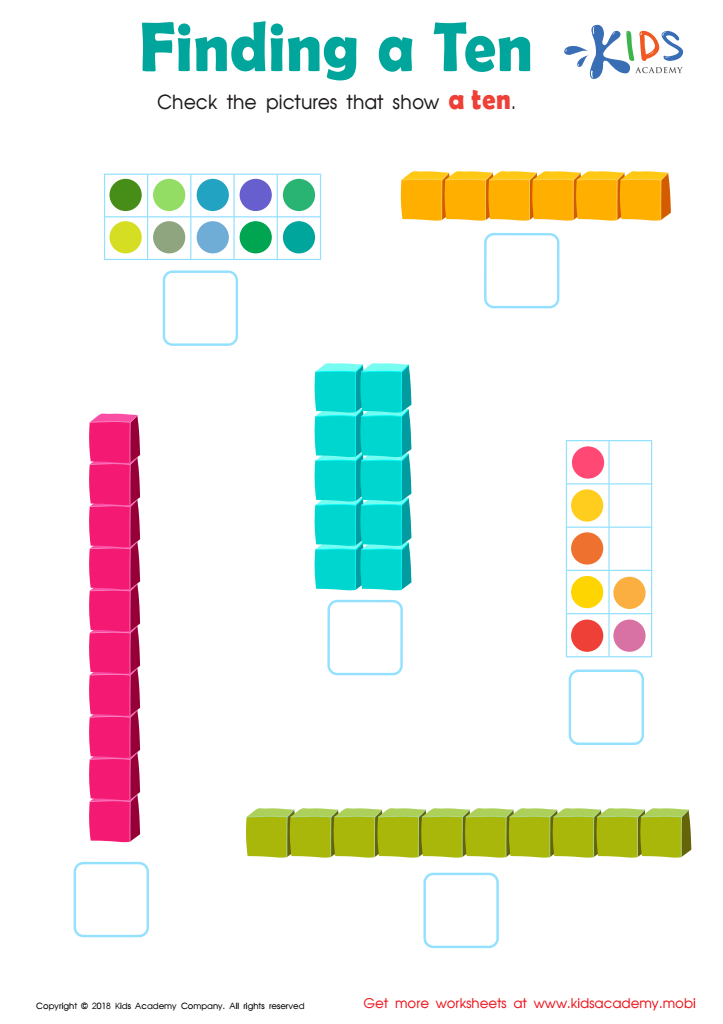
Finding a Ten Worksheet
 Assign to My Students
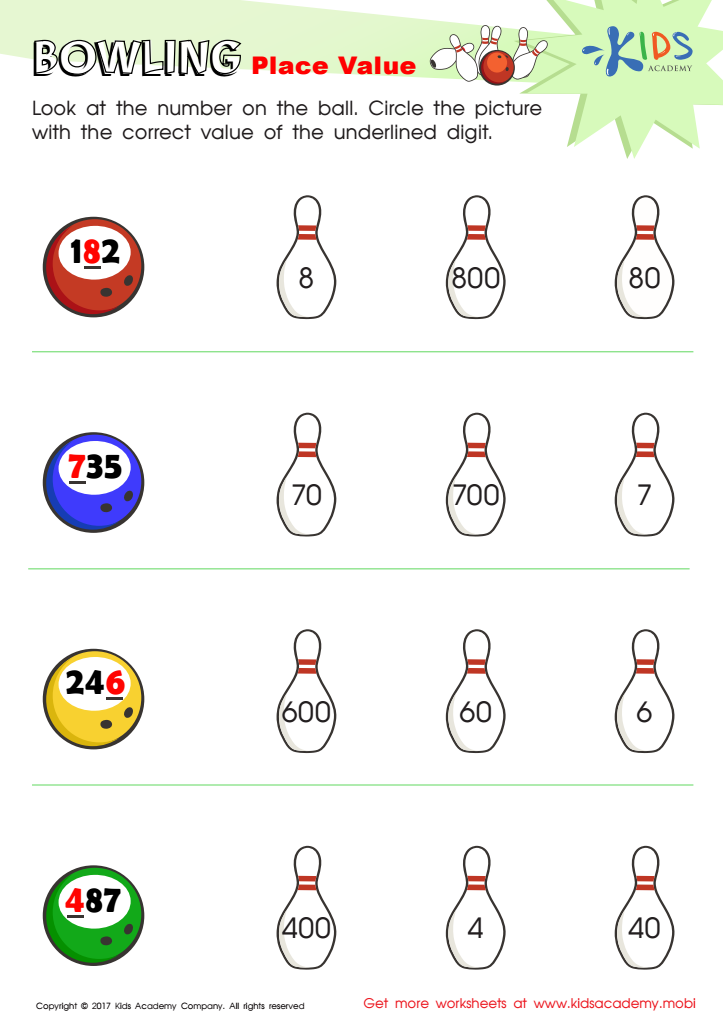
Place Value Worksheet
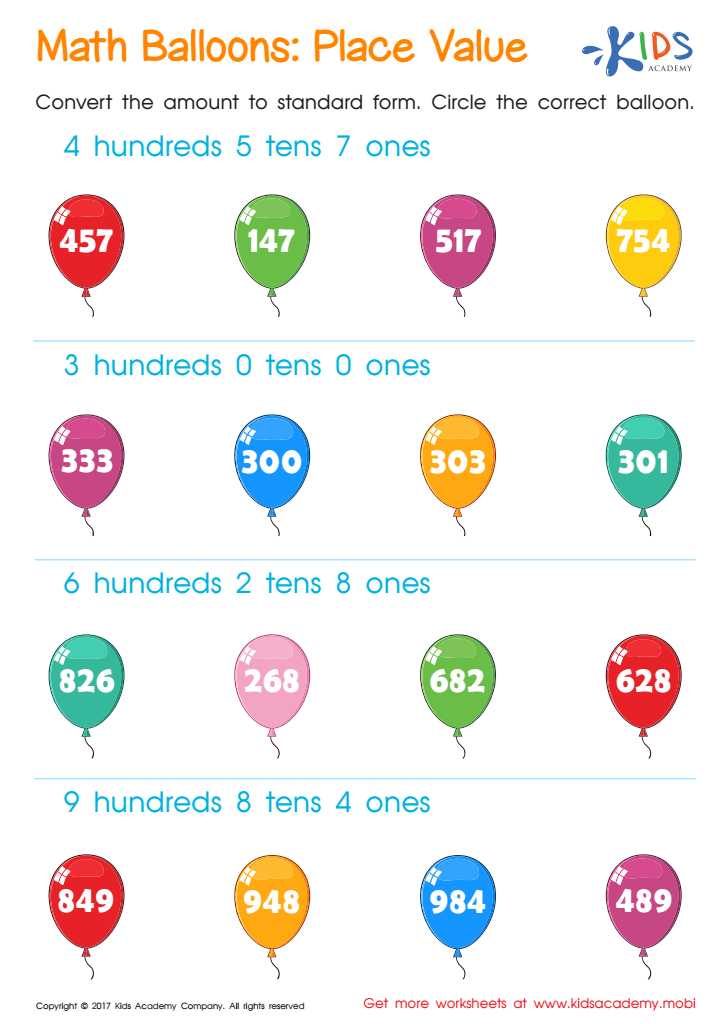
Place Value Printable Worksheet
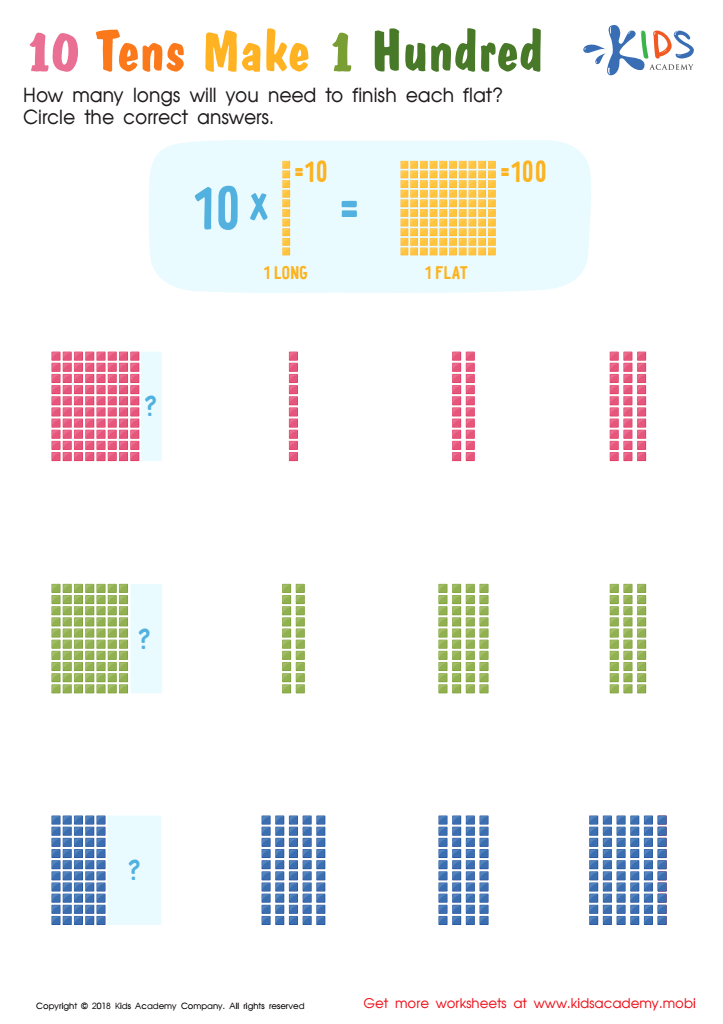
10 Tens Make 1 Hundred Worksheet





.jpg)

Recognizing number patterns is fundamental for young children aged 5-7 as it lays the groundwork for essential mathematical skills. Parents and teachers should care because grasping these patterns helps children understand the logical order and relationships in numbers, boosting their ability to predict and reason mathematically. This early skill development supports more complicated math concepts they'll encounter later, such as arithmetic operations, algebra, and problem-solving strategies.
Number patterns enhance cognitive skills, encouraging logical thinking and structured thought processes. They establish how sequences work, allowing children to identify, predict, and extend number sequences, which is a vital part of math literacy. This understanding fosters confidence and reduces math anxiety by providing structured and predictable frameworks within which children can operate.
Additionally, recognizing patterns builds the foundation for more abstract mathematical concepts like addition, subtraction, multiplication, and division. For example, seeing patterns in even and odd numbers, counting by twos or fives, or understanding simple progressions are all stepping stones to more complex ideas.
Overall, by making pattern recognition a focus, parents and teachers are giving children the tools to develop critical thinking, problem-solving skills, and a robust mathematical foundation. This initial enthusiasm and comprehension in math can lead to greater interest and success in their academic journey.








