
Understanding Quantities Normal Math Worksheets for Ages 5-7
3 filtered results
Difficulty Level
Grade
Age
-
From - To
Subject
Activity
Standards
"Understanding Quantities: Normal Math Worksheets for Ages 5-7" offer engaging activities to help young learners grasp fundamental math skills. These expertly designed worksheets provide a variety of exercises focused on comparing, measuring, and identifying quantities. Perfect for developing number sense and counting proficiency, the exercises boost children's confidence and enhance their understanding of basic math concepts. With colorful illustrations and child-friendly scenarios, these worksheets transform learning into a fun and interactive experience, ensuring your child remains enthusiastic and motivated. Ideal for both classroom use and at-home practice, they are an essential tool for early grade math success.
Favorites
With answer key
Interactive
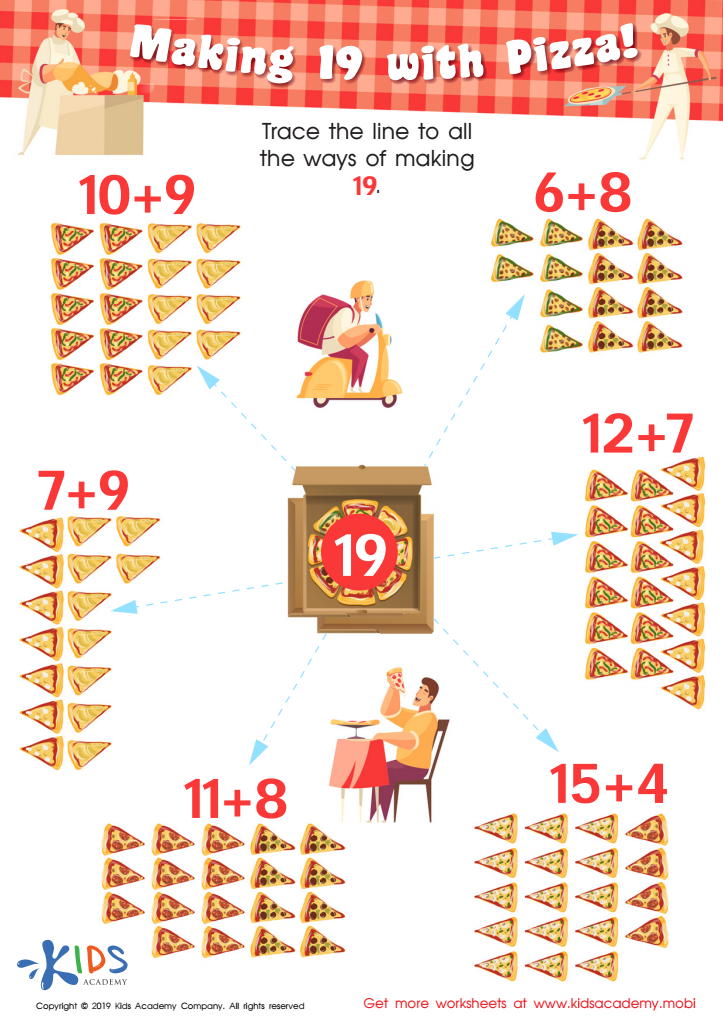
Making 19 with Pizza! Worksheet
Who loves pizza? Your kids do! Next time you need to teach them math, make it fun by combining it with something they enjoy. This worksheet uses a pizza-themed problem to help them practice solving equations. Have them trace the line to figure out how to make 19. It's a great way to make learning math fun!
 Assign to My Students
Making 19 with Pizza! Worksheet
Worksheet
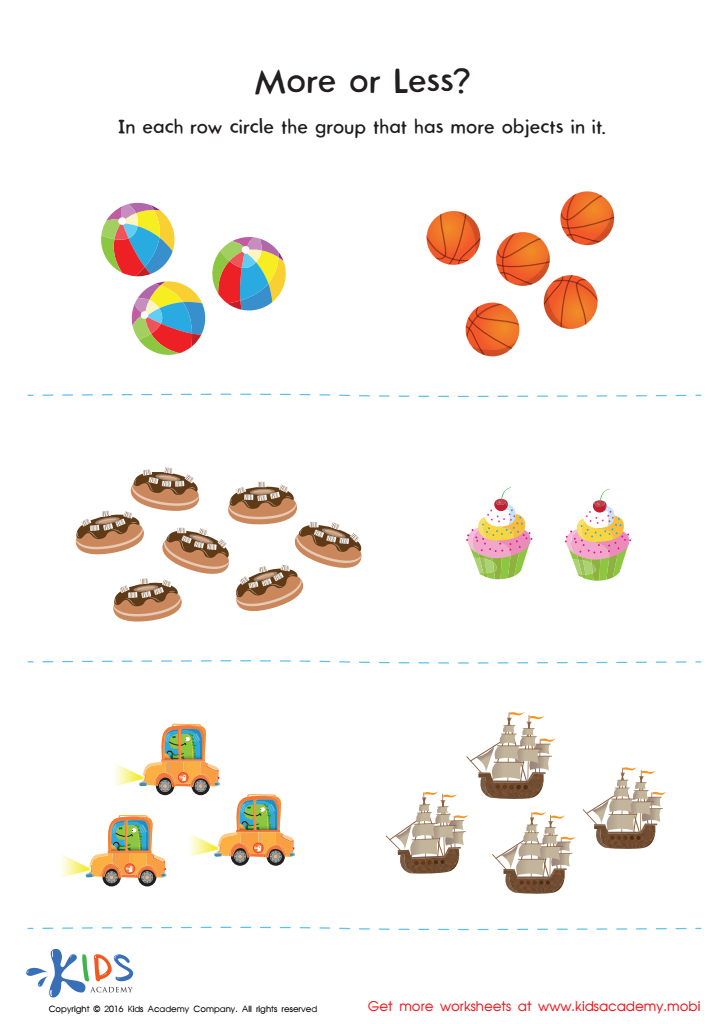
More or Less Size Worksheet
Worksheet
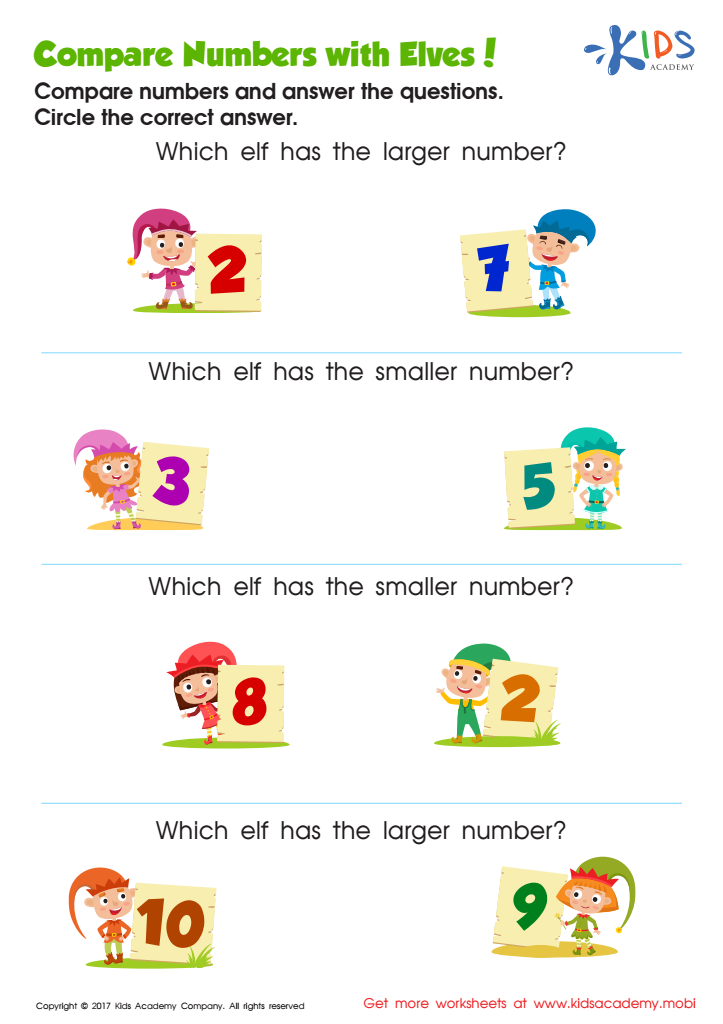
Comparing Numbers Worksheet for Kindergarten
Your child will love helping Santa's elves compare numbers with this fun worksheet for kindergarten! They must determine which number is bigger or smaller then circle the answer. It's a great activity for Christmas or any time!
Comparing Numbers Worksheet for Kindergarten
Worksheet
Join Kids Academy for Free
Who is primarily going to use this learning content?







Understanding quantities in math for ages 5-7 is crucial because it lays the foundational groundwork for a child's future learning and academic success. At this age, children are naturally curious and their brains are highly receptive to new information. Grasping basic math concepts like counting, recognizing numbers, and understanding small quantities helps them develop essential cognitive skills such as logical thinking and problem solving.
These early mathematical skills are not just about numbers; they form the basis for reasoning and critical thinking. Knowing how to compare quantities, understand size, and recognize patterns enables children to make sense of the world around them. This understanding is critical for more advanced math topics they'll encounter later in school, such as addition, subtraction, multiplication, and division.
Furthermore, early engagement with math through playful activities helps to build a positive relationship with the subject. It reduces math anxiety, making kids more confident and motivated learners as they grow. Parents and teachers play a vital role in making learning enjoyable and relevant. By incorporating math into daily activities—such as cooking, playing with blocks, or counting toys—adults can help children see the real-world applications of math, making it a natural and integral part of their daily lives.








