Sorting skills Normal Sorting Worksheets for Ages 5-7
5 filtered results
-
From - To
Our "Sorting Skills - Normal Sorting Worksheets for Ages 5-7" are designed to help young learners develop critical thinking and organizational abilities. These engaging, age-appropriate worksheets offer a variety of sorting exercises, from categorizing objects by color and shape to arranging items by size and type. Perfect for both classroom and at-home learning, these activities make mastering sorting skills fun and effective. Children will enhance their cognitive development while learning through interactive and thoughtfully crafted scenarios. Empower your child’s learning journey today with our expertly designed sorting worksheets, aimed specifically at fostering essential skills in young minds.
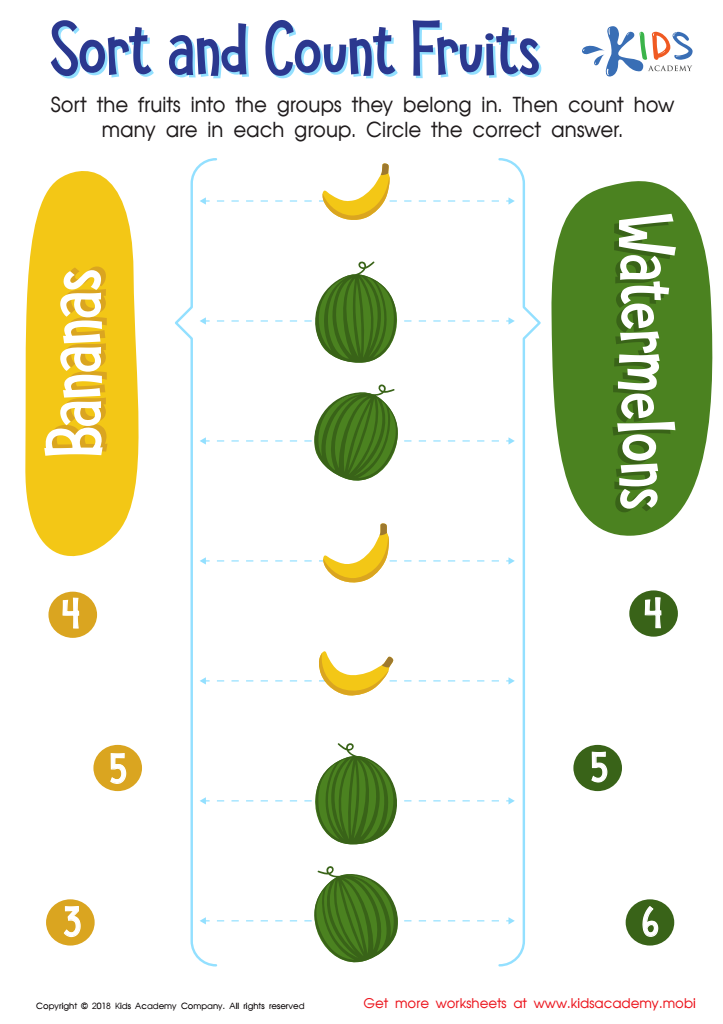
Sort and Count Fruits Worksheet
 Assign to My Students
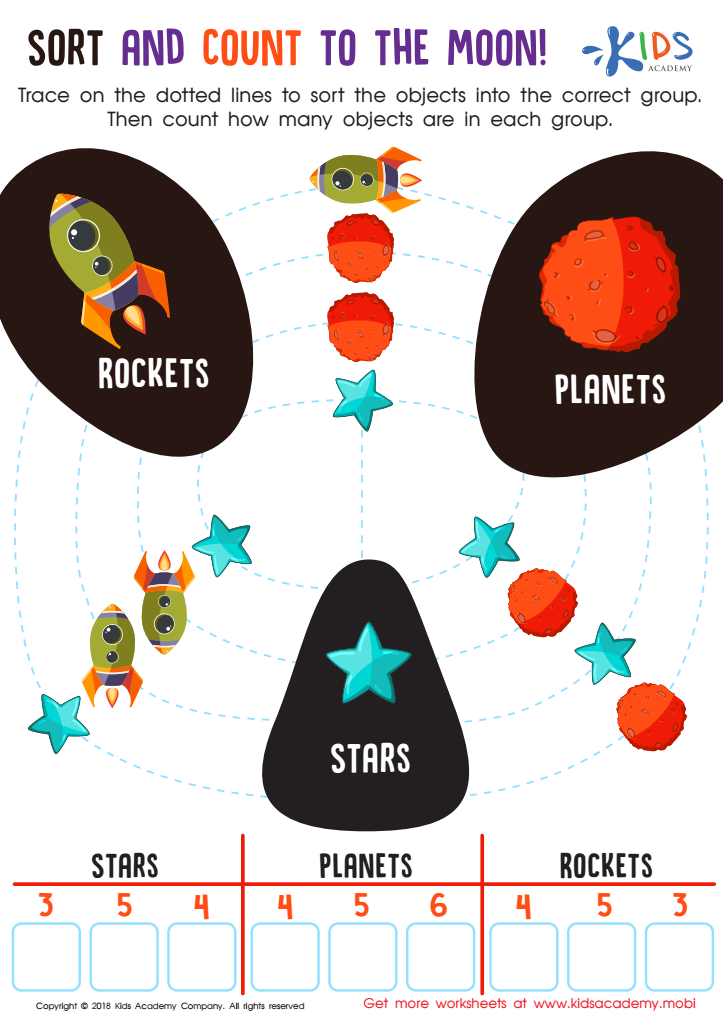
Sort and Count to the Moon Worksheet
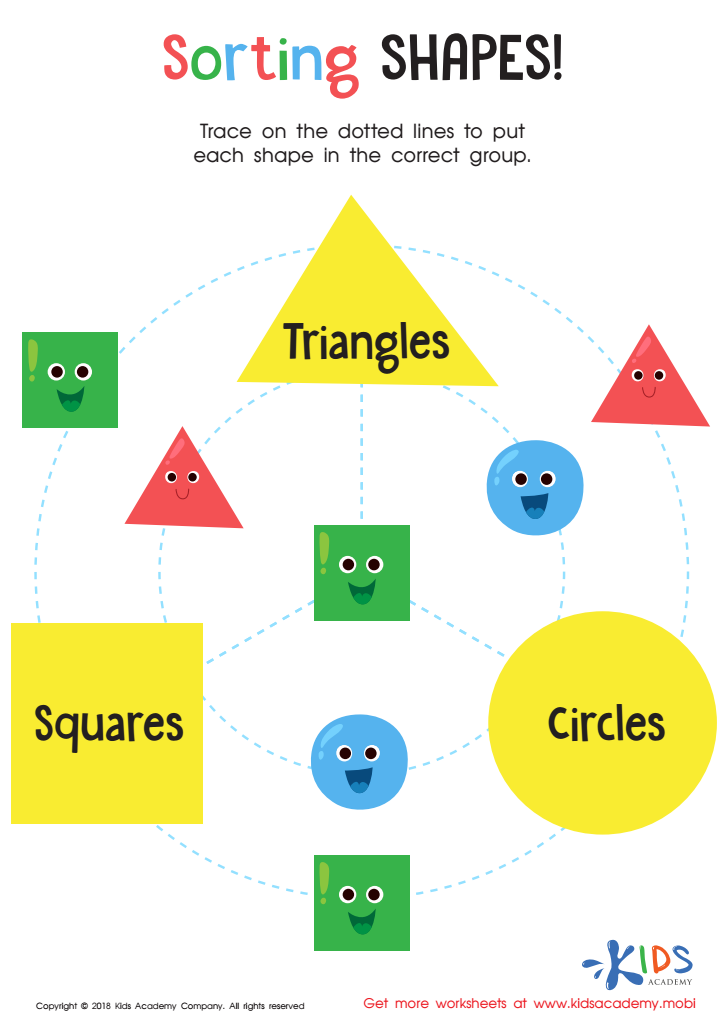
Sorting Shapes - Part 3 Worksheet
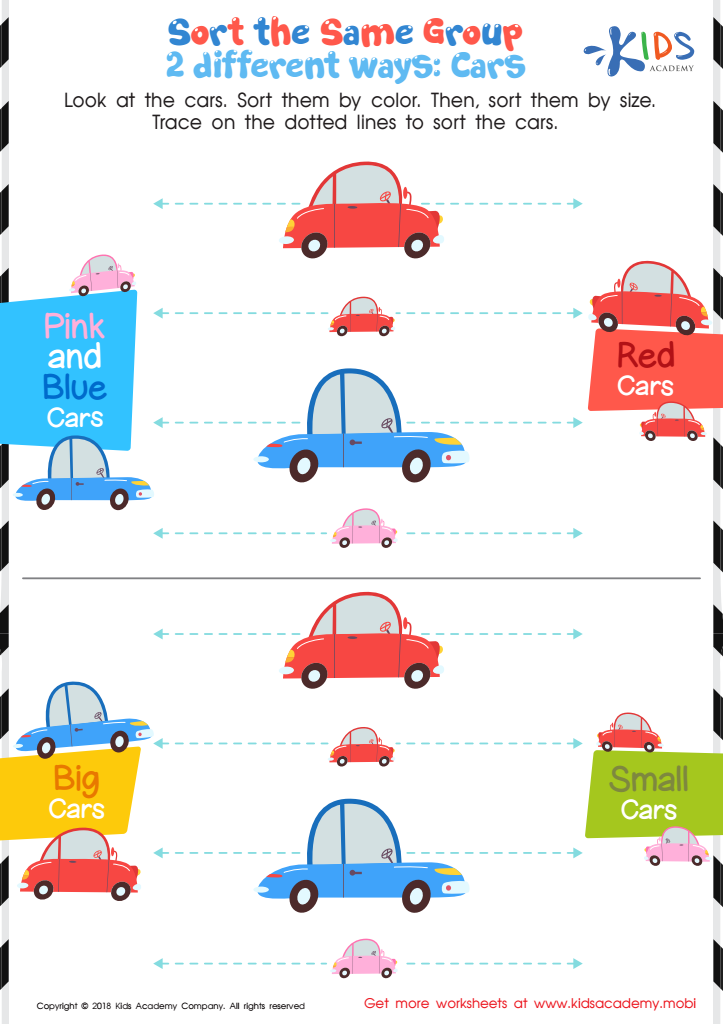
Sort the Same Group 2 Different Ways: Cars Worksheet
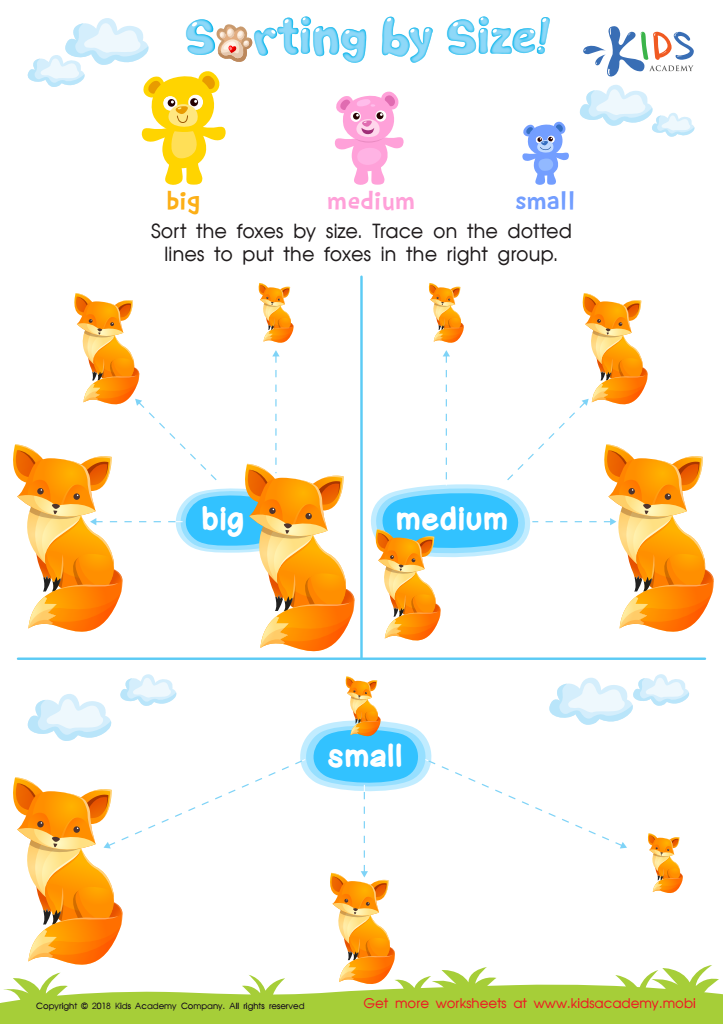
Sorting by Size Worksheet








Sorting skills are a crucial foundational element in the cognitive and mathematical development of young children, particularly between the ages of 5-7. Parents and teachers should pay attention to these skills because they lay the groundwork for more advanced concepts. Sorting helps children understand and organize the world around them by categorizing objects based on attributes such as color, size, shape, and type. This ability to categorize and classify is fundamental for the development of logical thinking and problem-solving skills.
When children engage in sorting activities, they learn to observe patterns, recognize similarities and differences, and make decisions based on those observations. These are cognitive processes that are critical for later academic success, especially in subjects like math and science. For instance, sorting is directly related to understanding numbers, equations, and data analysis.
Additionally, sorting enhances language skills. As children explain why they group certain objects together, they practice using descriptive language and logical reasoning. Socially, sorting can also foster teamwork and cooperation when done in group settings.
Therefore, by encouraging sorting activities, parents and teachers can support a child’s cognitive, linguistic, and social development, preparing them for more complex tasks and learning experiences in the future.








