
Multiplication practice Normal Word Problems Worksheets for Ages 5-7
3 filtered results
Difficulty Level
Grade
Age
-
From - To
Subject
Activity
Standards
Explore our engaging Multiplication Practice Normal Word Problems Worksheets designed for children ages 5-7! These worksheets provide a fun and interactive way for young learners to grasp multiplication concepts through relatable, everyday scenarios. By solving these word problems, kids will enhance their critical thinking and problem-solving skills while becoming more confident in their math abilities. Each worksheet is carefully crafted to cater to early learners, ensuring concepts are introduced progressively and clearly. Dive into a treasure trove of printable resources that make learning multiplication enjoyable and effective. Perfect for home practice or classroom activities, these worksheets are a must-have for every young mathematician!
Favorites
With answer key
Interactive
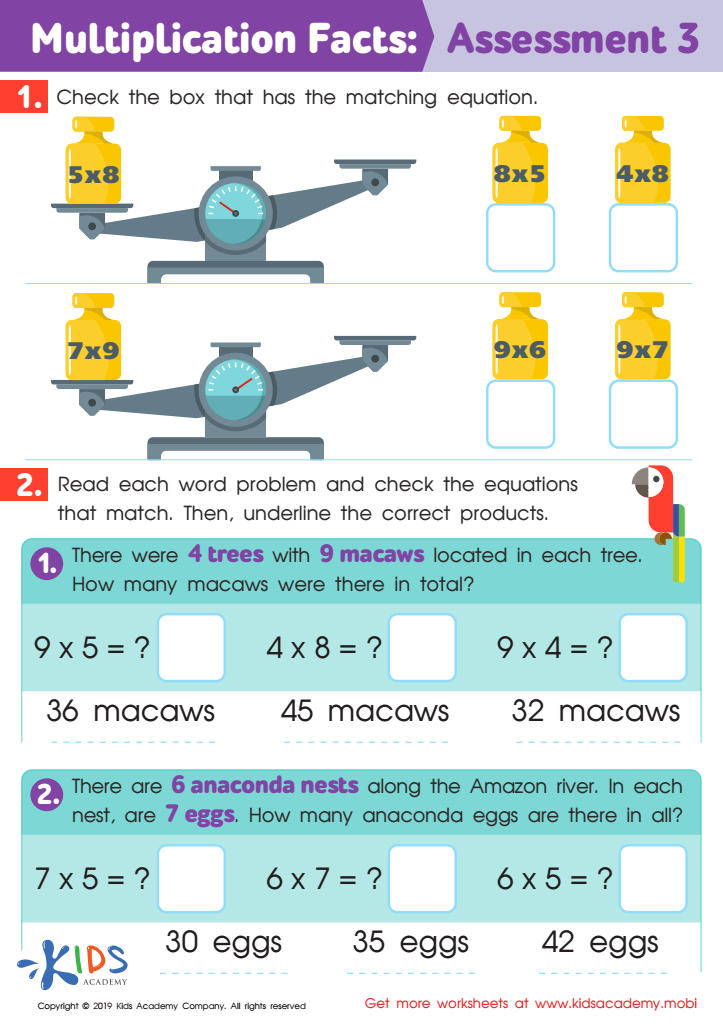
Multiplication Facts: Assessment 3 Worksheet
Test your kid's maths skills with this easy to use worksheet! Help them check the box that matches the equation in the first part, then read each word problem and underline the right answers to the second part. Assess your child's muliplication knowledge and find out where they need extra help.
 Assign to My Students
Multiplication Facts: Assessment 3 Worksheet
Worksheet
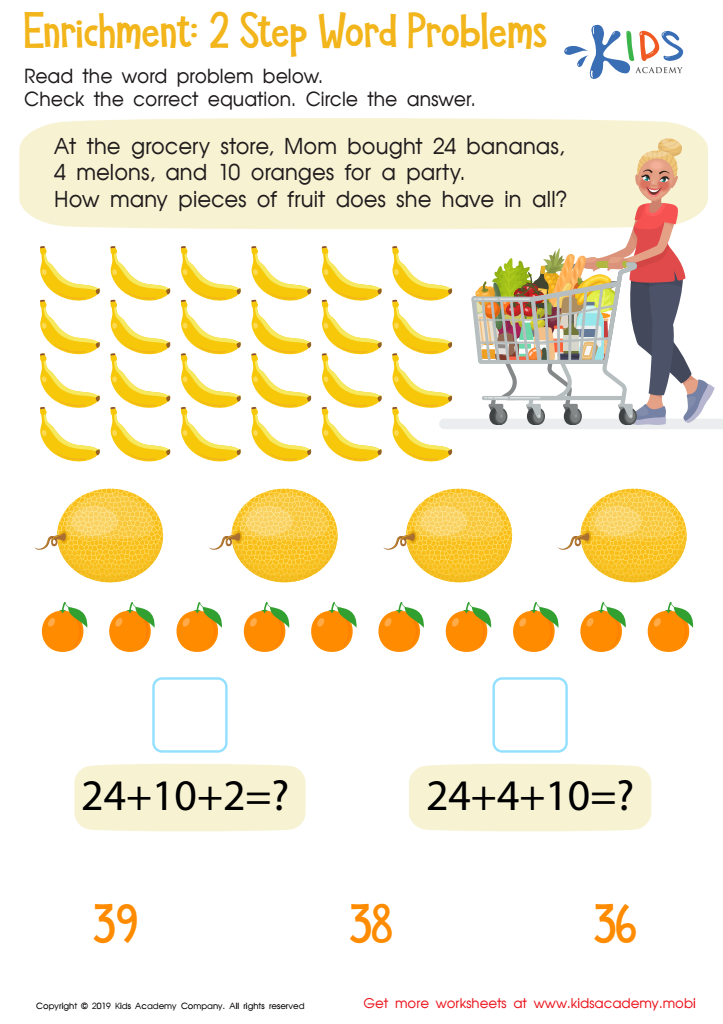
Enrichment -2 Step Word Problems Worksheet
Help your students learn math easier and faster with this colorful worksheet. Read the word problem and then guide them in checking the correct equation and finding the answer. Your students will benefit from the extra help, as they work through new concepts each day.
Enrichment -2 Step Word Problems Worksheet
Worksheet
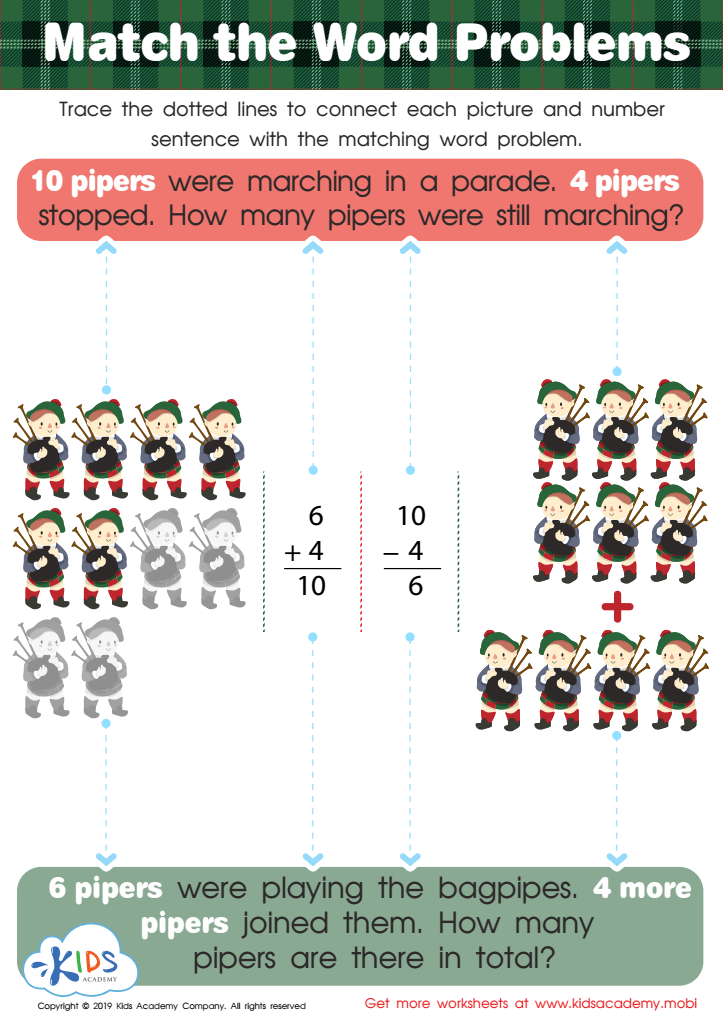
Match the Word Problems Worksheet
Read this word problem to your kids: Help them understand how it can be translated into a number problem. Trace the dotted lines to see how each picture and number sentence match the problem. With this worksheet, you can show your kids how easy it is to transform a word problem into a number problem.
Match the Word Problems Worksheet
Worksheet
Join Kids Academy for Free
Who is primarily going to use this learning content?








Parents and teachers should prioritize multiplication practice through normal word problems for children aged 5-7 because it fosters a foundational understanding of math that will benefit them throughout their education. Word problems contextualize multiplication, making the abstract concepts relatable and engaging. At this developmental stage, children are not just learning to multiply; they are also honing critical thinking and problem-solving skills.
By presenting multiplication through real-life scenarios, learners can visualize numbers and comprehend how they relate to everyday situations, strengthening their mathematical reasoning. This practice enhances language skills too, as kids learn to interpret and formulate responses to questions.
Additionally, at this age, children develop their confidence in handling mathematical tasks. Regular engagement with word problems helps them overcome frustration and improve resilience, laying the groundwork for a positive attitude toward learning math as they grow. Moreover, consistent practice creates familiarity with multiplication facts, enabling them to tackle more complex problems in the future effortlessly.
In summary, fostering multiplication skills through word problems cultivates essential academic skills, boosts confidence, and promotes a lifelong appreciation for mathematics in young learners.








