Logical Reasoning Normal Building Vocabulary Worksheets for Ages 5-7
4 filtered results
-
From - To
Welcome to our engaging collection of Logical Reasoning Normal Building Vocabulary Worksheets, designed specifically for children ages 5-7. These thoughtfully crafted worksheets aim to enhance not only vocabulary but also critical thinking skills through fun and interactive exercises. Children will embark on exciting activities that challenge their logical reasoning while expanding their language abilities. Each worksheet promotes cognitive development, making learning an enjoyable experience. Perfect for home schooling, classroom settings, or quick educational activities on the go, our resources help early learners build a strong foundation in language through effective reasoning skills. Let's inspire curious minds together!
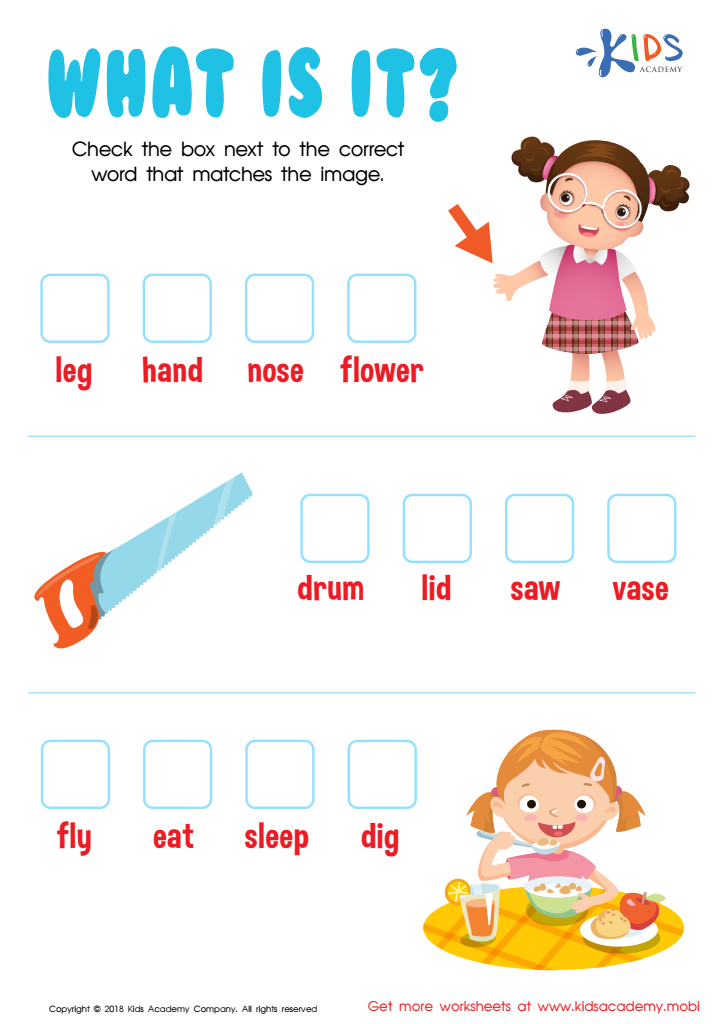
What Is It? Worksheet
 Assign to My Students











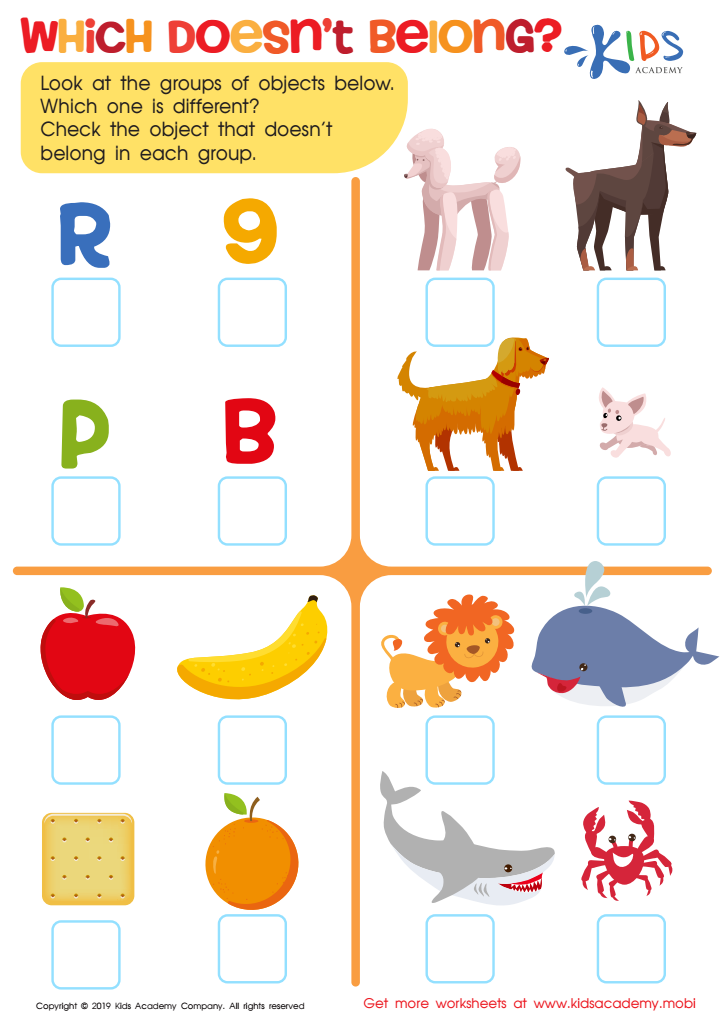
Which Doesn't Belong? Worksheet
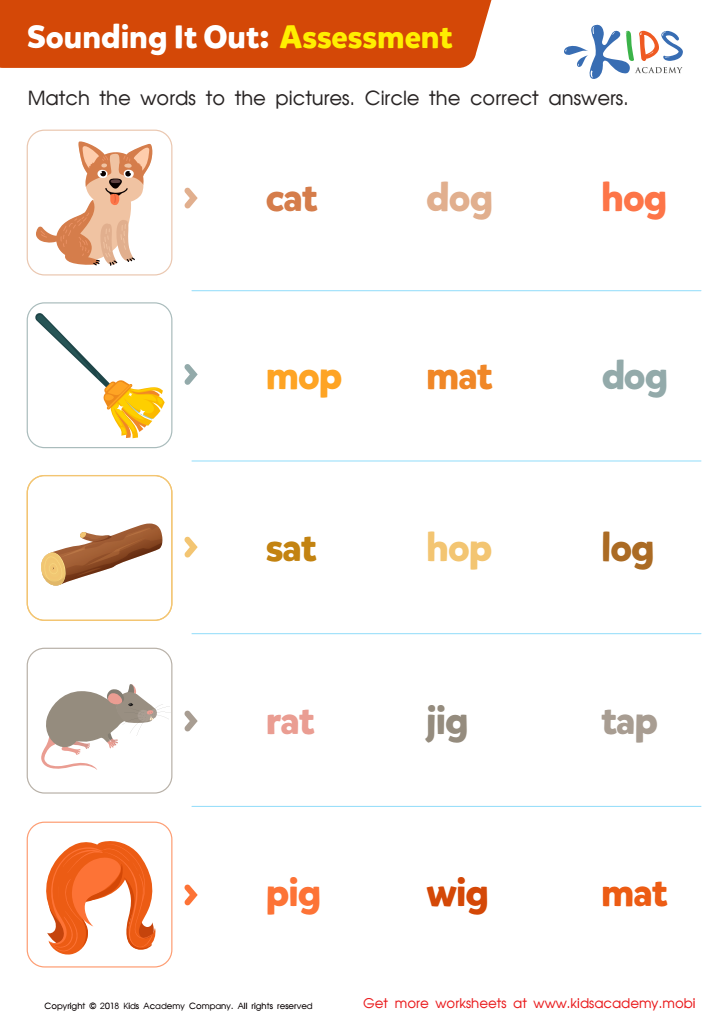
Sounding it Out: Assessment Worksheet
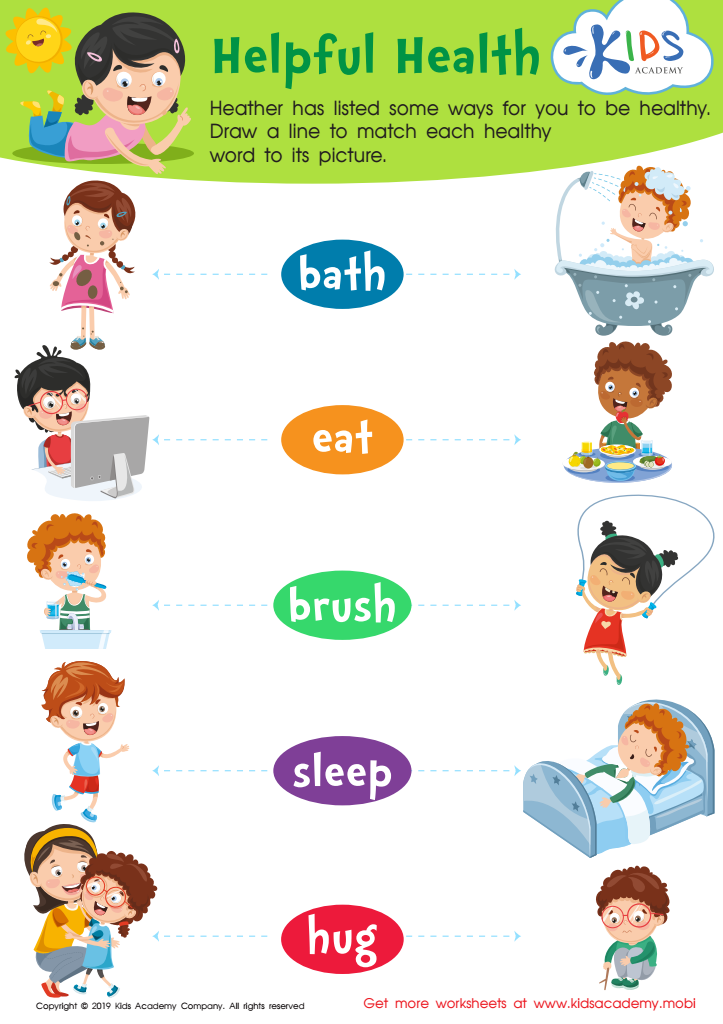
Helpful Health Worksheet






.jpg)

Parents and teachers should prioritize developing logical reasoning and vocabulary in children aged 5 to 7 because these skills serve as foundational elements for overall learning and critical thinking. Logical reasoning enables young learners to make connections, solve problems, and understand cause-and-effect relationships. This cognitive skill helps children navigate their environment, develop decision-making abilities, and engage more effectively with the content they encounter.
Building a strong vocabulary is equally important, as it enhances communication skills, boosts reading comprehension, and enriches overall language development. A robust vocabulary encourages children to articulate their thoughts and ideas more precisely and fosters their ability to comprehend complex concepts as they advance in their education.
Moreover, logical reasoning and vocabulary work hand-in-hand. As children learn new words, they simultaneously explore new ideas, perspectives, and relationships, further sharpening their reasoning abilities. Additionally, these skills are increasingly recognized as essential for academic success and lifelong learning. Therefore, investing time and resources in building logical reasoning and vocabulary during these formative years not only supports immediate learning but also empowers children to become confident, capable learners in the future. This commitment prepares them to thrive in an increasingly complex world.








