
Story analysis Normal Building Vocabulary Worksheets for Ages 5-7
3 filtered results
Difficulty Level
Grade
Age
-
From - To
Subject
Activity
Standards
Discover engaging "Story Analysis Normal Building Vocabulary Worksheets" designed specifically for ages 5-7 at Kids Academy! Our expertly crafted worksheets help young learners enhance their reading comprehension and vocabulary skills through exciting story analysis activities. Each worksheet encourages kids to delve into stories, identify key elements, learn new words, and develop critical thinking abilities. Perfect for early grade students, these activities are ideal for both classroom use and at-home practice. Start nurturing your child's love for reading and boost their language proficiency with our fun and educational printables. Visit Kids Academy today to explore and download!
Favorites
With answer key
Interactive
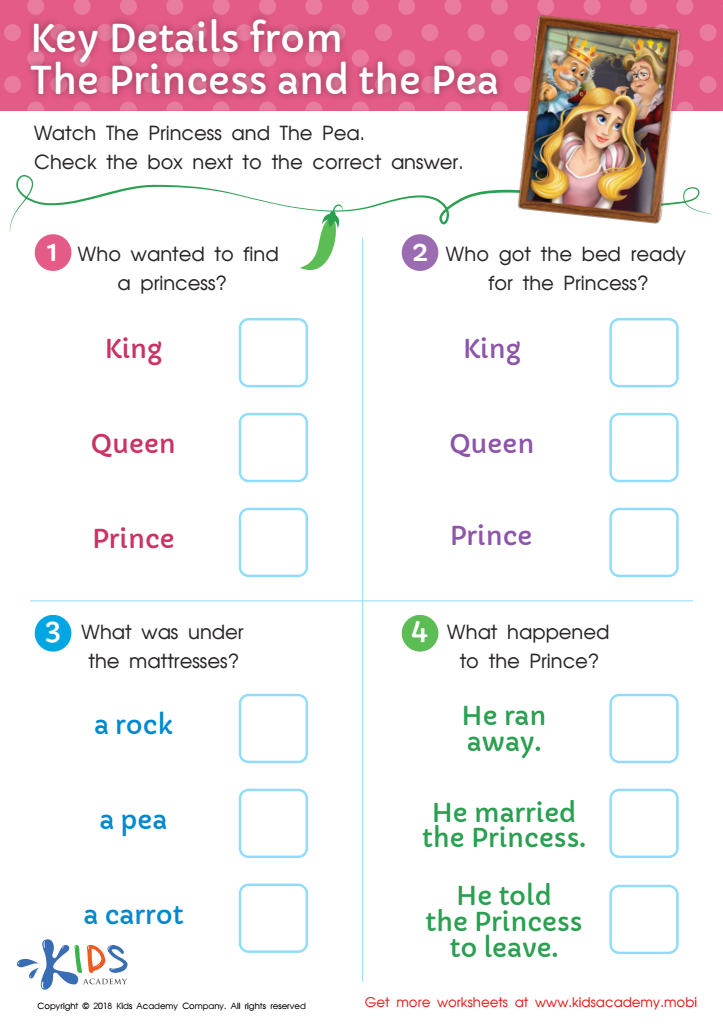
Key Details from the Princess and the Pea Worksheet
After reading The Princess and the Pea, ask your students questions to assess their comprehension of the story. Check their knowledge of key details. This printable can be used to help evaluate their understanding. Encouraging the recall of story events helps build important reading skills.
 Assign to My Students
Key Details from the Princess and the Pea Worksheet
Worksheet











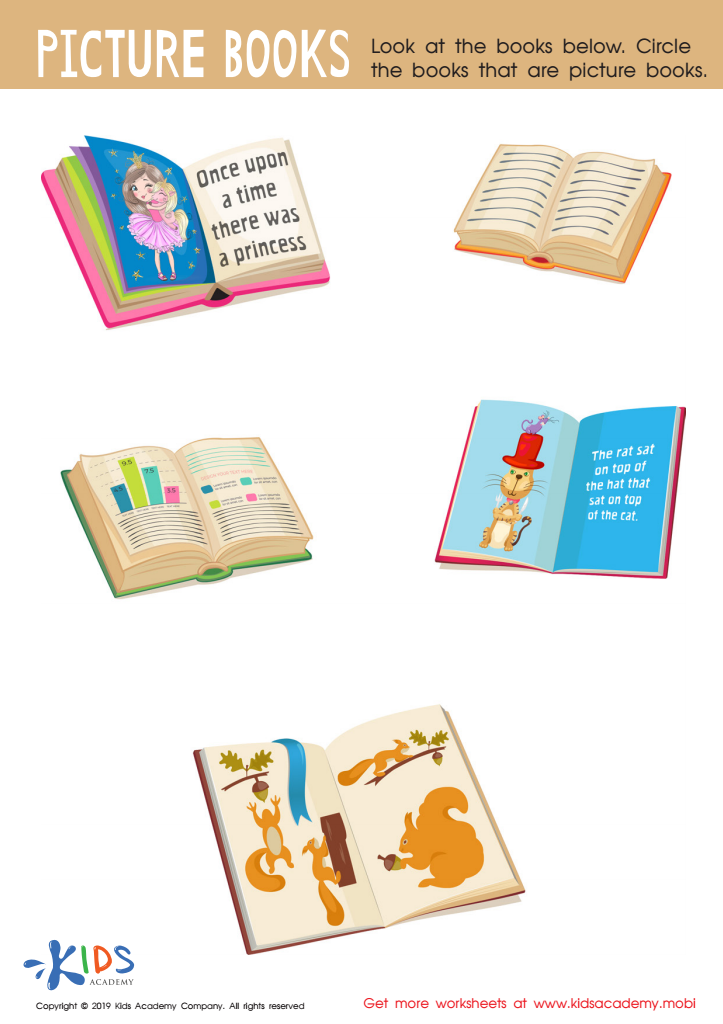
Picture Books Worksheet
Kids will love this exercise! Get their imaginations going with five colorful picture books. Ask them to circle the books that are picture books and have them enjoy the exciting stories, along with the colorful images. Reading can become that much more enjoyable!
Picture Books Worksheet
Worksheet
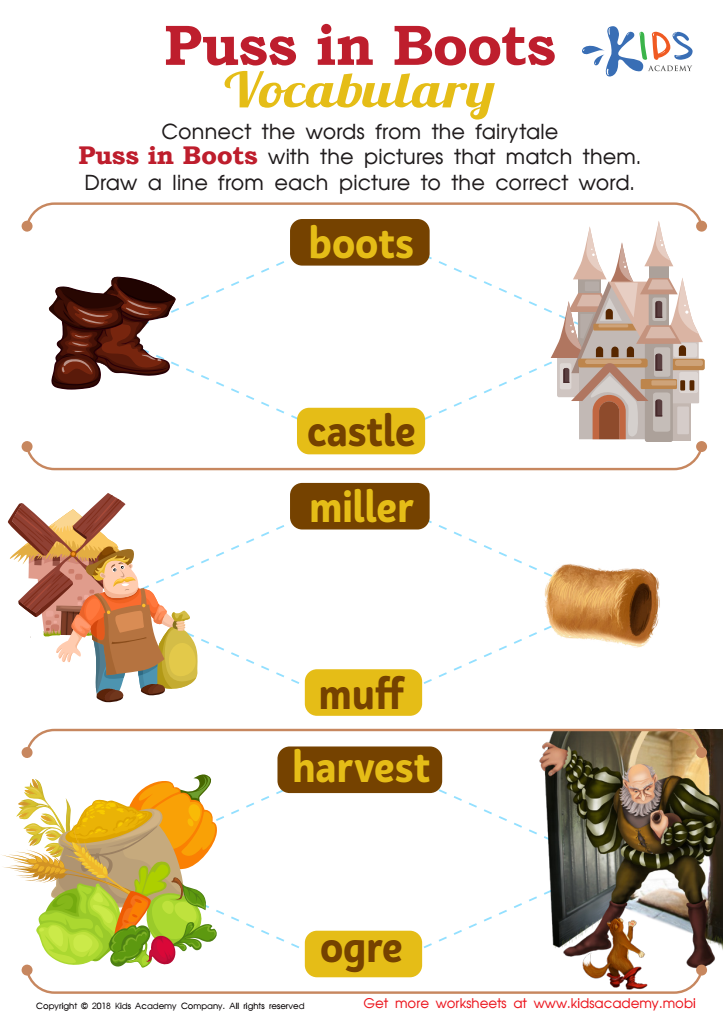
Puss in Boots Vocabulary Worksheet
Let your kids enjoy story-telling while learning at the same time. Help them learn from the fairytale, Puss in Boots, by connecting words from the worksheet with the matching pictures. Ask them to draw a line between each picture and corresponding word to build their vocabulary.
Puss in Boots Vocabulary Worksheet
Worksheet
Join Kids Academy for Free
Who is primarily going to use this learning content?



.jpg)




Parents and teachers should prioritize story analysis and vocabulary building for children aged 5-7 because these activities lay crucial foundations for their literacy and cognitive development. At this formative stage, children's brains are highly receptive to new information, making it an ideal period to enhance linguistic skills.
Story analysis encourages children to think critically about narratives, including understanding characters, settings, and plots. It helps them develop comprehension skills, such as identifying the main idea and key details, sequencing events, and making predictions. Engaging young minds in these higher-order thinking activities fosters deeper cognitive processing, aiding in future academic achievements.
Simultaneously, building vocabulary in these early years is fundamental. A rich vocabulary enhances children's communication skills and improves their ability to express thoughts and emotions clearly. With a more extensive vocabulary, children find it easier to grasp new concepts in various subjects, making the learning process smoother and more enjoyable.
Combining story analysis with vocabulary activities also makes learning interactive and exciting. Reading diverse stories opens up new worlds, providing context-based learning whereby children naturally absorb and understand words within meaningful scenarios. In essence, these early literacy practices not only support academic success but also ignite a lifelong love for reading and learning.








