Categorization skills Normal Reading Worksheets for Ages 5-7
3 filtered results
-
From - To
Enhance your child's early literacy with our "Categorization Skills Normal Reading Worksheets," designed specifically for ages 5 to 7. These engaging worksheets promote critical thinking by helping young learners categorize words, images, and ideas into meaningful groups. Tailored to appeal to children, the activities encourage exploration and learning in a fun, interactive way. Through colorful illustrations and relatable examples, your child will develop foundational skills in sorting and classifying, vital for their reading comprehension and cognitive growth. Ideal for home or classroom use, our worksheets offer a valuable resource to foster categorization skills necessary for lifelong learning. Start empowering your young reader today!
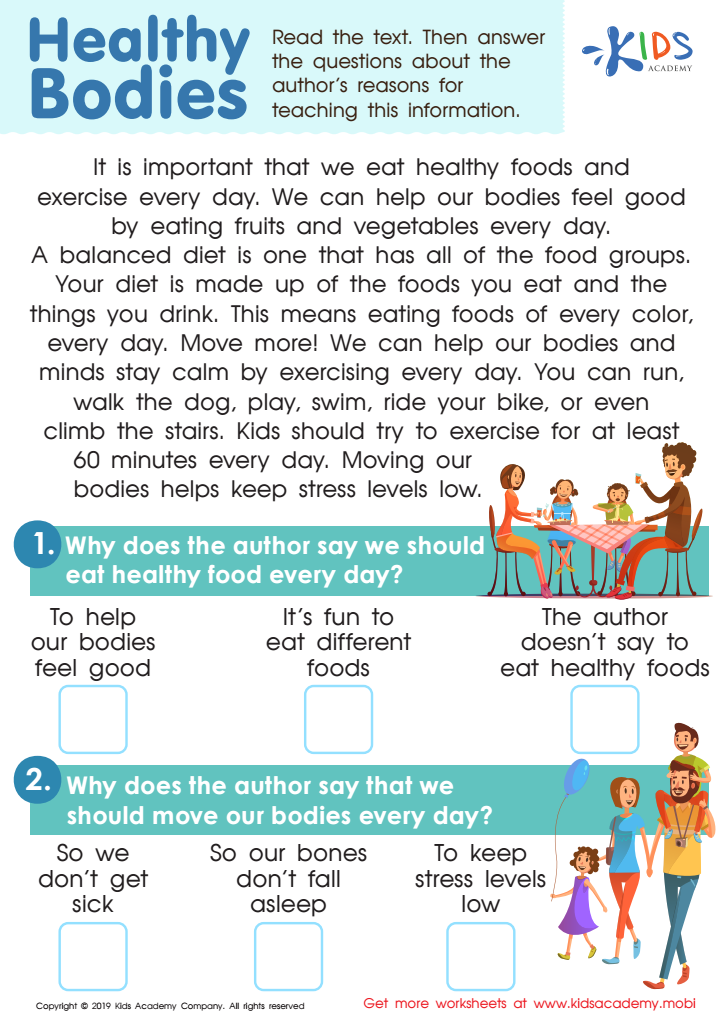
Healthy Bodies Worksheet
 Assign to My Students
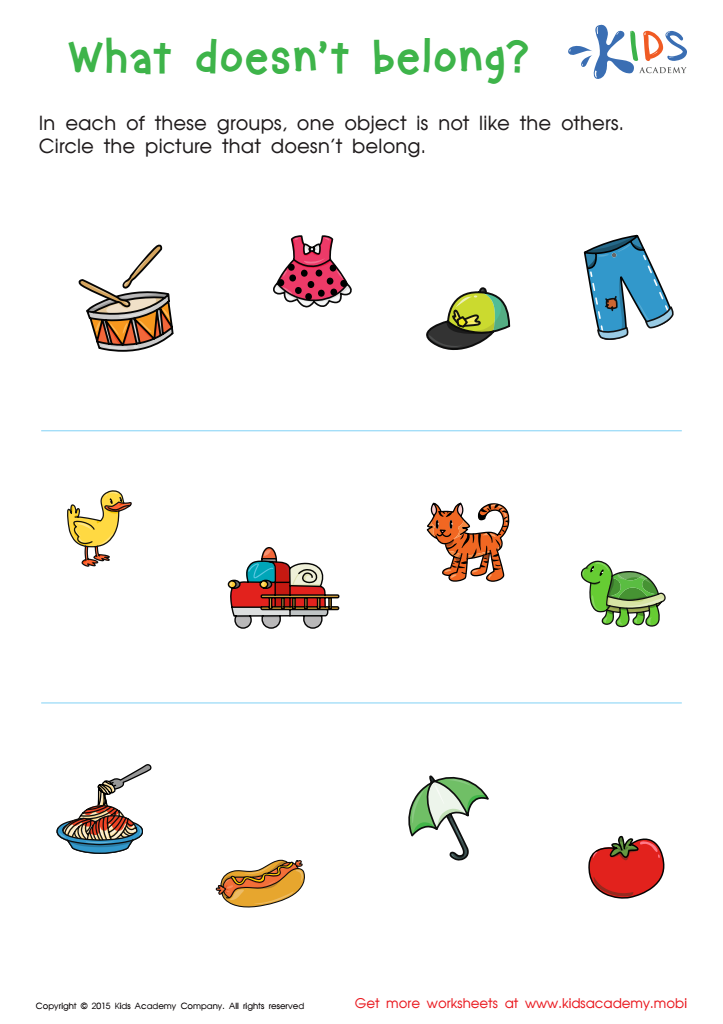
First Words: What Doesn't Belong Worksheet
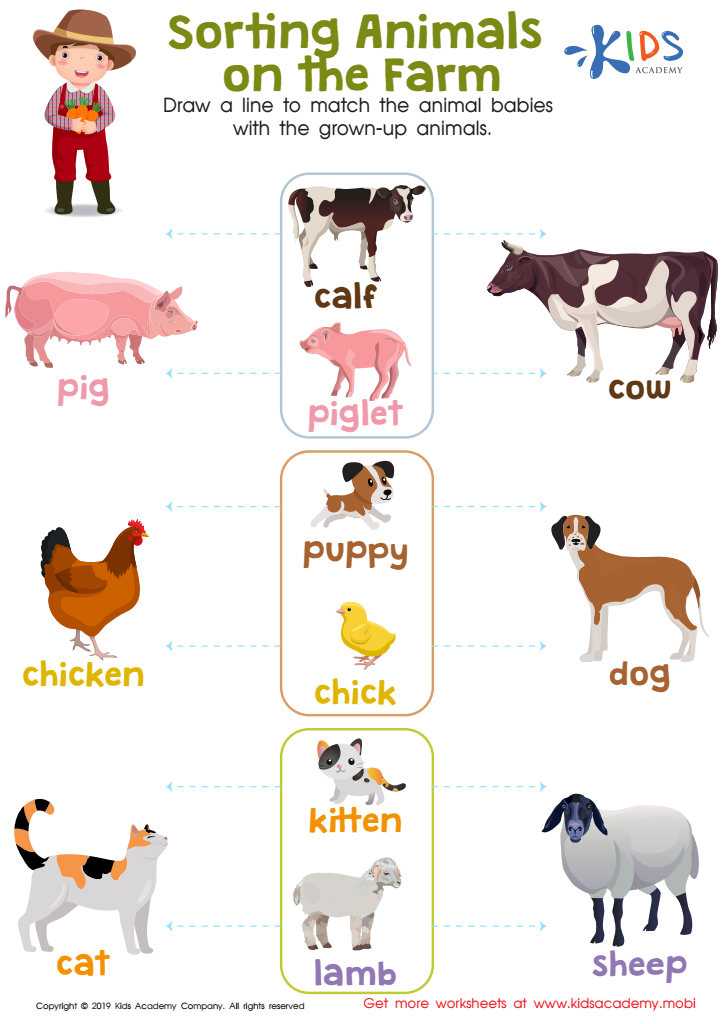
Sorting Animals on the Farm Worksheet







Categorization skills are fundamental for children aged 5-7 as they play a crucial role in literacy development and overall cognitive growth. Parents and teachers should care about these skills because they lay the groundwork for effective reading comprehension and critical thinking. At this age, children learn to group items, ideas, or words based on shared characteristics, which enhances their understanding of language structure and usage.
By recognizing categories—such as animals, colors, or shapes—children also improve their vocabulary and semantic knowledge. This skill helps them make connections between words, enabling more profound learning. Additionally, categorization encourages problem-solving abilities. For instance, when children identify patterns or sort information, they develop analytical skills that are essential in academics and everyday decisions.
Promoting categorization can be an engaging experience through fun activities such as sorting games or categorizing pictures. These engaging experiences foster a love of learning and make reading enjoyable. Ultimately, supporting categorization skills not only boosts reading proficiency but also prepares children for more complex thinking tasks in the future, making it fundamental for both parents and educators to focus on this critical aspect of early childhood education.








