
Rhyming skills development Normal Reading Worksheets for Ages 5-7
3 filtered results
Difficulty Level
Grade
Age
-
From - To
Subject
Activity
Standards
Boost your child's phonemic awareness with our "Rhyming Skills Development Reading Worksheets for Ages 5-7"! These engaging activities are expertly designed to help young learners identify and create rhyming words, enhancing their reading skills. Each worksheet is filled with fun, colorful illustrations that make learning enjoyable and effective. Perfect for early grade students, our rhyming worksheets foster better listening, speaking, and reading capabilities. Whether used in the classroom or at home, these resources provide a solid foundation for successful reading development. Set your child on the path to literacy success with our expertly crafted rhyming worksheets!
Favorites
With answer key
Interactive
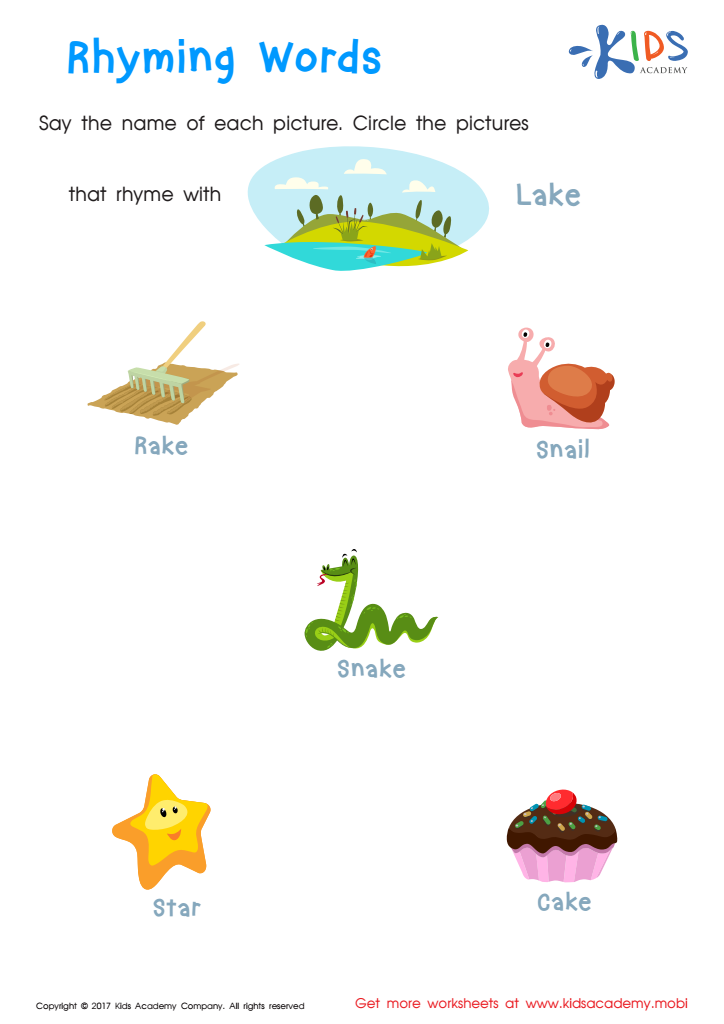
Rhyming Words Rhyming Worksheet
This worksheet is great for honing pre-reading skills. It helps kids make connections between pictures and written words, use problem-solving, and recognize sounds and words that rhyme. Have fun exploring rhyming words with your child, and they'll be rhyming in no time!
 Assign to My Students
Rhyming Words Rhyming Worksheet
Worksheet
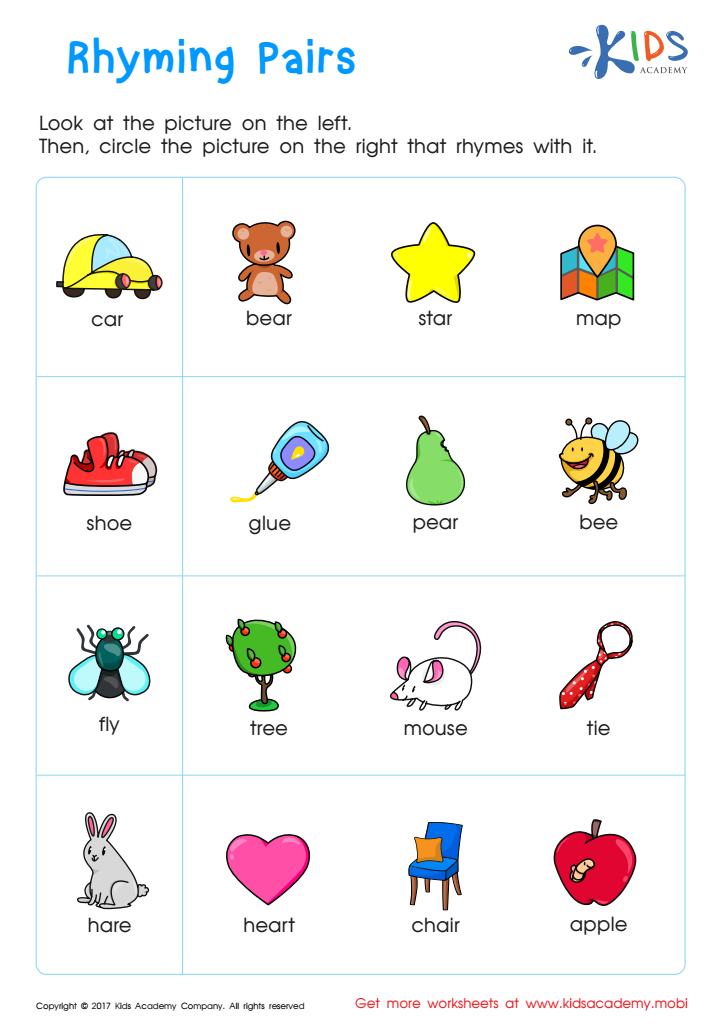
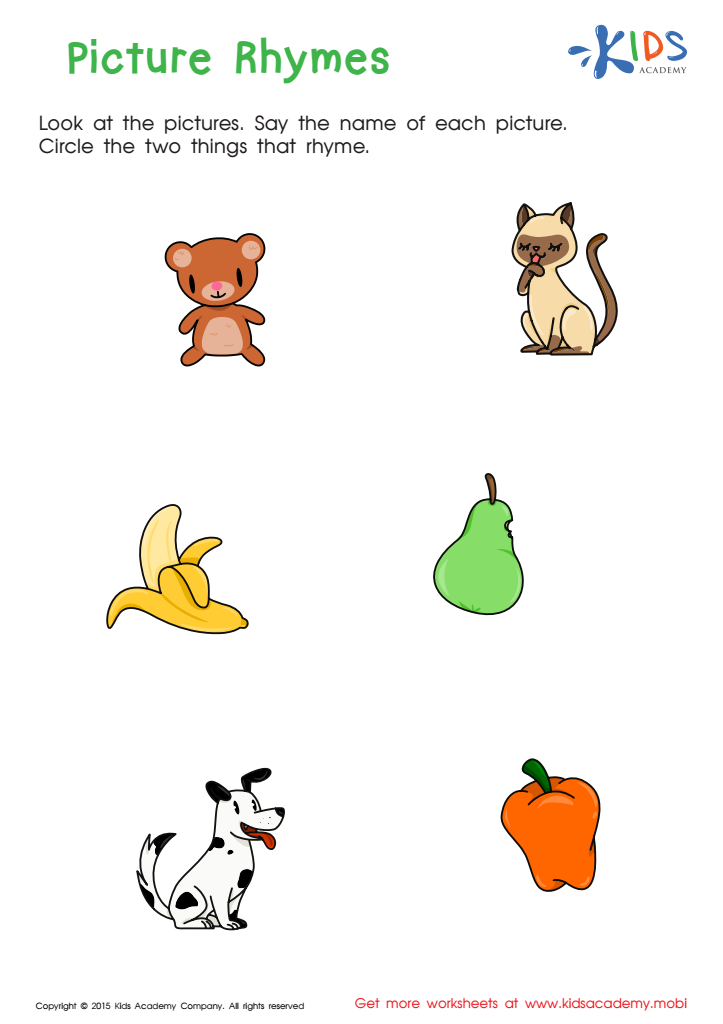
First Words: Picture Rhymes Worksheet
Rhyming helps kids understand language, read and write better. This printable worksheet boosts problem-solving and cognitive skills with vibrant pictures. It teaches kids to identify words, recognize rhymes, complete mental tasks and write words. An extra activity: show them how rhyming words share some of the same letters.
First Words: Picture Rhymes Worksheet
Worksheet
Join Kids Academy for Free
Who is primarily going to use this learning content?








Rhyming skills are a crucial aspect of early literacy development for children ages 5-7. These skills significantly contribute to a child's ability to hear, identify, and manipulate sounds within spoken language, forming a strong foundation for reading and writing. Rhyming helps young learners recognize patterns in language, which is essential for decoding new words and understanding their structure. This auditory discrimination enables children to predict and generate rhyming words, enhancing their phonological awareness.
Phonological awareness, including rhyming, is one of the best predictors of how well children will learn to read during the first few years of school. It supports the development of critical reading skills, such as phonics—the relationship between letters and sounds—blending, and segmenting. These skills enable children to decode unfamiliar words, improving their fluency and comprehension.
Furthermore, engaging in rhyming activities can make learning enjoyable and dynamic. Songs, nursery rhymes, and rhyming games capture children's interest, fostering a positive attitude toward reading. In social terms, rhyming activities often involve peers or adults, promoting language-rich interactions that further reinforce learning.
In summary, the development of rhyming skills in early childhood is vital for nurturing a foundation in reading and writing, ultimately supporting overall academic success and a lifelong love of literacy.








