Moral understanding Normal Reading Comprehension Worksheets for Ages 5-7
4 filtered results
-
From - To
Enhance your child's reading skills with our "Moral Understanding Normal Reading Comprehension Worksheets" designed specifically for ages 5-7. These engaging worksheets foster young readers' abilities to grasp not only the text but also the moral lessons behind the stories. Each worksheet features age-appropriate texts accompanied by questions that encourage critical thinking and discussions about right and wrong. By integrating moral lessons into reading comprehension, children develop empathy and social awareness while improving their literacy skills. Perfect for teachers and parents alike, these printable resources make learning fun and meaningful, guiding children through the world of stories and ethics. Start nurturing lifelong learners today!
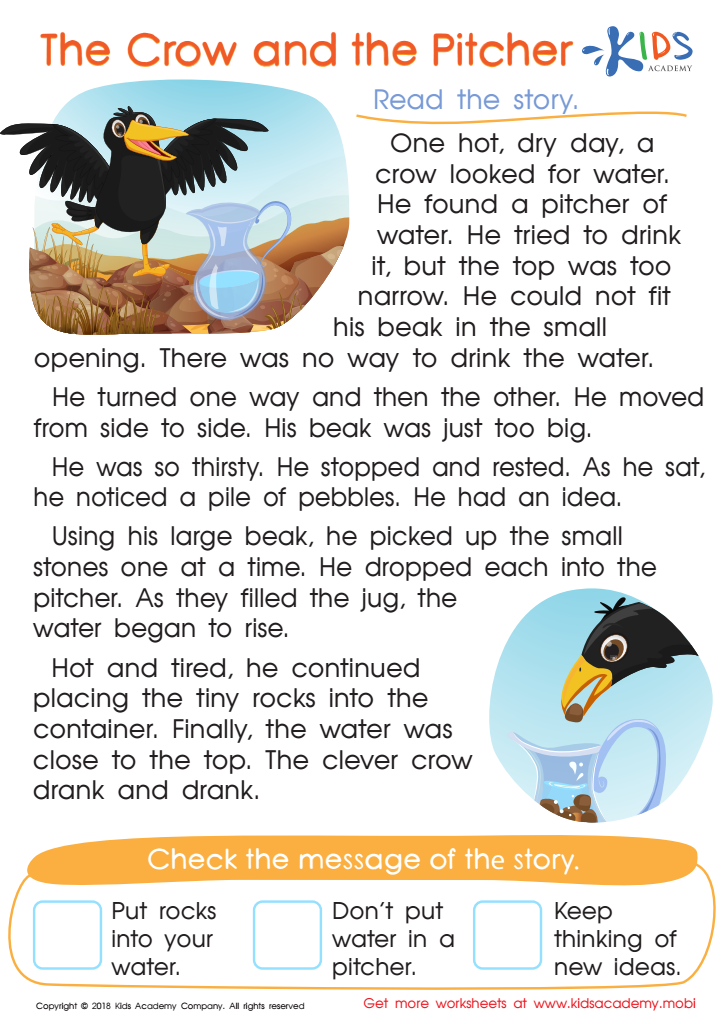
The Crow and the Pitcher Worksheet
 Assign to My Students
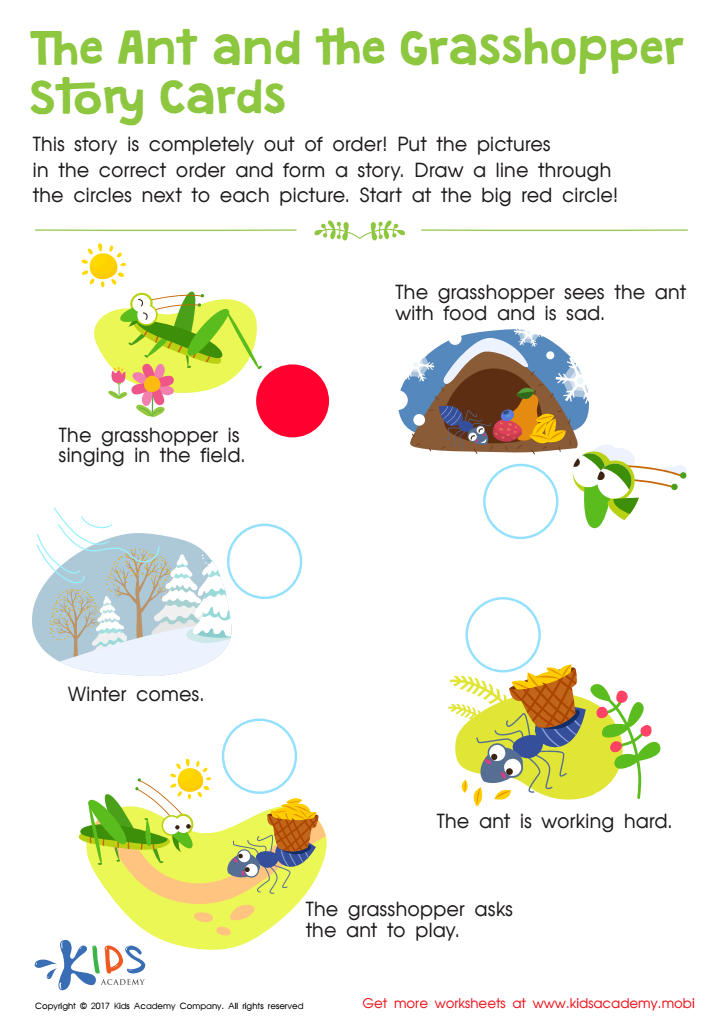
The Ant and The Grasshopper Worksheet
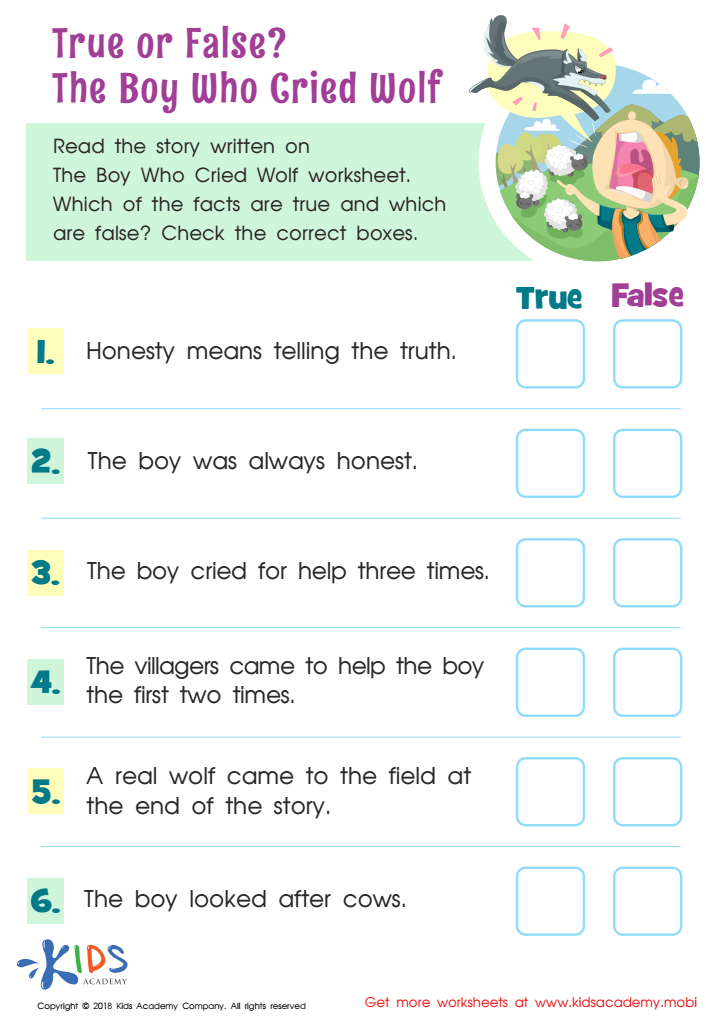
True or False? The Boy Who Cried Wolf Worksheet
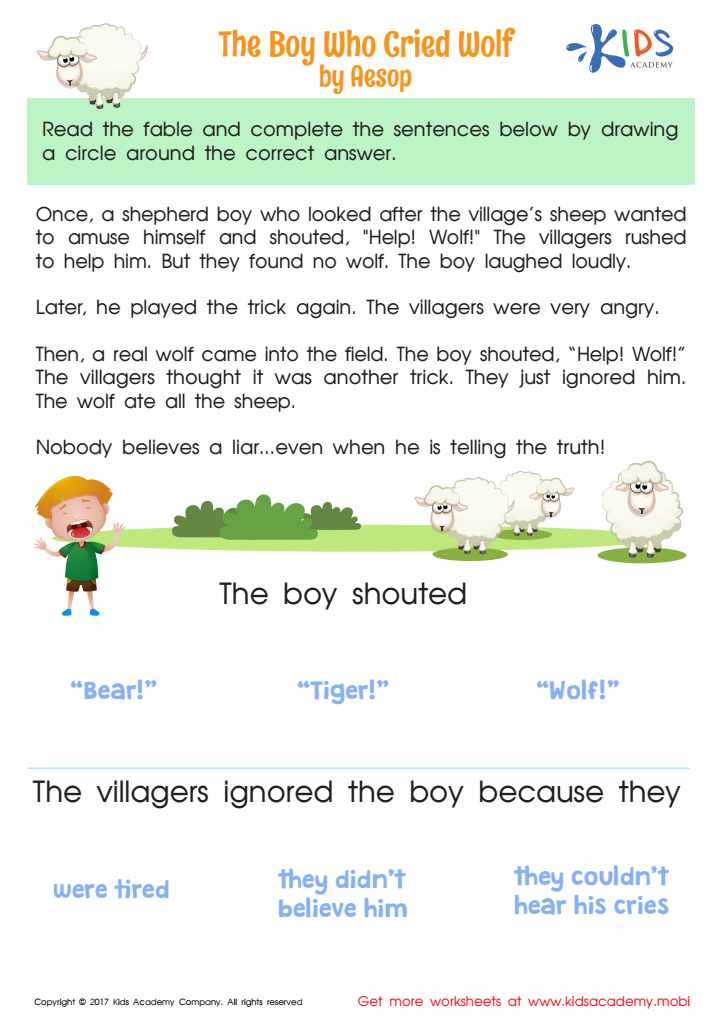
The Boy Who Cried Wolf Worksheet






Moral understanding is crucial for children aged 5-7 as it lays the foundation for their ethical development, social interactions, and emotional intelligence. At this age, children begin to comprehend concepts of right and wrong, and reading comprehension plays a significant role in this process. Stories often present characters in moral dilemmas, allowing children to explore choices and consequences, which fosters empathy and critical thinking.
Parents and teachers should focus on enhancing reading comprehension through moral narratives, providing opportunities for discussions on values like honesty, kindness, and respect. This encourages children to articulate their thoughts and feelings, promoting emotional awareness. When children engage with literature that presents moral lessons, they learn to relate to others, enhancing their social skills and ability to cooperate.
Furthermore, moral understanding cultivates self-regulation and responsible behavior, vital for academic and personal success. By integrating moral themes into reading activities, adults can guide children in developing a moral compass, which will inform their decisions throughout life. In summary, nurturing moral understanding through reading comprehension not only enriches children’s literature engagement but also equips them with essential life skills, setting the stage for becoming compassionate and thoughtful individuals in society.








