Identifying story elements Normal Reading Fiction Worksheets for Ages 5-7
3 filtered results
-
From - To
Enhance your child's reading skills with our "Identifying Story Elements" worksheets designed for ages 5-7. These engaging, interactive resources help young learners grasp the key components of fiction, including characters, setting, plot, and main ideas. Ideal for classroom or home use, our worksheets encourage critical thinking and comprehension through fun exercises tailored for early readers. Each worksheet features playful illustrations and age-appropriate activities that make learning enjoyable. Foster a love for reading and storytelling while building essential literacy skills. Explore our collection today and watch your child's confidence grow as they learn to identify the elements that make stories come alive!
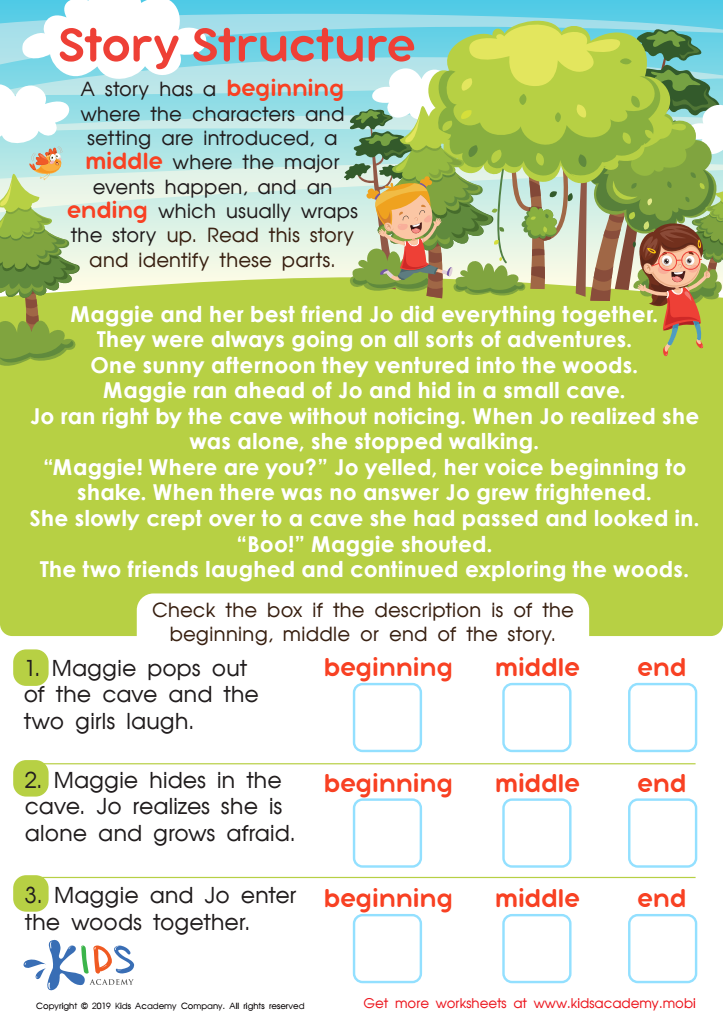
Story Structure Worksheet
 Assign to My Students
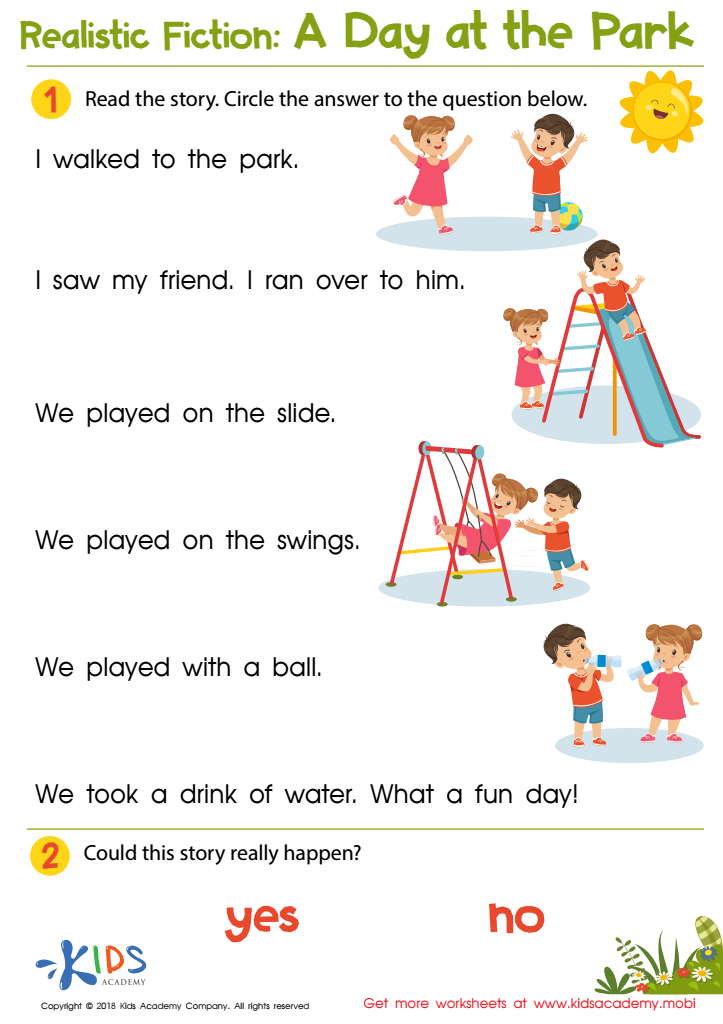
A Day at the Park Worksheet
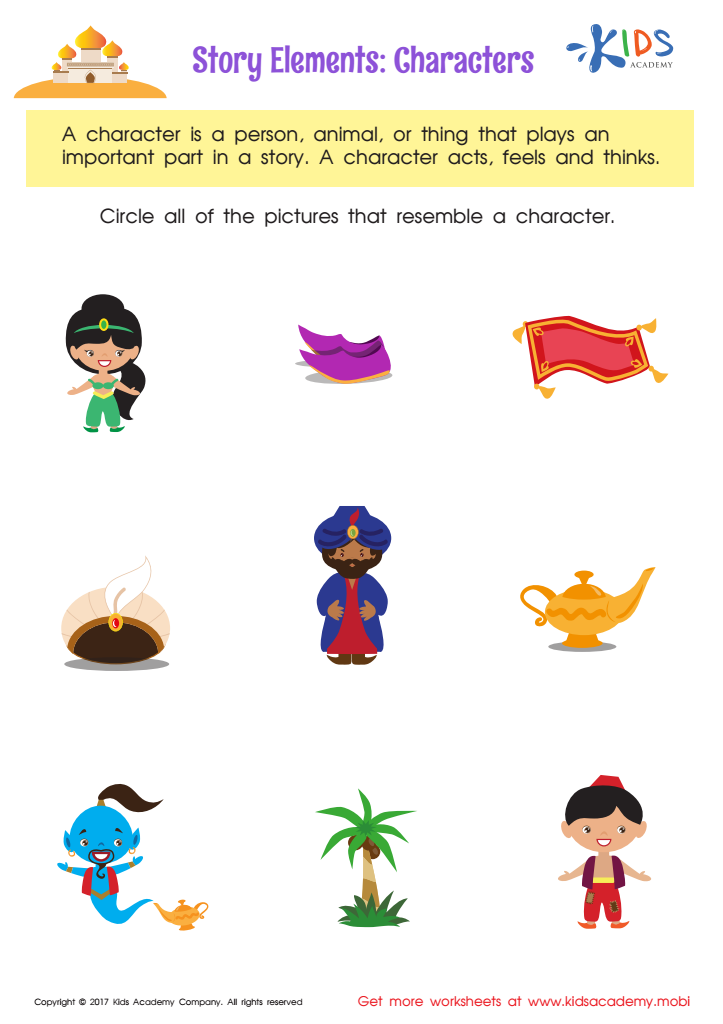
Story Elements Printable



.jpg)



Identifying story elements is crucial for young learners aged 5-7 for several reasons. First, understanding story elements such as characters, setting, plot, conflict, and resolution lays a foundation for literacy skills. These components help children comprehend and analyze narratives, fostering a deeper love for reading. When parents or teachers encourage discussions about these elements, they enhance critical thinking and comprehension skills, essential for academic success.
Additionally, identifying story elements promotes engagement and creativity. Children who recognize these components can draw connections to their own lives, enhancing their ability to relate to characters and situations. This relatability can lead to increased motivation to read and explore various genres.
Moreover, discussing story elements provides opportunities for collaborative learning. Parents and teachers can engage children in discussing and retelling stories, which strengthens vocabulary and fosters communication skills. As children learn to articulate their thoughts about narratives, they develop confidence in expressing their opinions.
Ultimately, caring about identifying story elements equips young learners with essential skills and encourages a lifelong love of reading. By nurturing curiosity and analytical skills early on, adults empower children to become proficient readers and thoughtful individuals.







