Categorization skills Normal Animals Worksheets for Ages 5-7
3 filtered results
-
From - To
Enhance your children's categorization skills with our engaging "Normal Animals Worksheets" tailored for ages 5-7! Designed to foster cognitive development, these worksheets help young learners identify and categorize a variety of animals. Through fun and interactive activities, kids will explore different animal types, strengthen their classification abilities, and improve their observational skills. Each worksheet is crafted to ensure that learning is enjoyable and effective, making it a perfect addition to your home or classroom resources. Watch as your little ones develop essential skills while having fun with their favorite creatures! Download our categorized animal worksheets for endless educational excitement.
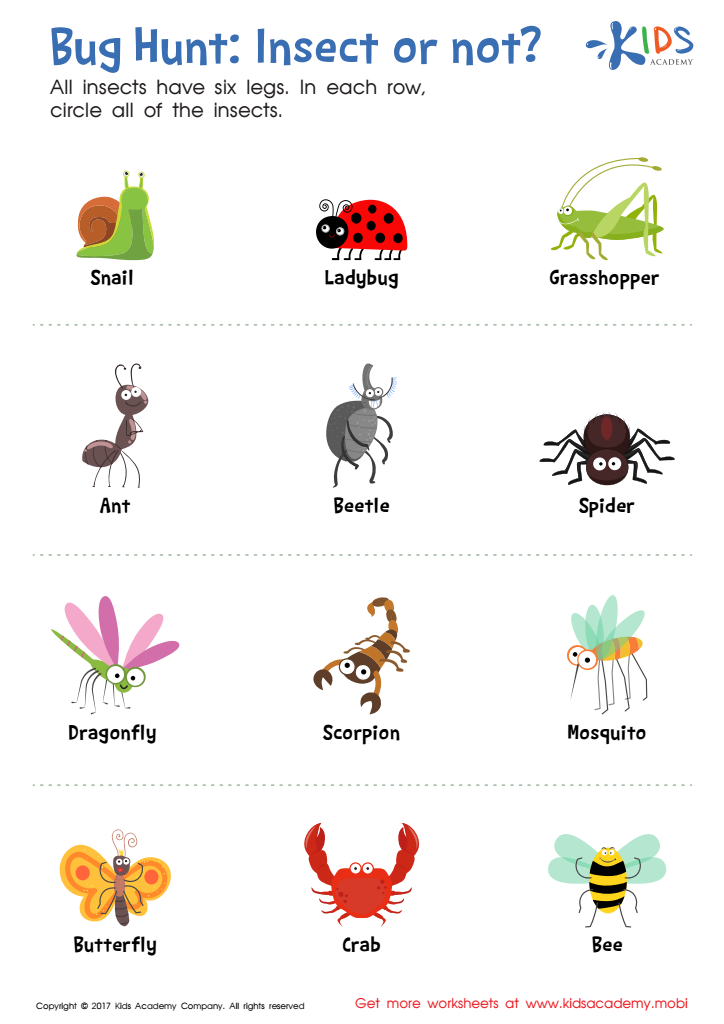
 Assign to My Students
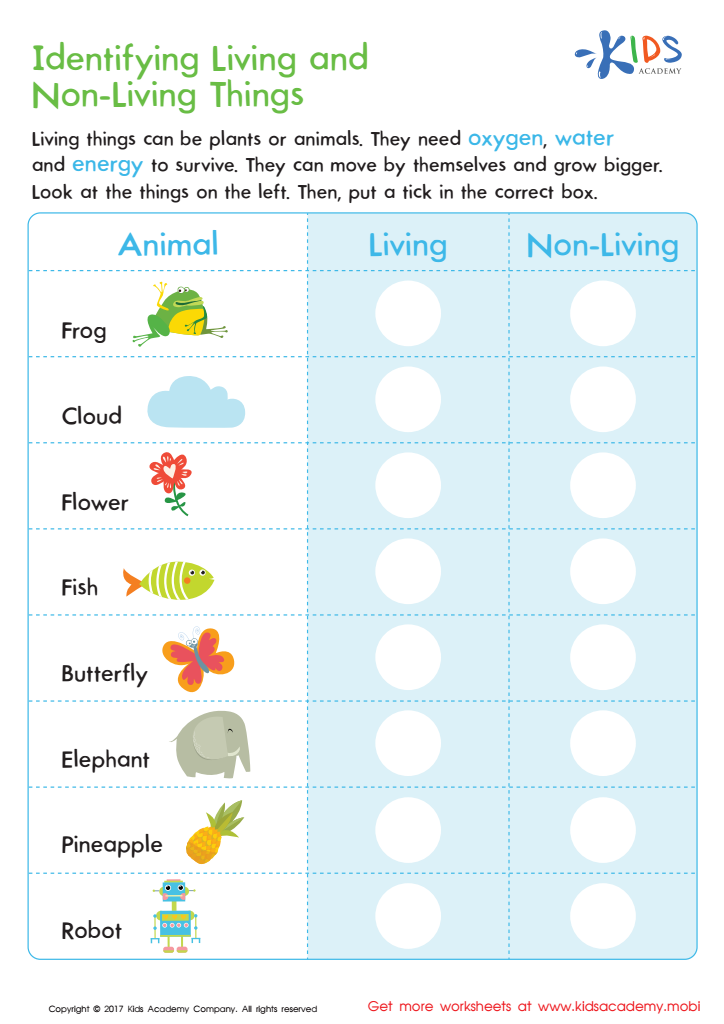
Identifying Living or Non–living Worksheet
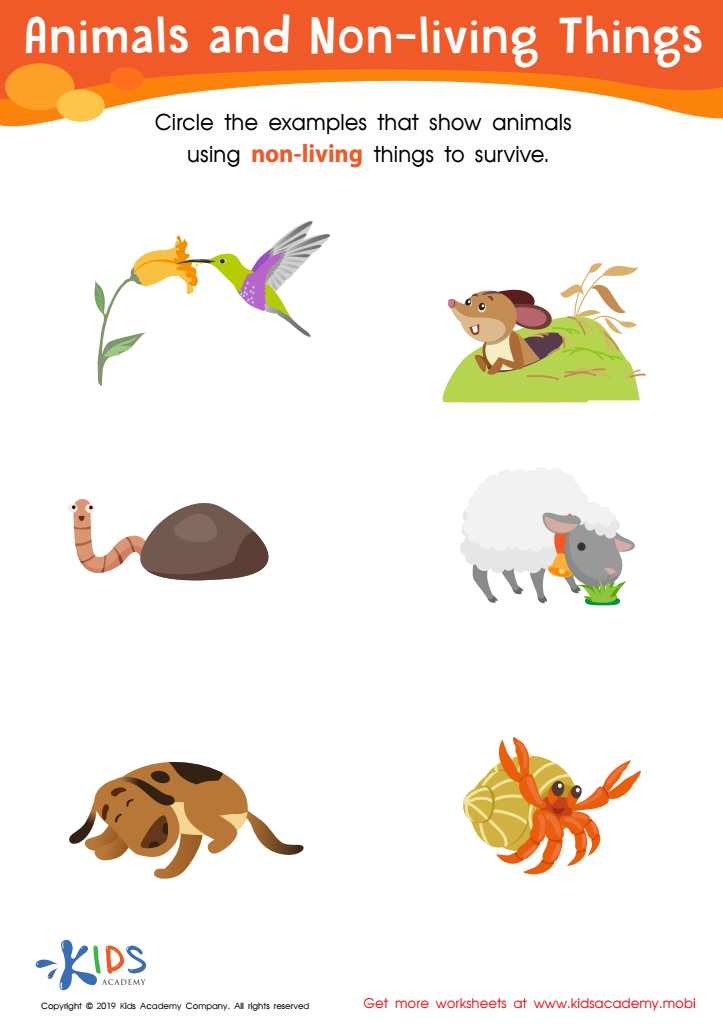
Animals and Non-Living Things Worksheet








Categorization skills are essential for children aged 5-7 as they form the foundation for critical thinking and cognitive development. Teaching young learners about categorical groupings, such as identifying normal animals, helps them develop observational skills and enhances their ability to make connections in various contexts. By recognizing similarities and differences among animals, children learn to classify based on characteristics like habitat, diet, or physical features.
Parents and teachers should prioritize these skills because they directly influence a child’s ability to organize information, which is vital for problem-solving later in life. Strong categorization skills also promote language development; children learn specific vocabulary associated with groups of animals and can articulate their understanding more clearly.
Moreover, this foundational skill bridges learning in other subjects—such as science, math, and even art—where categorization plays a crucial role in understanding concepts like ecosystems or data organization. Additionally, discussing animals encourages curiosity and fosters a sense of empathy towards living beings. Ultimately, nurturing categorization skills in young children not only equips them with essential academic tools but also prepares them to navigate the complexities of the world around them with confidence and understanding.








