
Animal Classification Normal Science Worksheets for Ages 5-7
5 filtered results
Difficulty Level
Grade
Age
-
From - To
Subject
Activity
Standards
Explore the fascinating world of animal classification with our engaging Normal Science Worksheets designed specifically for ages 5-7! These worksheets introduce young learners to the basics of understanding and categorizing animals by their unique characteristics such as mammals, birds, reptiles, and more. Fun activities and colorful illustrations make learning enjoyable and interactive, ensuring that children develop essential skills in science while fostering a love for nature. Perfect for home or classroom use, our worksheets encourage critical thinking and promote curiosity. Get started today and watch your child's confidence in science grow while they uncover the incredible diversity of the animal kingdom!
Favorites
With answer key
Interactive
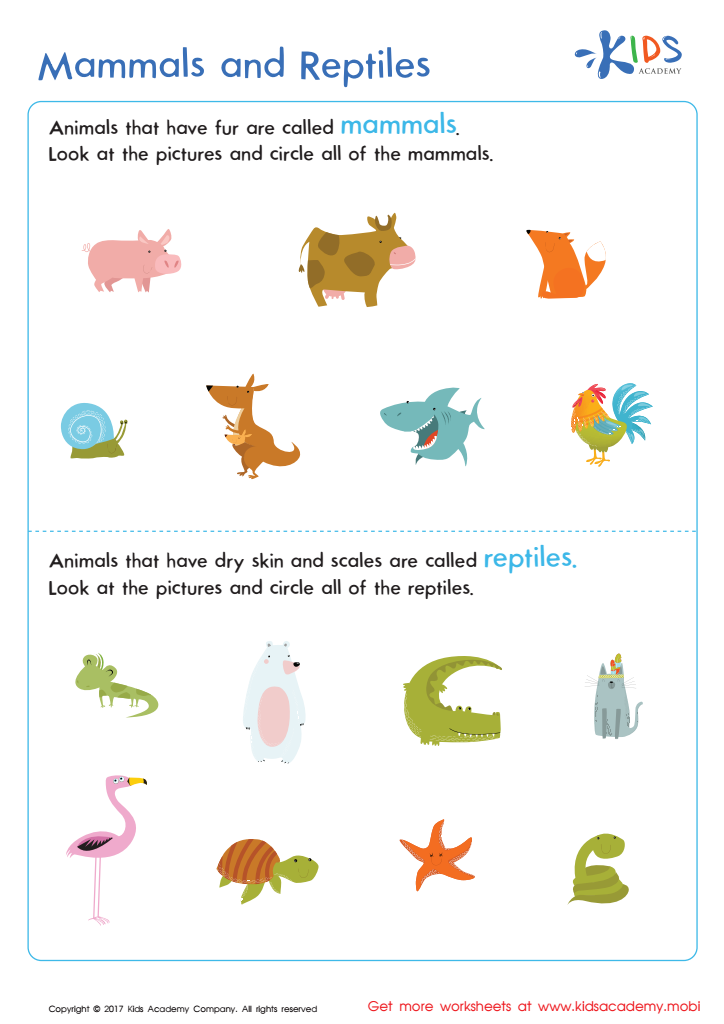
Mammals and Reptiles Worksheet
Challenge your child to identify mammals and reptiles with this worksheet. It's a great way to help them recognize the differences between these two types of animals.
 Assign to My Students
Mammals and Reptiles Worksheet
Worksheet
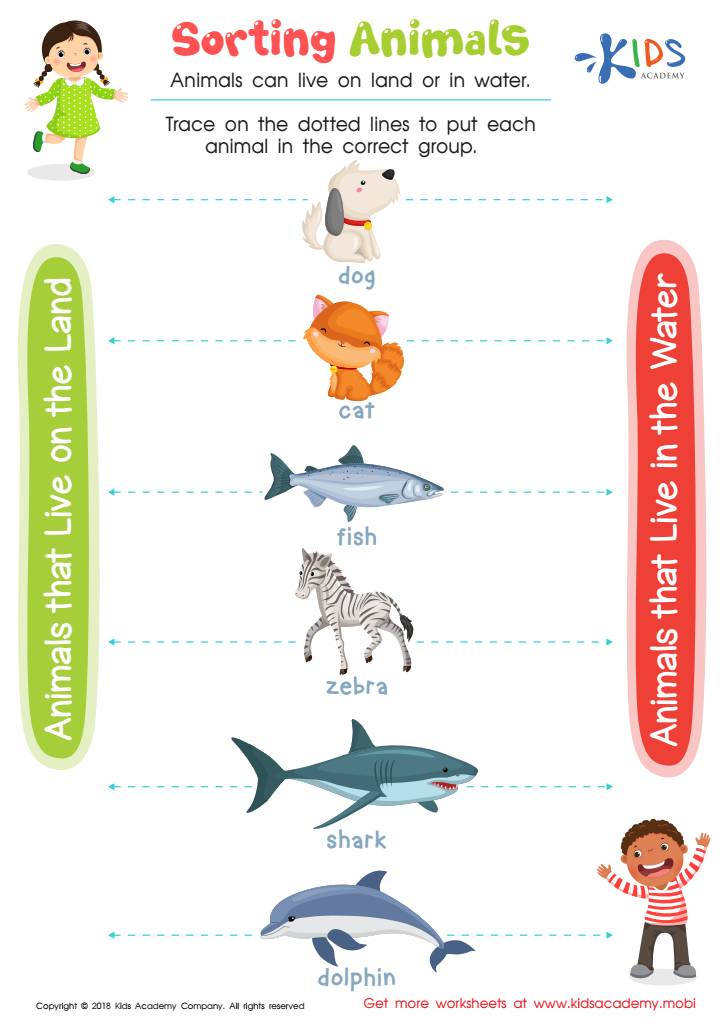
Sorting Animals Worksheet
Your kids will love this free, interactive worksheet! With image clues, they can read and trace the animal names, and then sort them into groups of land or water animals. It's an enjoyable way to boost their critical thinking, fine motor and prior knowledge skills.
Sorting Animals Worksheet
Worksheet
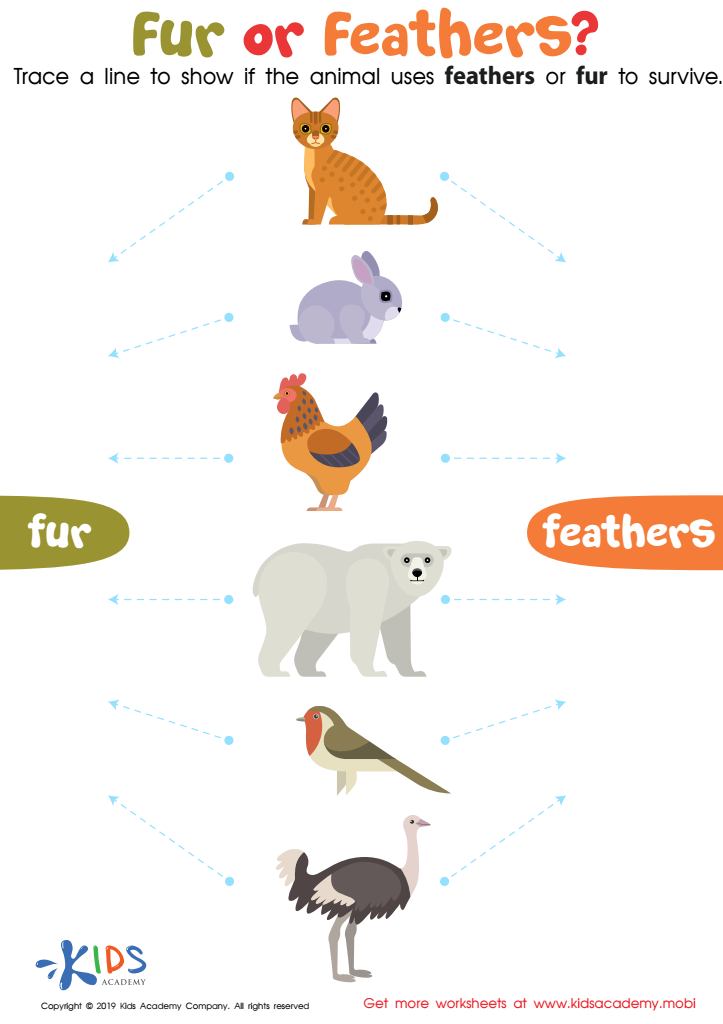
Fur or Feathers? Worksheet
Examine animals you see daily. How do they differ from humans? With a pet in your home, ask your child to touch it and identify what covers the animal's body - fur or feathers? Birds have feathers, while mammals have fur. Guide your kids to identify animals in this worksheet and determine if fur or feathers keep them alive.
Fur or Feathers? Worksheet
Worksheet
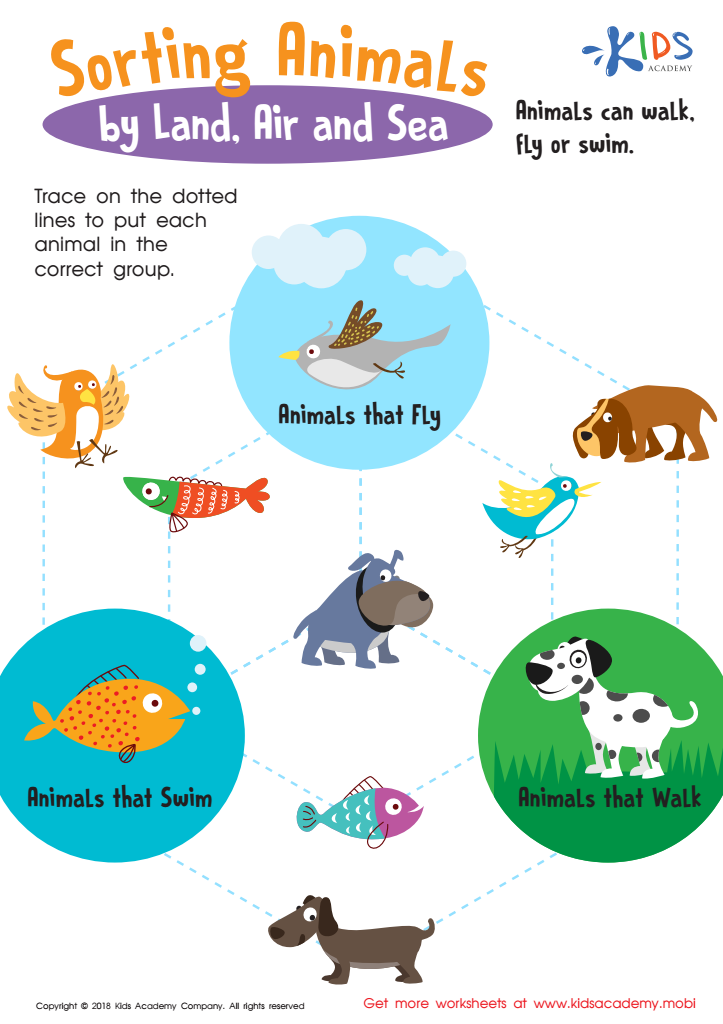
Sorting Animals by Land, Air and Sea Worksheet
Kids will use critical thinking and fine motor skills with this worksheet! They'll analyze animal traits and draw lines to sort them into groups of those that fly, swim, or walk. It's a fun way to hone skills and have a great time!
Sorting Animals by Land, Air and Sea Worksheet
Worksheet
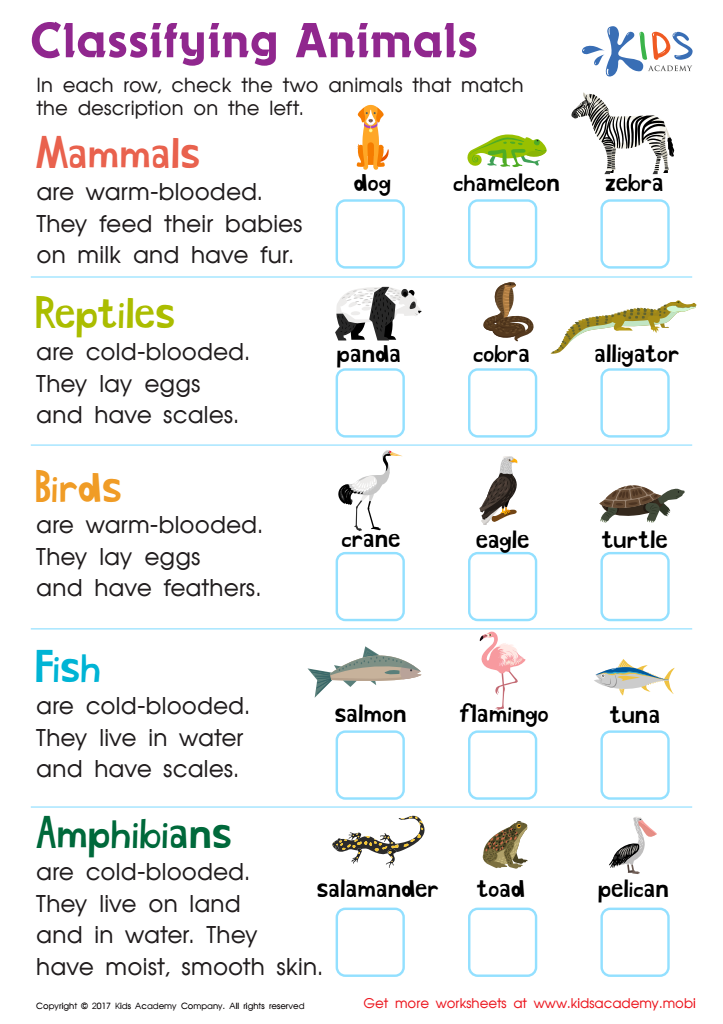
Classifying Animals Worksheet
Print the 2nd grade animal classification worksheet and help kids study the differences between mammals, reptiles, birds, fish and amphibians. Let them pick two examples from the options given.
Classifying Animals Worksheet
Worksheet
Join Kids Academy for Free
Who is primarily going to use this learning content?






Understanding animal classification is essential for children aged 5-7, as it lays the foundation for scientific literacy and critical thinking. By learning about how animals are grouped into categories like mammals, birds, reptiles, amphibians, and fish, children develop an appreciation for biodiversity and the natural world around them. This knowledge fosters curiosity and encourages exploration, prompting children to ask questions about the environment and the creatures within it.
Parents and teachers play a crucial role in guiding this learning process. Engaging children in hands-on activities, such as sorting animals based on their characteristics, can enhance their observational skills and make learning enjoyable. Additionally, animal classification serves as a gateway to discussions about ecosystems, habitats, and the importance of conservation, nurturing a sense of responsibility toward the planet.
Furthermore, discussing animal characteristics and their roles in nature fosters empathy in young children, cultivating a respect for all living things. By investing time in teaching animal classification, parents and teachers equip children with essential knowledge for their future education while sparking their interest in science and the environment. This foundational understanding can inspire life-long learning and a deep-seated appreciation for the interconnectedness of all forms of life.







