Space knowledge Normal Science Worksheets for Ages 5-7
4 filtered results
-
From - To
Explore the wonders of the universe with our engaging Space Knowledge Normal Science Worksheets designed for ages 5-7! These captivating resources by Kids Academy introduce young learners to space concepts, including planets, stars, and galaxies. Interactive activities foster curiosity and build foundational science skills through fun, age-appropriate exercises. Ideal for classroom use or at-home learning, our printable worksheets encourage hands-on exploration and critical thinking. Ignite your child’s imagination and set them on a stellar educational journey that merges entertainment with essential space knowledge. Download and watch your budding scientist reach for the stars!
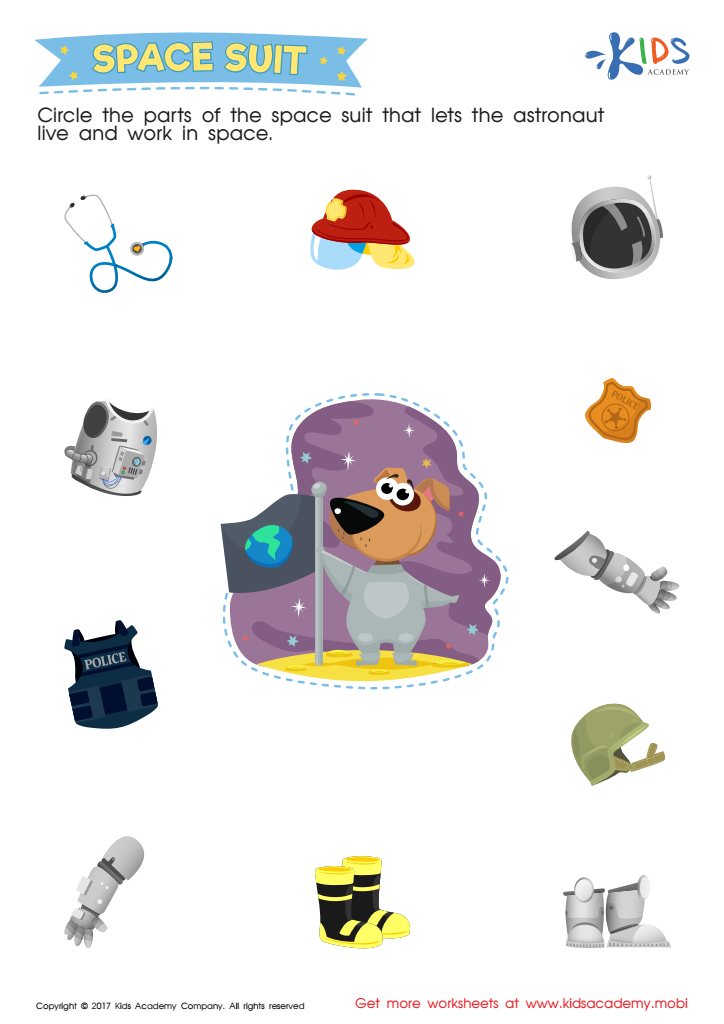
 Assign to My Students
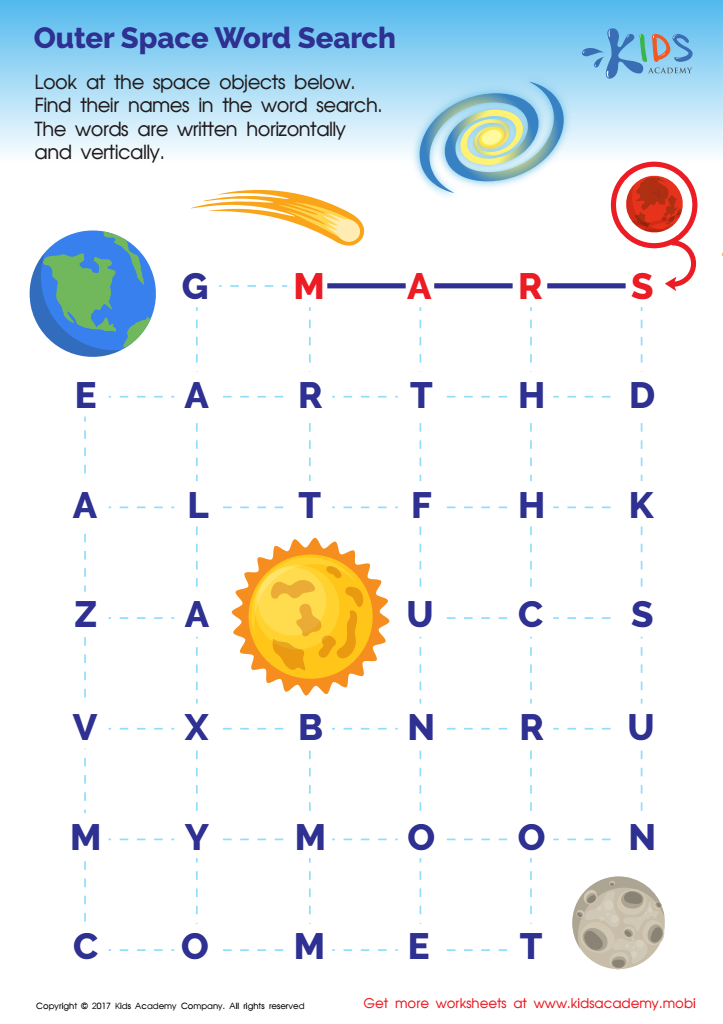
Outer Space Word Search Printable
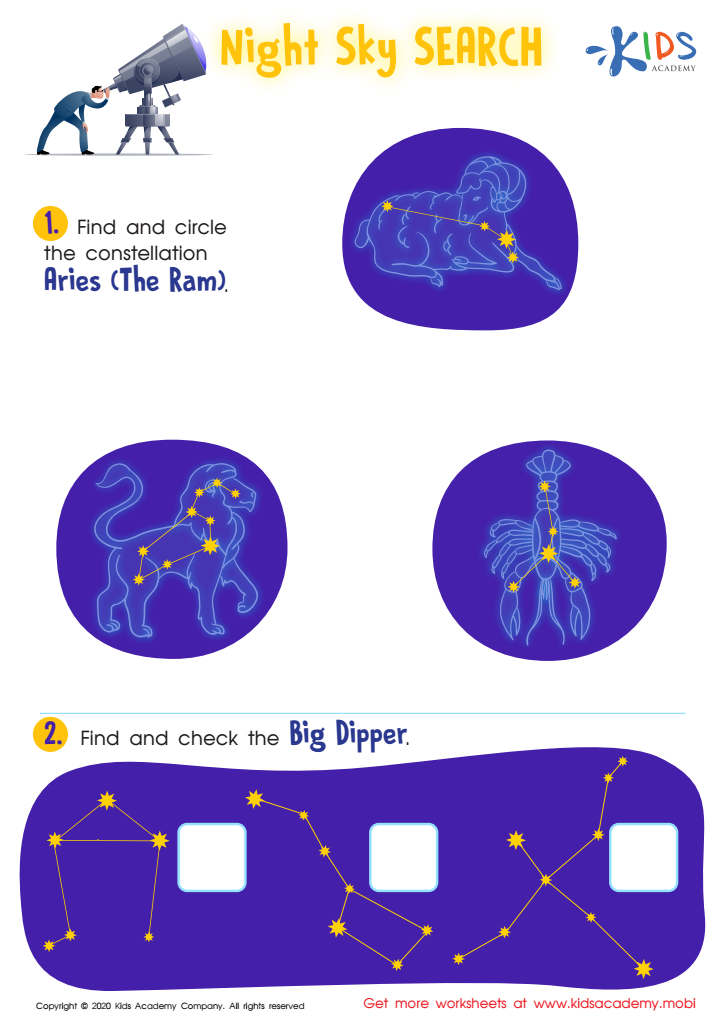
Night Sky Search Worksheet
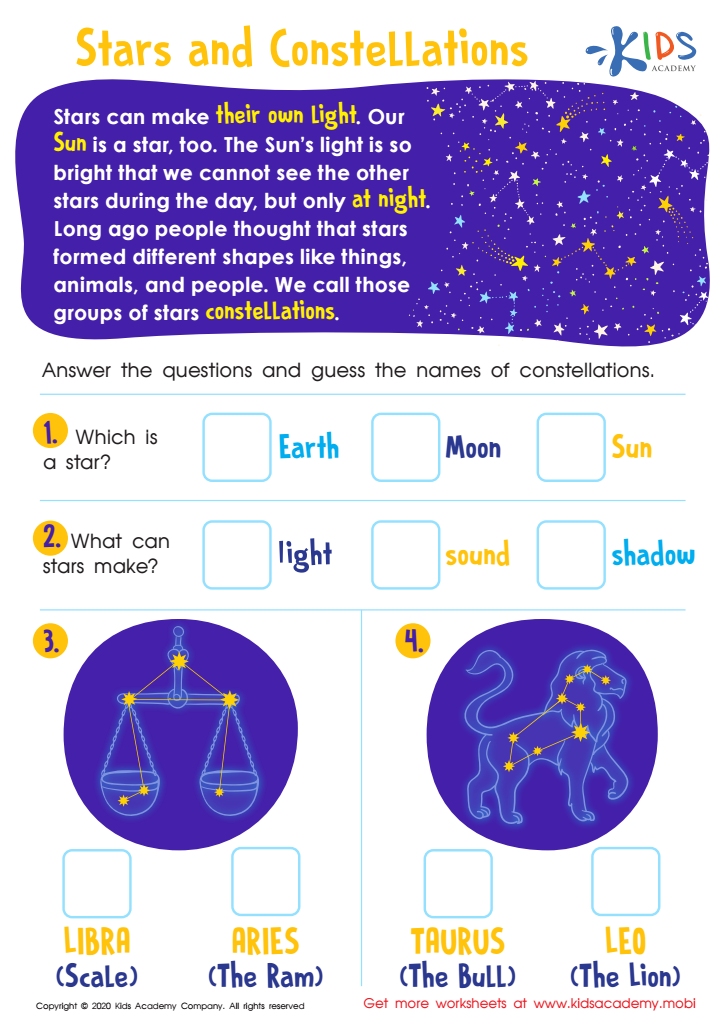
Stars and Constellations Worksheet



.jpg)
Introducing young children to space knowledge and basic scientific concepts at an early age fosters curiosity and critical thinking. At ages 5-7, children are naturally curious and eager to learn about the world around them, including the vast universe beyond our planet. Learning about space ignites their imagination and teaches them to ask questions, thus laying a foundation for scientific inquiry that will benefit them throughout their education.
Understanding basic space concepts, like the Earth’s place in the solar system, the moon’s phases, and the idea of gravity, can also enhance children's comprehension of other subjects. For example, concepts of day and night and the changing seasons tie into their understanding of time and can improve their grasp on geography and Earth's natural processes.
Additionally, space education encourages a sense of awe and wonder, which can build a lifelong love of learning. It can instill important values such as perseverance, humility, and responsibility for our planet. Through playful activities, engaging storytelling, and simple experiments, children can develop problem-solving skills and innovative thinking.
Parents and teachers play crucial roles in guiding this exploration, making sure children get an accurate yet simple introduction to scientific knowledge in a fun and relatable way. This early exposure can profoundly impact a child's intellectual growth and attitude toward science in the long run.







