
Spatial awareness Normal Science Worksheets for Ages 5-7
6 filtered results
Difficulty Level
Grade
Age
-
From - To
Subject
Activity
Standards
Enhance your child's spatial awareness with our engaging Science Worksheets designed specifically for ages 5-7! These worksheets incorporate fun activities that help young learners develop their understanding of space and how objects relate to each other in their environment. Through interactive exercises, children will explore concepts such as directions, distances, and visualization, essential for their cognitive development. Our user-friendly printable resources make learning enjoyable and easy to incorporate into any daily routine. Foster curiosity and critical thinking in your little ones as they master vital skills that lay the foundation for future academic success. Start exploring our collection today!
Favorites
With answer key
Interactive
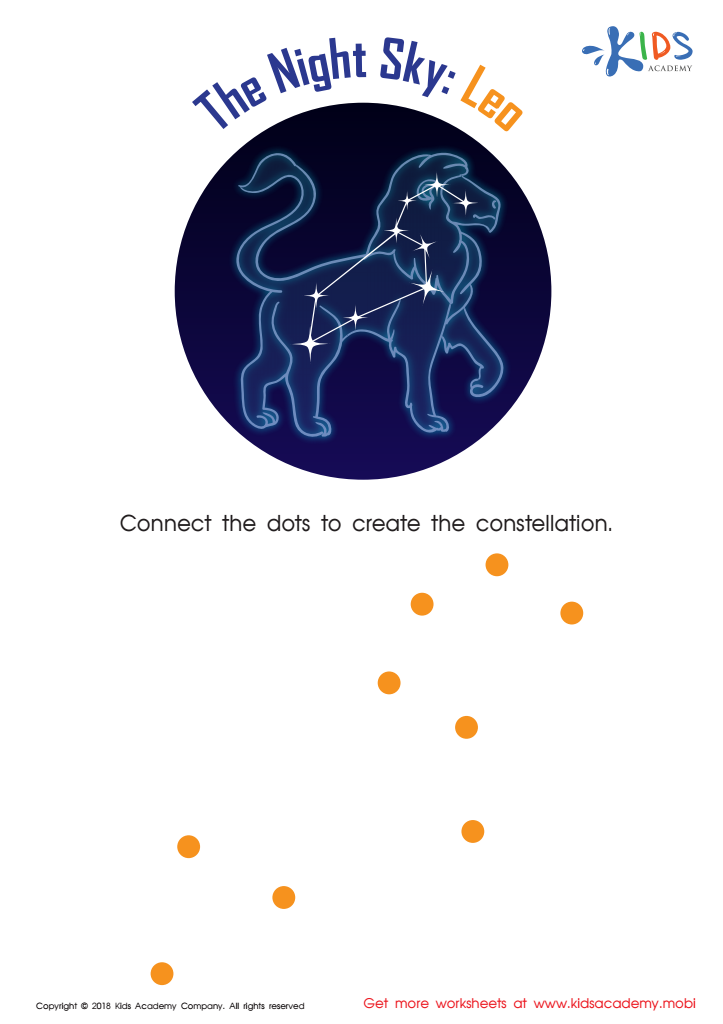
The Night Sky: Leo Worksheet
Let your kids explore the wonders of the stars with this fun worksheet! They'll connect the dots to create the constellation Leo. Night gazing instruments, a telescope or this printout can help your kids learn about constellations and horoscopes. Download the worksheet and let the star watching begin!
 Assign to My Students
The Night Sky: Leo Worksheet
Worksheet
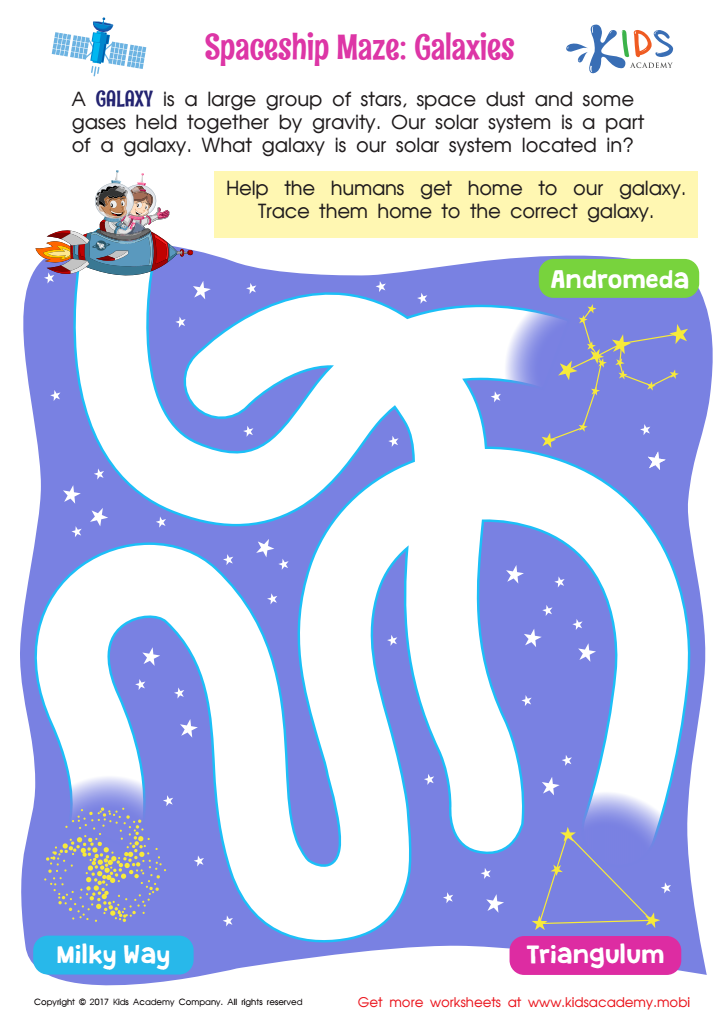
Spaceship Maze: Galaxies Worksheet
Guide lost humans home with this fun space maze: Galaxies! Once the journey is complete, kids can discover the name of our galaxy: the Milky Way! An exciting way to teach kids about space and help humans find their way back home.
Spaceship Maze: Galaxies Worksheet
Worksheet
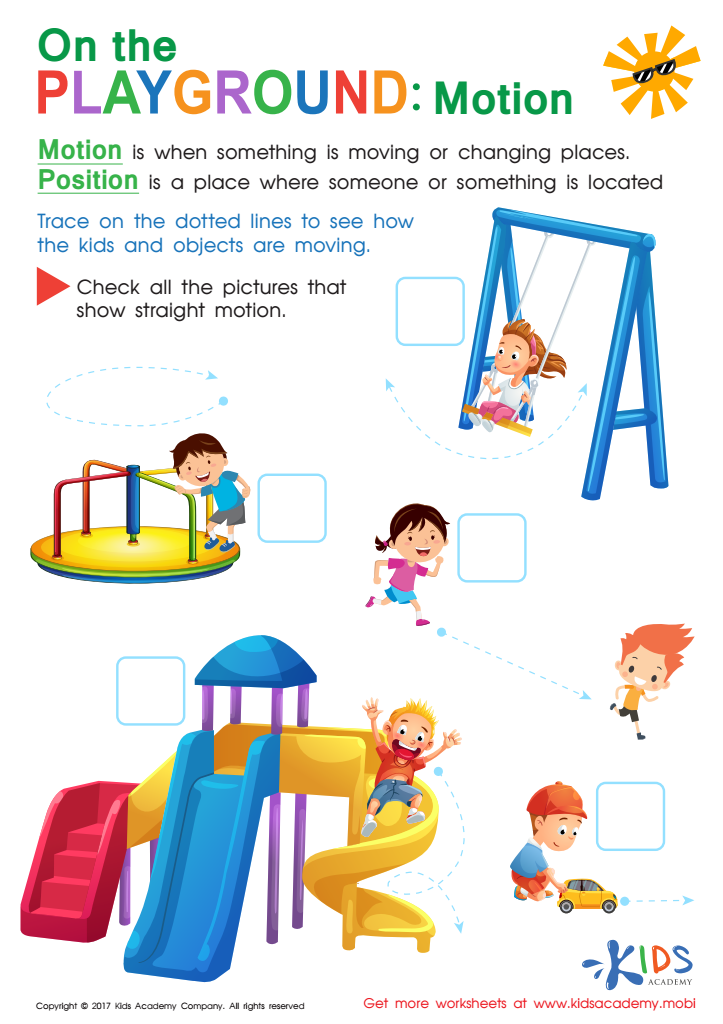
Position and Motion Worksheet
Take a trip to the park and explore motion and position with fun worksheets!
Take your child's science knowledge to a whole new level with Kids Academy's grade 2 position and motion worksheets! Explore motion and position with fun worksheets while taking a trip to the park. Strengthen their understanding of physics and how people and objects move through space.
Position and Motion Worksheet
Worksheet
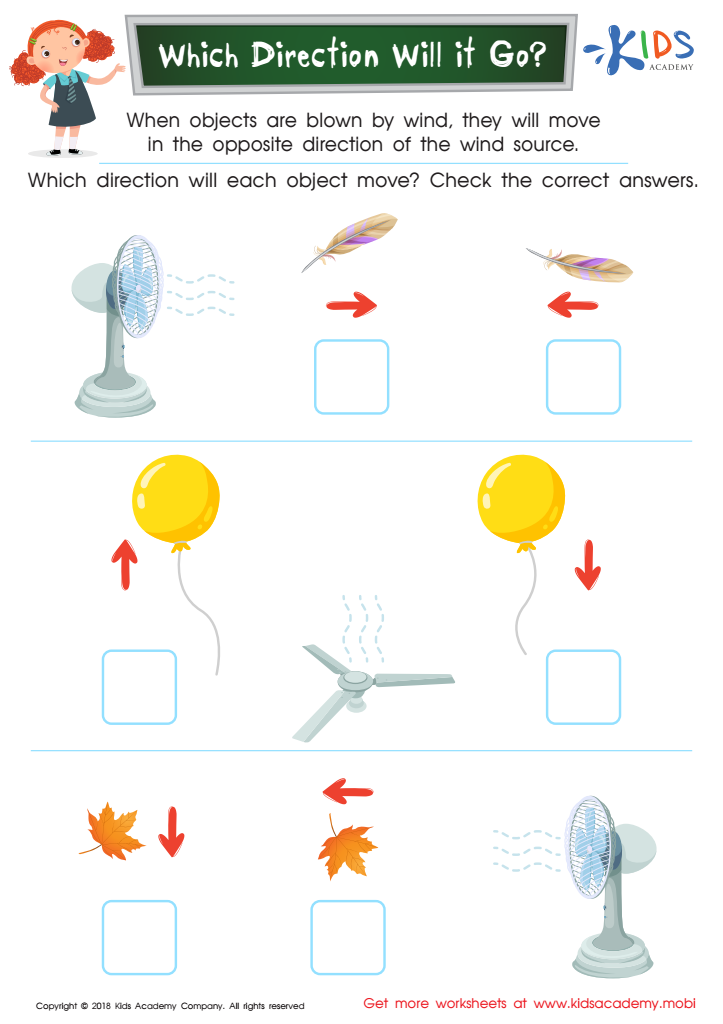
Which Direction Will it Go? Worksheet
Explain to your students: when objects are blown by wind, they will move in the opposite direction. In the worksheet, there are pictures of wind sources and objects being blown by the wind. Ask your child to identify and check the direction each object will move.
Which Direction Will it Go? Worksheet
Worksheet
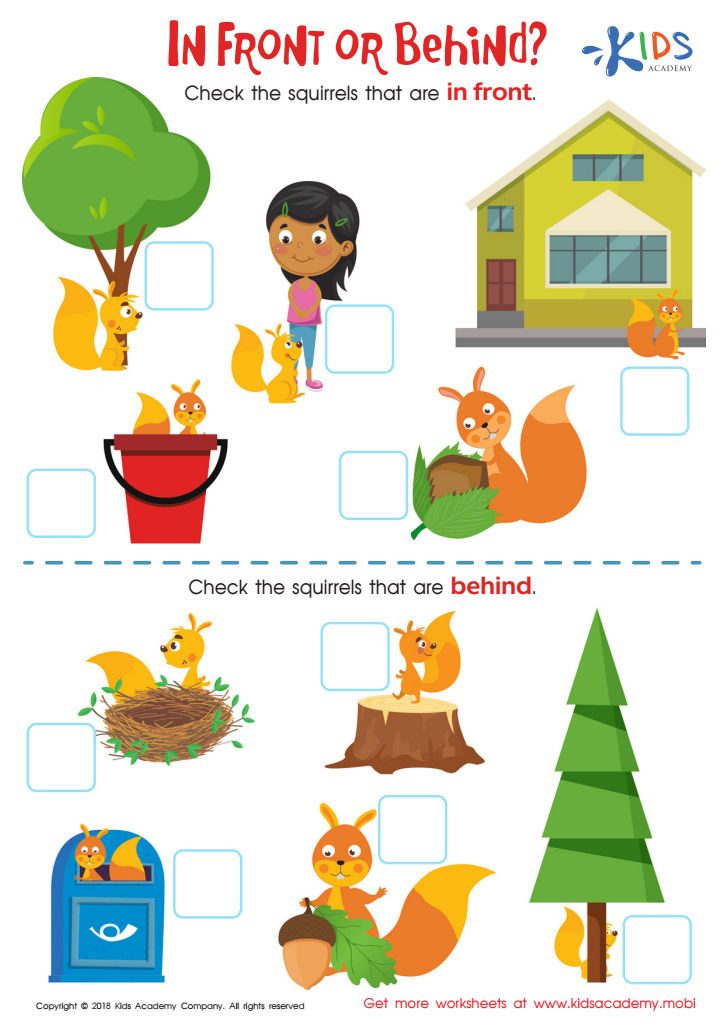
In Front or Behind: Part 2 Worksheet
Teach positional words "front" and "behind" with this fun worksheet! Students identify where the squirrel is in relation to the object - in front or behind. It's a great exercise to practice early geometry skills and understanding object movement.
In Front or Behind: Part 2 Worksheet
Worksheet
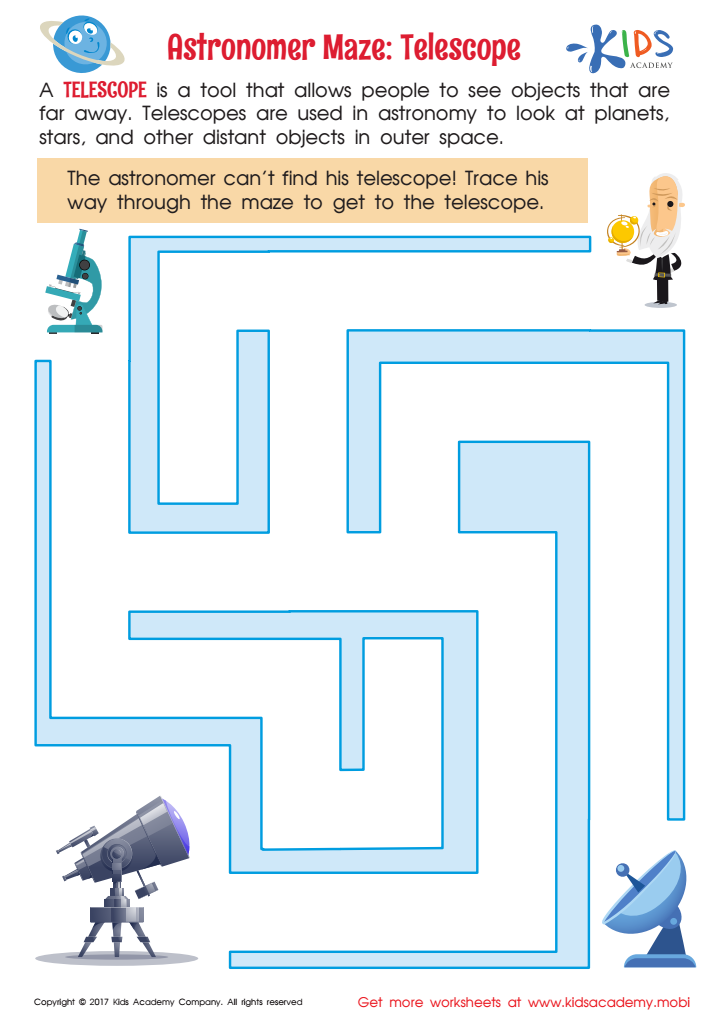
Astronomer Maze: Telescope Worksheet
Let your mini astronomer explore the galaxy with this fun and puzzling space maze worksheet – Telescope! Your child will have a great time navigating the maze, while learning how telescopes help scientists study the stars.
Astronomer Maze: Telescope Worksheet
Worksheet
Join Kids Academy for Free
Who is primarily going to use this learning content?







Spatial awareness plays a crucial role in a child's development, particularly for children aged 5-7, as they begin to navigate their physical world and build foundational cognitive skills. For parents and teachers, fostering spatial awareness is essential for several reasons. Firstly, it enhances problem-solving abilities; children learn to understand and manipulate their environment, which is fundamental in tasks such as math, science, and everyday activities.
Secondly, spatial awareness supports motor skills. Activities like drawing, manipulating objects, or participating in games require children to understand spatial relationships, which improves their coordination and overall physical development. Moreover, spatial awareness is closely linked to academic success in subjects like geometry, which they will encounter in later grades.
Engaging in activities that promote spatial understanding—such as puzzles, building blocks, and navigational games—encourages creativity and critical thinking. In an age teeming with digital distractions, hands-on activities can help children develop a stronger connection with their spatial environment.
By prioritizing spatial awareness, parents and teachers can provide children with invaluable skills that serve as a foundation for lifelong learning, artistic expression, and effective communication. Ultimately, investing in these skills enriches a child’s learning experience and enhances their ability to engage meaningfully with the world around them.







