Understanding light sources Normal Science Worksheets for Ages 5-7
3 filtered results
-
From - To
Dive into the fascinating world of light with our comprehensive "Understanding Light Sources" worksheets specifically designed for ages 5-7. Tailored to conform with educational standards, these printables take young learners on a journey to identify different sources of light, understand natural and artificial light, and explore the importance of light in everyday life. Engaging activities and colorful illustrations make complex concepts accessible and fun, promoting curiosity and critical thinking. Perfect for classroom use or homeschool settings, these worksheets provide an excellent foundation for young scientists to grasp the fundamentals of light and its vital role in our world.
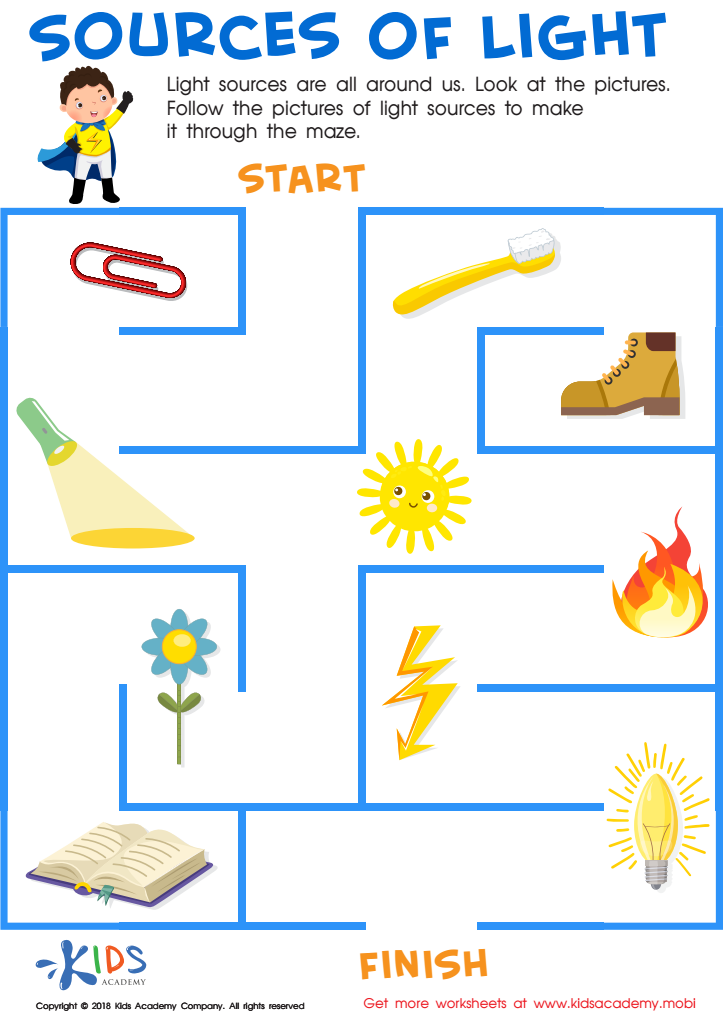
Sources of Light Worksheet
 Assign to My Students
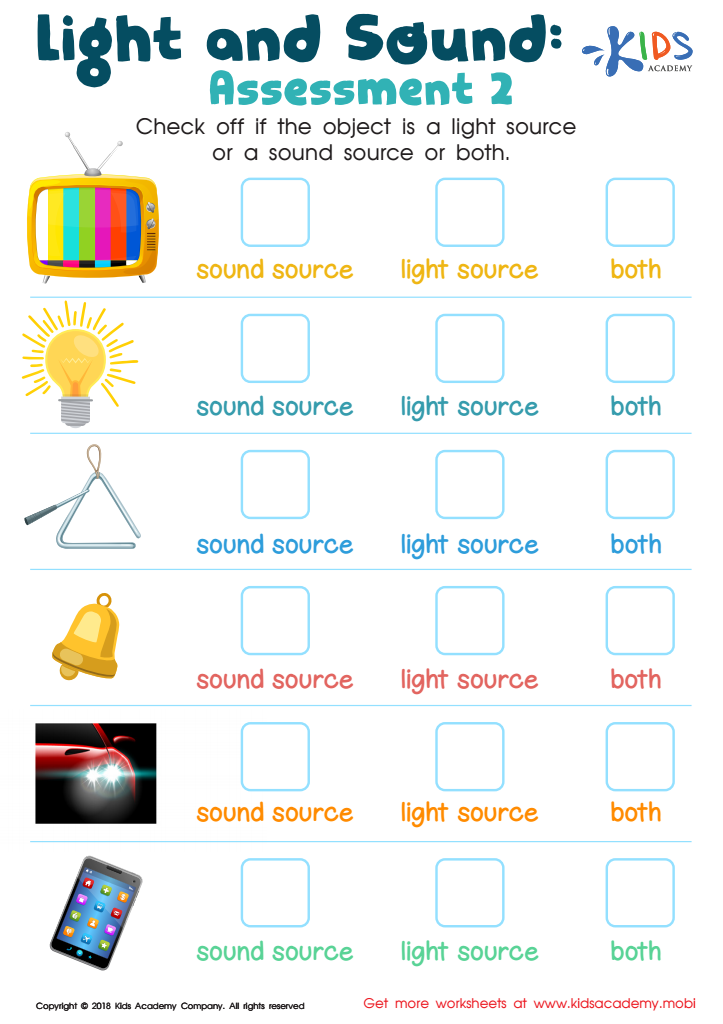
Light and Sound: Assessment 2 Worksheet
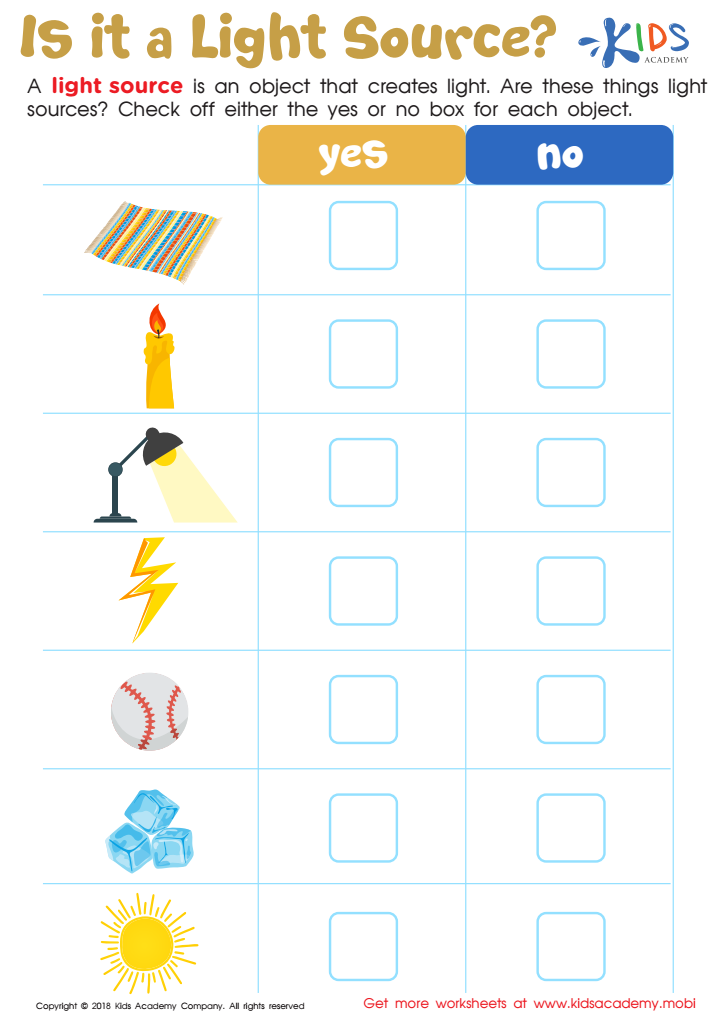
Is It a Light Source? Worksheet







Understanding basic scientific concepts, such as light sources, is fundamental for young children aged 5 to 7. For parents and teachers, fostering this knowledge lays the groundwork for future learning in science and everyday problem solving.
Firstly, by learning about light sources—natural ones like the sun and artificial ones like lamps—children become more aware of the world around them. This awareness cultivates curiosity and observational skills critical for early cognitive development. Secondly, grasping these concepts helps in their daily activities and safety. For example, understanding that sunlight is important for visibility and health leads to better outdoor experiences.
Moreover, exploring light aids in creativity and play. It inspires activities like shadow play, which can be both educational and entertaining. When explained properly, these concepts can spark a lifetime interest in learning.
Teachers and parents benefit too; they get to engage in meaningful and fun activities with the children, enhancing relationships and communication. This foundational understanding can help children appreciate more complex scientific principles as they grow, making science less intimidating and more accessible in later years. Therefore, understanding light sources is crucial as it sets children on a path to successful, lifelong learning.







