
Vocabulary development Normal Science Worksheets for Ages 5-7
11 filtered results
Difficulty Level
Grade
Age
-
From - To
Subject
Activity
Standards
Boost your child's scientific curiosity and language skills with our Vocabulary Development Normal Science Worksheets for ages 5-7. These engaging, age-appropriate worksheets are designed to help young learners expand their science vocabulary through fun and interactive activities. Tailored to align with early education standards, these worksheets cover essential concepts in a simple and understandable manner. By integrating visuals with key terms, children can easily grasp and remember scientific words, enhancing both their language and cognitive development. Perfect for both classroom learning and home practice, these resources make science both accessible and enjoyable for young minds.
Favorites
With answer key
Interactive
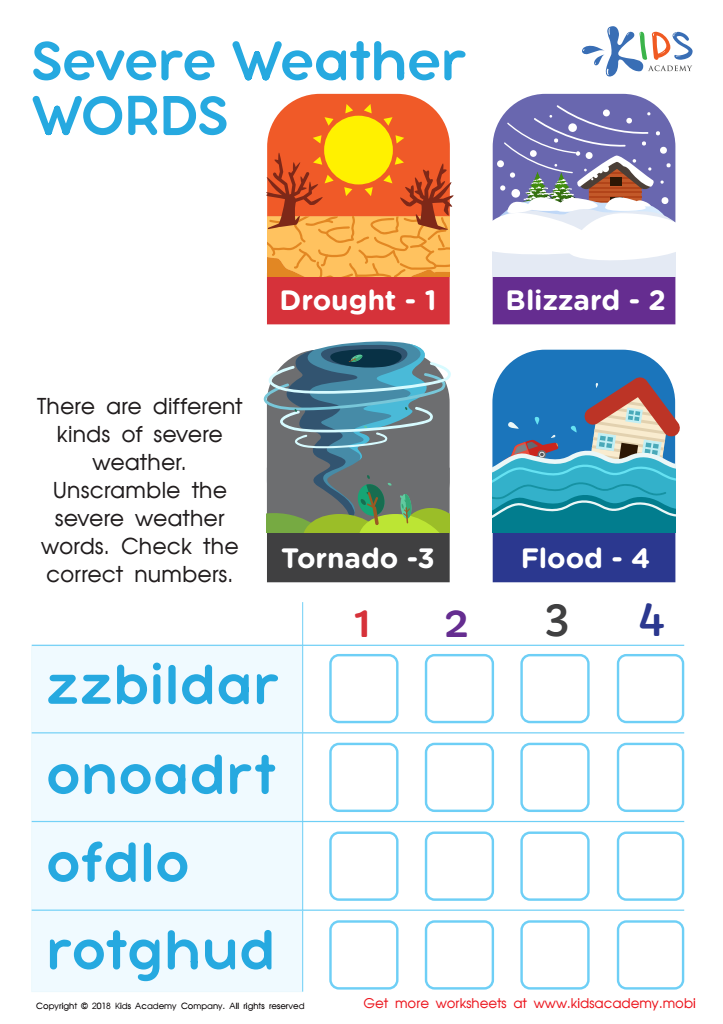
Severe Weather Words Worksheet
Help your child learn about severe weather with this PDF worksheet! Review each image's term and discuss, then have kids unscramble the words. Match the picture number to the term by selecting the correct box. Let your kids work through it and become weather-savvy!
Severe Weather Words Worksheet
Worksheet
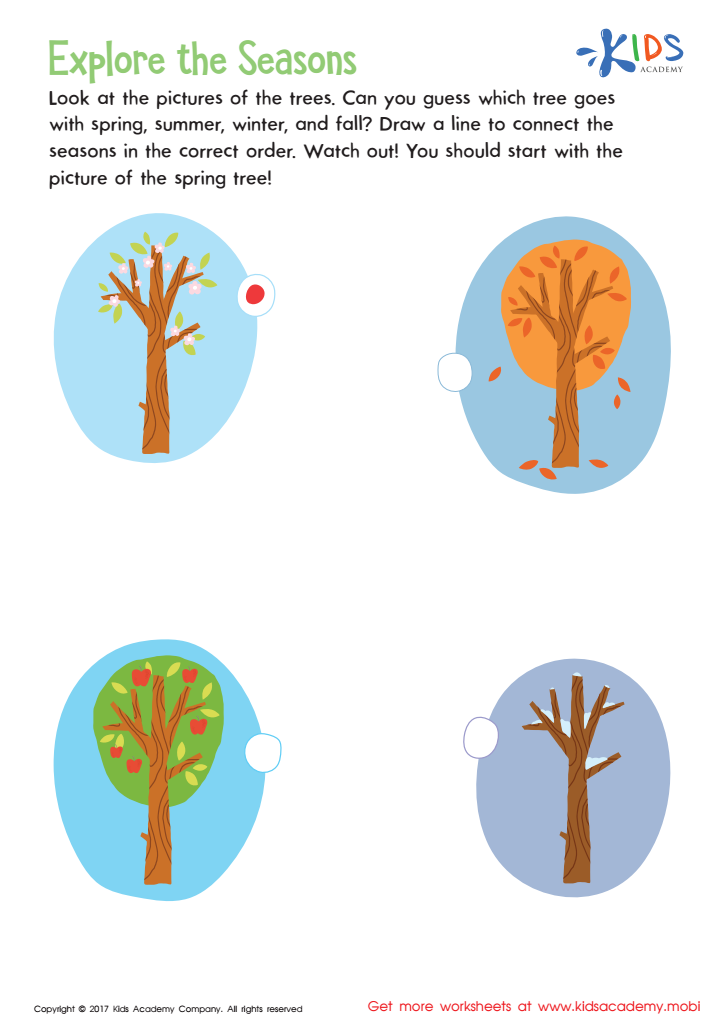
Explore the Seasons Worksheet
Introduce kids to the abstract concept of time with the explore the seasons printable. It helps build logical reasoning and problem-solving skills while teaching how trees change with the weather. Plus, it lets kids make real-life connections to what they're learning. So have them recall the seasons that have passed this year and prepare to be amazed!
Explore the Seasons Worksheet
Worksheet
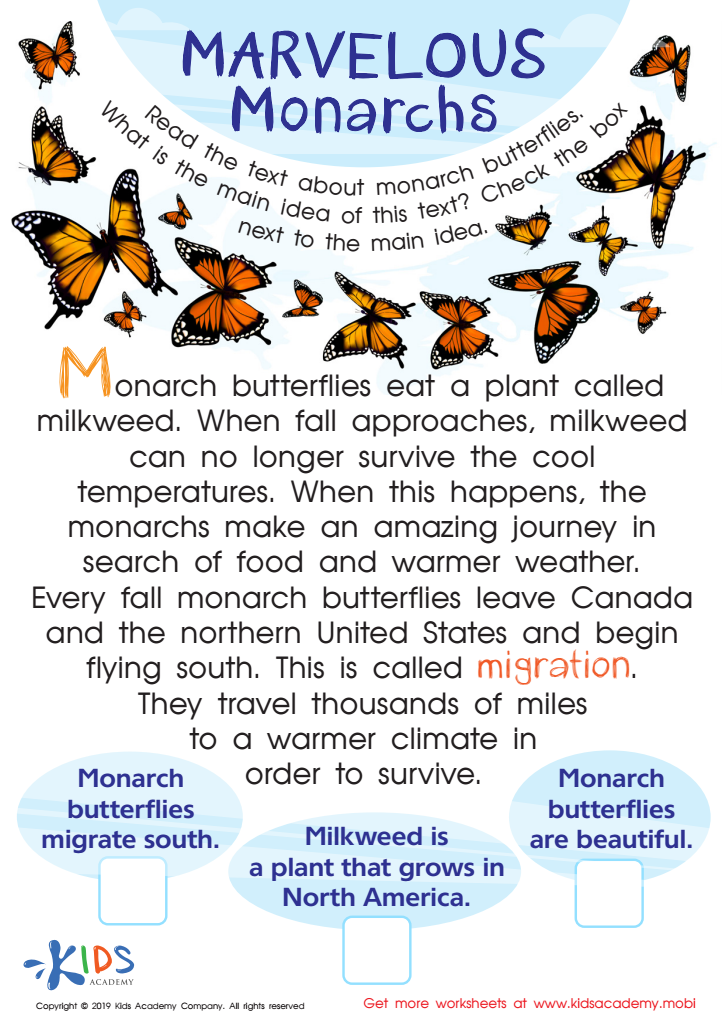
Marvelous Monarchs Worksheet
Help your kids have fun while reading - start with small words and short sentences. This worksheet can test your kids' reading and comprehension skills. Ask them to read the text about Monarch butterflies and help them locate the main idea.
Marvelous Monarchs Worksheet
Worksheet
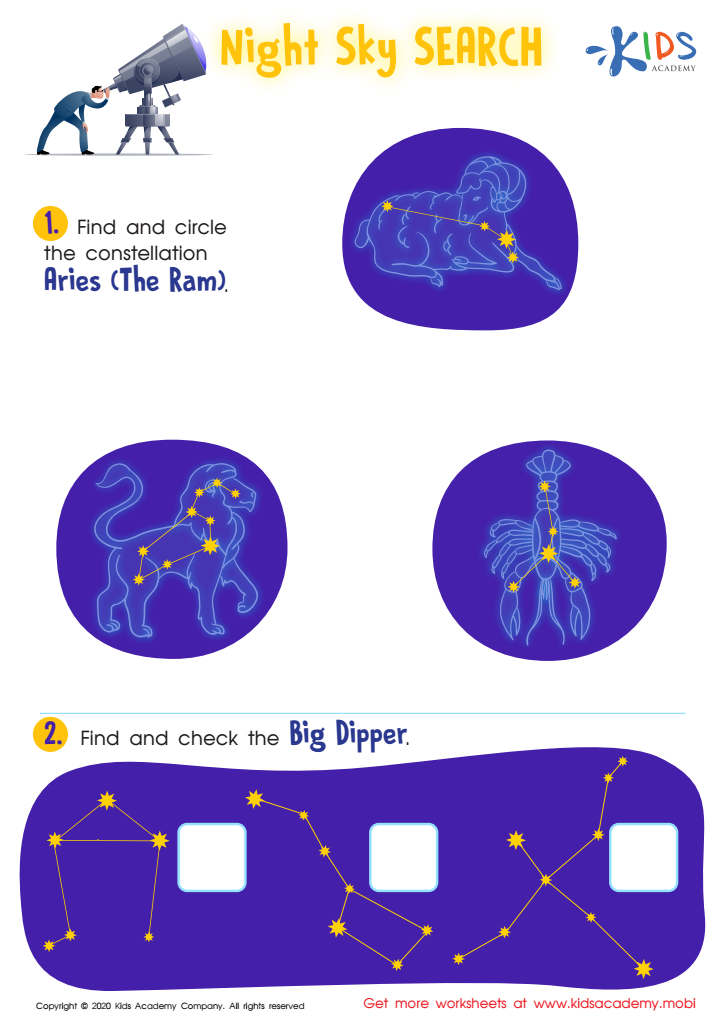
Night Sky Search Worksheet
Gaze up into the night sky and spot the stars! Your little astronomer can learn about Aries and Big Dipper constellations with this science worksheet. Simply find the ram for Aries and check the box for Big Dipper. Then, when the weather is right, go outside and look for them in the night sky!
Night Sky Search Worksheet
Worksheet
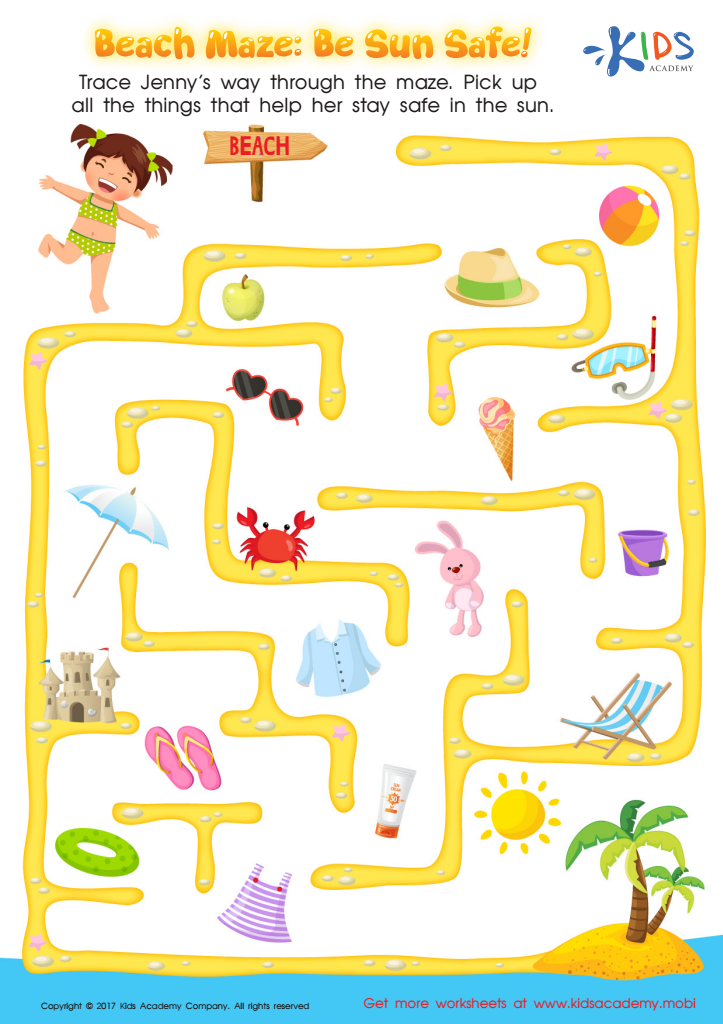
Beach Maze: Sun Safe Worksheet
Let's have fun in the sun! Use this worksheet to help guide your child - Jenny - through the maze and find the items she needs to stay safe. Your child will learn more about sun safety while they think through the maze and protect their skin.
Beach Maze: Sun Safe Worksheet
Worksheet
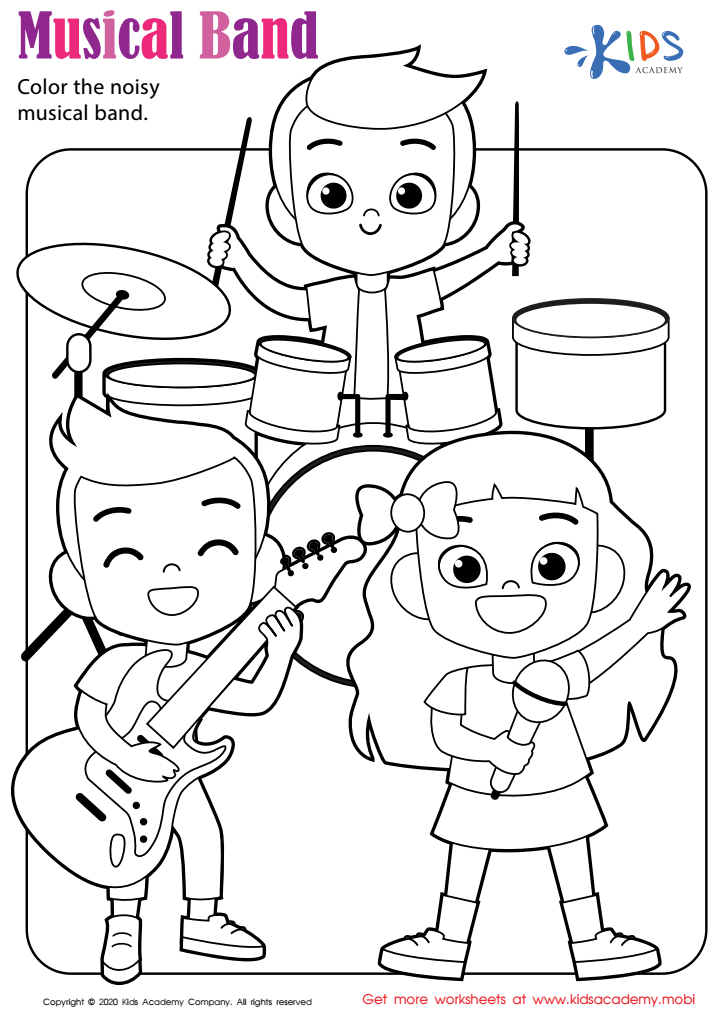
Musical Band Worksheet
Introduce music to your kids with this free printable coloring worksheet! Ask them to name the instruments and their sounds, then let them get creative with the colors. A band is formed when several people play instruments together - help your child learn this concept and get inspired to join a band one day!
Download (PDF)
 Assign to My Students
Assign to My Students
Musical Band Worksheet
Worksheet
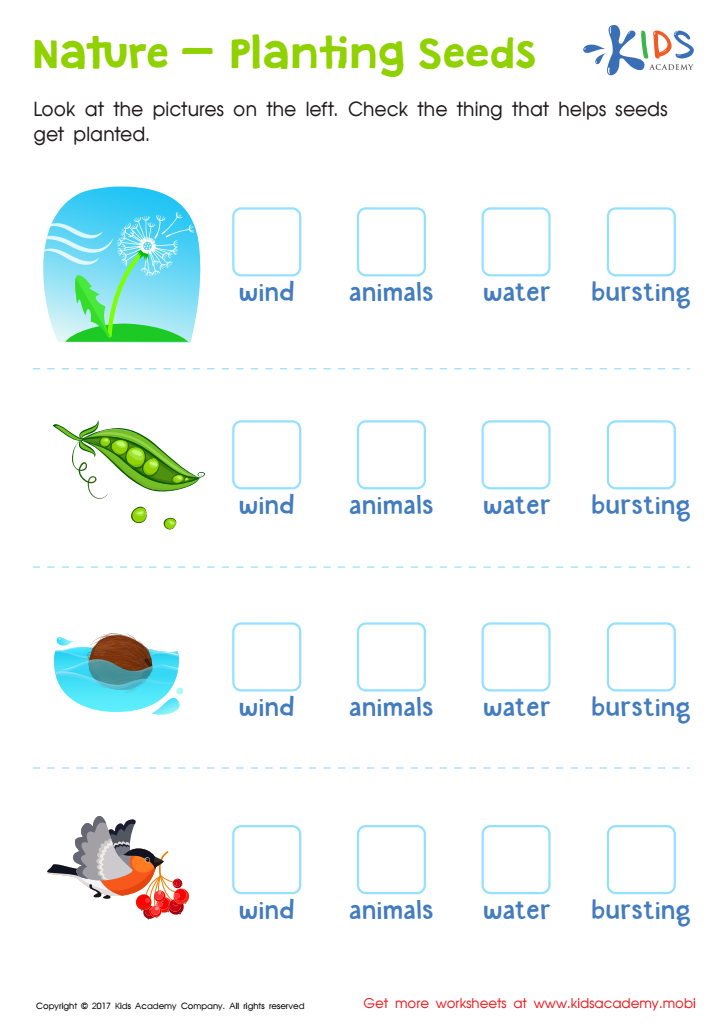
Nature Planting Seeds Worksheet
Help your child explore the fascinating cycle of plants and seeds with this worksheet. They'll learn how plants grow and how seeds travel to the ground. Challenge them to identify the right way each seed gets planted!
Nature Planting Seeds Worksheet
Worksheet
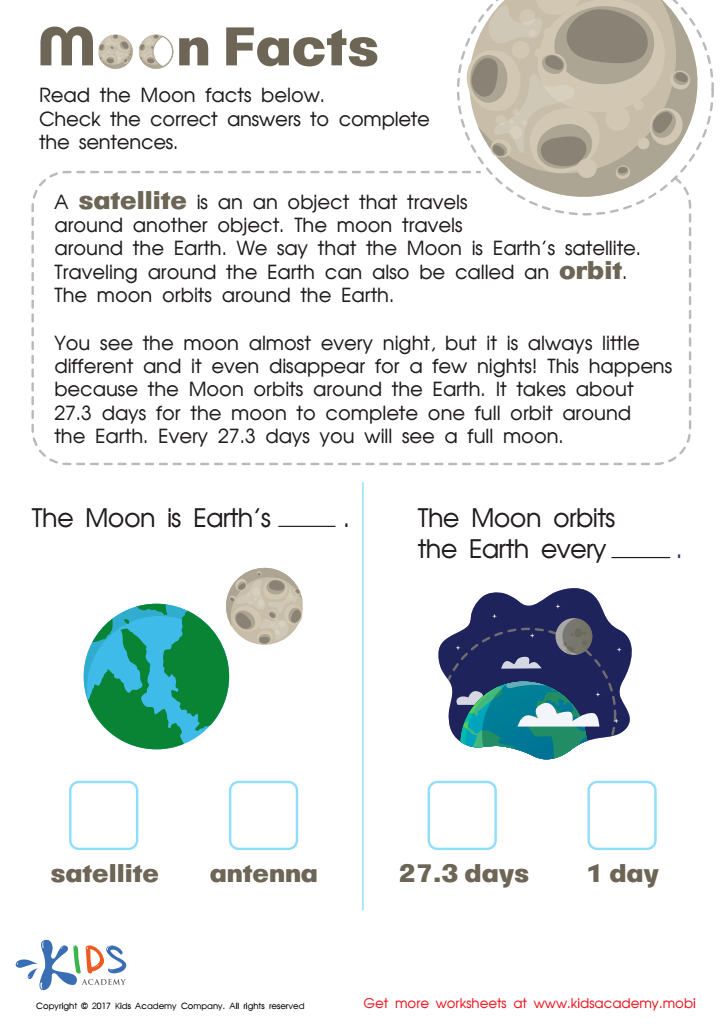
Moon Facts Worksheet
This worksheet challenges your child's reading comprehension. They'll learn all about satellites and the moon's orbit, observing the moon's fascinating phases!
Moon Facts Worksheet
Worksheet
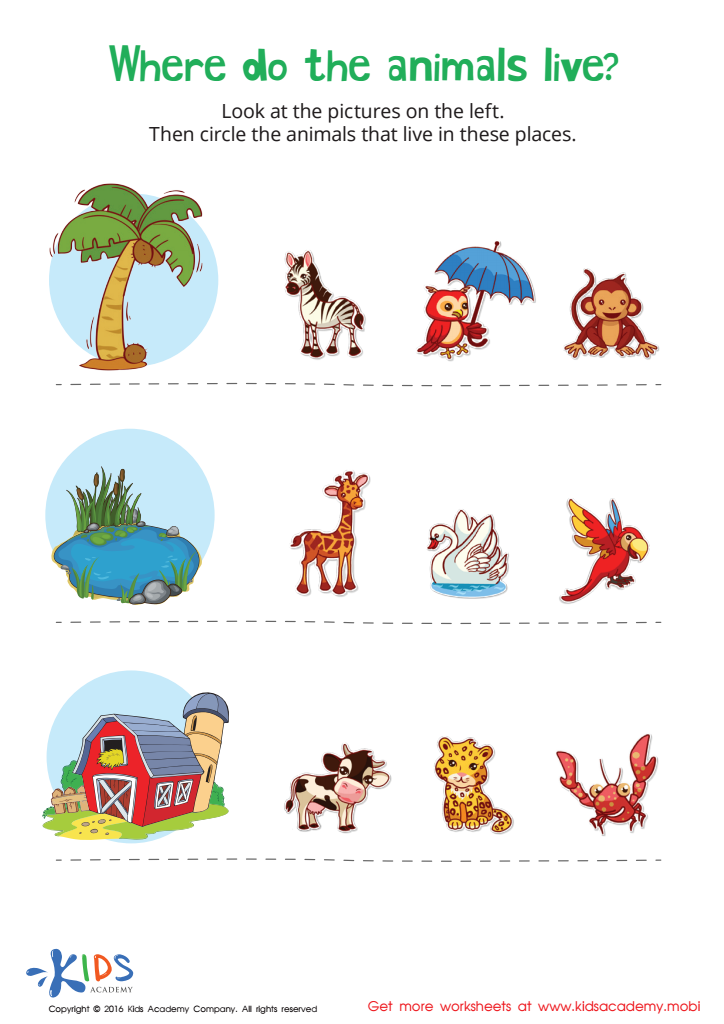
Where Animals Live Worksheet
Teaching early reading and math skills is important, but don't forget about science. With the Where Animals Live PDF worksheet, kids can identify their favorite animals and the environments they live in. Ask them what type of environment the animals like and introduce them to geography. It's great for logical reasoning and classification skills. Your kid will practice with their favorite animals and love the trip to the zoo afterwards!
Where Animals Live Worksheet
Worksheet
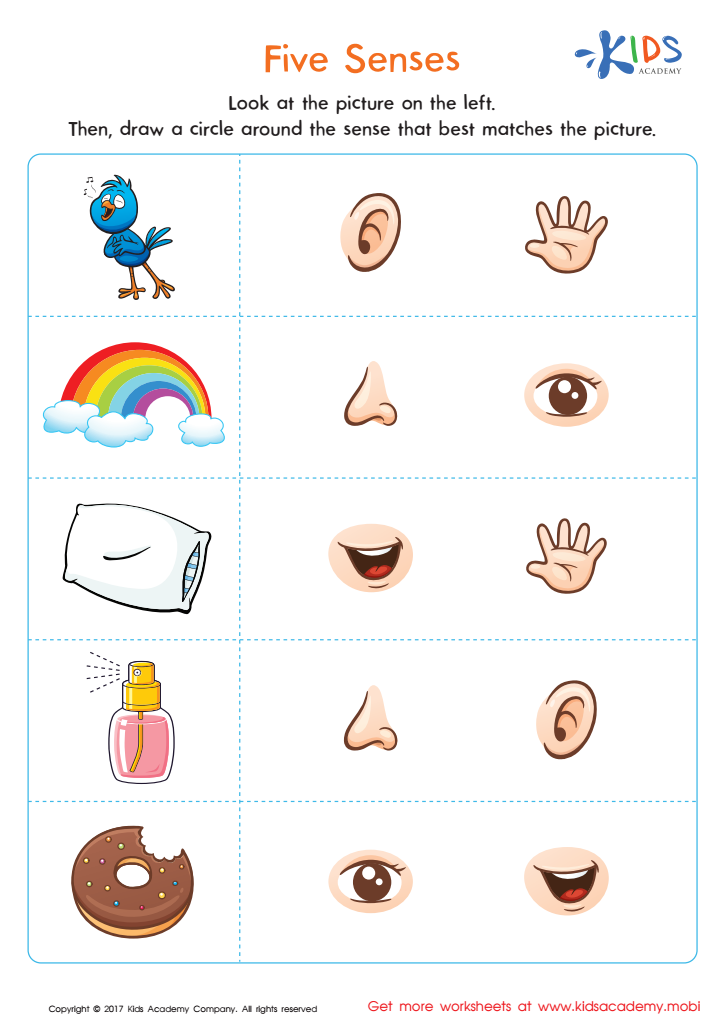
Five Senses Printable
For an easy way to jumpstart your child's critical thinking and introduce the five senses, print our free worksheets! These are great for reviewing each sense and practicing critical thinking skills. Work with your child and discuss each image. After completing the worksheet, find objects around the house so they can quiz themselves!
Five Senses Printable
Worksheet
Join Kids Academy for Free
Who is primarily going to use this learning content?




.jpg)
Vocabulary development is crucial for children aged 5-7, often referred to as a foundational period in early childhood education. At this stage, children's brains are highly receptive to new information, making it an ideal time to build a robust vocabulary, which significantly influences their overall academic performance and social interactions.
Firstly, an extensive vocabulary enhances reading comprehension. When children understand the meaning of more words, they can better grasp the content of texts, leading to improved reading skills— a fundamental aspect of most subjects, including Normal Science. Mastery in understanding scientific terms and concepts expands their ability to engage with and enjoy science lessons, fostering a positive attitude toward the subject.
Secondly, vocabulary development aids communication skills. It enables children to express themselves more clearly and confidently. This is particularly important in science, where precise language is necessary to explain observations, ask questions, and collaborate with peers.
Lastly, a strong vocabulary is linked to higher cognitive abilities. Children with a rich vocabulary typically find it easier to think critically and solve problems, crucial skills for understanding and applying scientific concepts.
In conclusion, focusing on vocabulary development in early childhood sets a foundation for lifelong learning and curiosity, particularly in Normal Science. It empowers children to understand, communicate, and explore the world around them, forming essential skills for their future education and personal growth.







