Map reading skills Normal Our Planet and Environment Worksheets for Ages 5-7
1 filtered results
-
From - To
Explore essential map reading skills with our engaging worksheets designed for children aged 5-7! "Map Reading Skills: Our Planet and Environment" is a fun-filled resource that introduces young learners to the basics of interpreting maps. With vibrant visuals and interactive activities, these worksheets help children develop crucial skills like understanding symbols, directions, and geographic features. Foster their curiosity about the world while enhancing their ability to navigate and comprehend different environments. Perfect for classrooms or at-home learning, our printable worksheets make learning about maps an exciting adventure. Empower your little explorers today with foundational skills for understanding our planet!
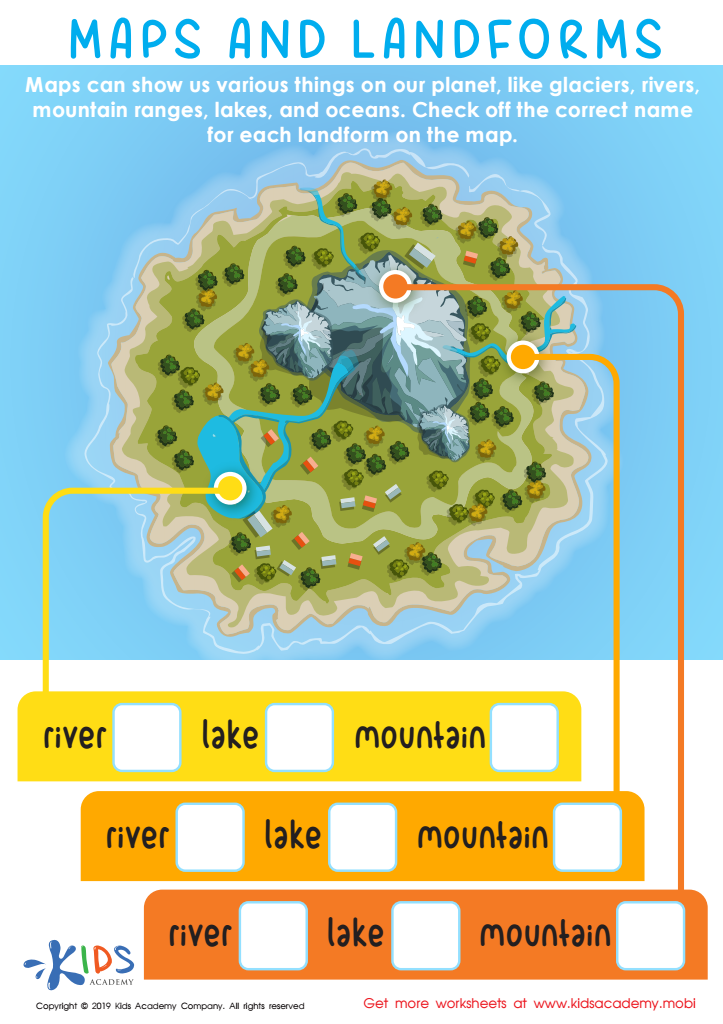
Maps and Landforms Worksheet
 Assign to My Students



Map reading skills are crucial for young learners aged 5-7, as they form the foundation for understanding our planet and environment. By teaching children how to read maps, parents and teachers help them make sense of the world around them, fostering spatial awareness and critical thinking. These skills allow children to recognize symbols, interpret directions, and understand distances, which are essential for navigating their surroundings.
Engaging with maps enhances creativity, as children envision how different locations connect and explore new places in their minds. Additionally, map reading encourages curiosity about geography, promoting an appreciation for diverse cultures, ecosystems, and natural landscapes.
Learning about maps also supports environmental education, as children can visualize important concepts such as habitats, natural resources, and human impact on the planet. This understanding aids in developing a sense of responsibility towards the environment, nurturing future stewards of the Earth.
Furthermore, map reading skills align with early literacy and numeracy, boosting overall cognitive development. As children build these skills, they grow more confident in their ability to explore the world, both in the classroom and beyond. Therefore, investing in map reading education is significant for well-rounded child development and awareness of our environment.







