Observational skills Normal Our Planet and Environment Worksheets for Ages 5-7
6 filtered results
-
From - To
Enhance your child's observational skills with our "Normal Our Planet and Environment Worksheets" designed specifically for ages 5-7. These engaging printable activities encourage young learners to explore nature, identify plants and animals, and understand their surroundings. Each worksheet features interactive tasks focused on observation and critical thinking, allowing children to develop a deeper appreciation for our planet. With a variety of colorful illustrations and relatable themes, these worksheets make learning fun and effective. Perfect for home or classroom use, they help foster curiosity and inspire a lifelong love for science and the environment! Download today to start your child's educational adventure.
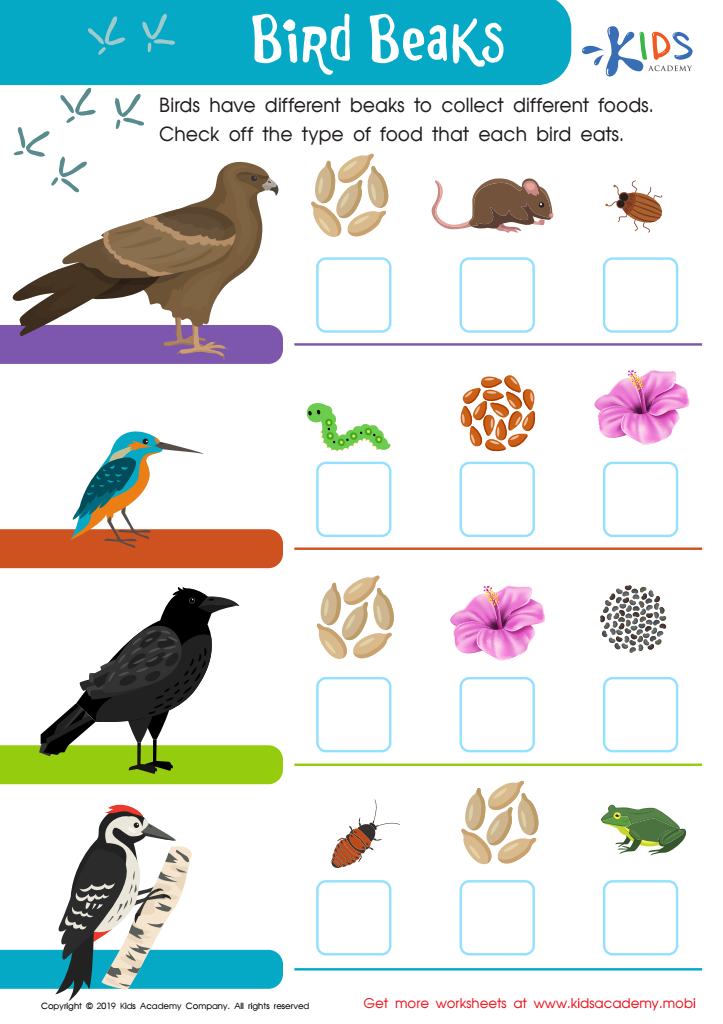
Bird Beaks Worksheet
 Assign to My Students
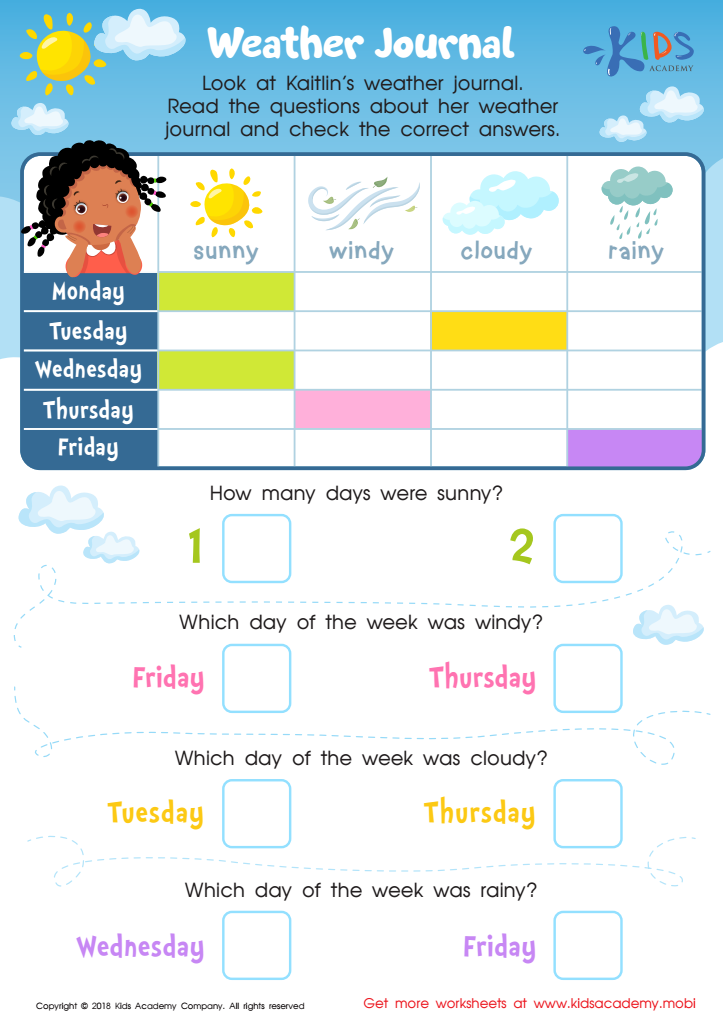
Weather Journal Worksheet
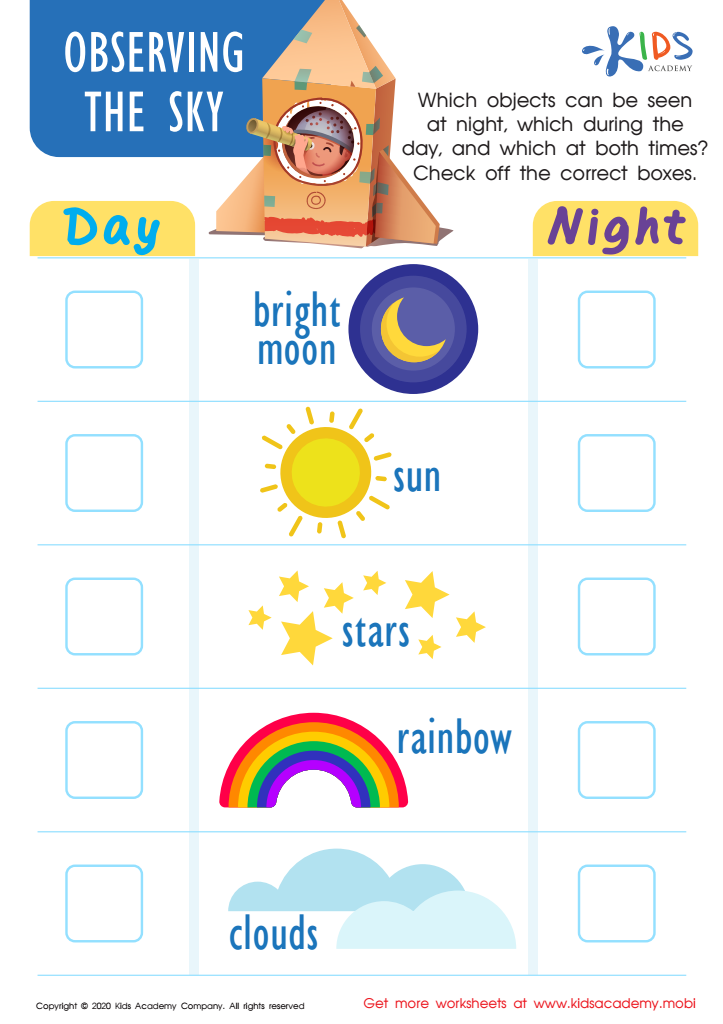
Observing the Sky Worksheet
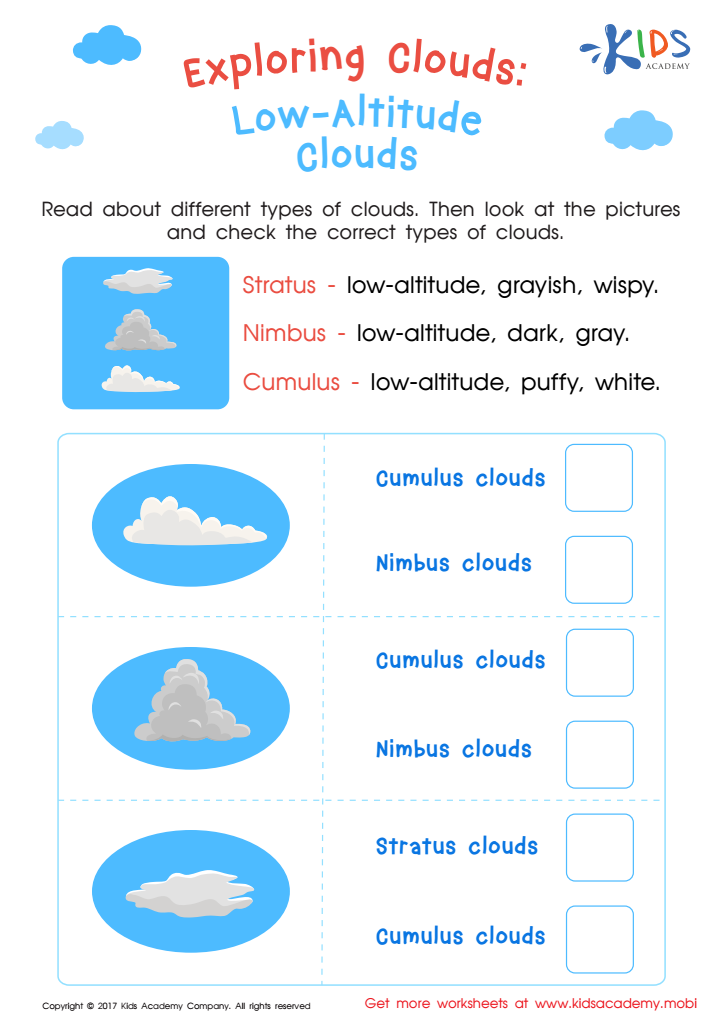
Exploring Clouds: Low Altitude Clouds Printable
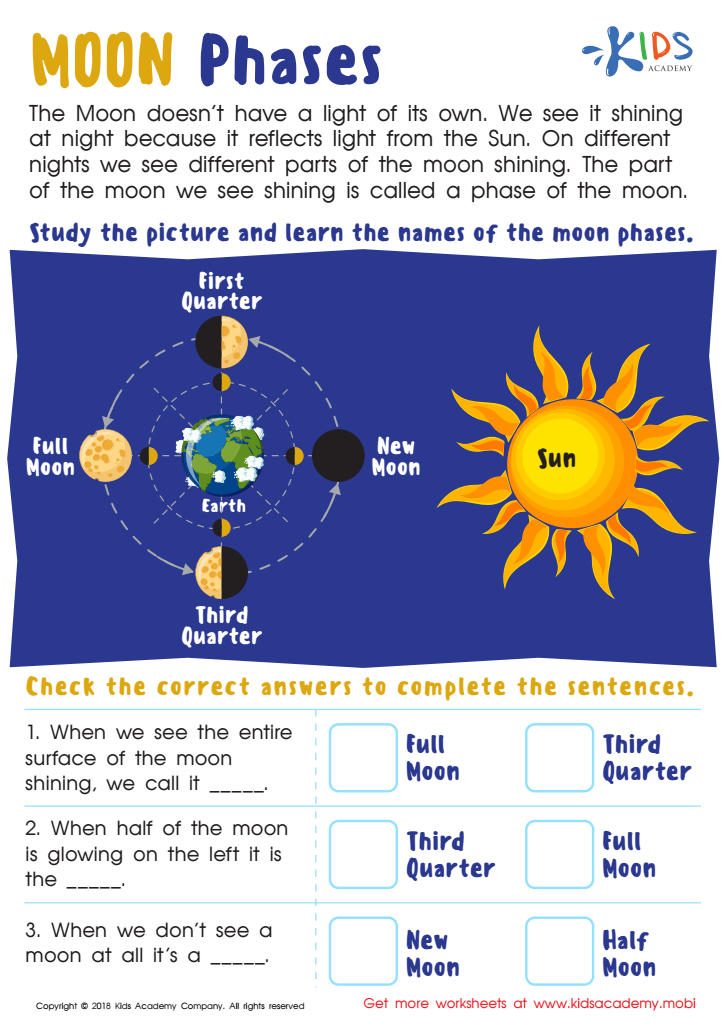
Moon Phases Worksheet
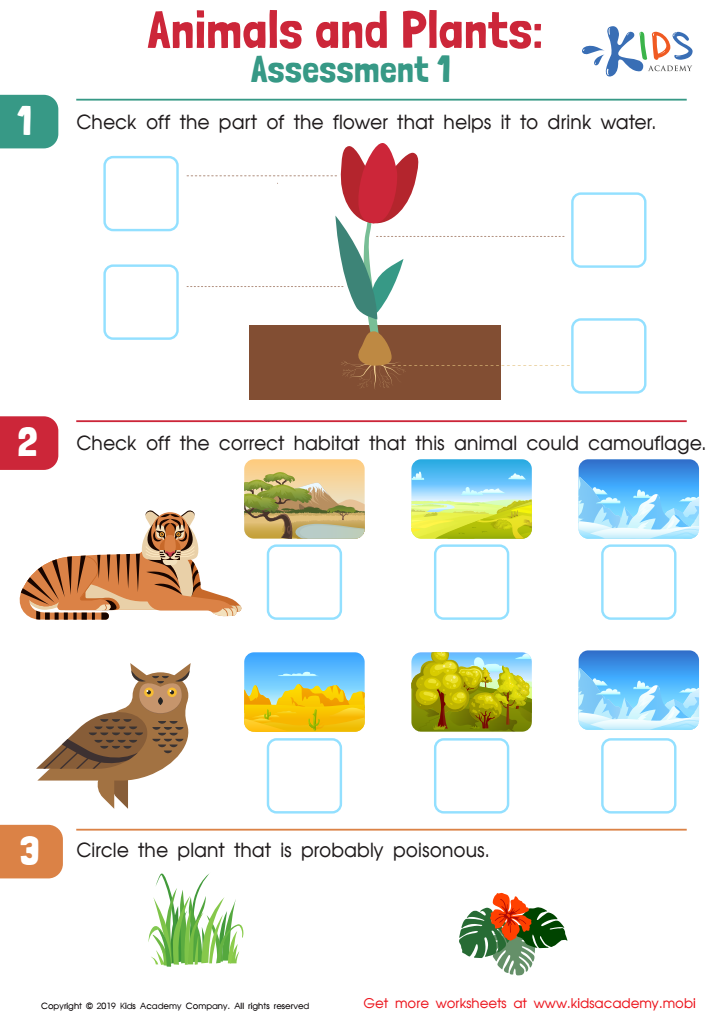
Animals and Plants: Assessment 1 Worksheet



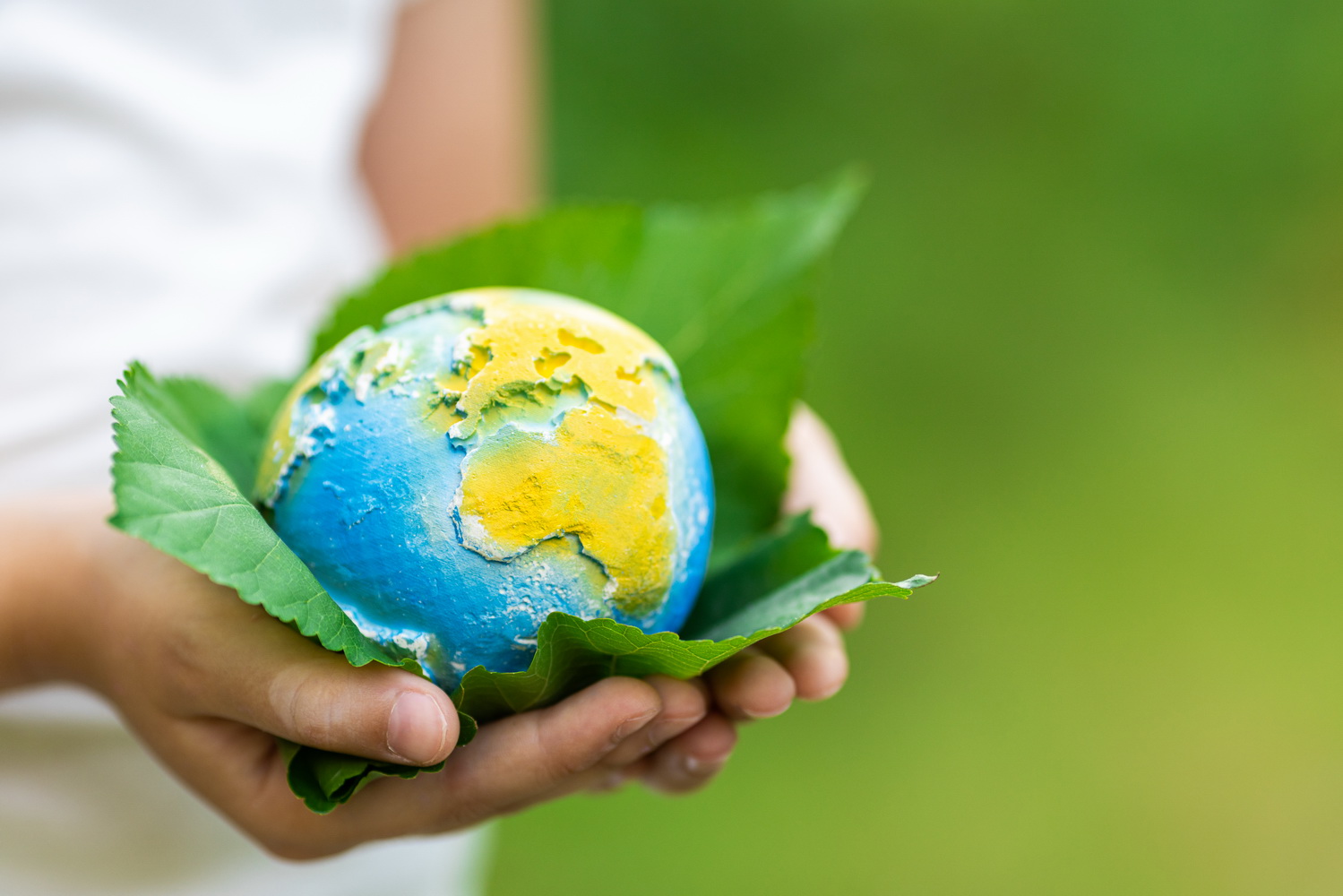

Observational skills are crucial for young learners, particularly in the context of understanding our planet and environment. For children aged 5-7, engaging with their surroundings fosters not only curiosity but also a sense of responsibility towards their ecosystem. Observational skills encourage children to notice details, patterns, and changes, making everyday encounters more enriching and meaningful.
Teachers and parents play a pivotal role in nurturing these skills through guided exploration and inquiry-based learning. By helping children observe natural phenomena, such as the growth of plants or the behavior of animals, adults can inspire a deeper connection to the environment. This connection cultivates empathy for living things and an understanding of ecosystems, promoting environmental stewardship from an early age.
Moreover, strong observational skills lay the groundwork for critical thinking and problem-solving. As children learn to ask questions and seek answers through observation, they develop a scientific mindset, paving the way for future education.
Encouraging observational skills in the context of our planet and environment not only enhances children’s academic abilities but also fosters a love for nature, promoting sustainability as they grow. In essence, this nurturing impacts future generations’ relationship with the world around them, ultimately benefiting society and the planet at large.







