Shape Recognition Normal Community Worksheets for Ages 5-7
4 filtered results
-
From - To
Discover our Shape Recognition Community Worksheets, designed for children ages 5-7! These engaging activities help young learners identify and differentiate basic shapes, fostering essential skills needed for early geometry and problem-solving. Our worksheets blend fun and education by integrating community-themed illustrations, making learning relatable and enjoyable. Perfect for developing fine motor skills and visual perception, these resources support foundational learning standards. Parents and teachers will appreciate the clear, concise instructions, while kids will love the interactive and colorful designs. Unlock the world of shapes within their community and watch your child's confidence and knowledge grow!
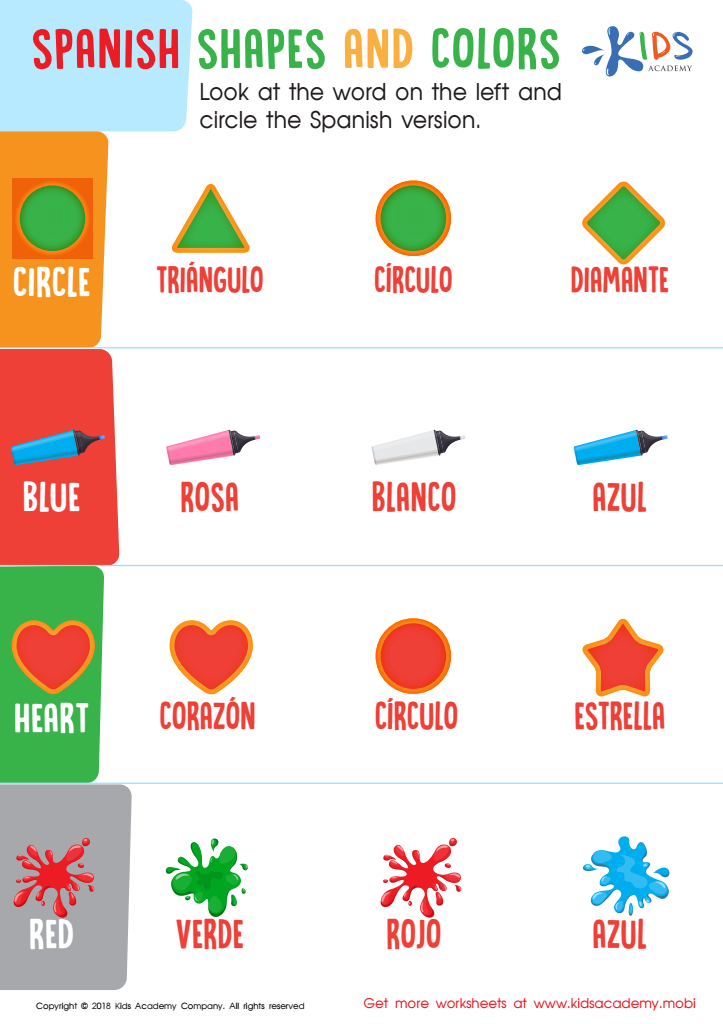
Spanish Shapes and Colors Worksheet
 Assign to My Students
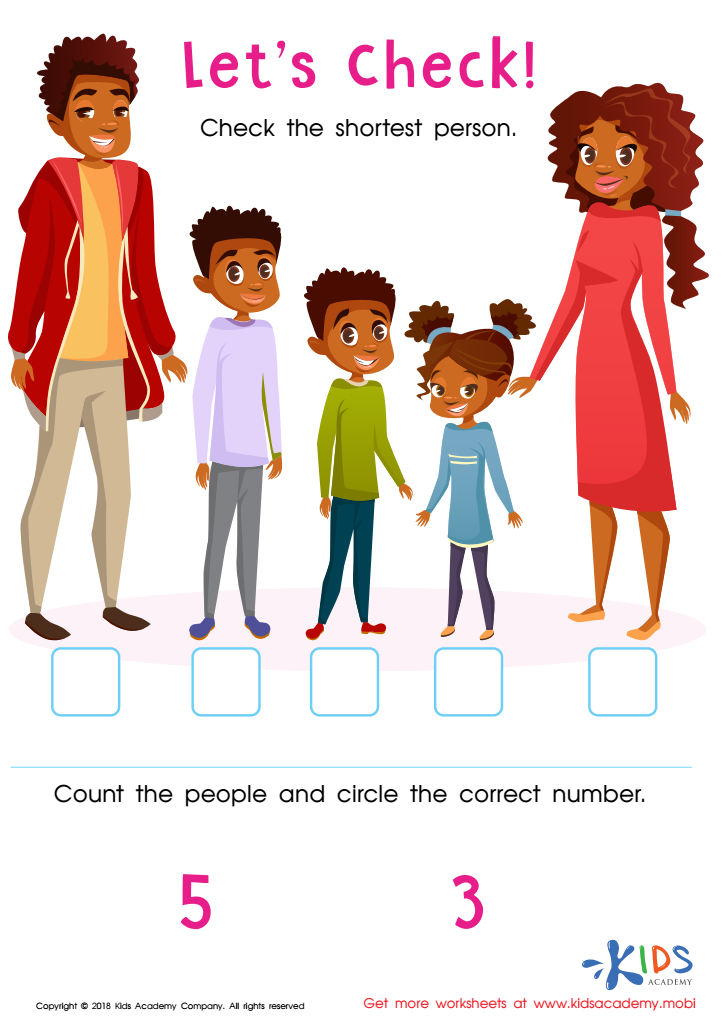
Let's Check! Assessment Worksheet
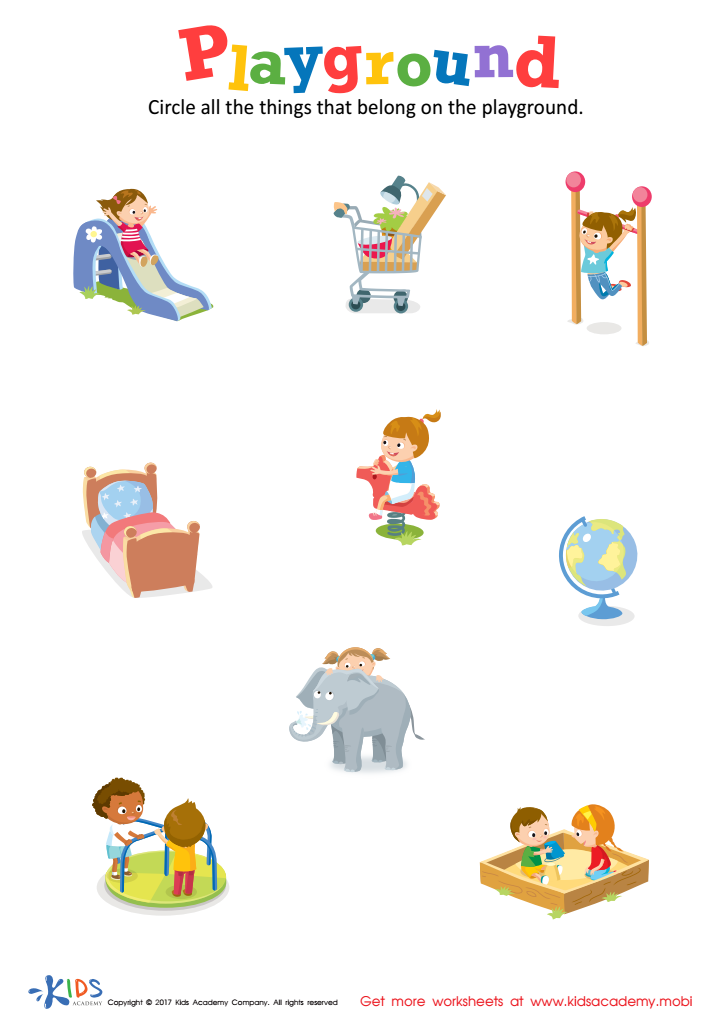
Playground Worksheet
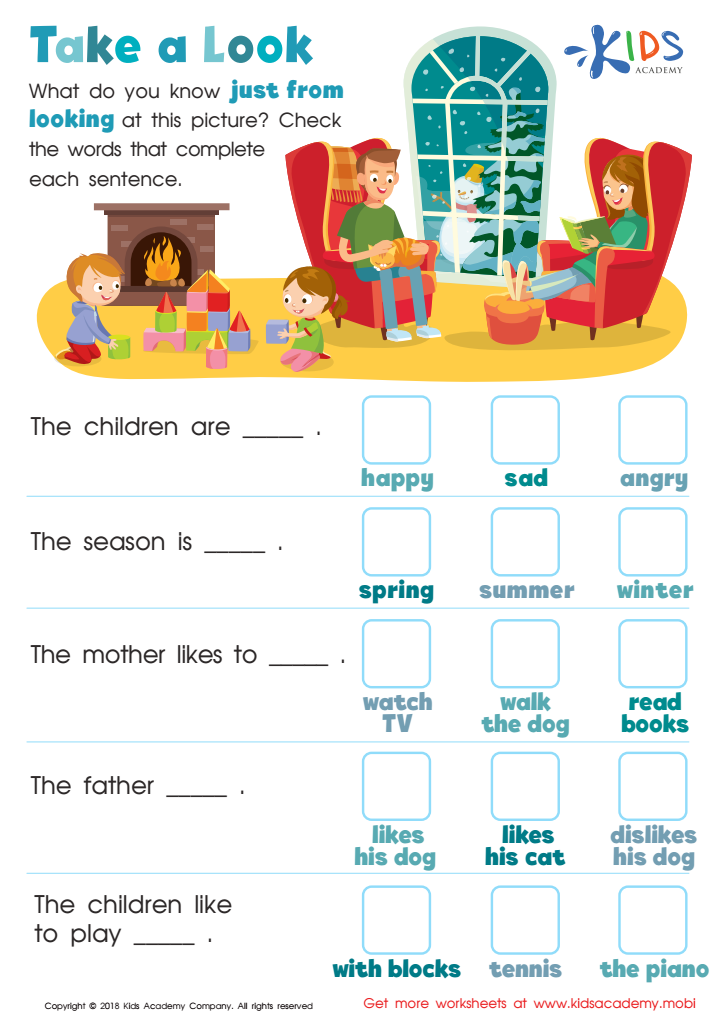
Take a Look - Part 1 Worksheet








Shape recognition is fundamental for the cognitive development of children aged 5-7. Both parents and teachers should prioritize this skill because it forms the basis for more advanced mathematical concepts. When children learn to identify, name, and differentiate between shapes, they are building crucial analytical skills. This isn’t just limited to math; recognizing shapes also improves literacy. Letters themselves are shapes, and discerning them accurately leads to better reading and writing proficiency.
Additionally, shape recognition enhances a child's spatial awareness. This means understanding relationships between objects in their environment, which is key for navigating the world around them. Furthermore, critical thinking skills are bolstered as children start to see patterns and order, paving the way for problem-solving abilities.
Engaging in shape recognition activities also significantly boosts fine motor skills. Whether it’s drawing geometric forms, tangibly constructing them with materials, or tracing them, these activities require hand-eye coordination and dexterity.
Finally, early success in recognizing and understanding shapes can foster a child’s confidence and enthusiasm. When they feel competent in one aspect of learning, they are more likely to tackle new challenges with a positive mindset. Therefore, shape recognition is not just an educational milestone but a comprehensive developmental tool that supports emotional, intellectual, and physical growth.