Vocabulary development Normal Community Worksheets for Ages 5-7
5 filtered results
Difficulty Level
Grade
Age
-
From - To
Subject
Activity
Standards
Discover our "Vocabulary Development Normal Community Worksheets for Ages 5-7" designed to enhance young learners' language skills. These engaging and educational worksheets help children build essential vocabulary related to everyday community concepts and social studies. Through fun and interactive activities, kids will learn new words, improve reading comprehension, and express ideas more effectively. Suitable for both classroom and home use, these worksheets provide a solid foundation for early literacy and cognitive development, ensuring your child is well-prepared for future academic success. Download today to support your child's vocabulary growth in a meaningful way!
Favorites
With answer key
Interactive
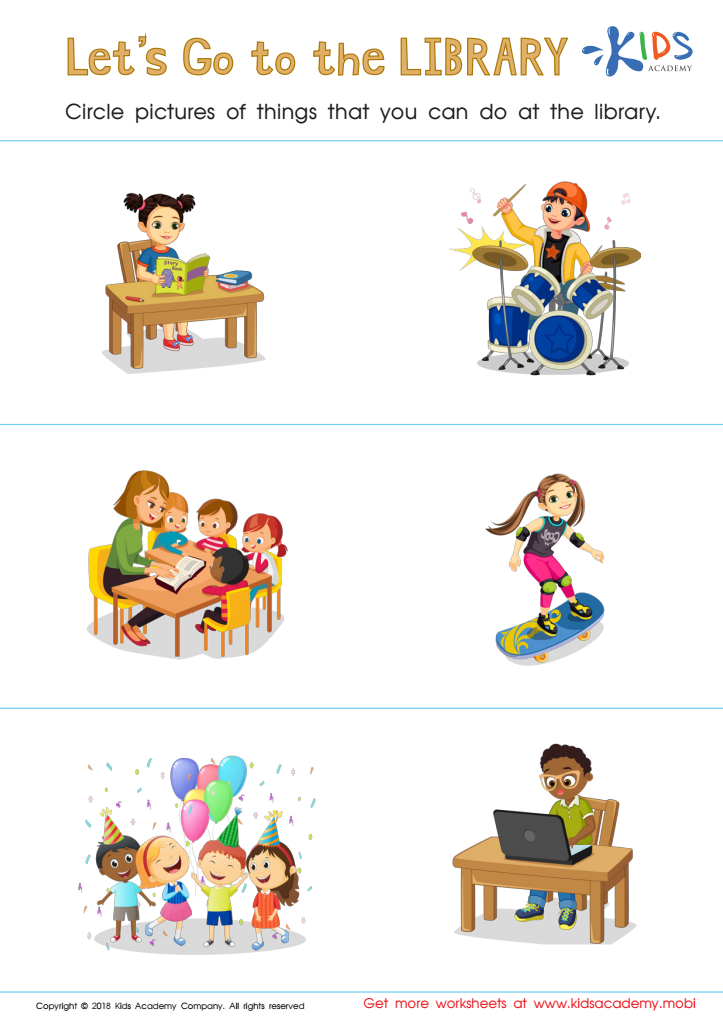
Let's Go to the Library! Worksheet
How often does your child visit the library? If they're a frequent visitor, they'll breeze through this worksheet. It requires them to look at pictures that depict activities done in the library and activities not allowed. Ask them to circle the correct picture. It's a fun way to reinforce library knowledge.
 Assign to My Students
Let's Go to the Library! Worksheet
Worksheet
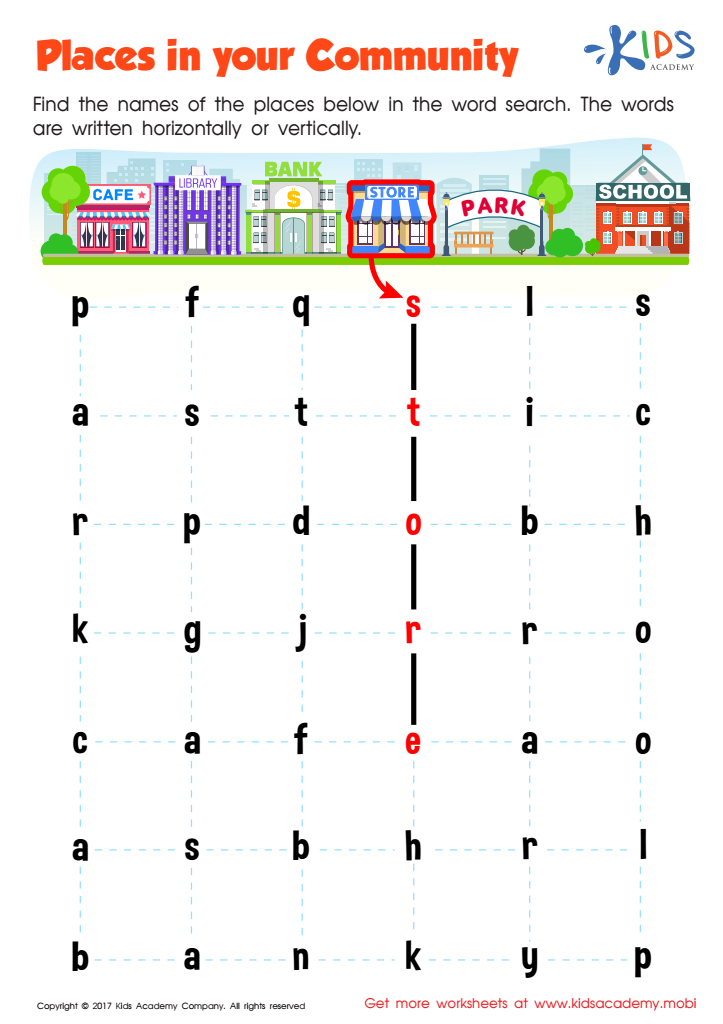
Places in Your Community Worksheet
Find and circle words related to common places in your community, like library, fire station, and more. Practicing vocabulary and spelling, your child will gain a better understanding of their community.
Places in Your Community Worksheet
Worksheet
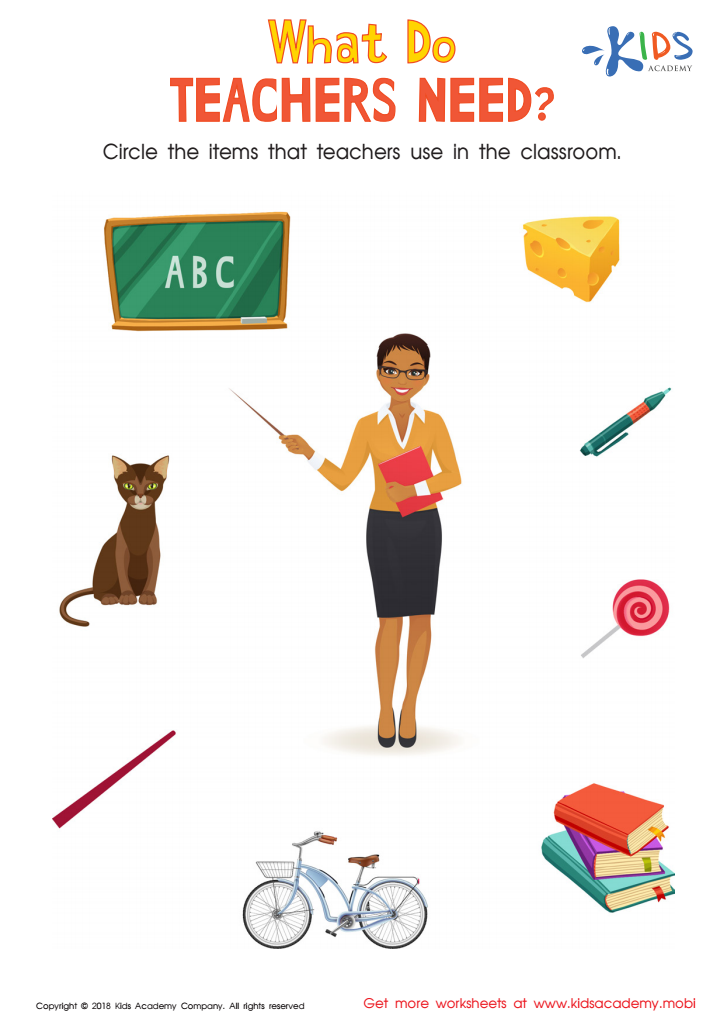
What Do Teachers Need Worksheet
This interactive worksheet tasks kindergarten students with identifying essential items a teacher needs in a classroom. They will be asked to circle items, helping them learn what teachers need to have in their classrooms.
What Do Teachers Need Worksheet
Worksheet
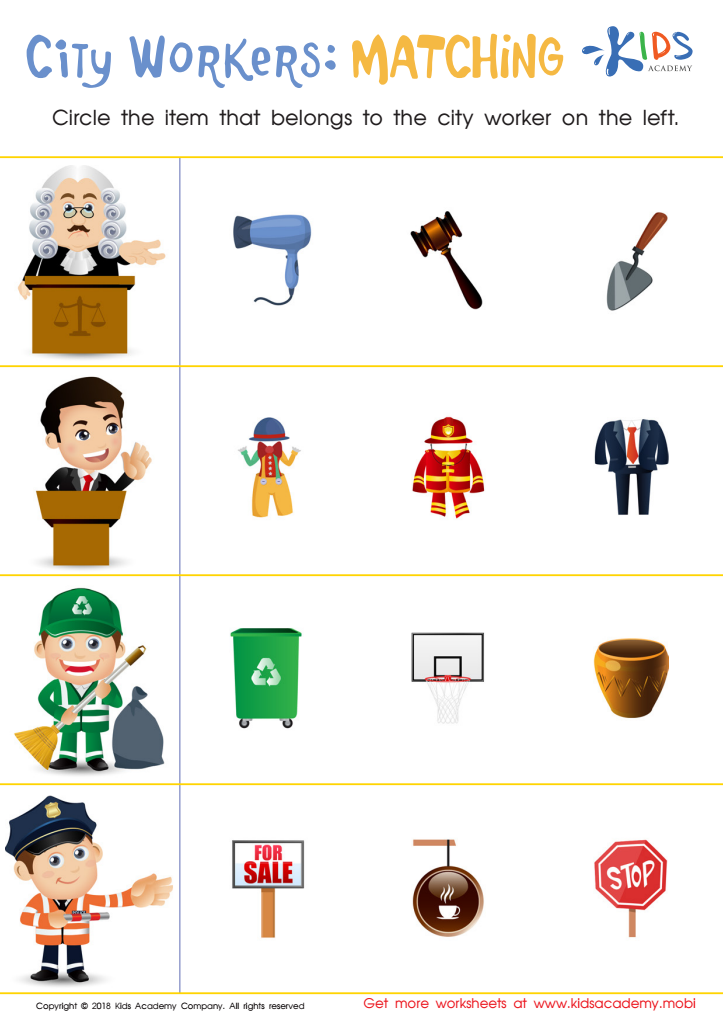
City Workers: Matching Worksheet
Examine the worksheet with your kid. Identify the individuals on the left and their jobs. Have your child circle the correct items on the right that pertain to the city workers. Help your child learn about city workers with this activity.
City Workers: Matching Worksheet
Worksheet
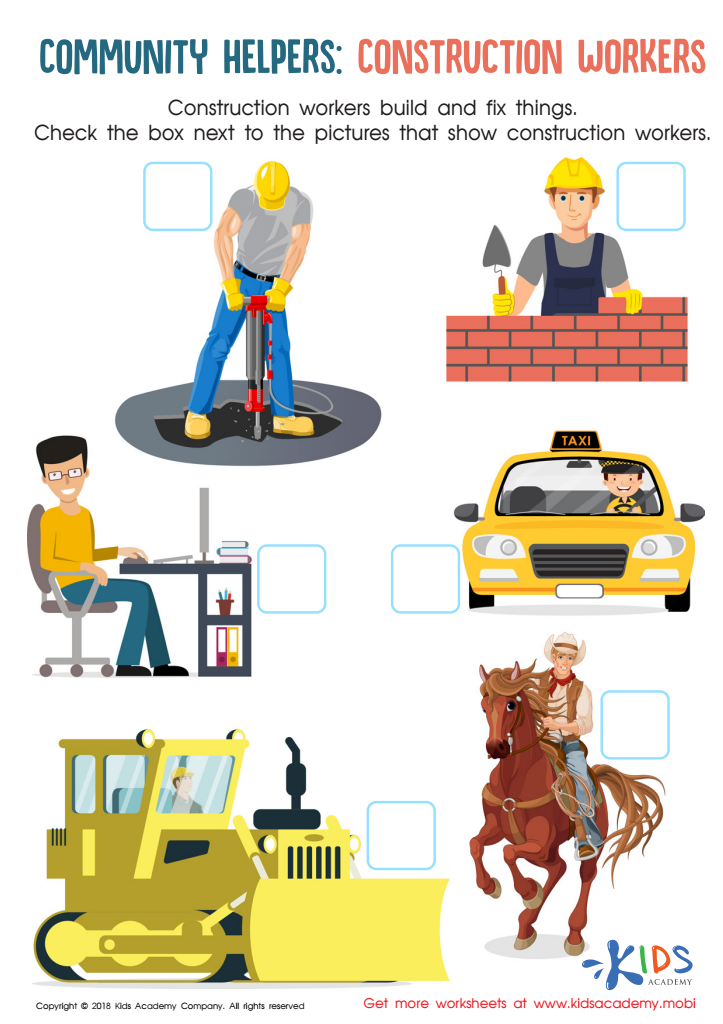
Construction Workers Community Helpers Worksheet
Construction workers build and repair roads, keeping them accessible for the community. Ask your child if they've ever seen one at work, and talk about what they do. Go through the worksheet together and check the pictures that show construction workers in action.
Construction Workers Community Helpers Worksheet
Worksheet
Join Kids Academy for Free
Who is primarily going to use this learning content?







Vocabulary development is crucial for children ages 5-7 as it directly impacts their academic success, social interactions, and overall cognitive development. During this period, children are in a critical language acquisition stage where they rapidly learn new words and grammar structures, laying the foundation for future learning.
Firstly, a robust vocabulary at an early age enhances reading comprehension skills. When children can easily recognize and understand words, they can grasp the meaning of texts more effectively, facilitating a smoother transition from "learning to read" to "reading to learn." This proficiency is essential not only for language arts but also for understanding instructions and information across all subjects.
Secondly, vocabulary development supports expressive and receptive language skills, enabling children to communicate their thoughts and needs more clearly. Effective communication fosters better relationships with peers and adults, building confidence and social competence.
Finally, a rich vocabulary promotes cognitive growth by encouraging curiosity and critical thinking. When children encounter and learn new words, they also acquire new concepts and ways of understanding the world around them.
By paying attention to and actively supporting vocabulary development, parents and teachers can provide children with the tools they need for academic achievement and social success, setting them on a path of lifelong learning and positive engagement with their community.