Building vocabulary Normal Social Studies Worksheets for Ages 5-7
3 filtered results
-
From - To
Our "Building Vocabulary Normal Social Studies Worksheets for Ages 5-7" provide young learners with the tools they need to develop essential vocabulary skills in a fun and engaging way. Designed for early grade students, these worksheets cover a variety of social studies topics, helping kids to understand and retain new words through colorful illustrations, puzzles, and activities. By integrating educational games and interactive exercises, our worksheets make learning vocabulary enjoyable while also enhancing reading comprehension and foundational knowledge in history, geography, and community awareness. Perfect for both classroom settings and at-home learning, these resources lay the groundwork for future academic success.
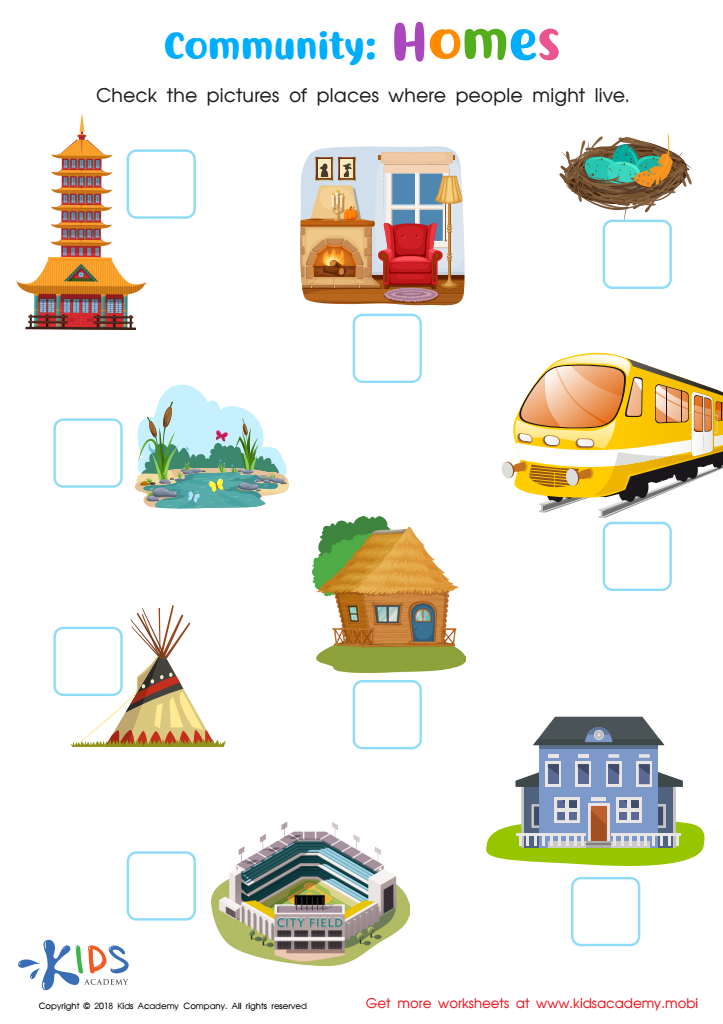
Community: Homes Worksheet
 Assign to My Students
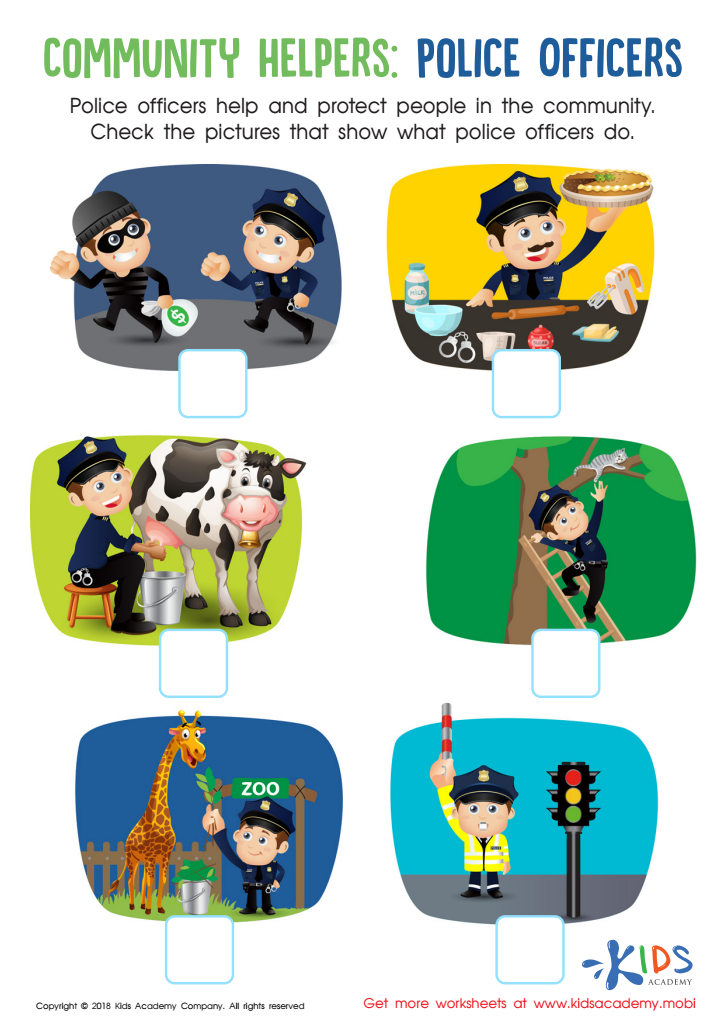
Police Officers Community Helpers Worksheet
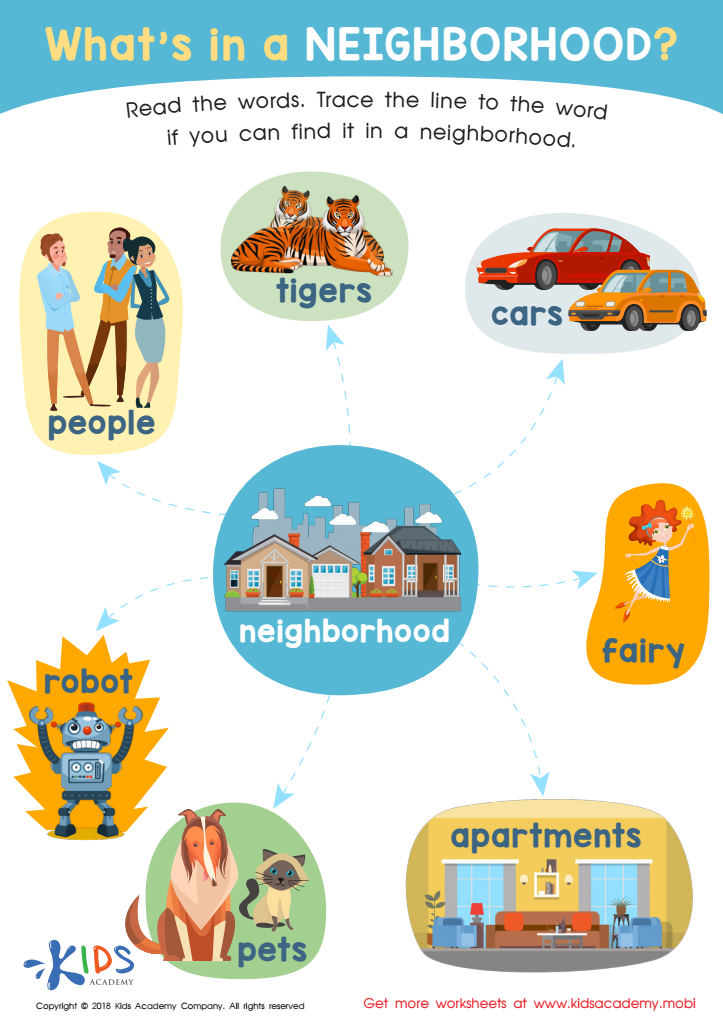
What's in a Neighborhood? Worksheet







Building vocabulary in normal social studies for ages 5-7 is essential since it forms the foundation for academic and social success. At this age, children's brains are highly receptive to learning new words and concepts. Introducing social studies topics helps them understand their world and their place within it. When children comprehend terms related to geography, communities, history, and cultures, it broadens their understanding and curiosity about society.
Having a robust vocabulary aids in reading comprehension and overall communication skills. As kids learn words like "map," "neighborhood," "country," or "celebration," they can better grasp stories and partake in discussions that promote critical thinking and empathy. Engaged and meaningful conversations about social studies provide platforms for parents and teachers to instill values such as respect, tolerance, and cooperation.
Moreover, a solid vocabulary in social studies ties into other subject areas by fostering a deeper understanding of diverse topics. For example, understanding terms like "traditions" or "rights" enriches literature readings and personal experiences.
In essence, by emphasizing vocabulary in early social studies education, parents and teachers help set the stage for lifelong learning. It equips children with the tools needed for both academic achievements and to emerge as informed, empathetic, and active citizens of their communities.








