Enhancing observation skills Normal Social Studies Worksheets for Ages 5-7
3 filtered results
-
From - To
Discover our collection of "Enhancing Observation Skills" Social Studies Worksheets tailored for ages 5-7. These engaging and interactive worksheets are designed to sharpen children's observation abilities while introducing them to essential social studies concepts. Featuring vibrant illustrations and age-appropriate activities, children will explore their surroundings, learn to identify patterns, and gain a deeper understanding of their community. Ideal for classroom use or homeschooling, these worksheets encourage critical thinking and attention to detail. Empower young learners to become more observant and curious about the world around them, fostering a strong foundation in social skills and awareness. Dive into learning today!
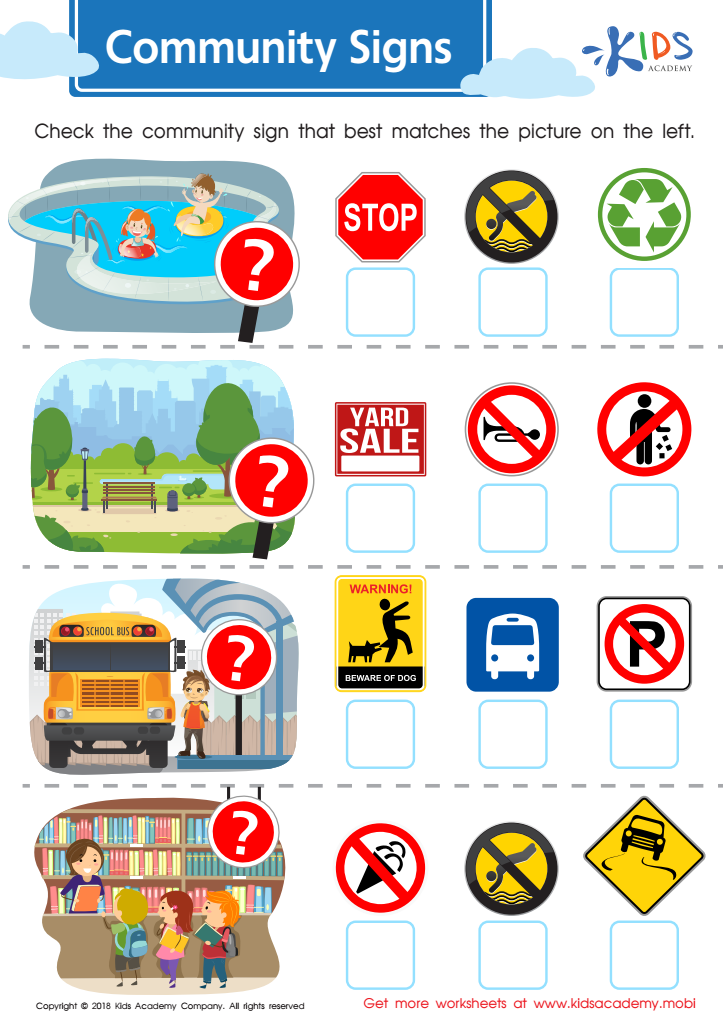
Community Signs Worksheet
 Assign to My Students
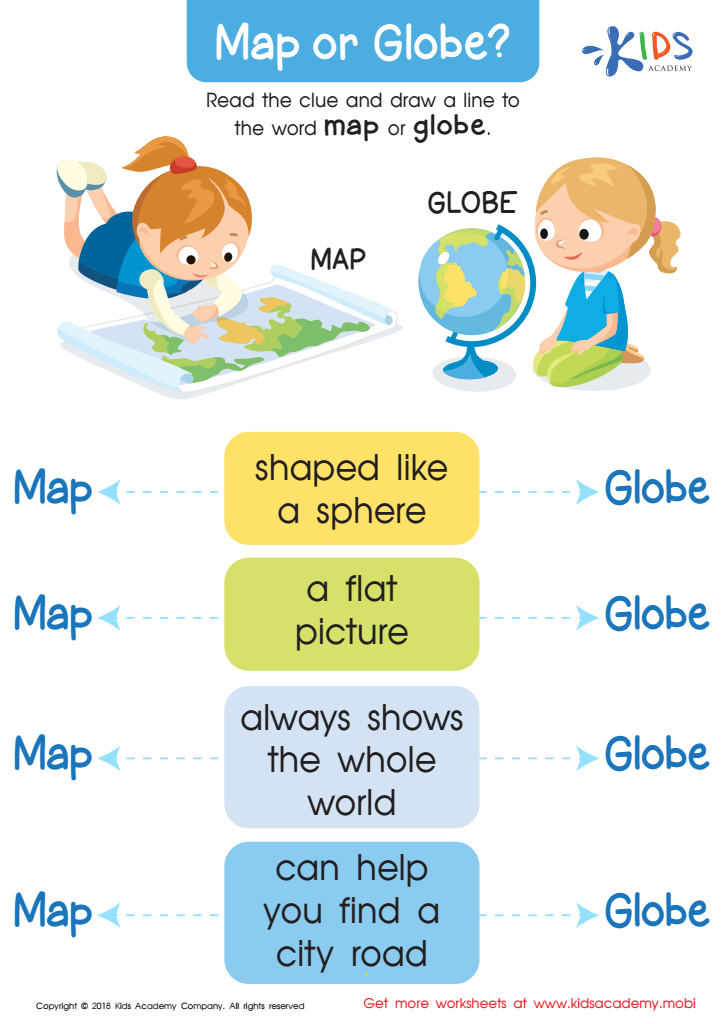
Map or Globe? Worksheet
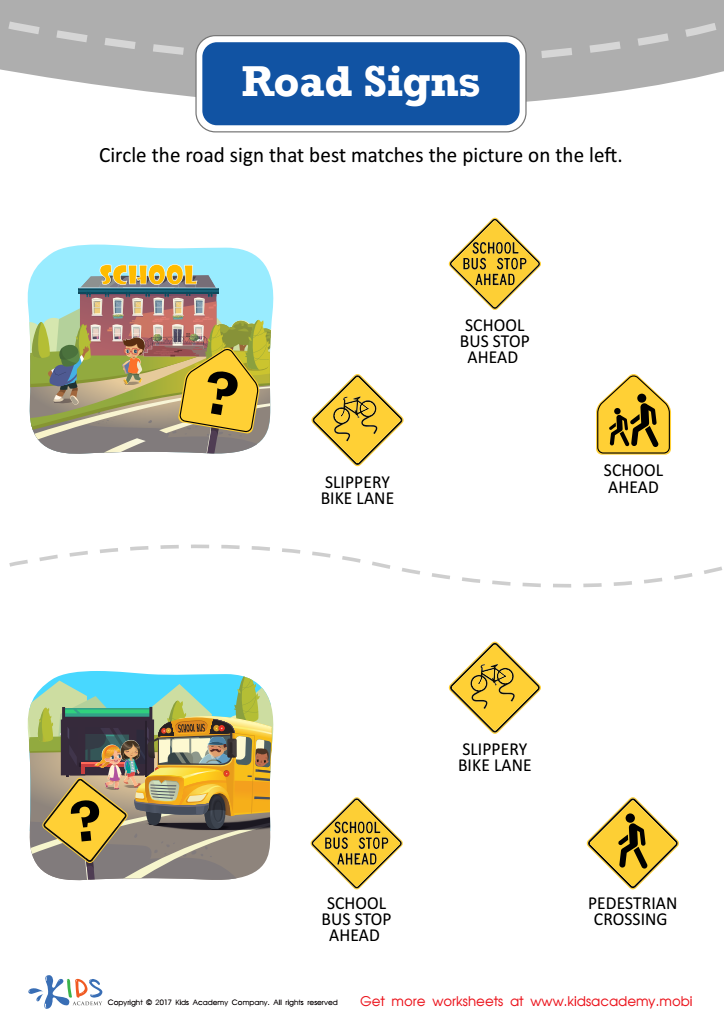
Road Signs (Part 1) Worksheet






Enhancing observation skills in young children, especially in the context of Social Studies, is crucial for their overall development and understanding of the world around them. For ages 5-7, developing these skills lays the foundation for critical thinking, empathy, and active engagement with their environment. When children learn to observe carefully, they can better notice and interpret their surroundings, including people, events, and cultural practices, fostering a deeper appreciation for diversity and community.
Parents and teachers should prioritize these skills because they promote independence and foster inquiry. Children who can observe effectively become active learners, asking questions and seeking answers about the world. This not only enhances their academic performance but also builds essential life skills such as problem-solving and communication.
Furthermore, observation skills encourage children to participate in discussions, share insights, and reflect on what they see, leading to collaborative learning experiences. In Social Studies, themes such as community roles and responsibilities can be explored in the context of real-life observations, making learning relevant and meaningful. Ultimately, supporting the development of observation skills in young learners equips them with the tools they need to grow into informed, responsible citizens who value and understand their world.








