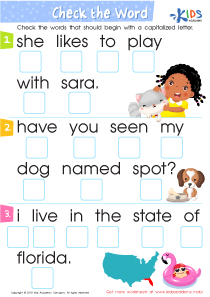
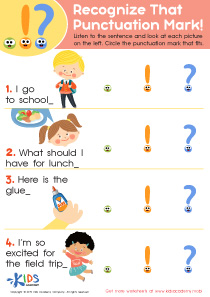
Phonics Skills Normal Grammar Worksheets for Ages 5-7
7 filtered results
-
From - To
Welcome to our Phonics Skills Normal Grammar Worksheets for Ages 5-7! These engaging and interactive worksheets are designed to help young learners develop essential phonics skills while enhancing their grammar understanding. Each activity encourages kids to recognize letter sounds, blend letters, and construct simple words, fostering their confidence in reading and writing. Perfect for classroom or home use, these worksheets combine fun exercises with purposeful learning. Our resources not only support literacy development but also adhere to educational standards, making them a valuable tool for early grade teachers and parents alike. Explore our collection and watch your child's skills flourish!
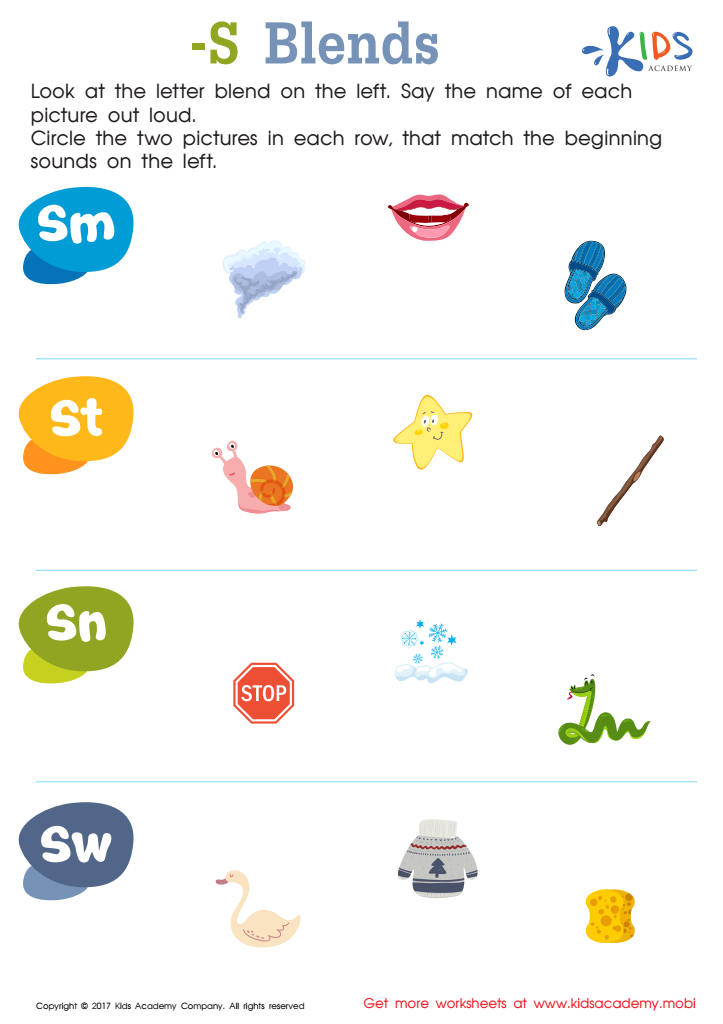
"s" Blends Spelling Printable
 Assign to My Students
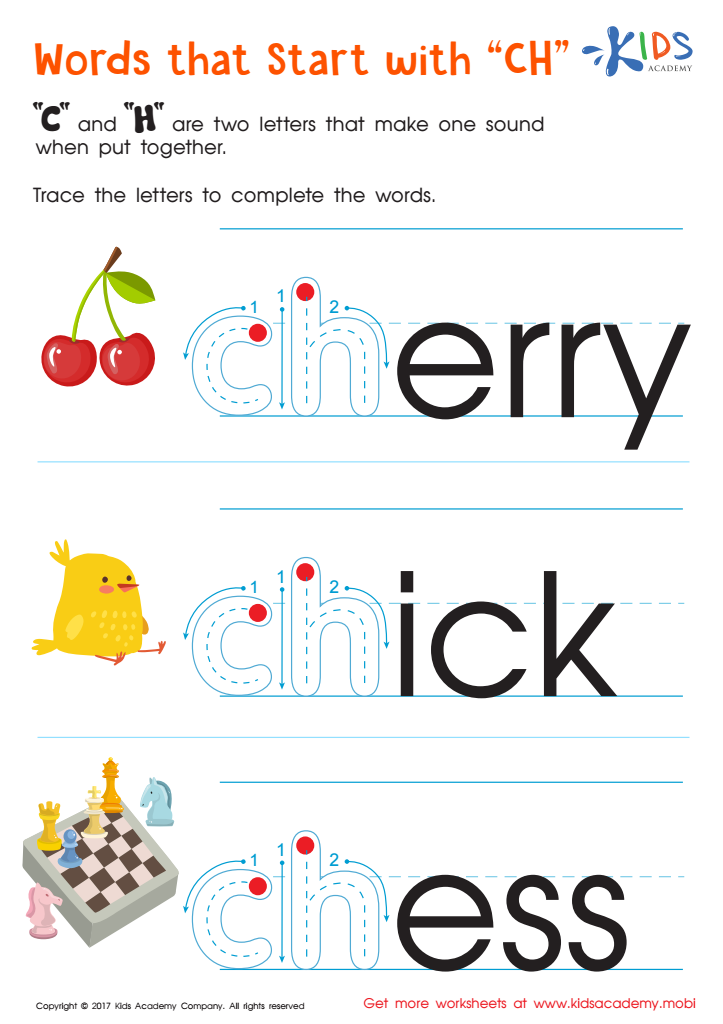
Words That Start with "ch" Spelling Worksheet
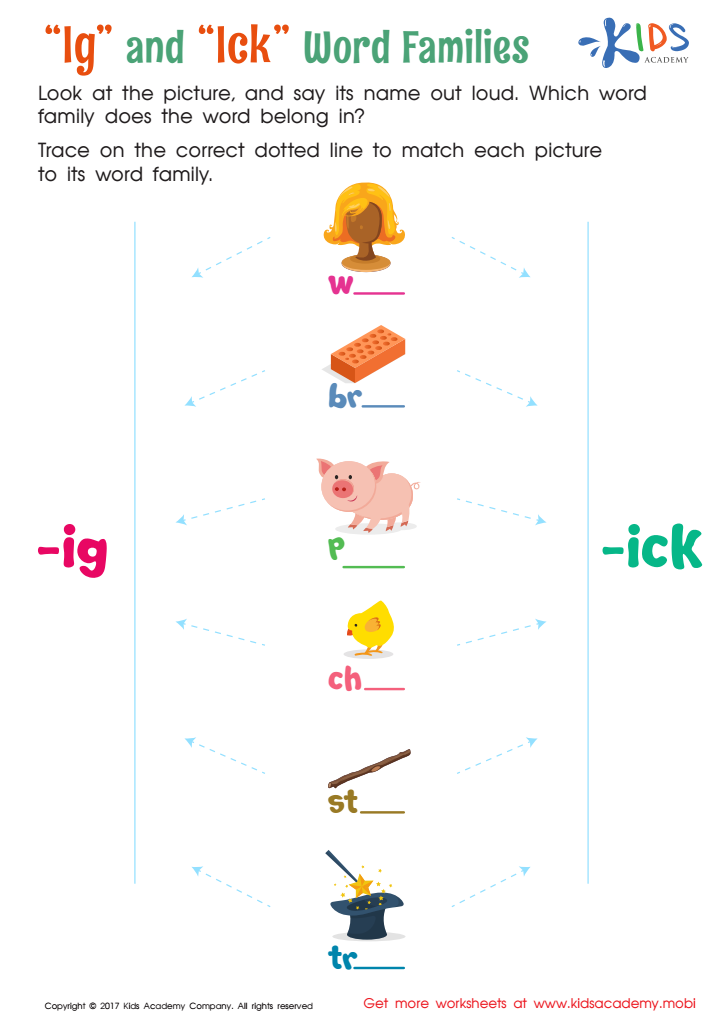
Words Families "ig" and "ick" Spelling Worksheet
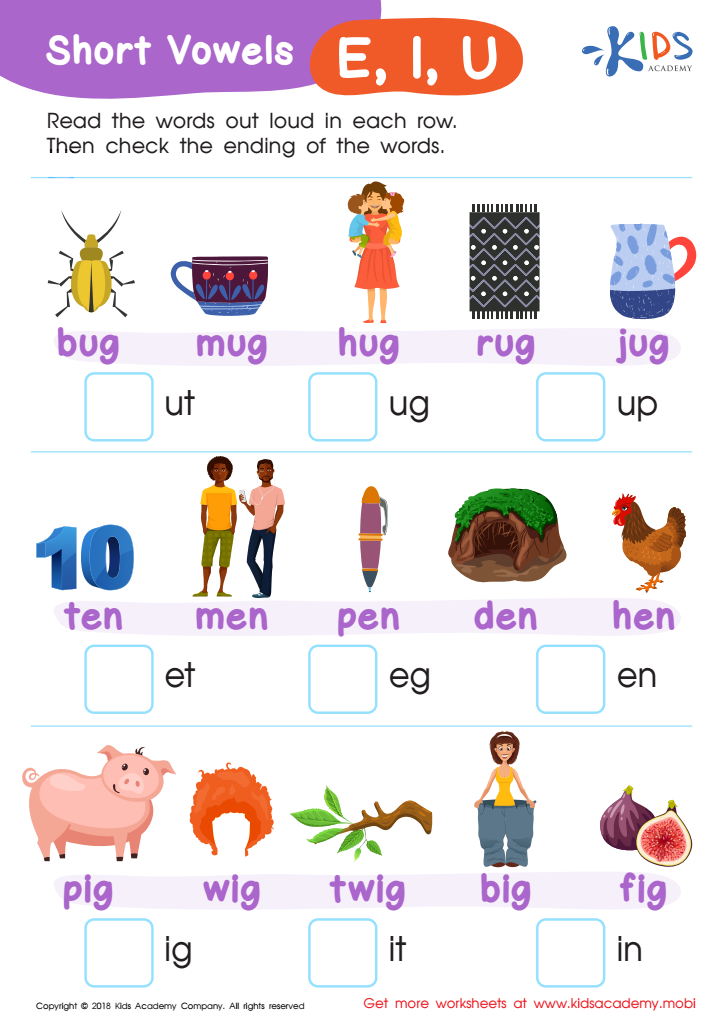
Short Vowels /e/, /i/, and /u/ Worksheet
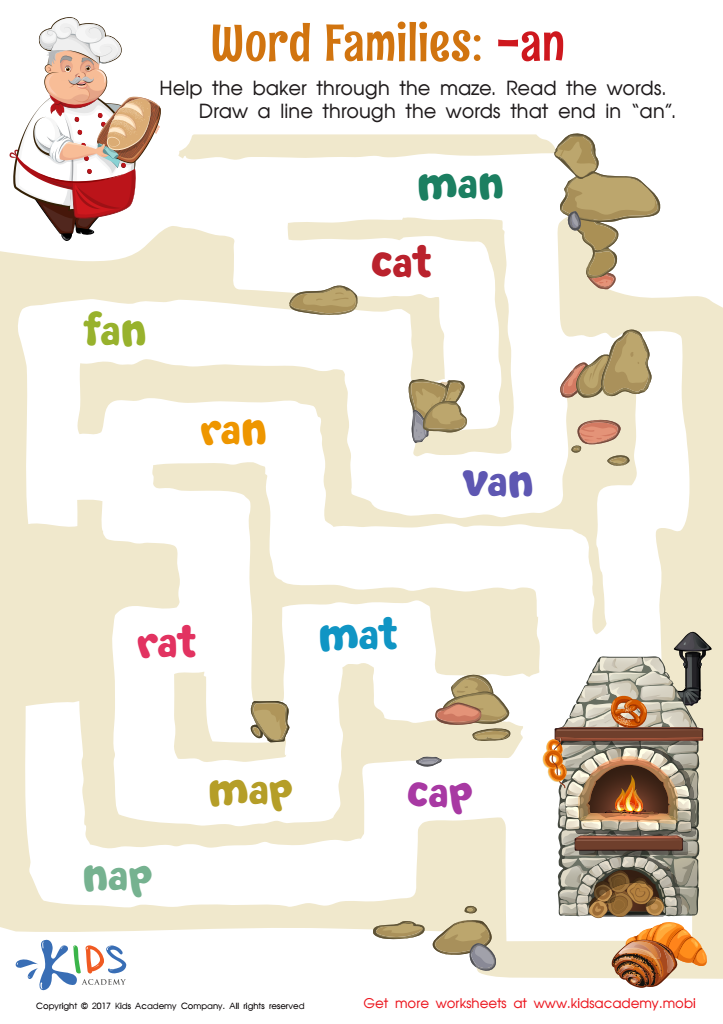
Words Families "an" Spelling Worksheet
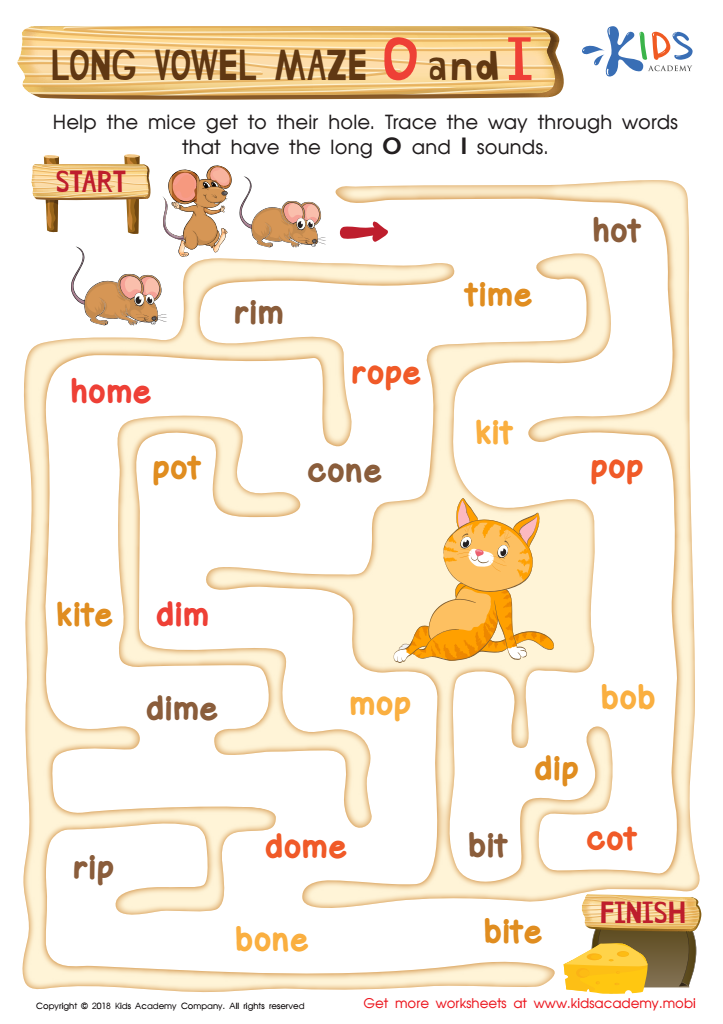
Long Vowel Maze /o/ and /i/ Worksheet
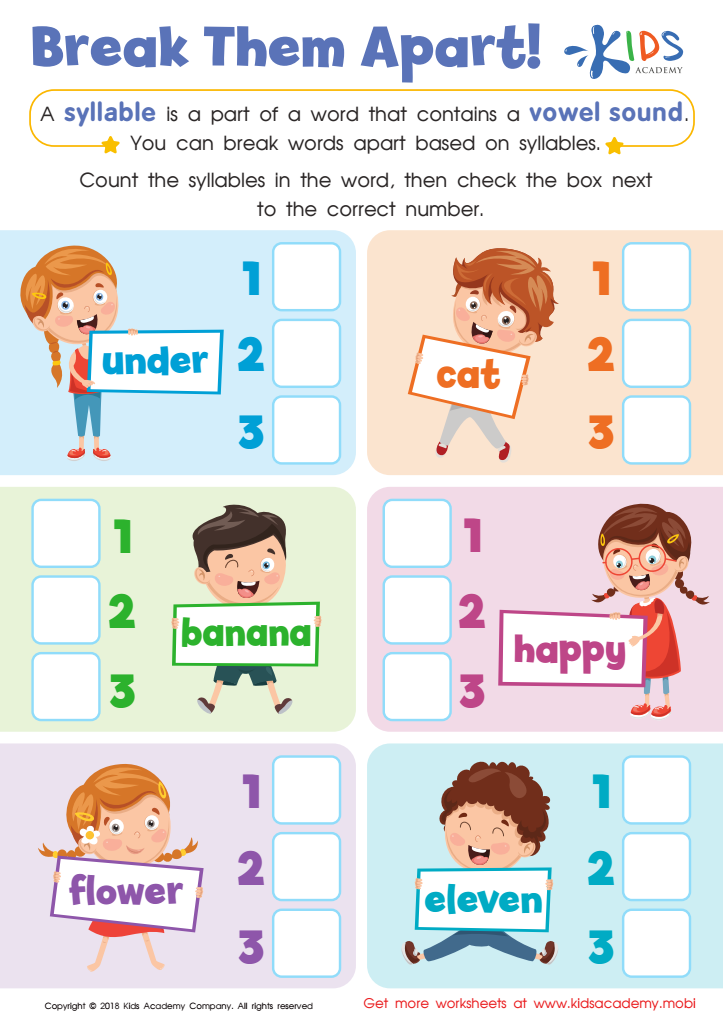
Reading: Break Them Apart Worksheet




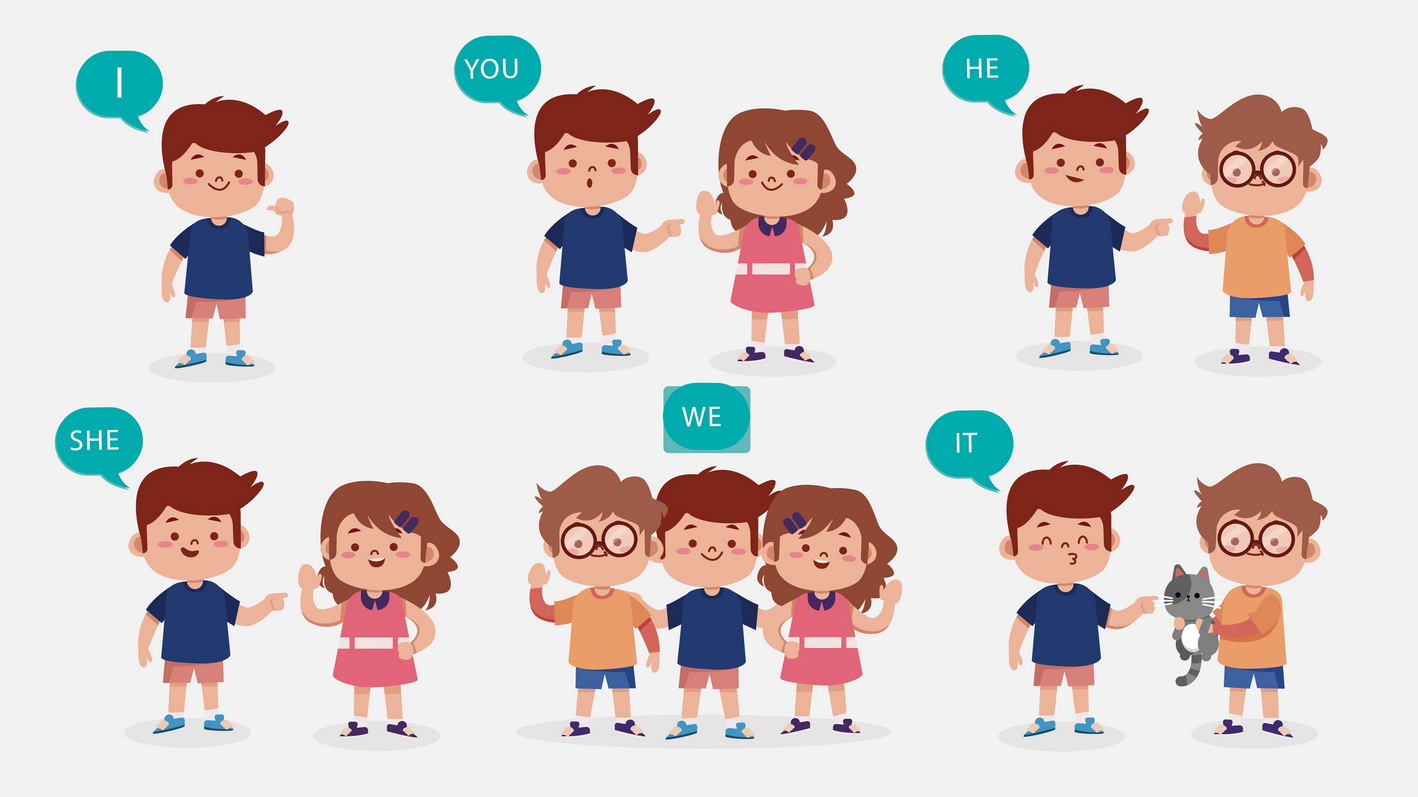

Phonics skills and grammar are foundational elements in early literacy development, crucial for children aged 5-7. During these formative years, children are learning how to decode words and comprehend sentences, laying the groundwork for effective communication. Phonics helps children understand the relationship between sounds and letters, enabling them to read unfamiliar words independently, fostering a love for reading and enhancing their vocabulary.
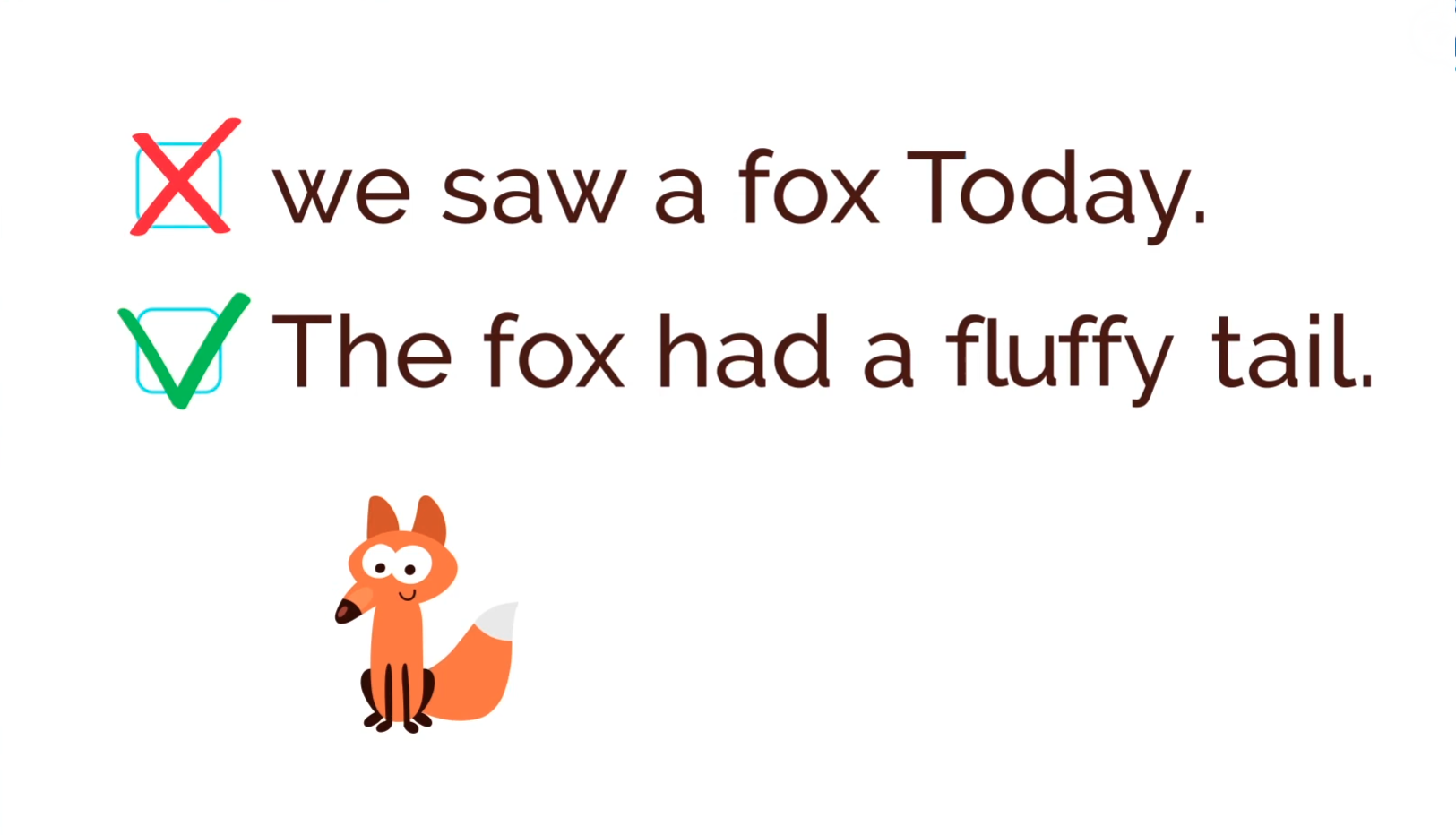
Additionally, learning normal grammar skills introduces children to the structure of language, teaching them how to construct sentences correctly. This knowledge is vital for both verbal and written communication. Mastery of basic grammar helps children express their thoughts clearly and confidently, preventing future difficulties in writing and reading comprehension.
Moreover, strong phonics and grammar skills correlate with academic success and self-esteem. Children who feel competent in their reading and writing abilities are more likely to engage positively with learning. For parents and teachers, supporting these skills not only promotes literacy but also helps instill in children the importance of effective communication, which is essential for their social and emotional development. Prioritizing phonics and proper grammar fundamentally equips young learners for future academic challenges and lifelong learning.