Understanding suffixes Normal Grammar Worksheets for Ages 5-7
3 filtered results
-
From - To
Help your child master the basics of grammar with our "Understanding Suffixes Normal Grammar Worksheets" for ages 5-7. These engaging educational resources are designed to introduce young learners to suffixes, enhancing their reading and writing skills. Each worksheet combines colorful illustrations with fun exercises, making it easier for kids to grasp how suffixes transform word meanings. Perfect for classroom activities or at-home practice, our worksheets support early literacy development and build a strong foundation for future grammar lessons. Boost your child's vocabulary and confidence in writing with these interactive and entertaining worksheets.
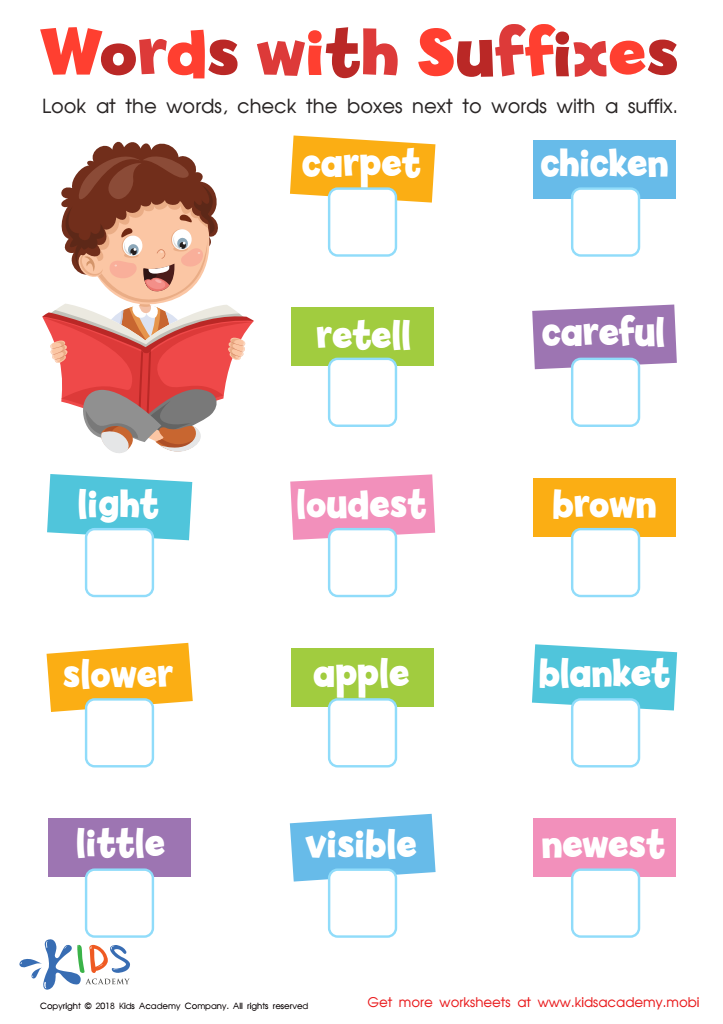
Reading: Words With Suffixes Worksheet
 Assign to My Students
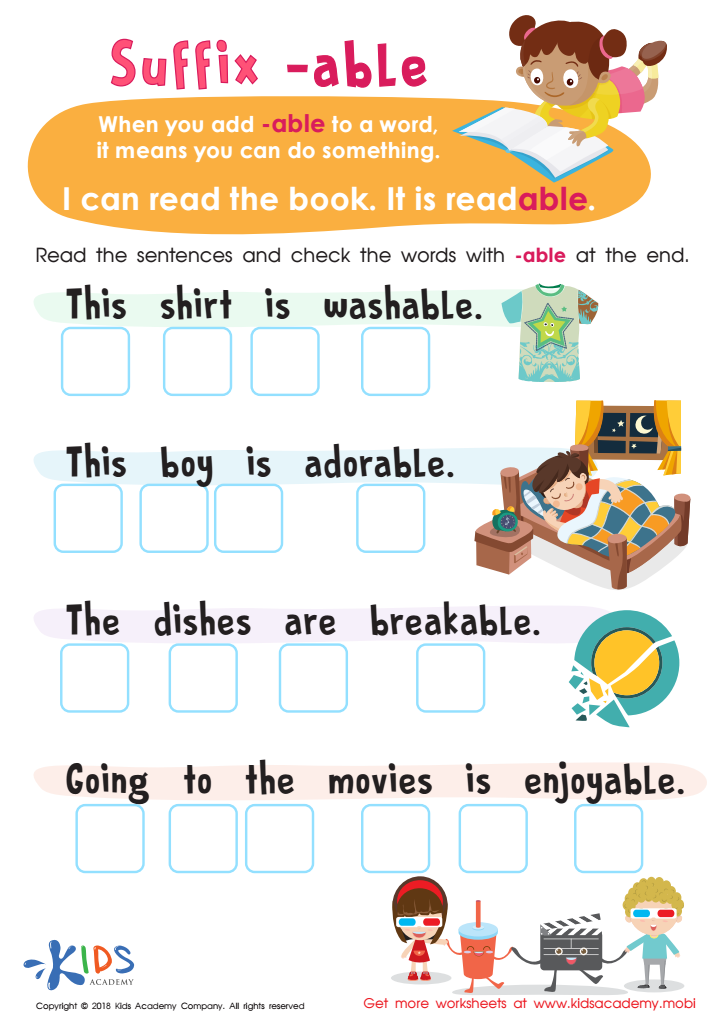
Suffix -Able Worksheet
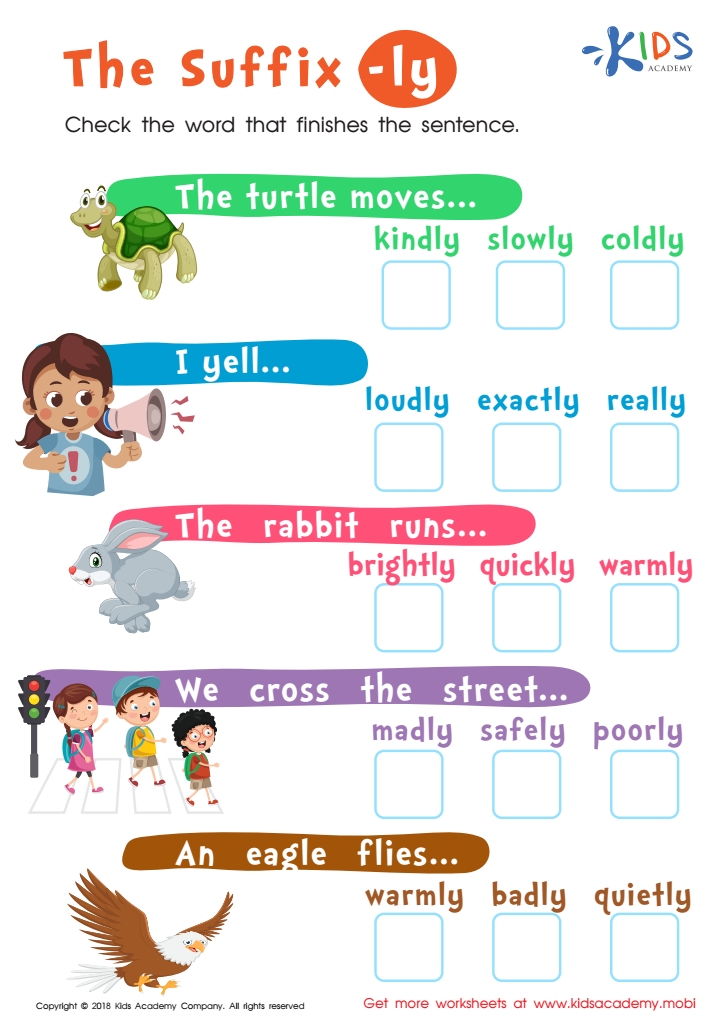
The Suffix -Ly Worksheet







Understanding suffixes is crucial for early childhood language development, and parents and teachers should give it significant attention for children aged 5-7. Suffixes are word endings added to root words that alter their meaning, grammatical function, or both, such as "play" becoming "played" or "happy" becoming "happiness." By grasping these concepts, children enhance their vocabulary, enabling them to express themselves more clearly and accurately.
Knowing suffixes helps children improve their reading skills. When they understand common suffixes like "-ing," "-ed," "-s," and "-es," they can more easily decode new and complex words, aiding in their overall reading fluency. Improved reading skills, in turn, bolster their comprehension abilities, making academic tasks less daunting and more enjoyable.
Math and science also benefit from this understanding, as terminology in these subjects often includes specific suffixes (like "-ment" in "measurement" or "-ology" in "biology"). Additionally, learning how suffixes work enhances spelling skills because children can infer word structures, reducing the likelihood of mistakes.
Finally, a strong grasp of grammar, including suffixes, lays the foundation for clear verbal and written communication. Effective communication skills are vital for academic success and social interactions. Therefore, helping children understand and use suffixes properly gives them a significant advantage in their education and daily life.