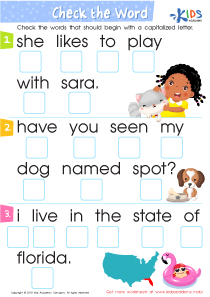
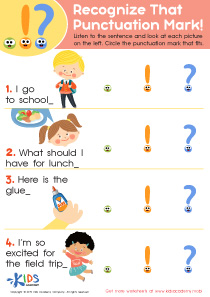
Capitalization rules Normal Writing Worksheets for Ages 5-7
3 filtered results
-
From - To
Enhance your young learners' writing skills with our "Capitalization Rules Normal Writing Worksheets" tailored for ages 5-7! These engaging worksheets introduce essential capitalization concepts, helping children grasp the importance of proper nouns, sentence beginnings, and titles. Bright, colorful layouts captivate attention while interactive exercises promote a fun learning experience. Ideal for use in classrooms or at home, these resources encourage practice in an enjoyable way, fostering confidence in writing abilities. Our worksheets are designed not only to teach but also to inspire creativity and expression. Discover the joy of writing with effective tools to master capitalization rules!
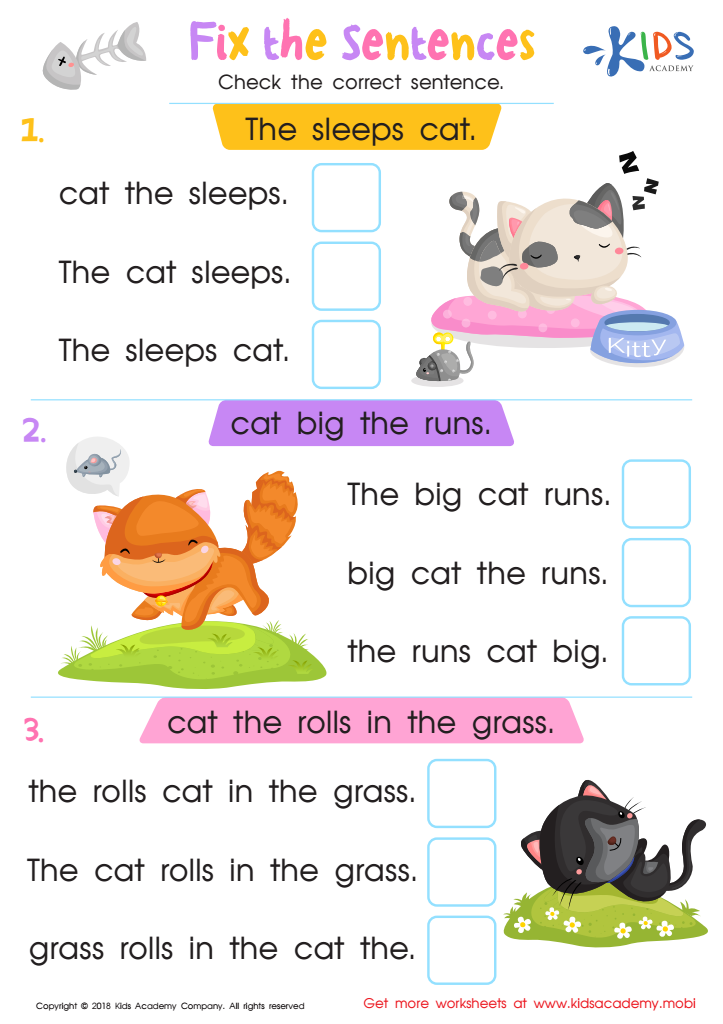
Fix the Sentences Worksheet
 Assign to My Students
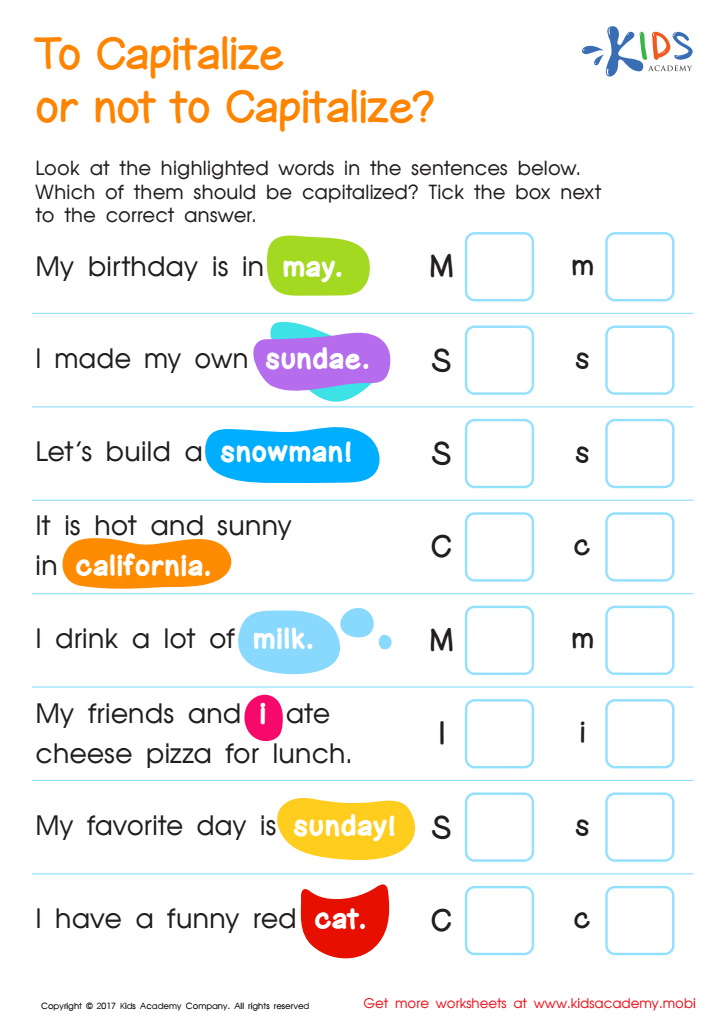
Capitalization: To Capitalize or Not? Printable
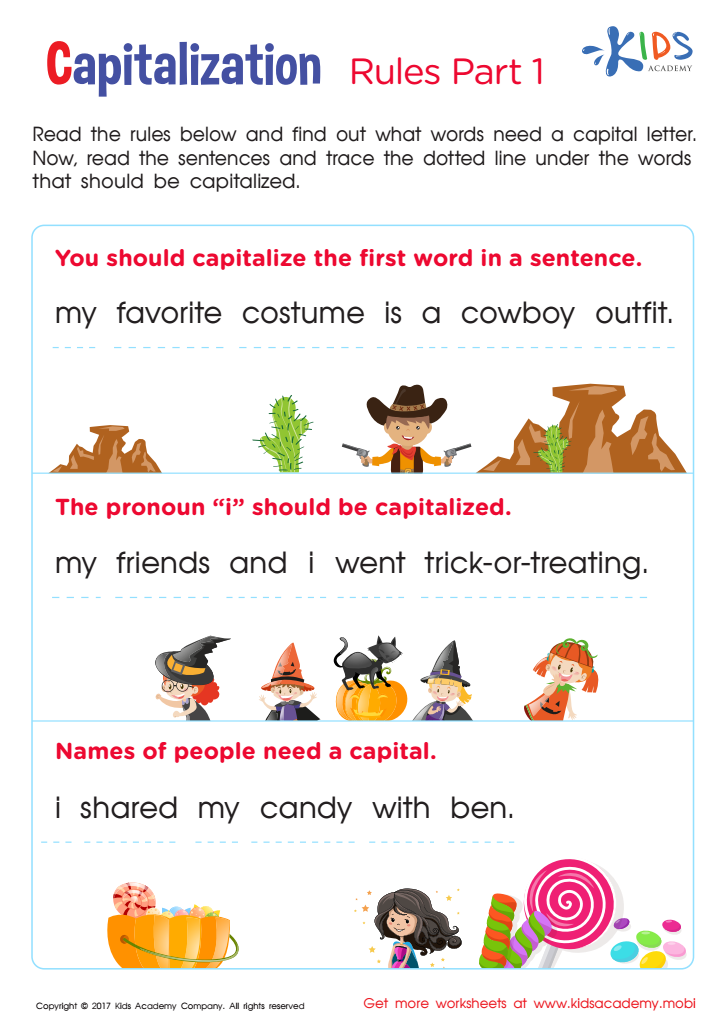
Capitalization Rules: Part 1 Worksheet



.jpg)



Capitalization rules are essential for young learners, particularly for children aged 5-7, as they begin to develop their writing skills. Teaching these rules helps children understand how to convey meaning clearly and effectively in their writing. Proper use of capital letters at the beginning of sentences, for names, and for days of the week enhances readability, allowing their ideas to be communicated without confusion.
By mastering capitalization, children are also better prepared for reading comprehension. Recognizing capital letters as indicators of significant words helps them understand context and structure in texts. Furthermore, following capitalization rules fosters a sense of discipline and attention to detail that is crucial in learning environments.
For parents and teachers, emphasizing these rules creates a solid foundation for more advanced literacy skills. It nurtures a sense of pride in their work, as well-constructed sentences indicate effort and knowledge. Engaging children in fun activities that involve capitalization, like writing stories or labeling pictures, makes learning enjoyable and memorable. In short, understanding capitalization is a vital part of a child's early education, supporting their confidence and competence as they progress in reading and writing.