Phonics practice Normal Beginning Sounds Worksheets for Ages 5-9
5 filtered results
-
From - To
Unlock the joy of learning with our Phonics Practice Normal Beginning Sounds Worksheets, designed for children aged 5-9. These engaging and educational worksheets help kids master the foundational skill of identifying and pronouncing beginning sounds. Through playful activities and colorful illustrations, children will enhance their phonics skills, improve their reading proficiency, and boost their confidence. Whether used at home or in the classroom, these worksheets are perfect for reinforcing early reading skills in a fun and interactive way. Foster a love for reading and set the stage for academic success with Kids Academy's expertly crafted phonics resources.
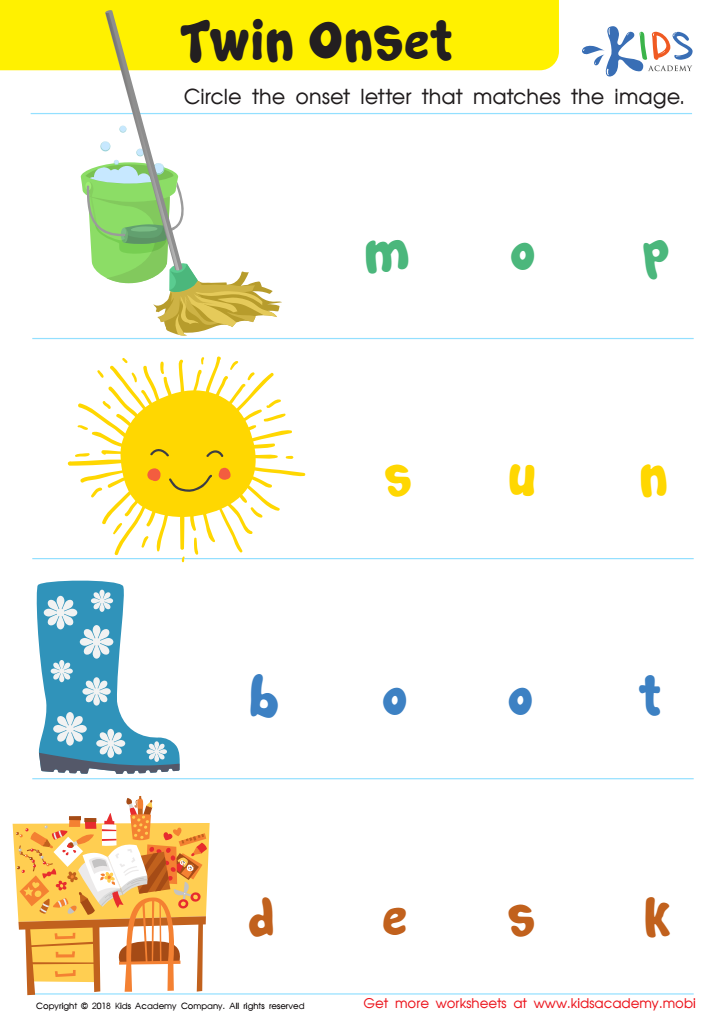
Twin Onset Worksheet
 Assign to My Students
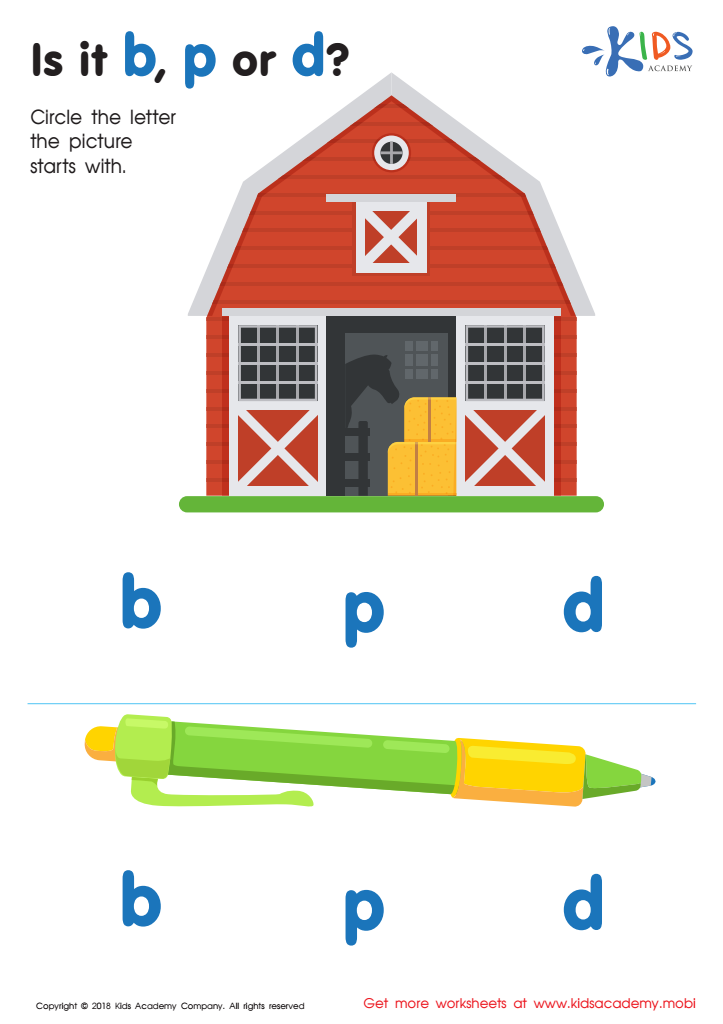
Is it b, p or d? Worksheet
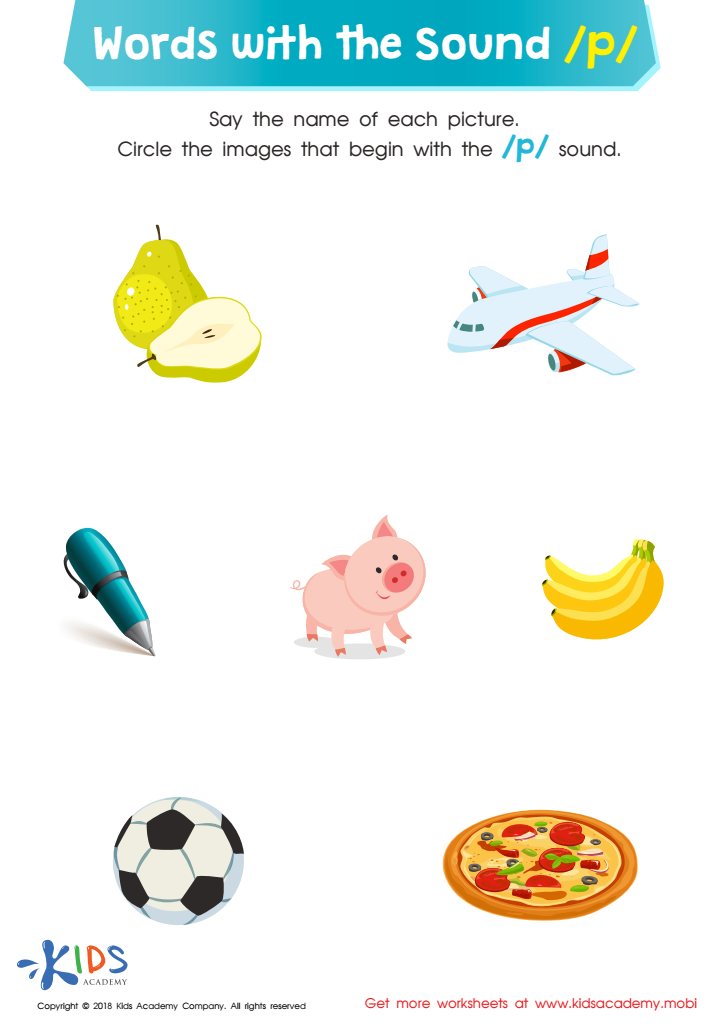
Words with sound p Reading Worksheet
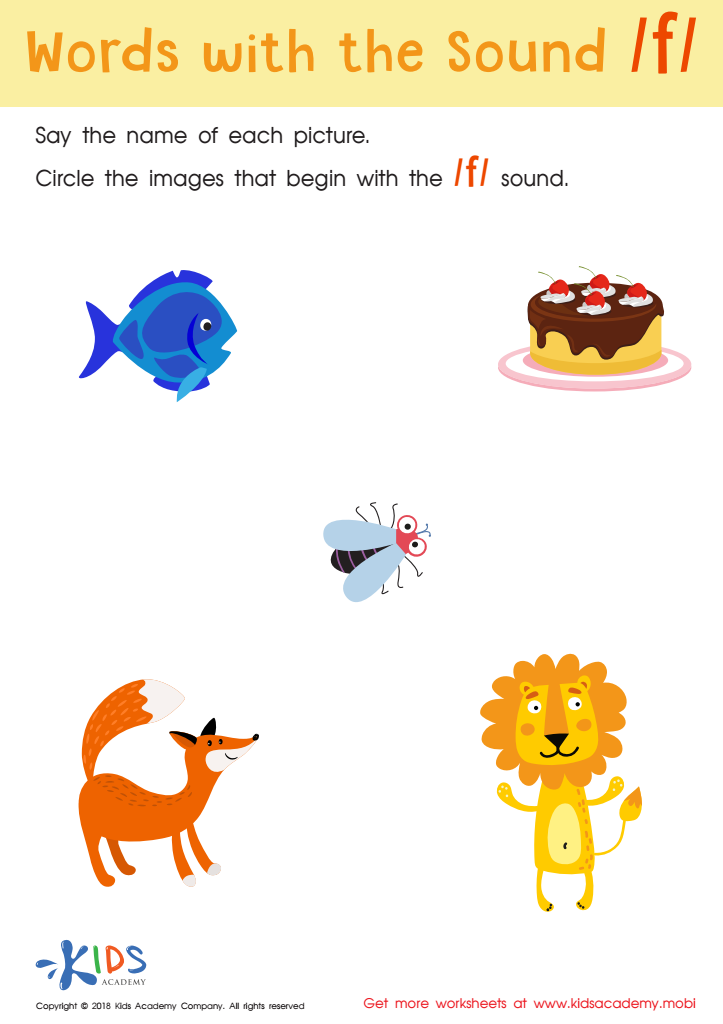
Words with sound f Reading Worksheet
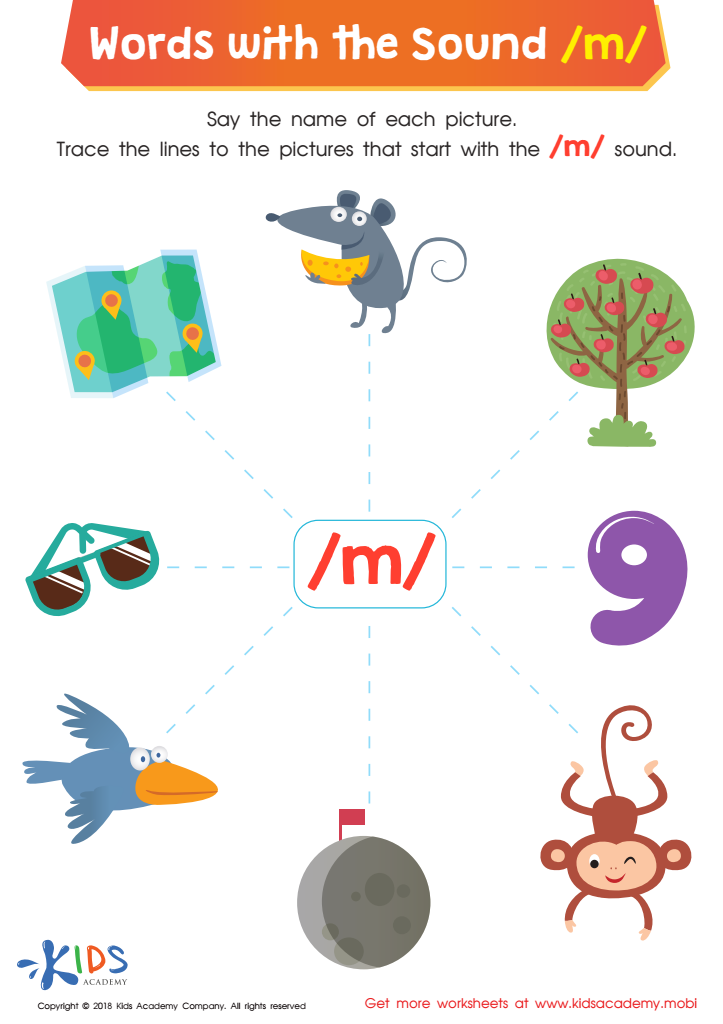
Words with Sound M Reading Worksheet








Phonics practice focusing on normal beginning sounds is crucial for children aged 5-9 because it lays the foundation for successful reading and writing skills. During these formative years, children are in a critical period for language development. Properly understanding and identifying the sounds that letters and letter combinations make is the first step in decoding words, which is essential for fluency in reading.
By concentrating on beginning sounds, children can start to recognize patterns and make connections between spoken and written language. This early skill is not only vital for knowing how to pronounce new words but also for spelling them correctly. Phonics practice enhances phonemic awareness, which research consistently shows is a strong predictor of future reading success.
For parents and teachers, nurturing this skill can prevent reading difficulties later in education. Effective phonics instruction can boost a child’s confidence, making them more eager and positive towards learning. It also aids in developing vocabulary and comprehension skills, as children can read more effectively and understand what they read.
Implementing fun and engaging phonics activities in a supportive manner will significantly impact a child’s lifelong love for reading and learning, making it a top priority for those involved in early education.







