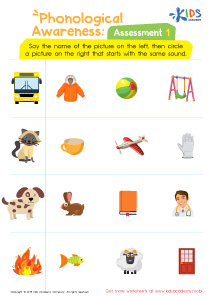
Phonics recognition Normal Consonants Worksheets for Ages 5-9
3 filtered results
-
From - To
Discover our engaging Phonics Recognition Normal Consonants Worksheets designed for children aged 5-9! These worksheets aim to enhance children's phonemic awareness and reinforce their understanding of consonant sounds through fun and interactive activities. Each worksheet features colorful illustrations and straightforward exercises, making learning enjoyable and effective. Students will practice identifying consonants, matching them with corresponding pictures, and completing related phonics tasks to build a solid foundational skill set. Perfect for both classroom use and at-home learning, our phonics worksheets provide parents and teachers with invaluable resources to support early literacy development. Start your child's reading journey today!
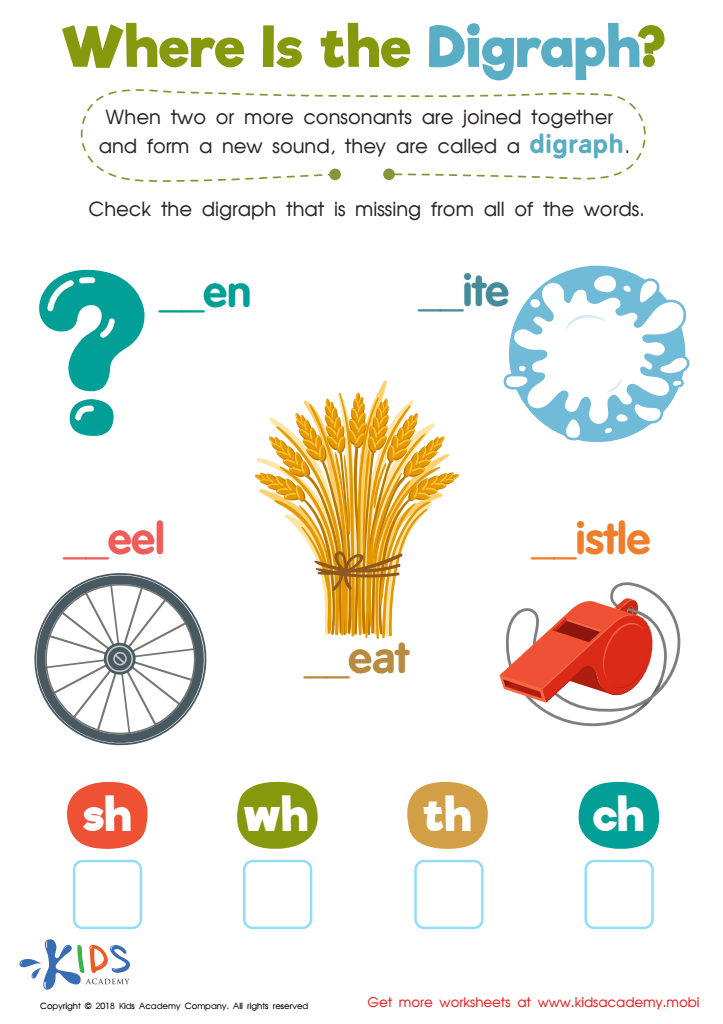
Where Is the Digraph? Worksheet
 Assign to My Students
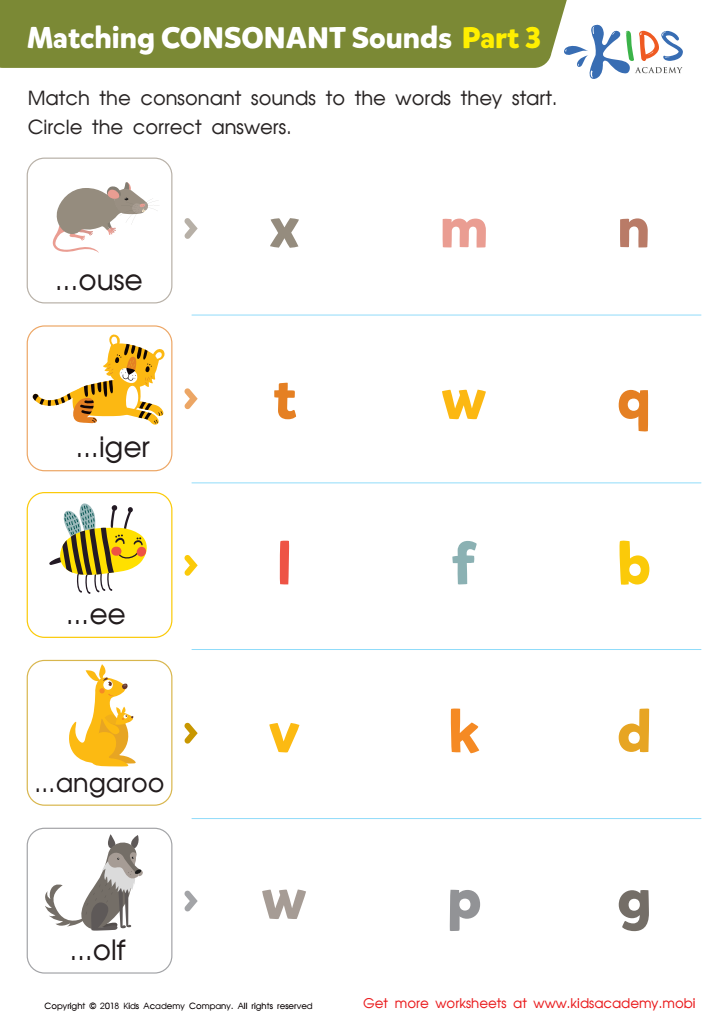
Matching Consonant Sounds: Part 3 Worksheet
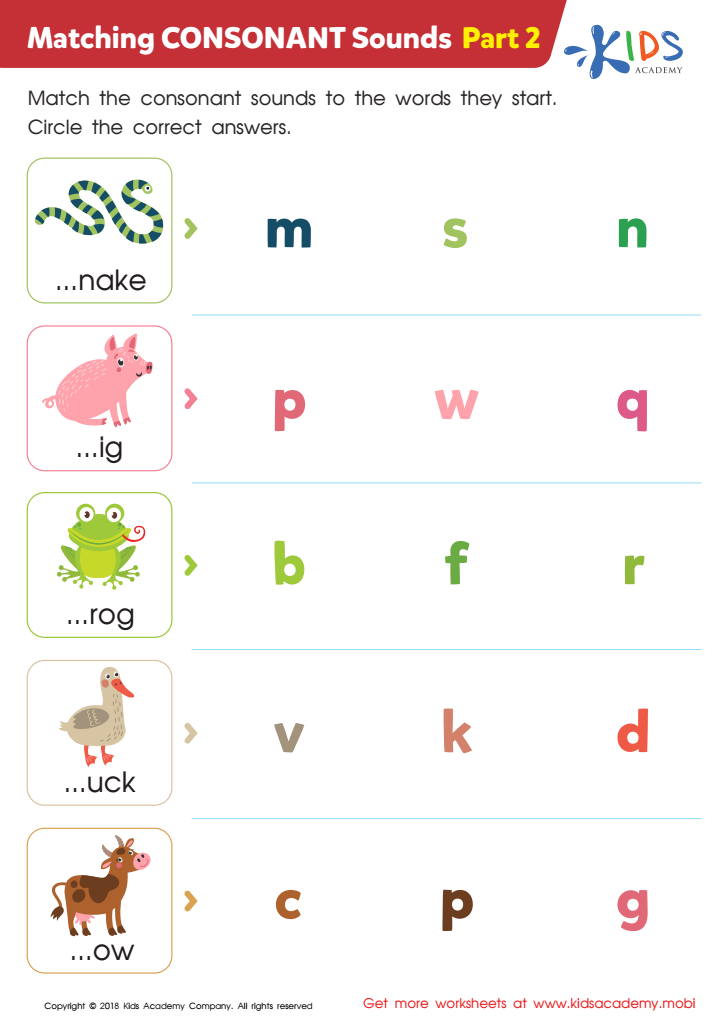
Matching Consonant Sounds: Part 2 Worksheet



Phonics recognition of normal consonants is crucial for children aged 5 to 9 as it forms the foundation for reading and language development. Understanding consonant sounds helps children decode words, unlocking the ability to read independently. This skill is essential not only for academic success but also for fostering confidence and a love for reading.
At this age, children are typically transitioning from recognizing letters to using sounds to read and write. Knowledge of consonants allows them to blend sounds, enabling them to read simple words and eventually progress to more complex texts. When children can sound out words, they are more likely to engage with reading materials and participate in classroom discussions, enhancing their overall learning experience.
Furthermore, phonics instruction supports spelling and vocabulary development. When kids recognize consonant sounds and patterns, they can better understand the relationships between letters and their sounds, aiding in both oral and written communication.
Parents and teachers play crucial roles in this developmental stage by incorporating phonics practice into daily routines and lessons. By investing time in phonics recognition, they help lay the groundwork for literacy skills that will benefit children throughout their educational journey and beyond.