Phonics skills improvement Normal Alphabet Worksheets for Ages 5-9
6 filtered results
-
From - To
Enhance your child's phonics skills with our engaging Normal Alphabet Worksheets, designed specifically for ages 5-9! These worksheets provide fun and effective activities aimed at developing essential reading and writing abilities. Children will practice letter recognition, sound association, and word formation through interactive exercises that foster a love for learning. Each worksheet is thoughtfully curated to match different skill levels, ensuring a personalized approach to education. Perfect for home schooling or classroom use, our resources will help young learners build a solid foundation in phonics, setting them up for future academic success. Start your child's educational journey today!
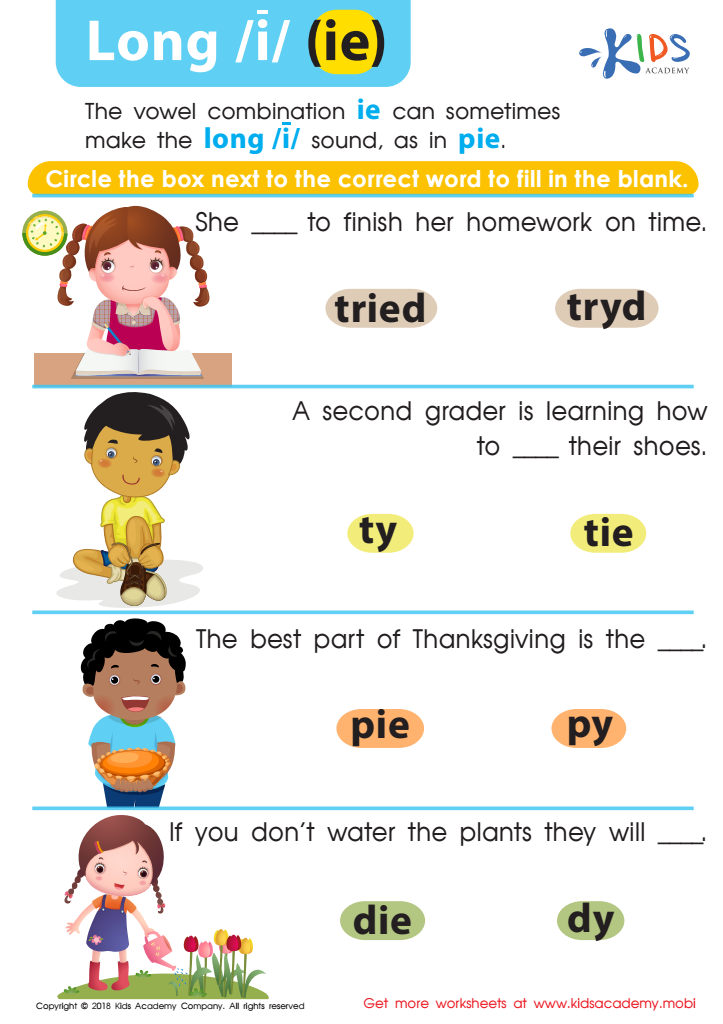
Reading: Long I and IE Worksheet
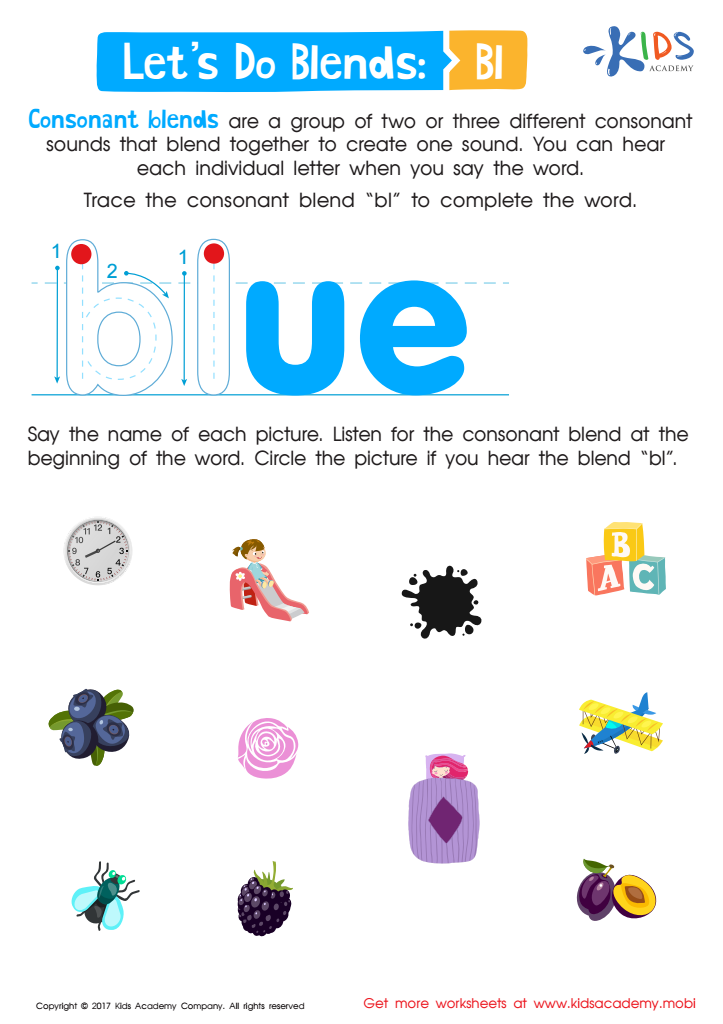
Beginning Blends: "Bl" Words Worksheet
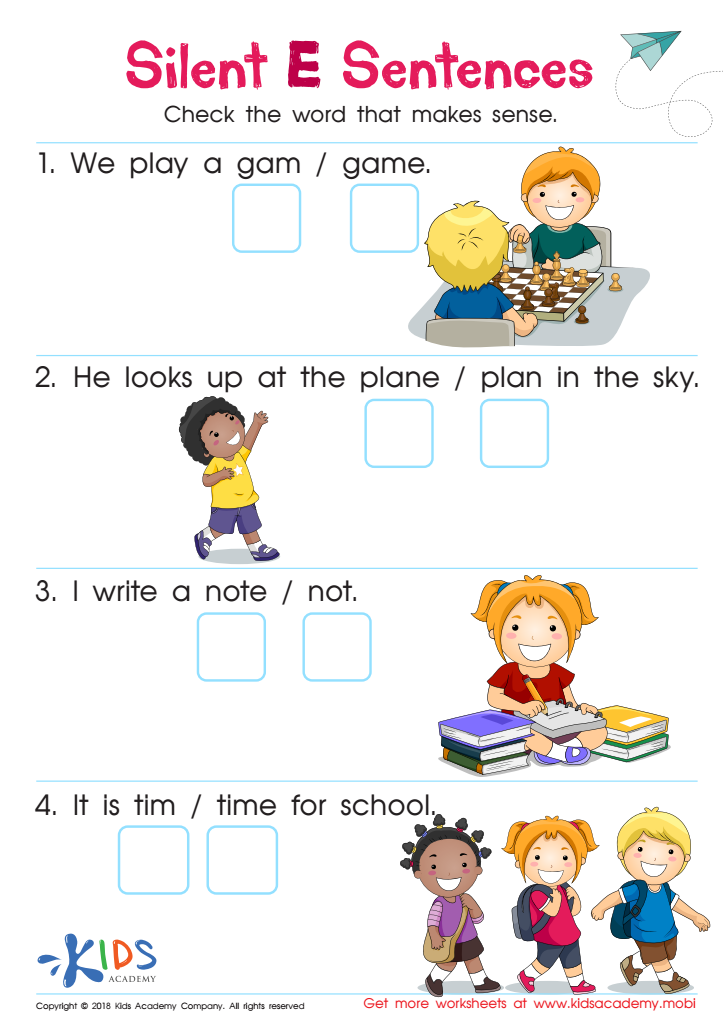
Silent E Sentences Worksheet

Long and Short U Worksheet
 Assign to My Students
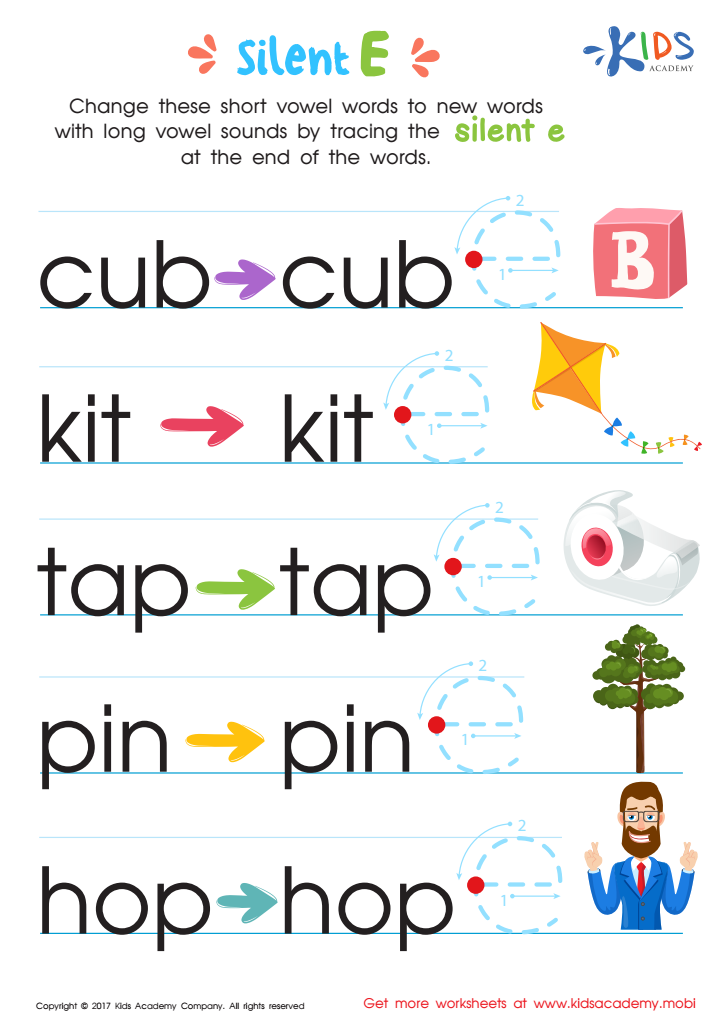
Silent E Words Worksheet
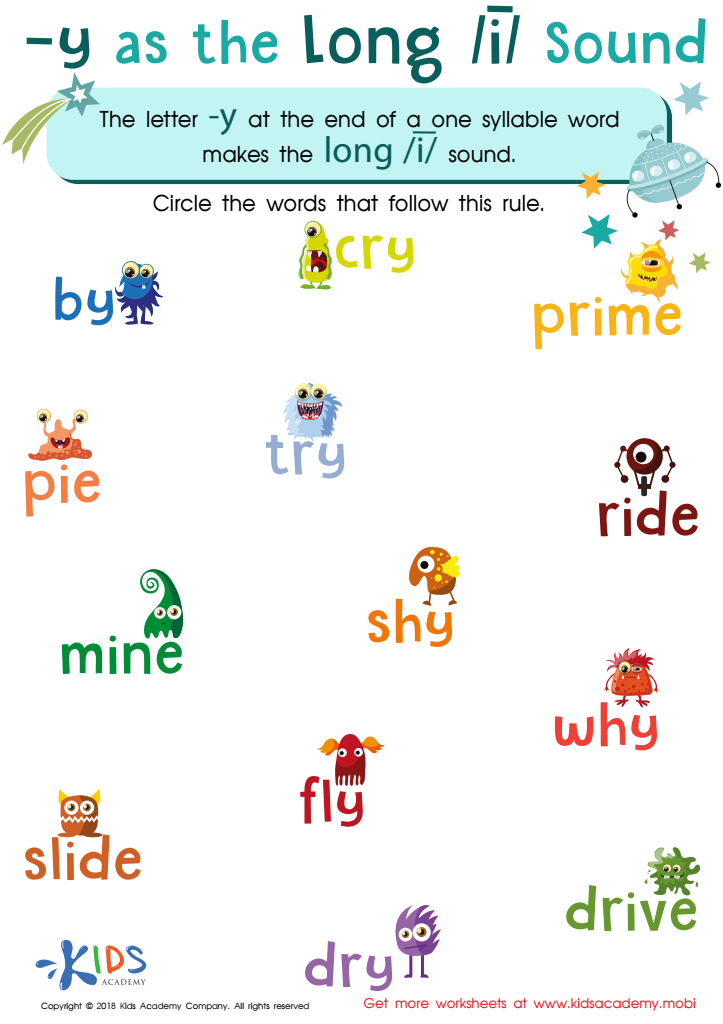
Reading: Y as Long I Worksheet






Phonics skills are foundational to a child's reading and writing development, making them crucial for parents and teachers of children aged 5-9. At this stage, children are transitioning from recognizing individual letters to understanding how they combine to form sounds and words. Improved phonics skills enhance their ability to decode unfamiliar words, boosting reading fluency and comprehension.
When children master phonics, they gain confidence in their literacy abilities, which encourages a lifelong love for reading. This love for reading supports academic success across all subjects, as literacy is essential for understanding content in math, science, and social studies.
Moreover, strong phonics skills play a vital role in preventing reading difficulties. Early interventions can address gaps in phonetic understanding, helping children avoid future challenges in literacy. This is particularly important for children at risk for dyslexia or other learning disabilities.
Involving parents in phonics instruction fosters a supportive learning environment at home, reinforcing what children are learning in school and making reading a shared family activity. Overall, investing in phonics skills improvement is fundamental in shaping proficient, confident readers, setting the stage for their future academic journey and personal growth.







