Rhyming skills development Normal Alphabet Worksheets for Ages 5-9
4 filtered results
-
From - To
Enhance your child's language skills with our Rhyming Skills Development Normal Alphabet Worksheets, designed specifically for ages 5-9. These engaging worksheets encourage children to explore the rhythm and sounds of language while practicing their alphabet knowledge. Each activity promotes phonemic awareness and helps kids recognize and create rhyming words in a fun and interactive way. Ideal for classroom use or at-home learning, these worksheets foster creativity and bolster reading readiness. Equip your young learners with essential skills in literacy and unleash their love for language! Start their rhyming journey today and watch them grow in confidence and ability!
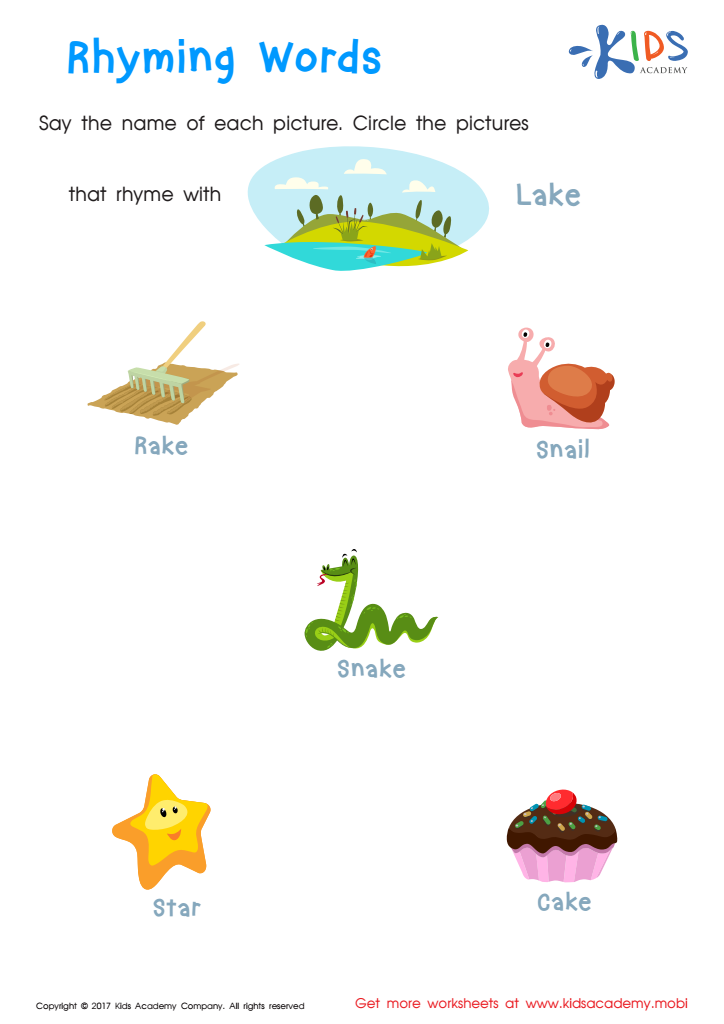
Rhyming Words Rhyming Worksheet
 Assign to My Students
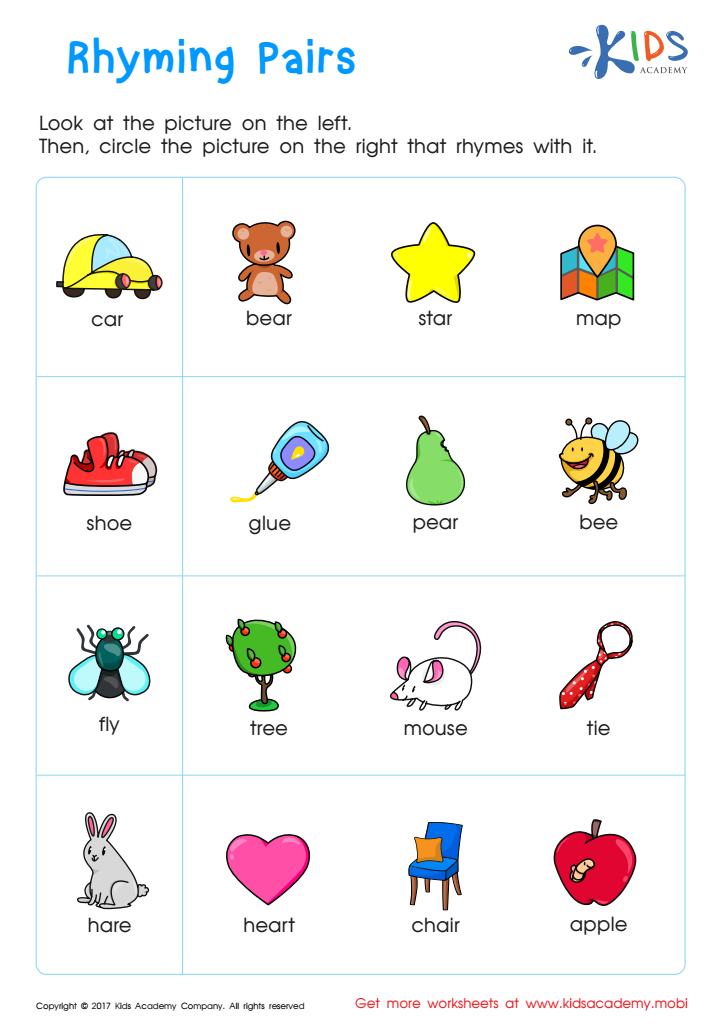
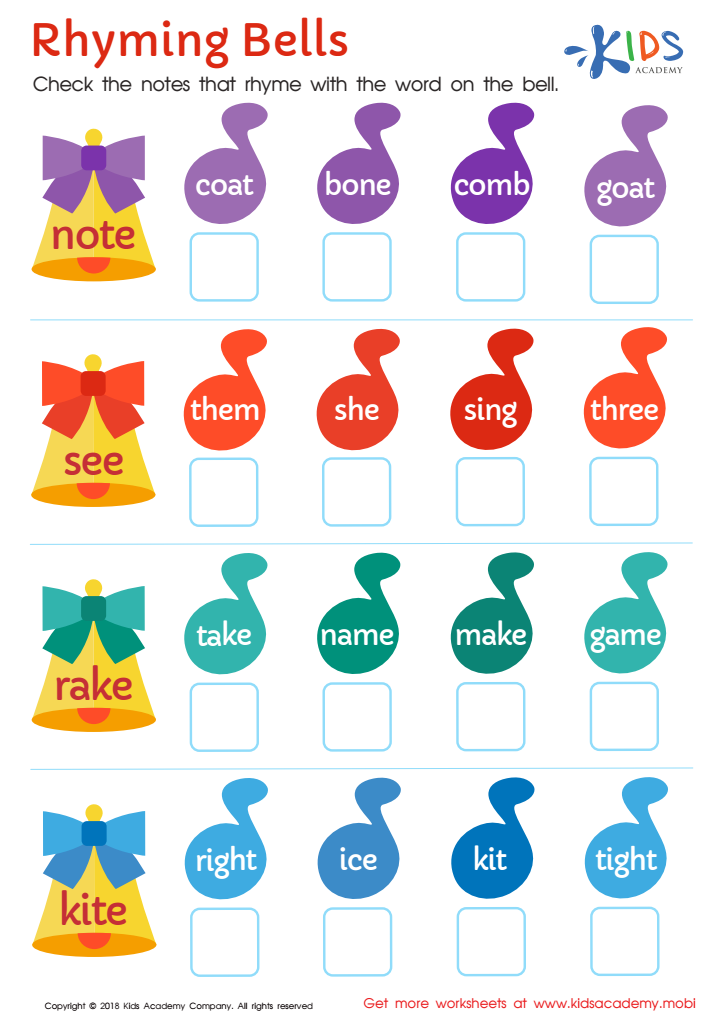
Rhyming Bells Worksheet
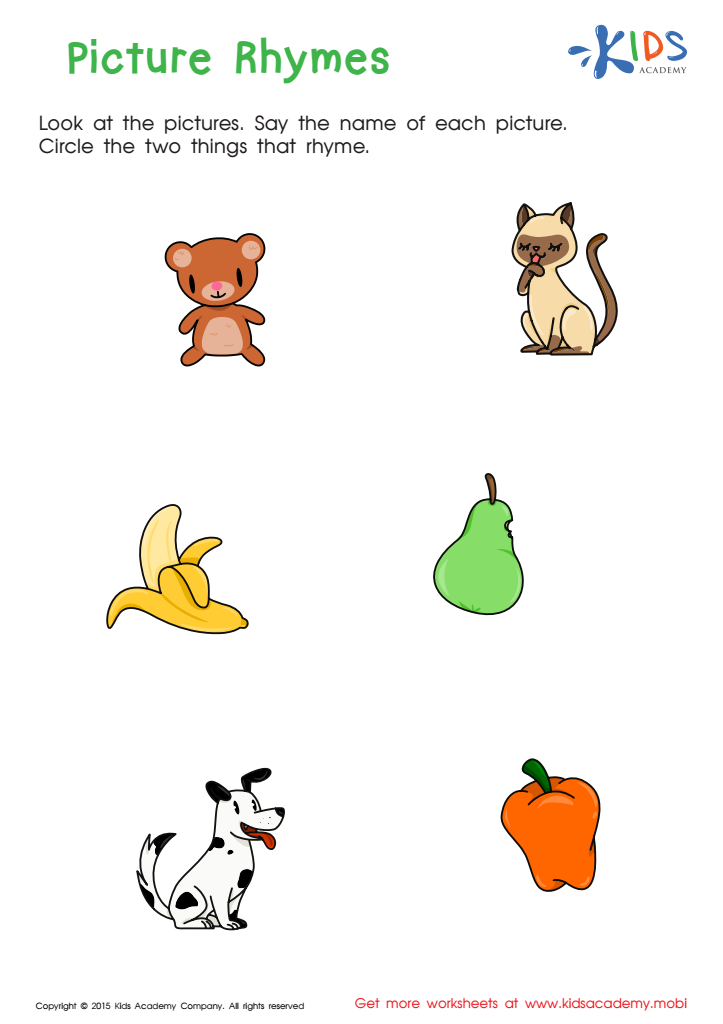
First Words: Picture Rhymes Worksheet








Rhyming skills development is crucial for children aged 5-9 because it lays the foundational framework for literacy and language acquisition. When children engage in rhyming activities, they enhance their phonemic awareness—the ability to hear, identify, and manipulate sounds in words. This skill is essential for developing reading abilities, as it helps children understand how letters correspond to sounds.
Moreover, rhyming boosts vocabulary development, as children are exposed to new words and sentence structures in playful, memorable ways. It encourages creativity and language expression, fostering confidence in their speaking and writing skills. Additionally, rhyming can improve memory and recall, important attributes for comprehensive learning.
For teachers and parents, implementing rhyming into daily activities, such as reading books, singing songs, or using nursery rhymes, enriches language-rich environments. These practices not only promote strong literacy skills but also nurture social interactions as children enjoy group activities that involve rhyme. In essence, understanding rhyming serves as a springboard for broader academic success, making it an essential focus for caregivers and educators seeking to equip children with effective communication tools as they grow.







