Sound differentiation Normal Alphabet Worksheets for Ages 5-9
3 filtered results
-
From - To
Enhance your child's reading and writing skills with our "Sound Differentiation Normal Alphabet Worksheets" designed specifically for ages 5-9. These engaging worksheets are tailored to help young learners identify and differentiate sounds associated with each letter of the alphabet. Through fun and interactive activities, worksheets focus on phonics, auditory discrimination, and letter recognition, providing a solid foundation for literacy development. Ideal for both home and classroom use, these resources support teachers and parents in fostering essential early language skills. Nurture your child's love for learning while enhancing their knowledge with our thoughtfully crafted sound differentiation worksheets. Explore today!
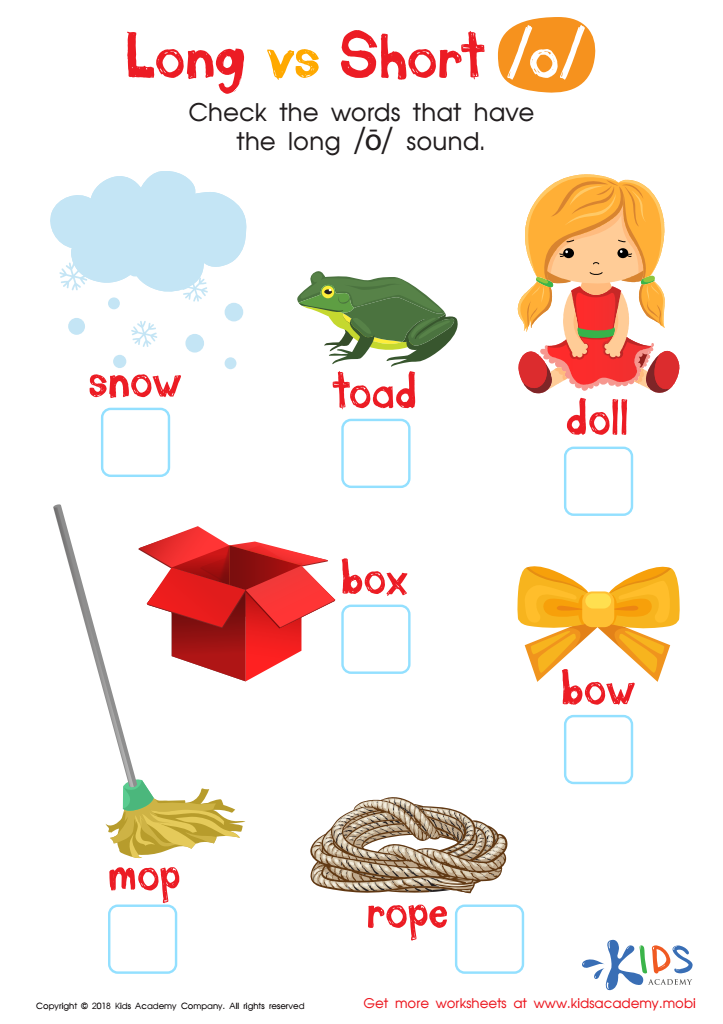
Long vs Short O Reading Worksheet
 Assign to My Students
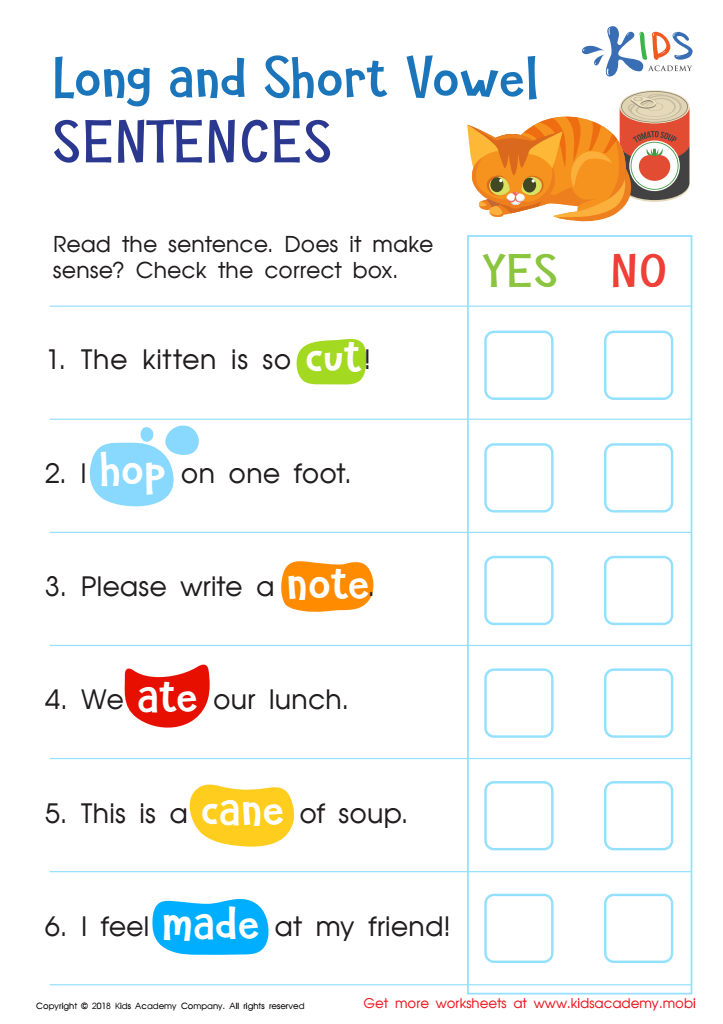
Long and Short Vowel Sentences: Assessment Worksheet
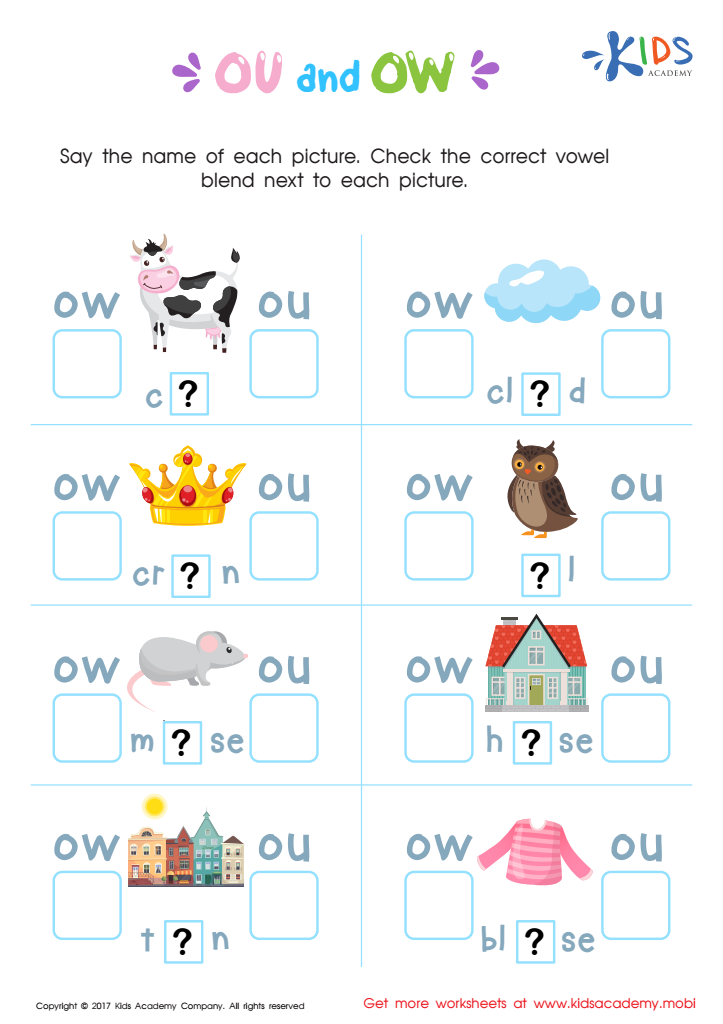
OU and OW Words Worksheet







Sound differentiation, or the ability to recognize and produce distinct sounds in words, is crucial for children aged 5 to 9 as it lays the foundation for effective reading and writing skills. At this developmental stage, children are just beginning to make connections between letters and their corresponding sounds, which is essential for literacy.
Parents and teachers should care about sound differentiation because it directly impacts children's phonemic awareness, a critical component of reading success. Mastery of sound differentiation enables children to decode words, facilitating fluency in reading. When children can hear, identify, and manipulate sounds, they become more confident in their reading abilities, which also boosts their overall academic performance.
Moreover, sound differentiation enriches children's verbal communication skills. It helps them articulate thoughts clearly, enhancing language development and building a robust vocabulary. Additionally, early intervention in sound differentiation can prevent future reading difficulties, reducing the likelihood of learning challenges later on.
By engaging in activities such as rhyming games, or sound sorting, either at home or in the classroom, parents and teachers can create a supportive environment that nurtures this essential skill. Ultimately, investing time and resources into sound differentiation fosters lifelong learning and literacy success.







