
Letter-sound association Normal Letter Recognition Worksheets for Ages 5-9
5 filtered results
Difficulty Level
Grade
Age
-
From - To
Subject
Activity
Standards
Enhance your child's learning journey with our engaging Letter-Sound Association Normal Letter Recognition Worksheets, designed specifically for ages 5-9. These worksheets help young learners connect letters with their corresponding sounds through fun and interactive exercises. By incorporating colorful illustrations and varying activities, children are encouraged to recognize and master their alphabet while developing foundational reading skills. Ideal for home or classroom use, these resources foster a love for learning and boost confidence in letter identification. Parents and educators can easily access and print these worksheets, ensuring an effective and enjoyable learning experience for early readers. Visit us to discover more!
Favorites
With answer key
Interactive
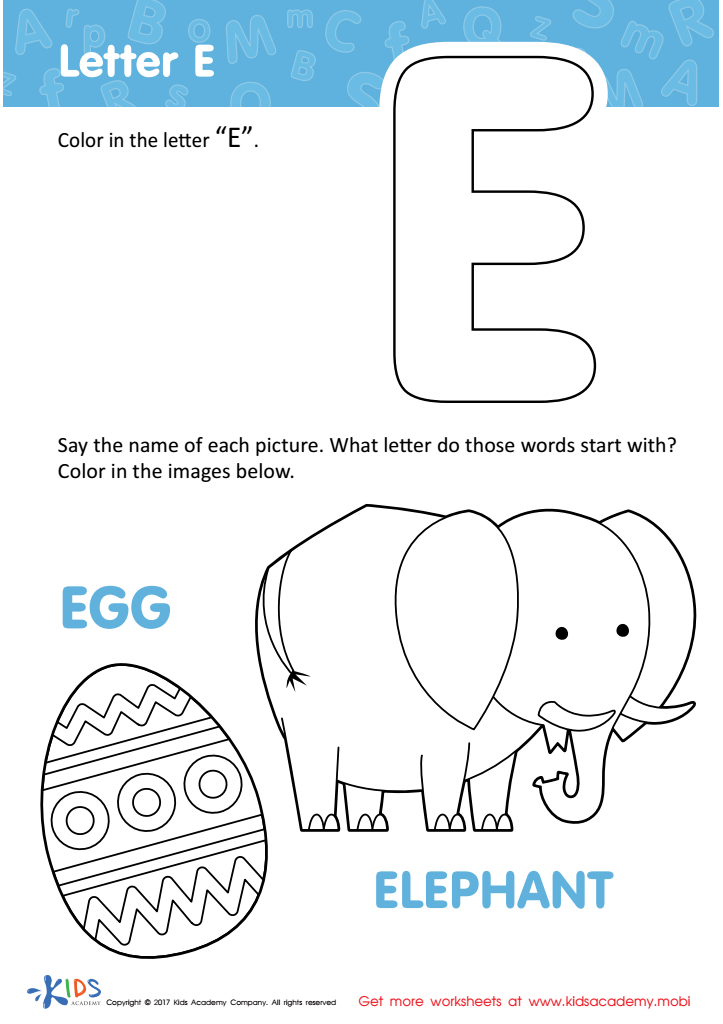
Letter E Coloring Sheet
Coloring pages are great for teaching kids the alphabet and words! This "E" page features a cute elephant and Easter egg. Kids will love it and learn the letter "E" at the same time. 80 words
Download (PDF)
 Assign to My Students
Assign to My Students
Letter E Coloring Sheet
Worksheet
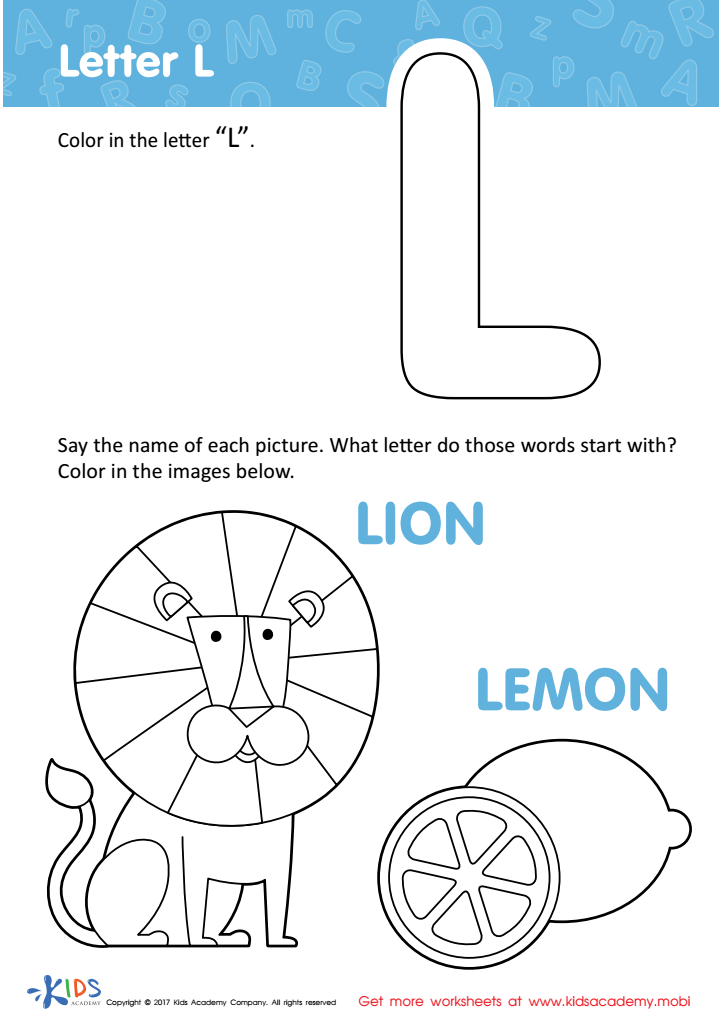
Letter L Coloring Sheet
Kids often struggle to say "L" and love it because so many things they love start with it! This coloring page combines the letter and fun images like a lemon and lion to teach and entertain!
Download (PDF)
Assign to My Students
Assign to My Students
Letter L Coloring Sheet
Worksheet
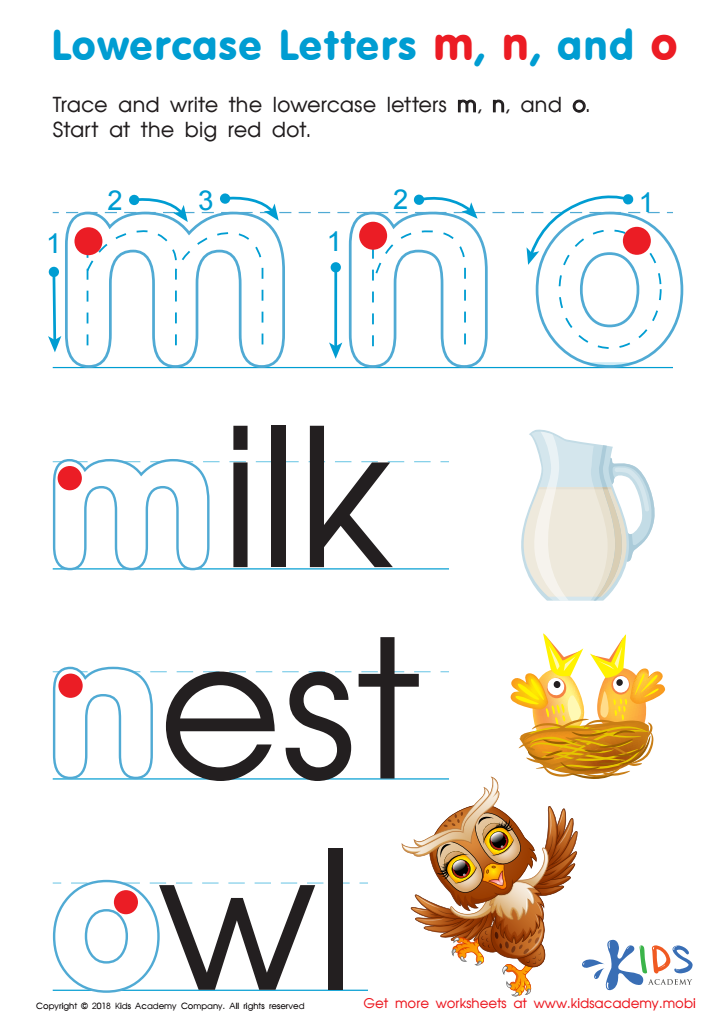
Lowercase Letters m n o Worksheet
Help your child learn the alphabet with letter tracing. Show them the difference between uppercase and lowercase letters by working through this free worksheet, tracing and writing lowercase m, n and o.
Lowercase Letters m n o Worksheet
Worksheet
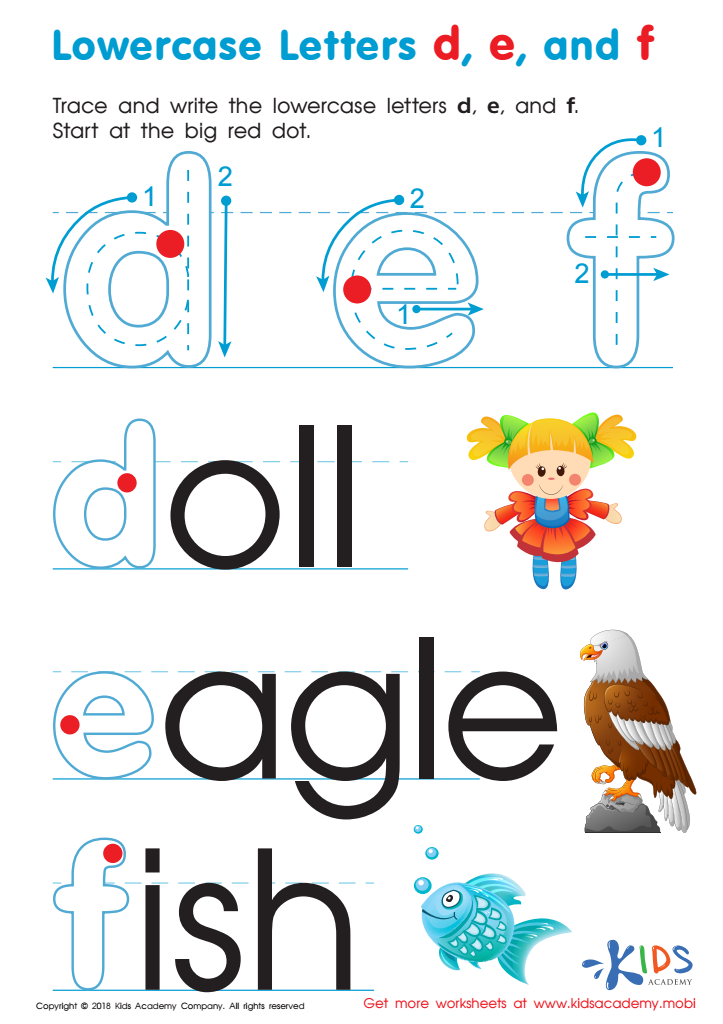
Lowercase Letters d e f Worksheet
Help your child learn the alphabet letters by tracing and writing the lowercase letters d, e, and f. Begin at the big red dot and follow the dots. This worksheet will help your little one gain a better understanding of the letters.
Lowercase Letters d e f Worksheet
Worksheet
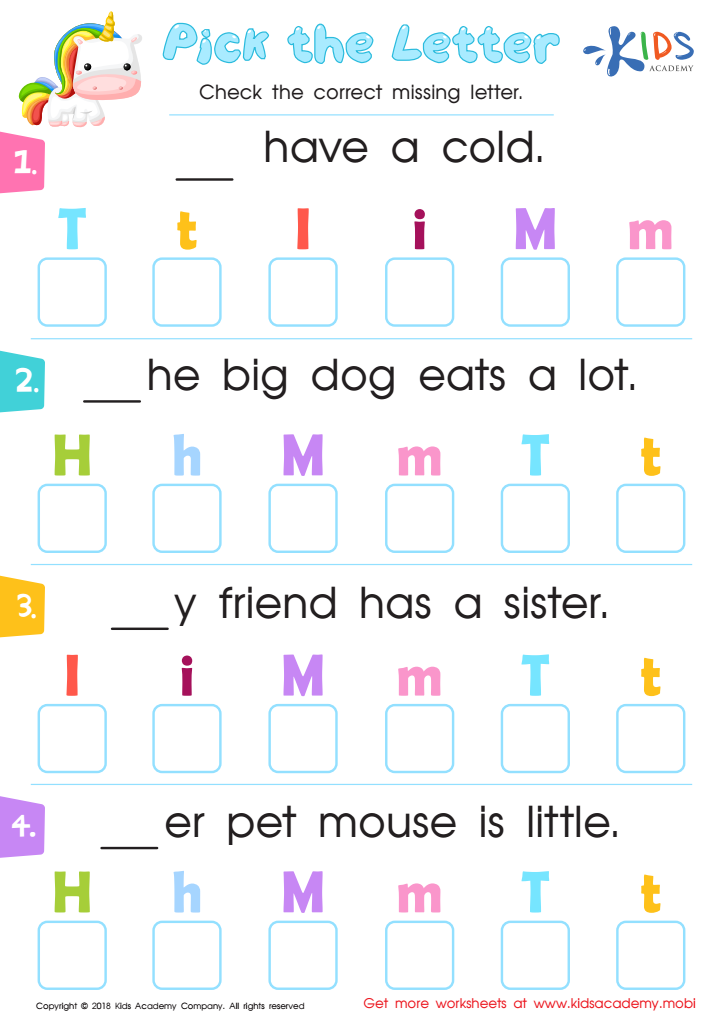
Pick the Letter Worksheet
Put your child's capitalization and reading skills to the test with this missing letter worksheet! Have them look at each sentence, note the blank and review the letters below. Find the uppercase letter that should start each sentence and check the boxes to complete. Fun and colorful, this worksheet is sure to keep your child engaged!
Pick the Letter Worksheet
Worksheet
Join Kids Academy for Free
Who is primarily going to use this learning content?








Letter-sound association and letter recognition are crucial components of early literacy development for children aged 5-9. Parents and teachers should prioritize these skills as they form the foundation for reading, writing, and overall language comprehension. Understanding that letters have specific sounds helps children decode words, a fundamental skill needed for effective reading.
As children learn to recognize letters, they are equipped to recognize patterns in language, which facilitates vocabulary building and fluency. Mastery of letter-sound association allows children to transition from simple word recognition to more complex text comprehension. This is vital for academic success in later grades.
Additionally, strong literacy skills contribute positively to a child's confidence and self-esteem. Children who can read and write well are more likely to engage actively in classroom discussions and activities, promoting social and emotional growth.
Moreover, fostering phonemic awareness through letter-sound activities can make learning engaging and fun. Games, songs, and interactive reading experiences can help solidify these concepts. By prioritizing letter-sound association and recognition, parents and teachers play a crucial role in ensuring a child’s educational journey is off to a strong start, ultimately laying the groundwork for lifelong learning.








