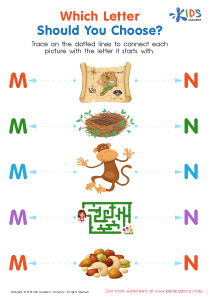
Handwriting practice Normal Lowercase/Small Letters Worksheets for Ages 5-9
8 filtered results
-
From - To
Boost your child's writing skills with our Handwriting Practice Worksheets designed for ages 5-9! These engaging worksheets focus on normal lowercase/small letters, helping young learners develop proper letter formation and neat handwriting. Featuring fun and interactive exercises, these printable sheets enhance fine motor skills and build a strong foundation for writing fluency. Perfect for at-home practice or classroom use, our worksheets offer structured guidance and plenty of practice opportunities. Watch your child's confidence grow as they master each letter, one stroke at a time. Start writing success today with our expertly crafted handwriting practice sheets!
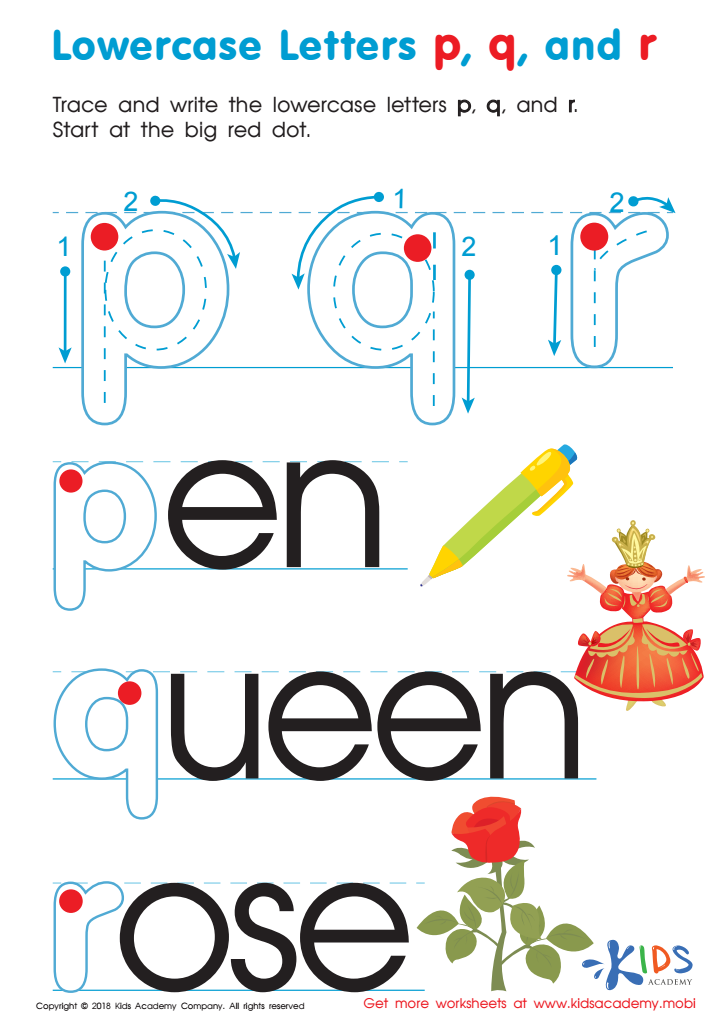
Lowercase Letters p q r Worksheet
 Assign to My Students
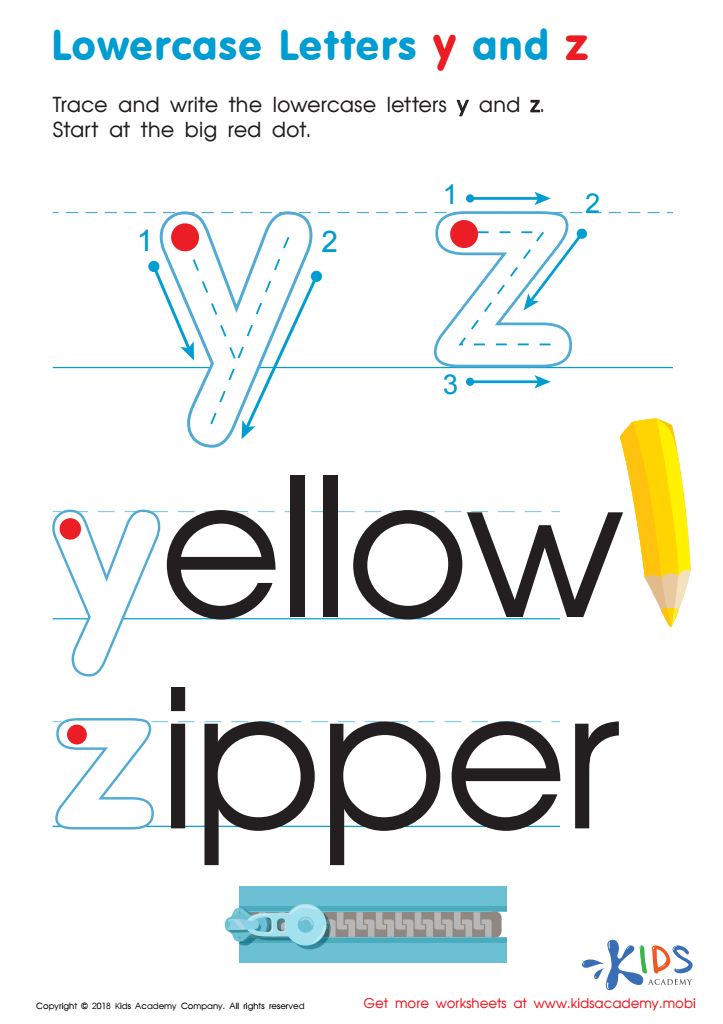
Lowercase Letters y z Worksheet

Lowercase Letters m n o Worksheet
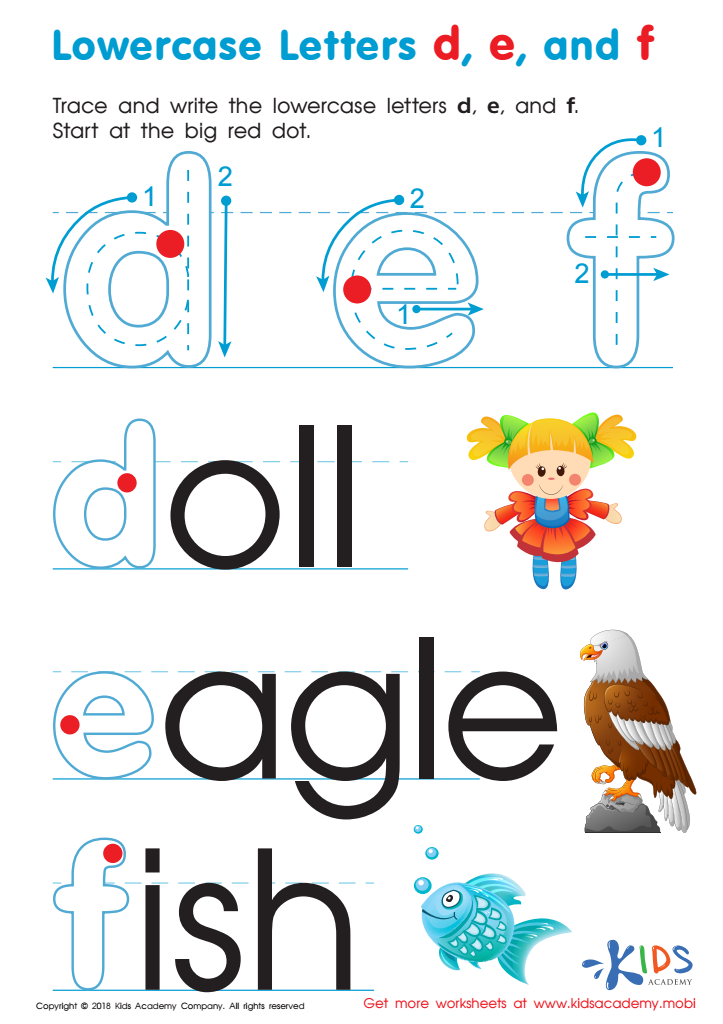
Lowercase Letters d e f Worksheet
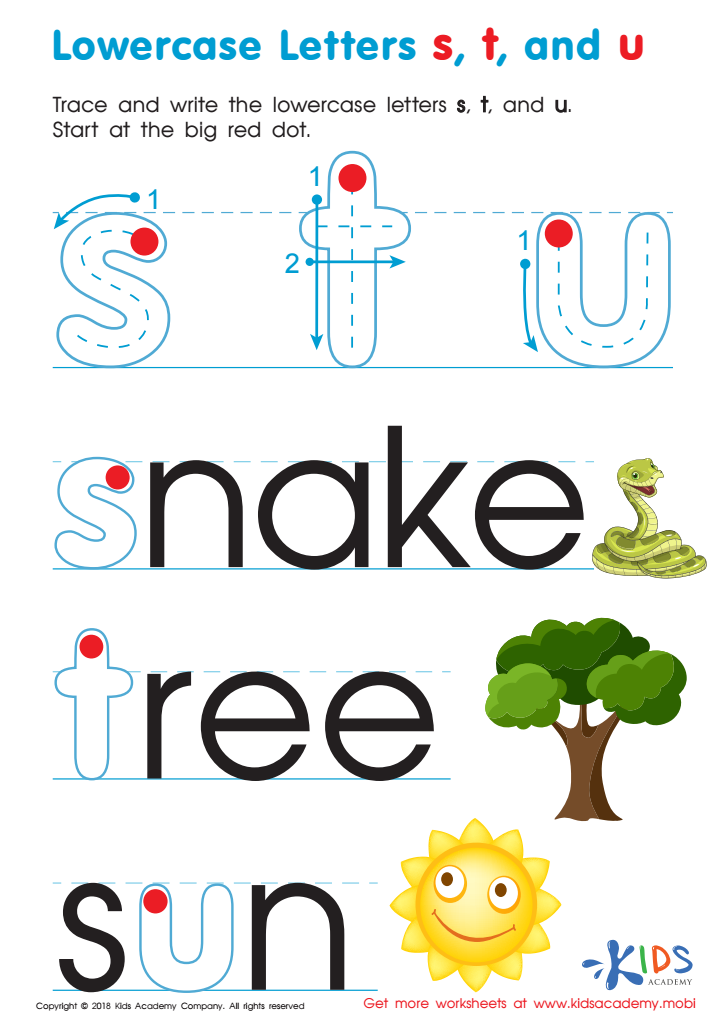
Lowercase Letters s t u Worksheet
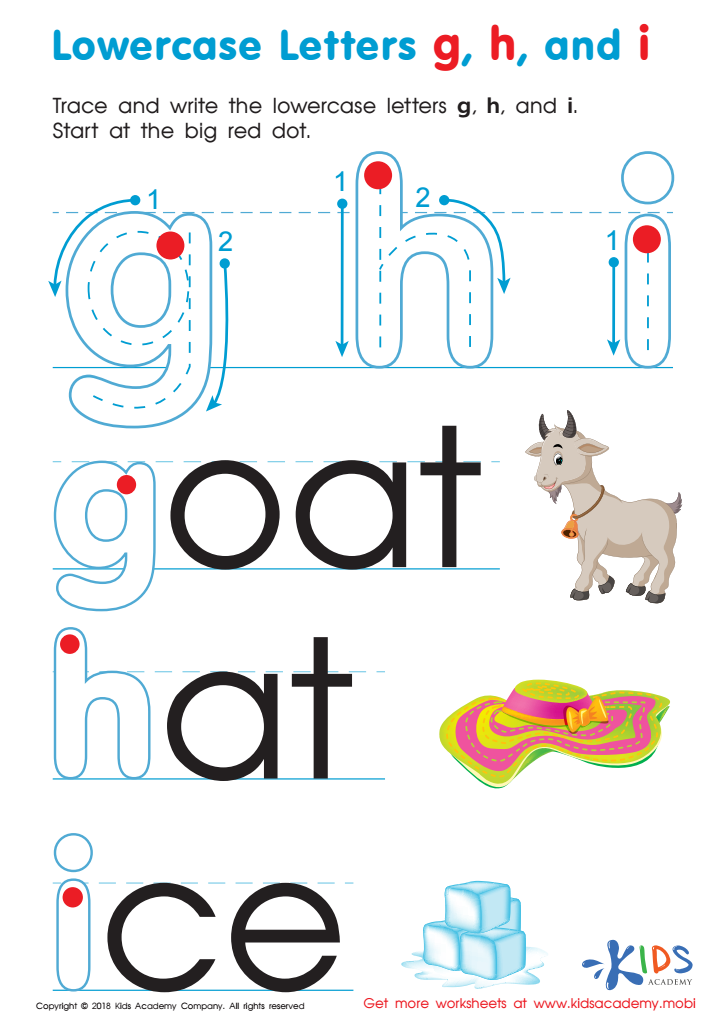
Lowercase Letters g h i Worksheet
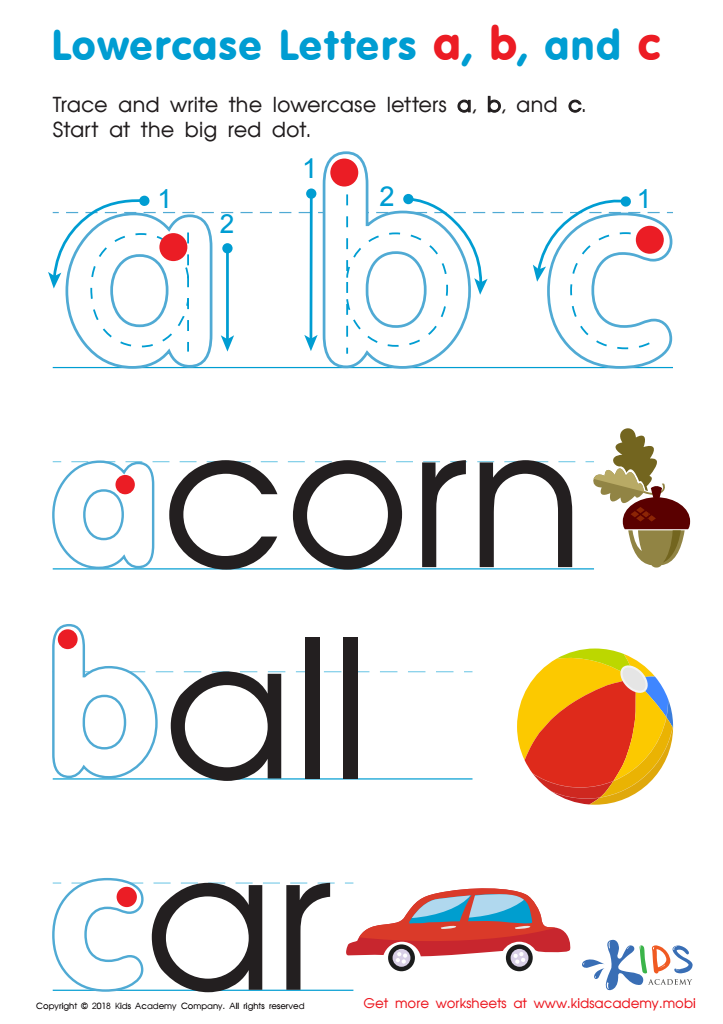
Lowercase Letters a b c Worksheet
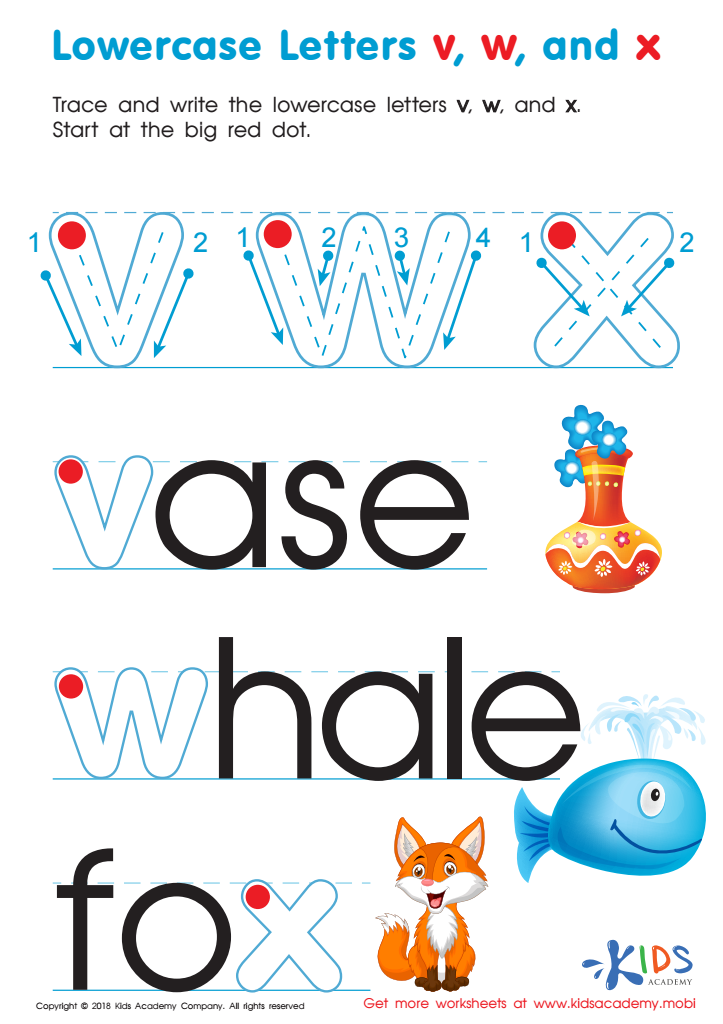
Lowercase Letters v w x Worksheet


Handwriting practice, particularly emphasizing normal lowercase or small letters, is crucial for children aged 5-9 for several reasons. Firstly, it forms the foundation of literacy. Legible handwriting supports reading and writing skills, essential for all academic subjects. When children practice lowercase letters, they become more proficient at distinguishing between different letter shapes, which aids in recognizing words and enhances reading fluency.
Secondly, handwriting practice improves fine motor skills and hand-eye coordination. Children learn to control their hand movements precisely, which is vital for daily tasks such as tying shoelaces and using utensils, thus fostering independence.
Moreover, consistent handwriting practice promotes cognitive development. As children form letters, they engage in processes that involve memory, concentration, and spatial awareness, enhancing their overall cognitive abilities. Consequently, this improves their problem-solving skills and attention to detail.
Early handwriting practice also instills a sense of accomplishment and pride. Children often take pleasure in seeing their writing improve, fostering self-esteem and a positive attitude towards learning.
Finally, it's increasingly important to balance digital and traditional writing skills. While technology use is on the rise, maintaining proficient handwriting is still essential for situations where typing isn’t suitable.
Overall, investing in handwriting practice equips children with fundamental skills that will benefit them academically, socially, and personally throughout their lives.