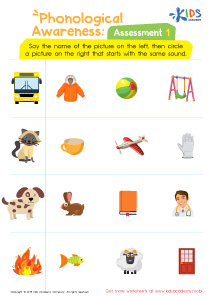
Phonics Skills Normal Phonics Coloring Pages Worksheets for Ages 5-9
3 filtered results
-
From - To
Introduce your child to the world of reading with our "Phonics Skills Normal Phonics Coloring Pages Worksheets" designed for ages 5-9! These engaging worksheets combine learning and creativity, allowing children to explore phonics through fun coloring activities. Our resources focus on essential phonics skills, including letter sounds, blends, and simple words, transforming critical learning into an enjoyable experience. Perfect for at-home practice or classroom activities, these coloring pages encourage participation and reinforce phonetic concepts while sparking imagination. With bright illustrations and user-friendly designs, your little ones will love mastering phonics as they color their way to literacy success!
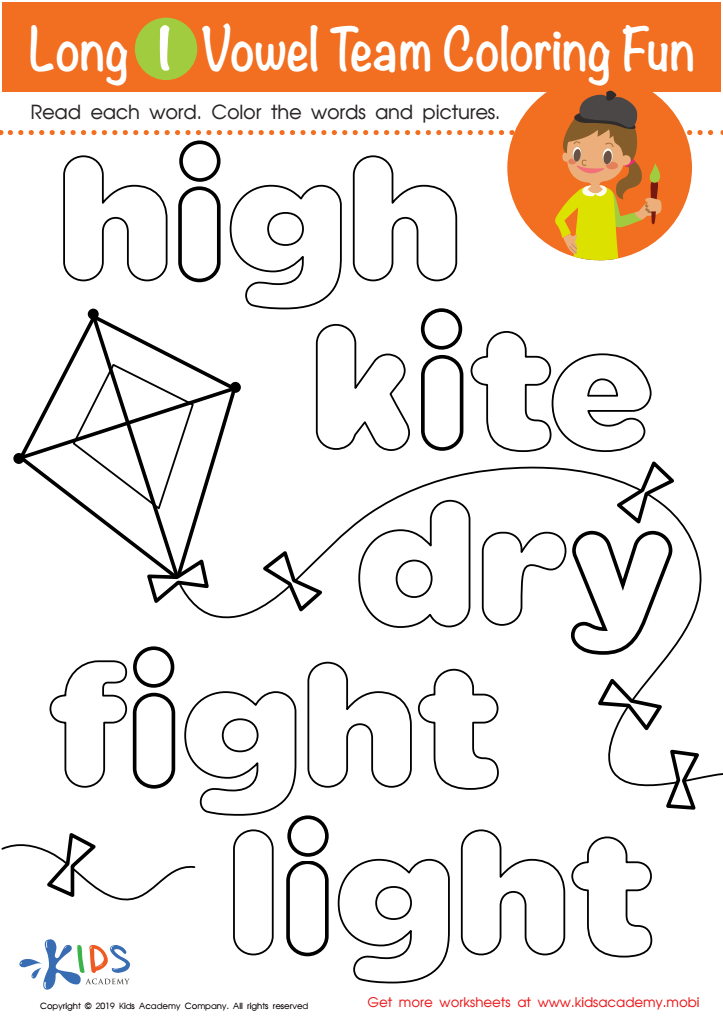
Long I Vowel Team Coloring Worksheet
 Assign to My Students
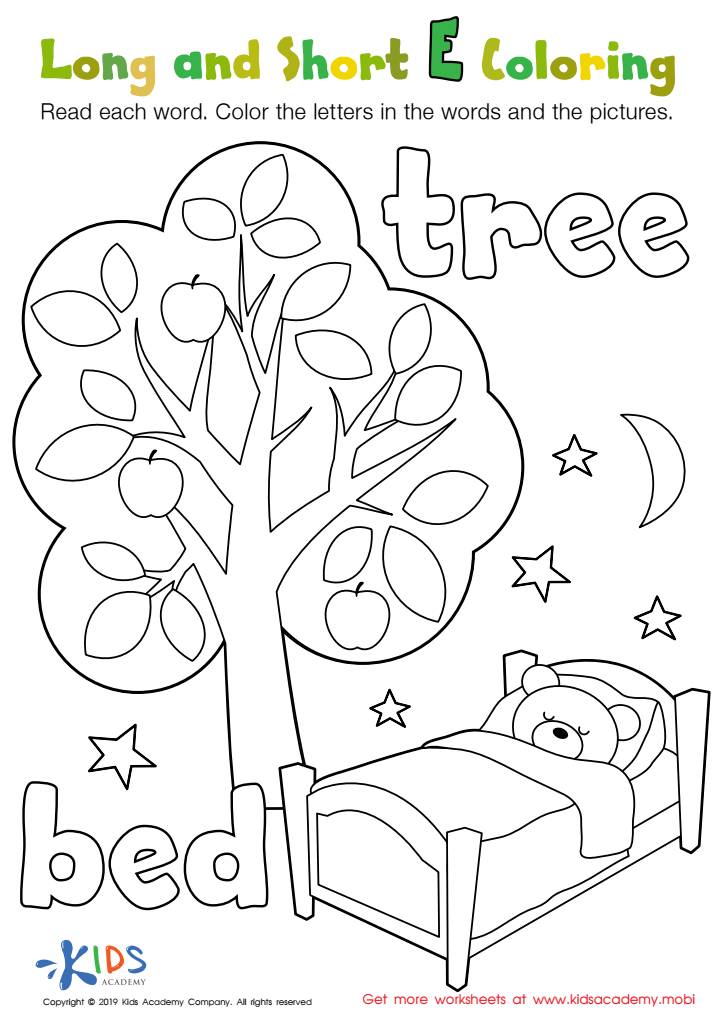
Long and Short E Worksheet
Assign to My Students
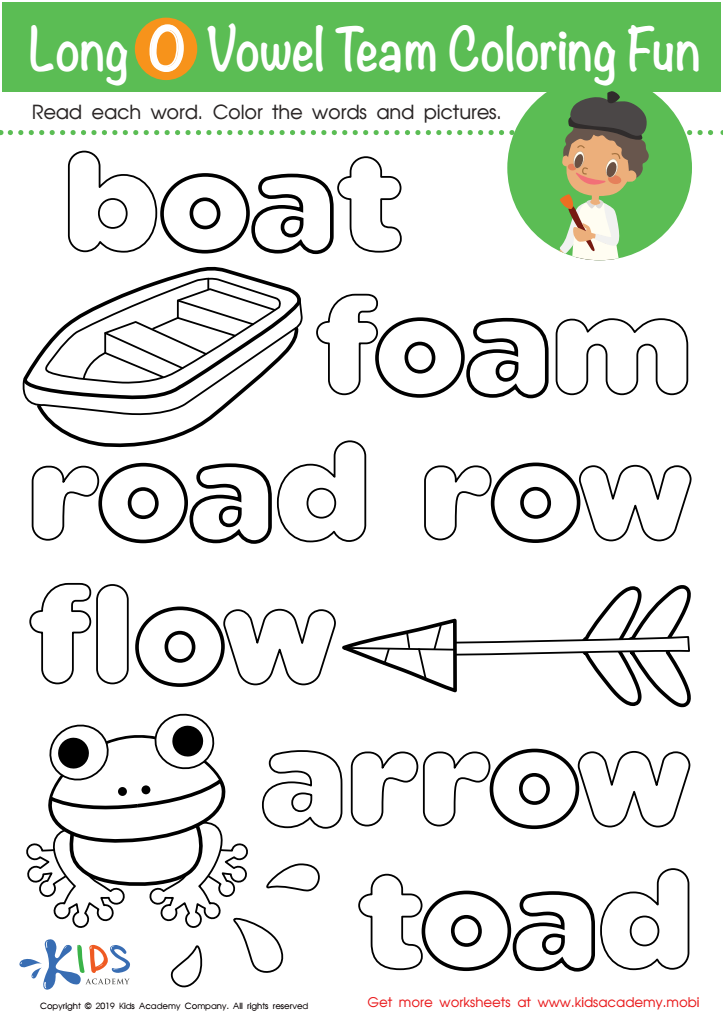
Long O Vowel Team Coloring Worksheet
Assign to My Students


Parents and teachers should prioritize phonics skills in young children, particularly through engaging resources like Normal Phonics Coloring Pages for ages 5-9, for several compelling reasons. First, phonics is fundamental to reading proficiency, offering children a systematic way to decode words. By associating sounds with letters, children can develop essential reading skills that underpin their entire educational journey.
Coloring pages make the learning process dynamic and enjoyable, catering to the creative interests of young learners. This visual element can help reinforce phonics concepts, making them easier for children to grasp and remember. When children color letters and associated images, they create a multi-sensory learning experience that can enhance retention.
Additionally, engaging activities like coloring promote fine motor skills, which are crucial for writing and other tasks. Offering a variety of fun, phonics-related activities helps to maintain the interest of young learners, reducing frustration and boosting confidence as they progress in their reading abilities.
Ultimately, integrating phonics education through interactive tools like coloring pages nurtures a positive attitude towards reading, setting the foundation for lifelong literacy skills. Parents and teachers play a vital role in cultivating these skills, ensuring that children are well-equipped for their academic future.