
Alphabet Recognition Normal Phonics Worksheets for Ages 5-9
3 filtered results
Difficulty Level
Grade
Age
-
From - To
Subject
Activity
Standards
Discover our engaging Alphabet Recognition Normal Phonics Worksheets, specially designed for children ages 5-9! These interactive worksheets help young learners master letter shapes and sounds, fostering essential reading skills. Each worksheet features colorful illustrations and fun exercises that enhance phonemic awareness, ensuring kids can identify letters in various contexts—essential for reading proficiency. Perfect for homeschooling or classroom settings, our worksheets promote active learning and reinforce phonics through enjoyable activities. Encourage a love for letters and language in your child with our carefully crafted resources, making alphabet mastery both accessible and fun! Download the worksheets and start your learning adventure today!
Favorites
With answer key
Interactive
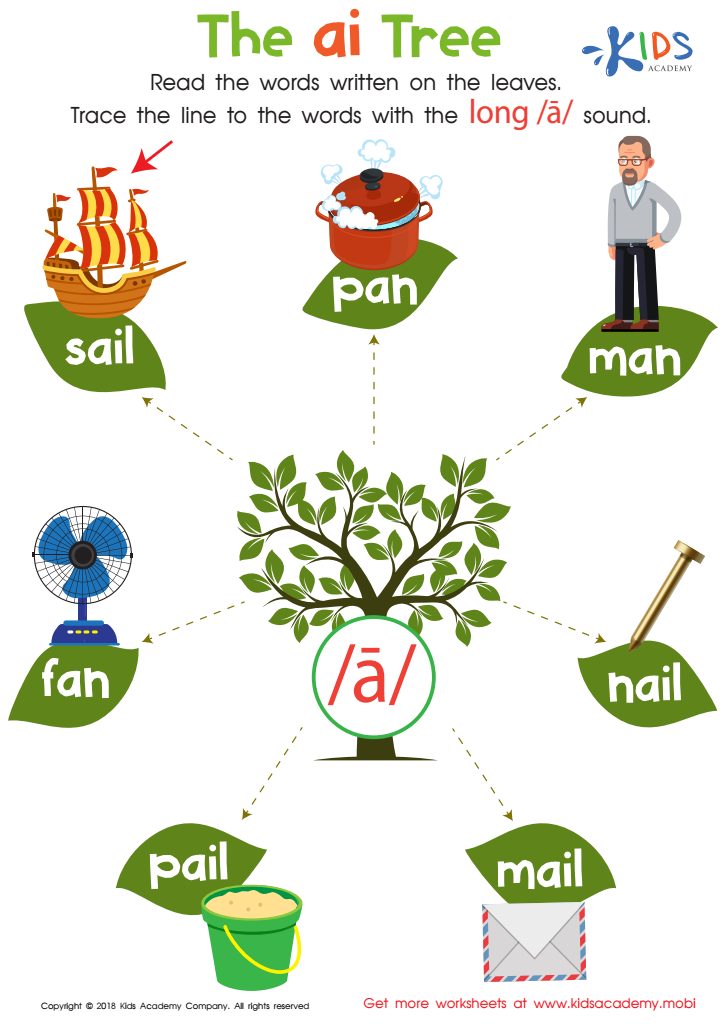
The AI Tree Worksheet
Help your kids learn to read better with this worksheet! Introduce the vowel pair 'ai' and give them familiar examples. Ask them to give you some in return. Then, have them read the words on the leaves and help them trace the ones with the long /a/ sound.
 Assign to My Students
The AI Tree Worksheet
Worksheet
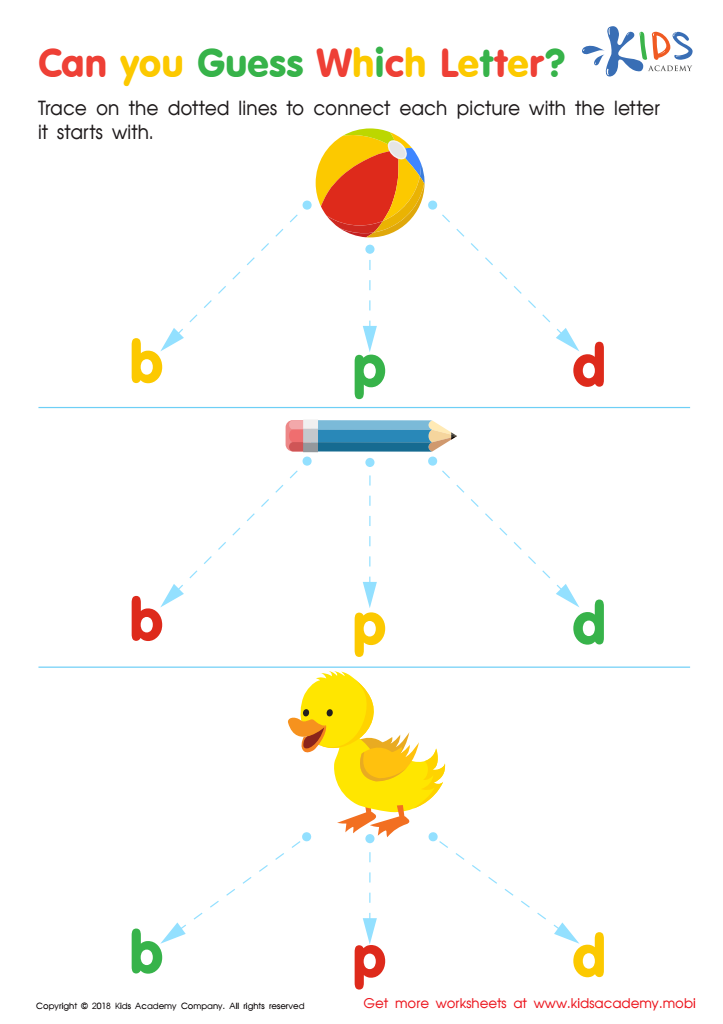
Can you Guess Which Letter? Worksheet
Connect the pictures with their corresponding letters with this fun worksheet! Ask your child what each picture is, then what letter it begins with. Download the PDF for colorful images and engaging texts to hold their attention, making learning an enjoyable activity.
Can you Guess Which Letter? Worksheet
Worksheet
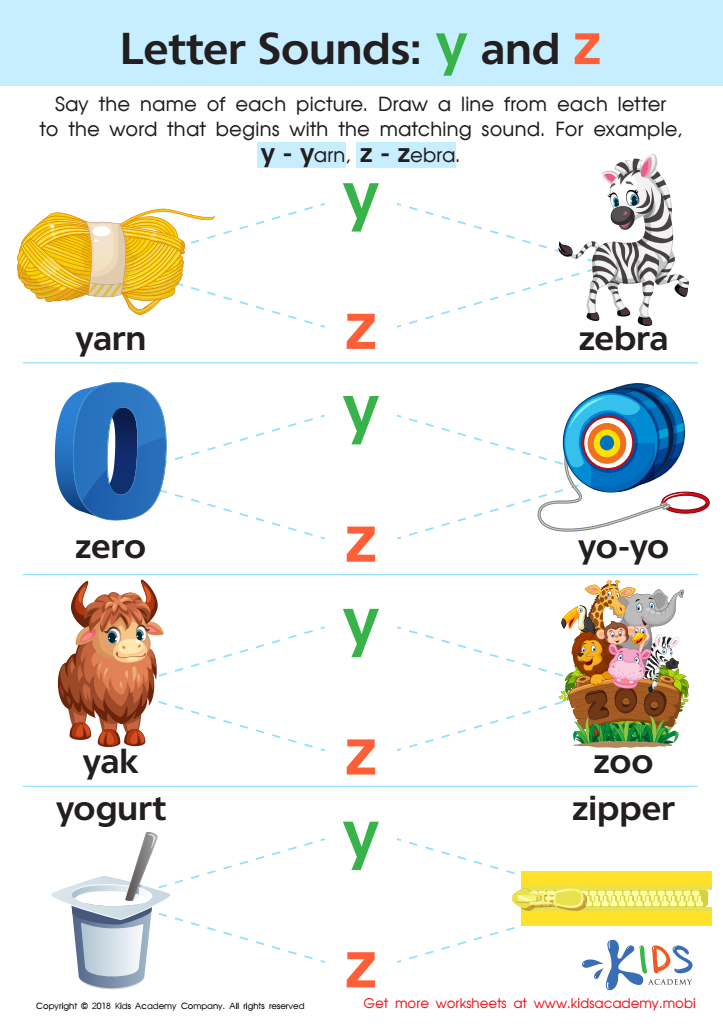
Letter Y and Z Sounds Worksheet
Y and Z can be tricky for kids to learn. Kids Academy has the answer with a great worksheet. "Yo-yo", "yak" and "zebra" help kids recognize, say and trace each letter. Plus, they can read the words and match them to images! Let your child try and help them master phonics at the end of the alphabet.
Letter Y and Z Sounds Worksheet
Worksheet
Join Kids Academy for Free
Who is primarily going to use this learning content?








Alphabet recognition and phonics are essential foundational skills for children aged 5-9, serving as the building blocks for reading and overall literacy development. Understanding the alphabet empowers children to connect letters with sounds, which is crucial for decoding words. Strong alphabet recognition and phonics knowledge enable kids to begin reading independently, enhancing their confidence and motivation.
Parents and teachers should care about these skills because they directly influence a child's academic success and future learning opportunities. Students who struggle with reading often encounter difficulties in other subjects, leading to a cycle of frustration and disengagement from school. In contrast, those who master these early literacy skills are more likely to excel academically, becoming enthusiastic and capable learners.
Moreover, children gain critical thinking and language skills through games and activities focused on alphabet recognition and phonics. This playful approach fosters a love for learning, encouraging their curiosity about the world. Investing time and resources in teaching these skills cultivates a strong literacy foundation, allowing children to express themselves effectively, share ideas, and explore literature. Ultimately, supporting alphabet recognition and phonics can set children on a path to lifelong learning and success.







