Fine Motor Skills Normal Phonics Worksheets for Ages 5-9
5 filtered results
-
From - To
Enhance your child's learning with our curated collection of Fine Motor Skills Normal Phonics Worksheets, designed specifically for ages 5-9. These engaging worksheets not only promote phonetic awareness but also develop essential motor skills through fun activities. Children will enjoy tracing letters, completing puzzles, and interacting with vibrant illustrations that make learning exciting. Our resources are perfect for reinforcing classroom instruction or for at-home practice, fostering creativity and fine motor coordination. With a focus on phonics and hands-on tasks, our worksheets help young learners build confidence while enhancing their reading skills. Explore our range today to support your child's educational journey!
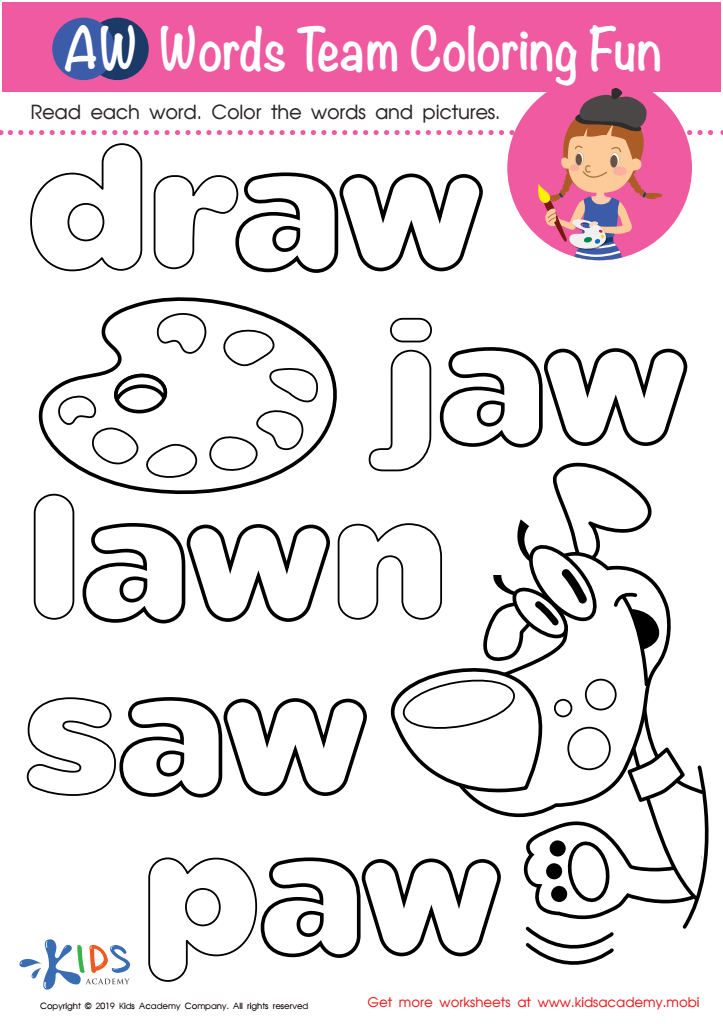
AW Words Team Coloring Fun Worksheet
 Assign to My Students

Long and Short U Worksheet
Assign to My Students
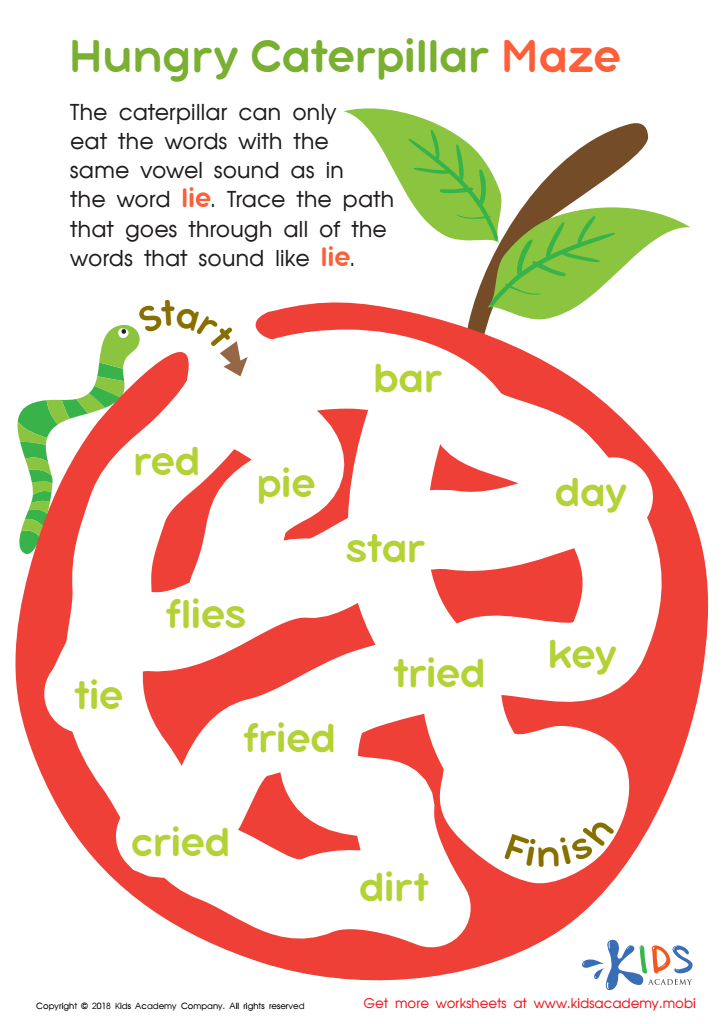
Hungry Caterpillar Maze Worksheet
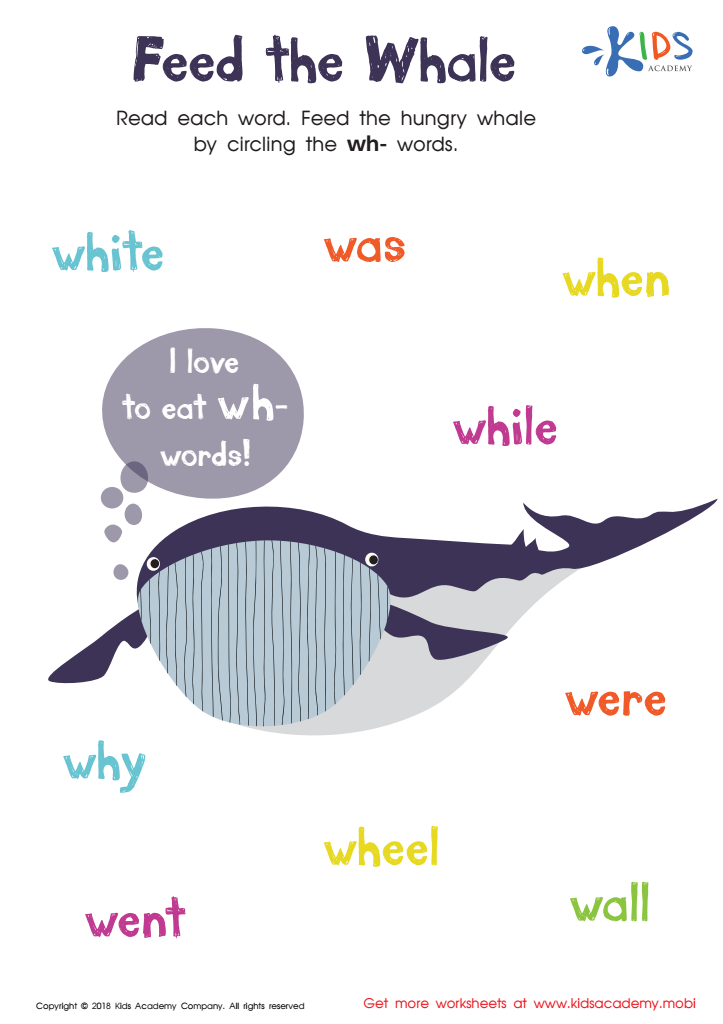
Feed the Whale Worksheet
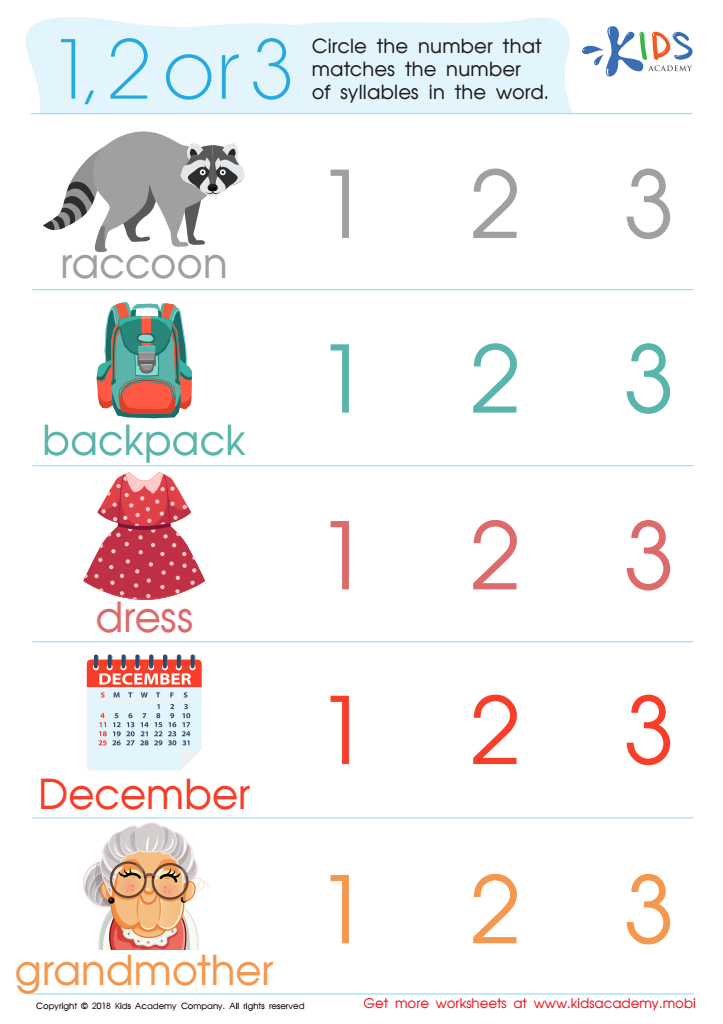
1, 2 or 3? Worksheet








Fine motor skills and phonics are critical components of a child's development between ages 5-9, making them essential areas of focus for parents and teachers. Fine motor skills refer to the ability to perform small, precise movements using the hands and fingers, which are vital for tasks such as writing, cutting, and buttoning clothes. These skills lay the foundation for academic success and daily independence.
Normal phonics, on the other hand, involves teaching children the relationship between sounds and letters, enabling them to decode words and develop reading skills. Proficient phonics knowledge enhances literacy, boosting comprehension and communication abilities, essential for lifelong learning.
By fostering both fine motor skills and phonics, parents and teachers can significantly influence a child's cognitive and physical development. Hands-on activities like art, puzzles, and building toys can improve fine motor coordination, while phonics games and reading aloud stimulate language skills.
Supporting children in these areas promotes confidence and a love for learning, helping them navigate academic challenges. Ultimately, honing fine motor skills and phonics fosters a well-rounded foundation for successful participation in school and beyond, setting the stage for lifelong skills and knowledge.







