
Handwriting practice Normal Phonics Worksheets for Ages 5-9
4 filtered results
Difficulty Level
Grade
Age
-
From - To
Subject
Activity
Standards
Discover engaging Handwriting Practice Normal Phonics Worksheets tailored for children ages 5-9. Our comprehensive resources combine phonics and handwriting, enhancing beginning readers and writers' skills. Each worksheet is carefully designed to support letter recognition, sound association, and fine motor development. Fun, interactive exercises ensure kids remain motivated as they progress at their own pace. Ideal for classroom use or additional practice at home, our worksheets build foundational skills that promote confidence and academic success. Give your child the tools they need with Kids Academy's expertly crafted phonics and handwriting practice worksheets. Start the journey to exceptional literacy today!
Favorites
With answer key
Interactive
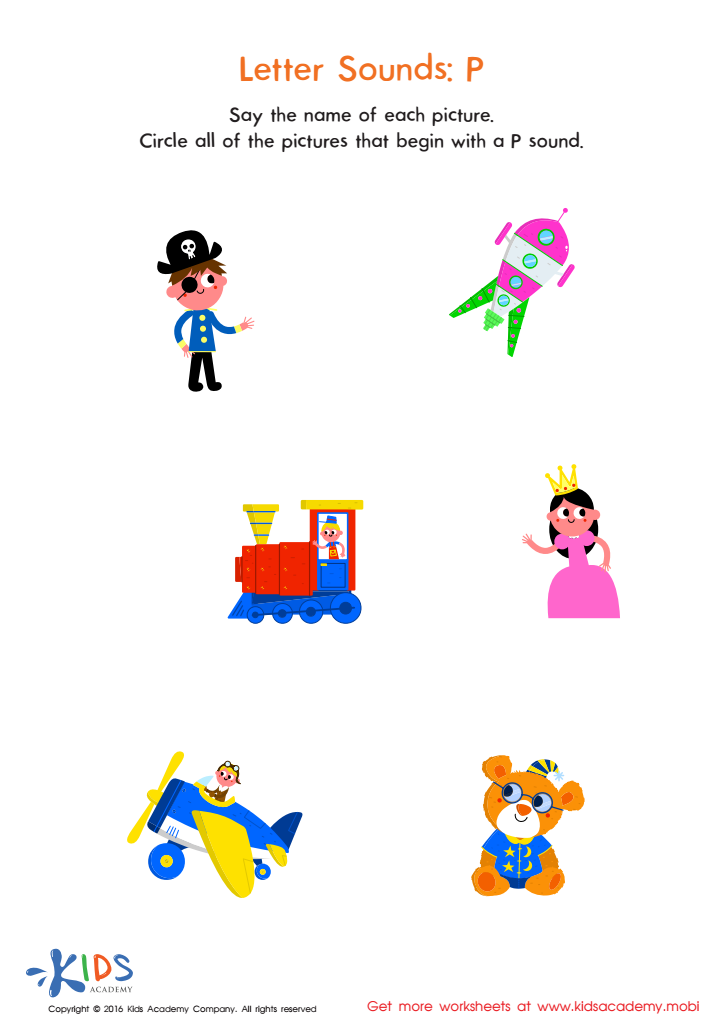
Letter P Sound Worksheet
Think P! Kids practice phonics with this fun letter P worksheet. With delightful illustrations, they'll sound out simple words and get closer to reading.
 Assign to My Students
Letter P Sound Worksheet
Worksheet
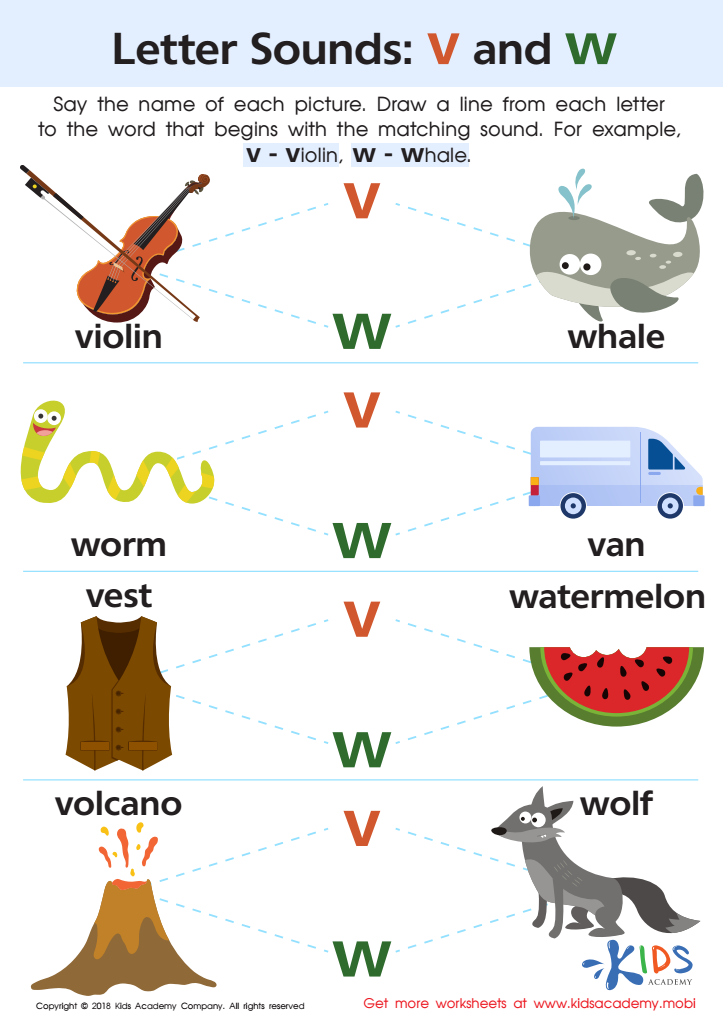
Letter V and W Sounds Worksheet
Help your child master the sounds of W & V while completing this fun phonics worksheet. Have them trace the dotted line from letter to picture while saying words like "worm", "violin" and "van" aloud to notice how each word begins with either W or V. Listen and pay attention to the pronunciation to complete the practice.
Letter V and W Sounds Worksheet
Worksheet
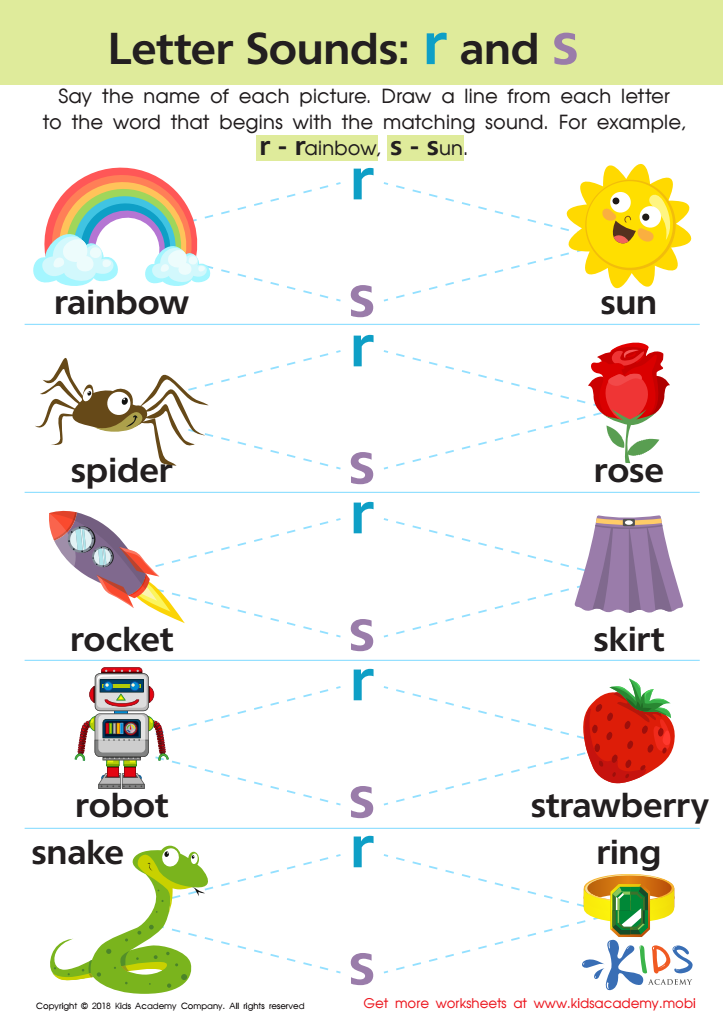
Letter R and S Sounds Worksheet
Kids Academy's phonics worksheet is full of fun and color! Help your child name the pictures and read the words under each one. Does it begin with an R or S? Then, use a pencil to trace the dotted line from the letter to its image. It's a great way to practice phonics skills!
Letter R and S Sounds Worksheet
Worksheet
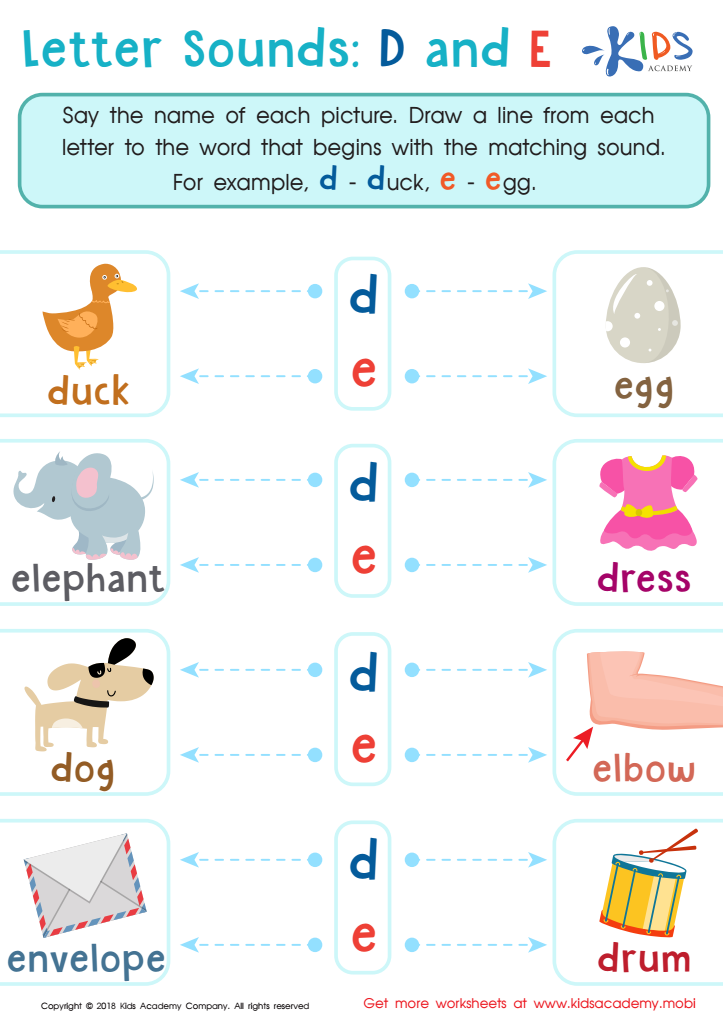
Letter D and E Sounds Worksheet
Kids can use picture clues and visual discrimination to name cheerful pics and isolate the beginning sound. This free PDF worksheet will help them develop phonological awareness, differentiate between "D" and "E", and hone fine-motor skills. It'll also boost their confidence as they become readers.
Letter D and E Sounds Worksheet
Worksheet
Join Kids Academy for Free
Who is primarily going to use this learning content?








Handwriting practice and phonics instruction are fundamental components in the early education of children between the ages of 5-9, as both are critical for literacy development. Handwriting practice helps children develop fine motor skills, hand-eye coordination, and cognitive function. As they learn to form letters consistently and legibly, students gain confidence in their writing abilities, which can positively impact overall academic achievement. Clear and precise handwriting also facilitates easier self-expression, helping children communicate their ideas more effectively.
Phonics instruction, on the other hand, forms the bedrock of reading proficiency. It teaches children the relationships between letters and sounds, enabling them to decode unfamiliar words phonetically. By understanding sound patterns and phonemic structures, young learners can enhance their reading fluency and comprehension skills. Strong phonics skills are directly correlated with better long-term reading and spelling abilities, which are essential for academic success across all subjects.
Together, handwriting practice and phonics provide a robust foundation for literacy. They not only support each other—phonics improving decoding and spelling while handwriting reinforces letter recognition and word formation—but also foster cognitive development, discipline, and the joy of learning. Therefore, parents and teachers should prioritize these practices to ensure children develop the essential skills needed for their educational journey.







