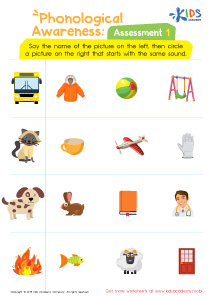
Rhyming skills development Normal Rhyming Worksheets for Ages 5-9
4 filtered results
-
From - To
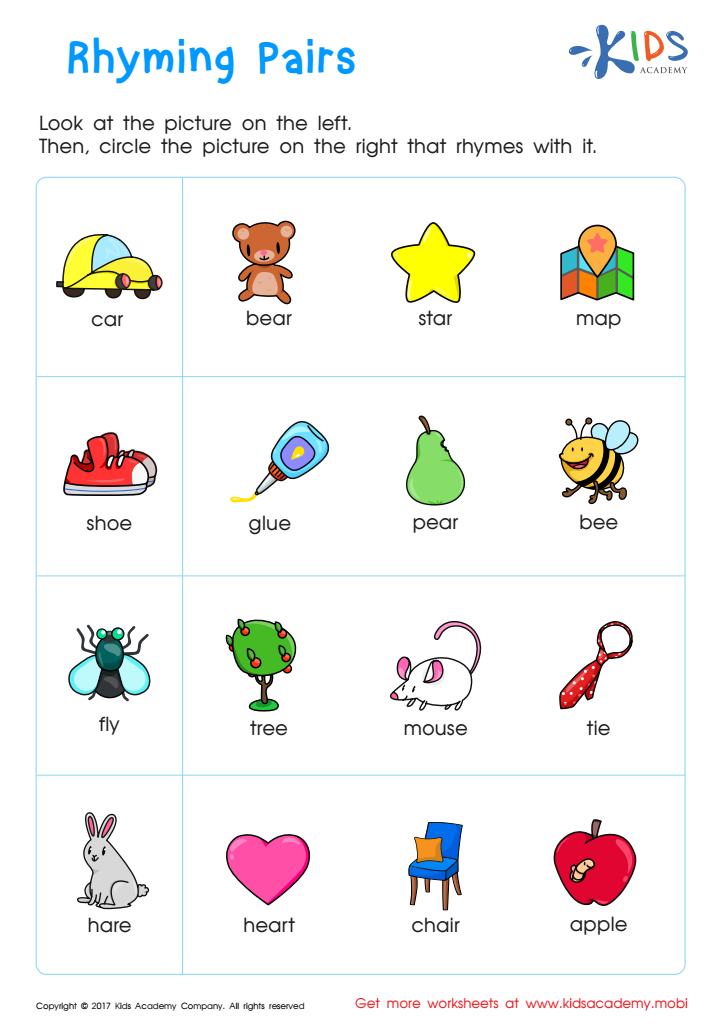
Enhance your child's language proficiency with our captivating rhyming worksheets designed for ages 5-9. These engaging resources promote rhyming skills development through playful activities, allowing young learners to explore the joy of rhyme while improving their phonemic awareness. Each worksheet is crafted to encourage creativity and critical thinking, ensuring that children grasp the concept of rhyming in a fun, interactive way. Ideal for both classroom use and at-home learning, our normal rhyming worksheets offer a variety of exercises, from matching rhymes to completing verses. Foster a love for reading and language in your child today with these essential learning tools!

Rhyming Words Rhyming Worksheet
 Assign to My Students
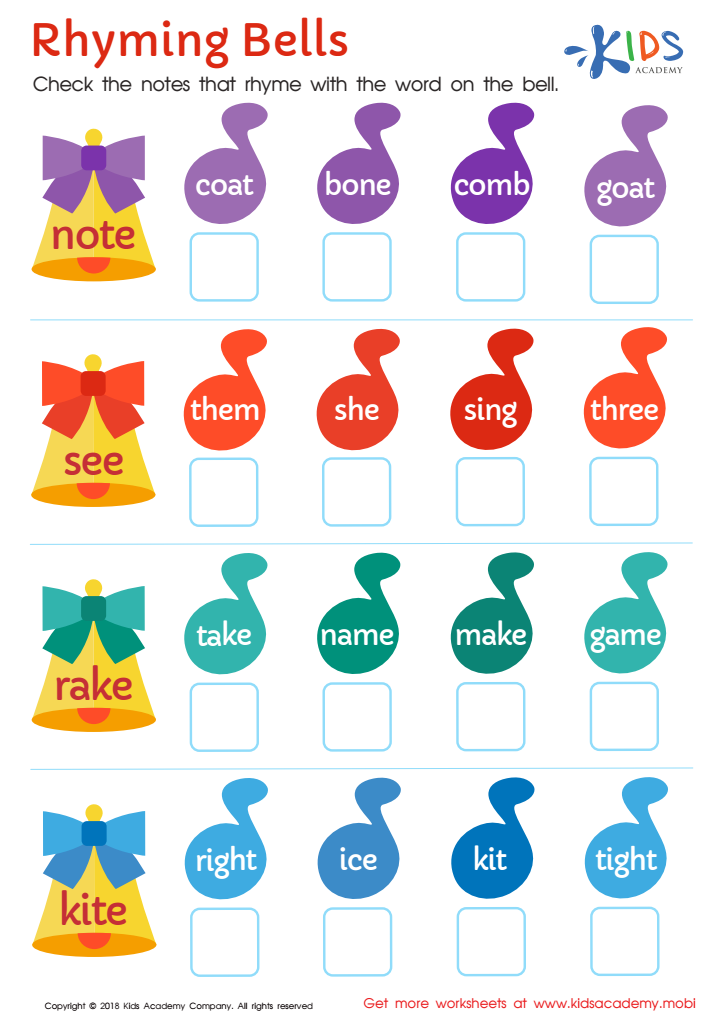
Rhyming Bells Worksheet

First Words: Picture Rhymes Worksheet







Rhyming skills are fundamental to language development in children aged 5-9, making it essential for parents and teachers to focus on this area. Rhyming activities enhance phonological awareness, the ability to recognize and manipulate sounds in words, which is crucial for reading success. When children can identify and produce rhymes, they strengthen their understanding of sound patterns, leading to improved decoding skills while reading.
Additionally, rhyming enhances vocabulary development. Engaging with poems, songs, and rhymes exposes children to new words and language structures in a fun and memorable way, boosting their overall language skills. Furthermore, rhyming helps children develop memory and recall abilities, which are vital for learning.
Beyond academics, rhyming supports cognitive development by fostering creative thinking and imagination. Through playful engagement with language, children learn to experiment with sounds and words, laying the groundwork for effective communication.
Lastly, rhythmic patterns in rhymes and songs help establish a love for literacy, making reading a more enjoyable and engaging experience. Such enjoyment can translate into a lifelong passion for reading and learning. Therefore, promoting normal rhyming in children's education is crucial for their cognitive, linguistic, and emotional growth.